Why Mineral Processing Wastewater COD Is Hard to Treat
Concentrator effluents fall outside the design envelope of municipal wastewater treatment: influent COD routinely runs 800–12,000 mg/L at pH 9–13, with residual xanthates, dithiophosphates, and free sulfide ions that suppress heterotrophic bacteria and resist conventional activated sludge. Four streams converge at the effluent sump — thickener overflow, filtration wash water, tailings decant, and reagent make-up bleed — and together they account for 40–60% of the total COD load through the flotation reagent fraction alone, not the suspended solids (per Chen et al., Central South University, characterization of mineral processing wastewater on sulfide mineral flotation). When the reagent contribution dominates, the water is no longer a "biological" problem at all; it is an advanced-oxidation problem with a polishing step attached.
The refractory organics are the hard part. Xanthates (typically C2–C5 alkyl xanthates at 5–50 mg/L residual) and dithiophosphates break down slowly under aerobic conditions, and sulfide ions scavenge dissolved oxygen, push oxidation-reduction potential negative, and inhibit nitrifiers at concentrations above 20 mg/L. Microbial electrochemical system work (ResearchGate publication 349514184, 2021) confirms that refractory organics in mineral effluents need an external electron-flow driver or advanced oxidation assistance to mineralize reliably — passive biology alone will not close the mass balance. If your plant's daily composite sample shows COD above 800 mg/L, residual xanthate above 5 mg/L, or pH above 9.5, you are in the advanced-treatment band, not the conventional-biology band.
How Fenton Oxidation Removes COD From Sulfide Mineral Wastewater
Fenton's reagent — Fe²⁺ catalyzing H₂O₂ into hydroxyl radicals (·OH) at 2.8 V oxidation potential — mineralizes xanthates, thiosalts, and dithiophosphate breakdown products faster than any biological route, with a 60–120 minute residence time at 30 °C and a tight pH window of 2.5–3.5. The Fe²⁺/H₂O₂ molar ratio controls both kinetics and sludge yield: 1:5–1:10 is the operating sweet spot for sulfide mineral effluents, with COD dropping from 2,500–10,000 mg/L to under 100 mg/L in most cases (Meng 2019, ScienceDirect, cited 41 times, "Efficient COD reduction from sulfide minerals processing wastewater"). The reaction is exothermic, so jacketed reactors with acid dosing and lime neutralization downstream are standard. An automatic chemical dosing skid for Fenton reagent control is the practical way to hold the Fe²⁺/H₂O₂ ratio within ±5% as influent COD swings diurnally.
Operating cost is reagent-driven, not energy-driven. Expect H₂O₂ consumption of 0.5–1.5 kg per kg COD removed, FeSO₄·7H₂O at 0.3–0.8 kg per kg COD, plus 93–98% sulfuric acid for pH adjustment and lime for neutralization. Sludge yield is the line item that catches engineers off guard: Fenton generates 0.4–0.6 kg of dry iron hydroxide sludge per kg COD removed, and that sludge needs a dewatering step before landfill. A plate-and-frame filter press for iron sludge dewatering is the typical pairing in 2026 full-scale designs because it drives cake solids above 35% — well past the 25% threshold that makes landfill disposal economical.
| Parameter | Operating Range | Notes |
|---|---|---|
| Reactor pH | 2.5–3.5 | Below 2.5 suppresses ·OH formation; above 3.5 precipitates Fe(OH)₃ prematurely |
| Fe²⁺/H₂O₂ molar ratio | 1:5–1:10 | Higher H₂O₂ raises cost without proportional COD gain |
| Residence time | 60–120 min | At 30 °C; longer below 25 °C |
| H₂O₂ dose | 0.5–1.5 kg/kg COD removed | Drives ~60–70% of variable OPEX |
| FeSO₄·7H₂O dose | 0.3–0.8 kg/kg COD removed | Catalyst; recoverable in theory, not in practice |
| Iron sludge yield | 0.4–0.6 kg dry/kg COD | Routes to filter press at 30–40% cake solids |
Electrocoagulation for Sulphide Mineral Processing Wastewater
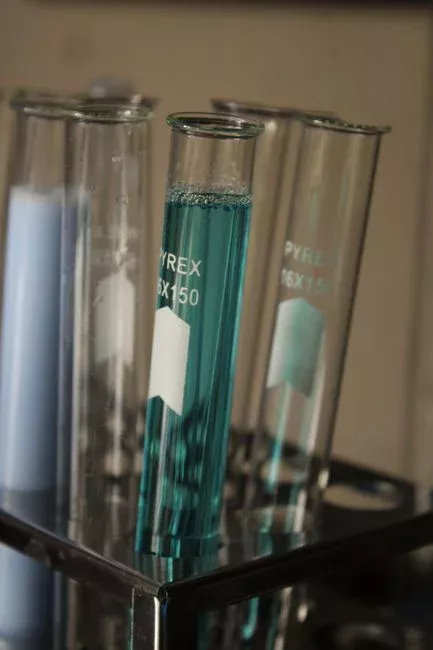
Electrocoagulation (EC) replaces chemical coagulant dosing with sacrificial Al or Fe anodes that release coagulant ions in situ under an applied DC current; hydrogen bubbles at the cathode lift colloids and emulsified reagent residues in a flotation layer that skims off the top. It is a compact, low-reagent technology and the lowest-CAPEX route for moderate-COD streams in the 800–3,000 mg/L range. Wu et al. (ScienceDirect S0048969719340409, "Electrocoagulation method for treatment and reuse of sulphide mineral processing wastewater") report 65–80% COD removal at current densities of 20–40 A/m² and 30–60 minute retention, with the electrode material driving the chemistry — Fe anodes handle sulfide-rich streams better, Al anodes deliver lower residual turbidity.
The economics shift above 4,000 mg/L influent COD, where EC efficiency drops sharply without a pre-oxidation step — the bubble blanket cannot keep up with the mass of coagulant needed. Below that band, EC's two operating cost drivers are electrode consumption at 0.05–0.15 kg Al or Fe per m³ treated and energy at 2–4 kWh/m³, which together land the OPEX well below Fenton's on moderate streams. For a 50 m³/d copper concentrate thickener overflow, the 3–5 year payback against Fenton chemical cost is realistic when influent COD sits below 2,000 mg/L. Pair EC with a DAF pre-treatment for flotation reagent and suspended solids when influent suspended solids exceed 500 mg/L, and use the same automatic chemical dosing skid for Fenton reagent control to dose pH correction between the EC cell and the clarifier.
Biological Treatment and MBR Polishing for Final COD Compliance
Biology enters the train only after toxicity is stripped — residual H₂O₂ from Fenton must be below 0.5 mg/L, sulfide below 1 mg/L, and pH returned to 6.5–8.0. With those conditions met, an anaerobic UASB digester handles 3,000–8,000 mg/L COD with 70–85% removal and a biogas yield of 0.35–0.45 m³/kg COD — a credit that often offsets aeration power downstream. For final polishing, a submerged MBR with PVDF membranes at 0.1–0.4 μm pore size reliably takes post-Fenton effluent from ~100 mg/L COD to under 50 mg/L, holding complete biomass retention at sludge retention times of 20–40 days so slow-growing degraders of residual xanthate breakdown products do not wash out (the failure mode that defeats conventional activated sludge on this duty).
MBR's hard limit is upstream load: incoming COD above ~1,500 mg/L starves the membranes of oxygen transfer and fouls within days, raising transmembrane pressure past the 0.5 bar threshold and forcing chemical cleaning. This is why Fenton or EC upstream is not optional — it is the membrane-protection step. A submerged MBR polishing unit paired with the MBR membrane bioreactor module in a PVDF hollow-fiber configuration is the 2026 default for sulfide concentrators aiming at the China GB 25466-2018 limit of 50–60 mg/L COD.
Technology Comparison: Fenton vs. Electrocoagulation vs. MBR
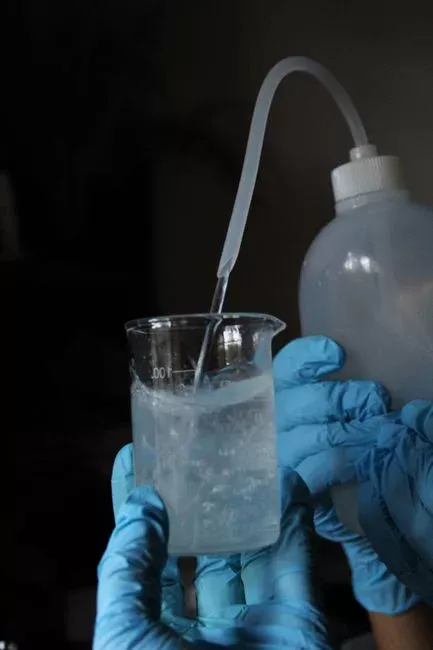
No single technology wins across the full influent range. The decision matrix below routes by COD band and ranks the realistic 2026 CAPEX/OPEX bands a procurement engineer should anchor a budget review against. Hybrid Fenton → sedimentation → MBR remains the dominant full-scale configuration for sulfide concentrators in 2026 because it covers the widest influent envelope (2,500–10,000 mg/L down to <50 mg/L) with the most defensible compliance margin; EC slots in as a lower-CAPEX alternative for the 800–3,000 mg/L band when no biological polishing is required.
| Criterion | Fenton Oxidation | Electrocoagulation | MBR (Post-Oxidation) |
|---|---|---|---|
| Influent COD range | 2,500–10,000 mg/L | 800–3,000 mg/L | Below 1,500 mg/L (polishing) |
| Removal efficiency | 85–98% (down to <100 mg/L) | 65–80% | 50–80% (e.g. 100 → <50 mg/L) |
| CAPEX, 50 m³/d skid (2026 USD) | 80,000–250,000 | 60,000–180,000 | 120,000–400,000 |
| OPEX (USD/m³ treated) | 1.20–3.50 | 0.40–0.90 | 0.30–0.80 |
| Sludge yield | 0.4–0.6 kg/kg COD | 0.1–0.3 kg/kg COD | 0.05–0.15 kg/kg COD (biological) |
| Footprint | Medium (acid, reactor, neutralization) | Compact (one cell, rectifier) | Large (tank + membrane rack) |
| Best-fit scenario | High-COD refractory, sulfide-rich, >2,500 mg/L | Moderate-COD 800–3,000 mg/L, low-footprint projects | Final polishing after Fenton or EC |
2026 Discharge Standards and Compliance Targets
Technology selection only matters against the permit number on the page. Use the strictest applicable standard to size the polishing step — under-sizing is the single most common compliance failure in retrofits, and it forces expensive last-mile chemistry when the regulator samples at the edge of the day. The 2026 landscape across the three jurisdictions that matter for non-ferrous metal producers is below.
| Jurisdiction | Standard / Reference | COD Limit | Other Key Parameters |
|---|---|---|---|
| China | GB 25466-2018 (2024 revision) | ≤ 60 mg/L (lead-zinc); ≤ 50 mg/L (copper-nickel) | Sulfate ≤ 250 mg/L in sensitive regions; pH 6–9 |
| United States | EPA 40 CFR 440 (ore mining & dressing) | ≤ 160 mg/L daily max (freshwater) | State permits often tighter; TSS ≤ 30 mg/L |
| European Union | IED 2010/75/EU, BAT-AEL | ≤ 50 mg/L (non-ferrous metal processing) | Total N ≤ 15 mg/L; sulfate site-dependent |
Pilot Testing and Full-Scale Implementation Checklist
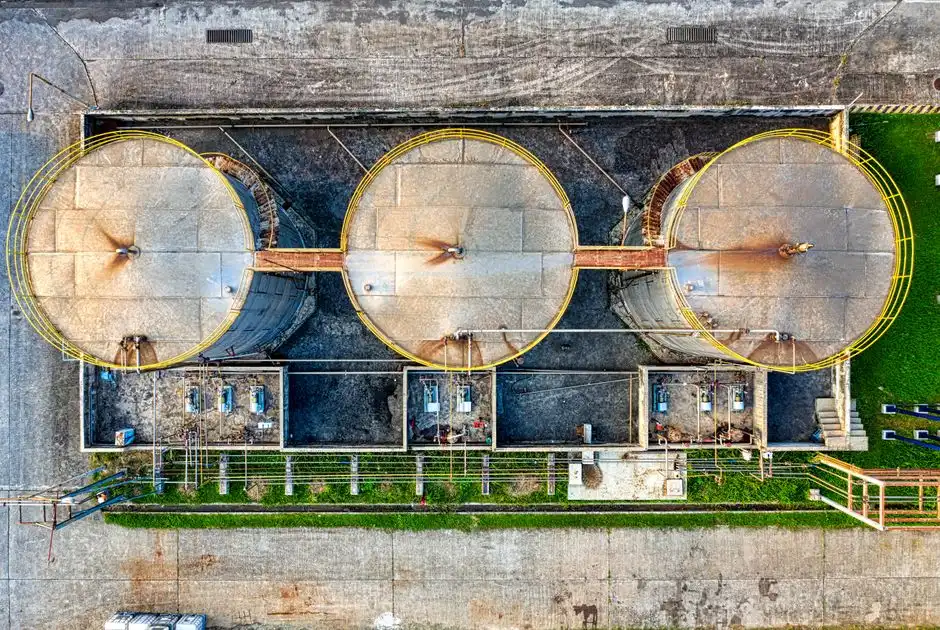
Lab data on synthetic xanthate solutions does not predict plant performance. Run a 4–6 week jar-test and bench-scale Fenton trial on actual thickener overflow: track COD, BOD₅, residual H₂O₂, and sludge volume index (SVI) at three Fe²⁺/H₂O₂ ratios (1:5, 1:7, 1:10) to map the dose-response surface. For EC, pilot at 50–200 L scale with the vendor's plate cell to confirm current density and electrode consumption against claims — anything above 0.20 kg Al/m³ is a red flag. For MBR, run a 1–5 m³/d pilot for 8–12 weeks to characterize membrane fouling rate (L/m²·h·bar) and chemical cleaning frequency under real upstream swings.
Build a commissioning deliverable list before signing the PO: a SCADA tag list covering influent COD, pH, ORP, and H₂O₂ residual; alarm thresholds for influent COD shock at ±20% of the 7-day rolling average; and a 12-month spare-parts schedule covering membranes (one full replacement set per 100 m³/d MBR), electrode plates (10% per year for EC cells), and pump seals. For 2026 builds, wire the skid to a SCADA and remote monitoring for influent COD shock alarms from day one, and budget consumables against the biological-treatment OPEX benchmarks for aeration and media to avoid mid-year surprises.
Frequently Asked Questions
Q1: What COD level can Fenton achieve in mineral processing wastewater? With a Fe²⁺/H₂O₂ molar ratio of 1:5–1:10 at pH 2.5–3.5 and 30 °C, Fenton drives influent COD from 2,500–10,000 mg/L to under 100 mg/L within 60–120 minutes; the Meng 2019 study documented compliance with the national emission limit in the treated effluent.
Q2: Is electrocoagulation or Fenton cheaper for a 100 m³/d sulfide concentrator? For influent COD below 2,000 mg/L, electrocoagulation's lower OPEX (USD 0.40–0.90/m³ versus Fenton's USD 1.20–3.50/m³) yields a 3–5 year payback against Fenton chemical cost. Above 2,500 mg/L, Fenton's higher removal efficiency wins on total cost of compliance because EC would need a polishing MBR anyway.
Q3: Can MBR alone treat raw flotation wastewater? No. Influent must be below ~1,500 mg/L COD to protect membrane aeration and prevent rapid fouling; raw flotation effluent at 5,000+ mg/L COD with residual sulfide will foul an MBR within days.
Q4: What discharge standard applies to my lead-zinc concentrator in 2026? China GB 25466-2018 (revised 2024) sets COD at ≤ 60 mg/L for lead-zinc mining, with stricter sulfate limits in sensitive receiving waters. State-level permits under US EPA 40 CFR 440 and EU IED BAT-AEL run 50–160 mg/L COD depending on jurisdiction.
Q5: How long does a Fenton pilot take to validate full-scale design? Plan 4–6 weeks of bench trials on actual plant wastewater, then 8–12 weeks of on-site pilot at 1–5 m³/d to confirm kinetics, sludge yield, and reagent consumption under diurnal influent swings — a total of 12–18 weeks before the CAPEX commitment is defensible. For a broader view of where the technology is heading into 2027, see the 2026 industrial wastewater treatment market trends.