Wet SO2 scrubber maintenance for lime FGD units centers on daily pH checks (slurry target 5.2–6.0), weekly nozzle inspections, quarterly slurry pump efficiency tests (>78%), and semi-annual structural corrosion assessments. Lime-based wet scrubbing commonly delivers >95% SO2 removal when spray coverage, slurry density, and demister differential pressure stay inside design bands, supporting EPA NSPS compliance and stable reagent use.
Why SO2 Scrubber Downtime Costs Climb Fast
An industrial SO2 scrubber protocol holds lime slurry pH at 5.2–6.0 and inspects spray nozzles weekly. It tests recirculation pump efficiency quarterly above 78%, keeps demister differential pressure under 6 in H2O, and schedules semi-annual NACE lining checks with gypsum purity above 90% CaSO4·2H2O.
Unplanned FGD outages cost industrial facilities $12,000–$45,000 per day in lost production, according to EPA 2021 case data, while corrosion and scaling cause 68% of wet scrubber failures per RTI analysis for EPA manuals. Those failure modes cut SO2 removal, force emergency repairs, and raise exceedance risk before operators regain spray coverage.
Earlier plant summaries often cited average EPA NSPS penalties near $18,500 per violation. For assessments on or after January 8, 2025, 40 CFR Part 19 sets the Clean Air Act judicial civil penalty under 42 U.S.C. 7413(b) as high as $124,426 per day of violation after inflation adjustment. That figure matches the January 8, 2025 Federal Register final rule and the current eCFR Table 1. Proactive preventive work shortens the path from early nozzle fouling to a reportable exceedance, and it keeps recirculation pumps, demisters, and liners inside their design life.
Daily Checks for Continuous SO2 Scrubber Operation
SO2 scrubber systems need daily checks to catch early failure signs before stack SO2 climbs. Technicians should verify recirculation pump pressure in the 35–45 psi band; readings above 50 psi often flag nozzle fouling or pipeline restrictions that shrink spray coverage. Keep scrubber inlet gas temperature below 160°F to limit liner degradation and thermal stress on internals.
Hourly slurry pH testing remains non-negotiable for lime reagent service in the 5.2–6.0 band used by many plant checklists. According to the U.S. EPA Control Cost Manual (7th ed., 2021), limestone wet FGD slurry pH is typically held between 5.0 and 6.0, with CaCO3 stoichiometry about 1.01–1.1 mol per mol SO2. Industry wet-scrubber instrumentation guidance often places lime control higher, near 6.5–7.0 pH, so confirm the band against your reagent and OEM control narrative. Inspect demister pad differential pressure daily; values above 6 in H2O signal plugging and liquid carryover risk.
| Parameter | Optimal Range / Threshold | Action Required (if outside range) |
|---|---|---|
| Recirculation Pump Pressure | 35–45 psi | Investigate >50 psi for nozzle fouling or pipe blockage. |
| Scrubber Inlet Gas Temperature | < 160°F | Identify and rectify upstream process excursion if >160°F. |
| Slurry pH | 5.2–6.0 | Adjust lime reagent feed rate to re-establish optimal pH. |
| Demister Pad Differential Pressure | < 6 in H2O | Schedule demister cleaning if >6 in H2O. |
What Does an Industrial Scrubber Maintenance Inspection Cover?
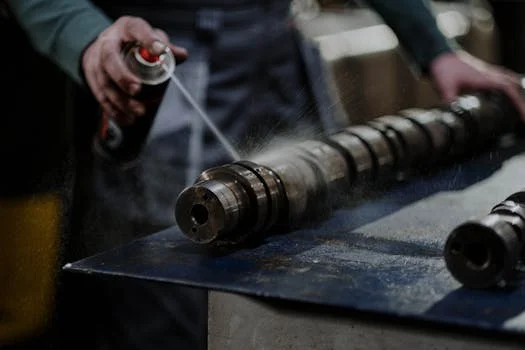
An industrial scrubber maintenance inspection should cover spray nozzles, demister pads, slurry density, and pump seals on a fixed weekly-to-monthly cadence. Weekly nozzle checks matter because limestone slurry with >15% solids raises clog risk by about 3.2 times and breaks spray uniformity. The EPA Control Cost Manual notes typical wet FGD slurry solids near 10–15%; most plants we size for coal FGD hold the lower half of that band when nozzles start plugging early.
Clean demister pads with a 10% citric acid flush every 720 operating hours, or sooner if differential pressure exceeds 6 in H2O. Test slurry density weekly and hold 1.18–1.22 g/cm³; densities above 1.25 g/cm³ raise pump wear and energy use. Lubricate recirculation and slurry pump seals monthly with PTFE-based grease to avoid dry-run seal failures. A PLC-controlled lime dosing system for stable pH management reduces manual feed swings during load changes.
| Task | Frequency | Threshold / Criteria | Action Required |
|---|---|---|---|
| Inspect Spray Nozzles | Weekly | Visual inspection for clogging, uneven spray patterns. | Clean or replace clogged nozzles. |
| Clean Demister Pads | Every 720 operating hours (approx. monthly) | Differential pressure >6 in H2O or visual buildup. | Flush with 10% citric acid solution. |
| Test Slurry Density | Weekly | Ideal: 1.18–1.22 g/cm³ | Adjust reagent/water feed if >1.25 g/cm³ or <1.18 g/cm³. |
| Lubricate Pump Seals | Monthly | Manufacturer's specification for lubrication type. | Apply PTFE-based grease to all seals. |
Quarterly and Semi-Annual Deep Maintenance
Plant managers should reserve shutdown windows for quarterly and semi-annual deep work on SO2 scrubber systems. Measure recirculation and slurry pump efficiency each quarter; efficiency below 78% usually means impeller wear or cavitation damage that cuts flow and wastes power. Inspect tank linings and ductwork semi-annually to NACE Level 2 criteria so blistered coatings get repaired before substrate attack spreads.
Calibrate pH, pressure, and flow sensors quarterly to ±2% accuracy per ISA-5.1 practice used in the original plant checklist, then replace sensors that fail the check. Analyze byproduct gypsum purity semi-annually; >90% CaSO4·2H2O confirms oxidation and reagent use are on target. For units that need tighter reagent control and easier access, an integrated FGD scrubber with lime/limestone reagent system can reduce wear points that drive repeat outages.
| Task | Frequency | Threshold / Criteria | Action Required |
|---|---|---|---|
| Measure Pump Efficiency | Quarterly | >78% efficiency (baseline specific to pump model) | If <78%, inspect impeller, casing; consider rebuild/replacement. |
| Inspect Tank Linings & Ductwork | Semi-annually (NACE Level 2) | No visible cracks, blistering, or substrate exposure. | Repair or reline affected areas to prevent corrosion. |
| Calibrate Sensors (pH, pressure, flow) | Quarterly | ±2% accuracy per ISA-5.1 standards. | Recalibrate or replace sensors failing accuracy checks. |
| Analyze Byproduct Gypsum Purity | Semi-annually | >90% CaSO4·2H2O | Adjust oxidation air or reagent feed if purity is low. |
Troubleshooting Common SO2 Scrubber Failures
Rapid diagnosis keeps SO2 removal from drifting when emissions or vibration alarms trip. High outlet SO2 usually starts with reagent feed rate, pH loop health, and gas-distribution tray alignment. Pump cavitation noise and vibration often mean low sump level; keep the sump above 1.2 m and check suction lines for blockage or air ingress.
Excessive scrubber pressure drop points to scale in venturi or packed-bed zones and needs chemical cleaning or mechanical removal. When gypsum dewatering fails, test hydrocyclone underflow density; values below 1.40 g/cm³ suggest poor separation or worn internals. Pair that check with a maintenance guide for handling FGD byproduct gypsum sludge so dewatering hardware stays matched to slurry quality.
| Symptom | Probable Cause | Remedial Action |
|---|---|---|
| High Outlet SO2 Emissions | Insufficient reagent feed, incorrect pH, poor gas distribution, clogged nozzles. | Increase reagent feed, recalibrate pH sensor, inspect/clean nozzles and trays. |
| Pump Cavitation (noise, vibration) | Low sump level, blocked suction line, air ingress. | Ensure sump level >1.2 m, clear suction line, check for air leaks. |
| Excessive Pressure Drop | Scale buildup in venturi/packed bed, demister plugging. | Initiate chemical cleaning, inspect and clean demister pads. |
| Gypsum Dewatering Failure | Low hydrocyclone underflow density, incorrect settings, worn components. | Test underflow density (>1.40 g/cm³ required), adjust settings, inspect hydrocyclone for wear. |
What Belongs in a Scrubber Operation and Maintenance Manual?
A scrubber operation and maintenance manual should define daily checks, weekly inspections, deep outage scopes, spare-parts minima, and the exact record fields auditors will request. Log every action with timestamp, technician ID, and equipment tag in line with ISO 14001 practice. Retain slurry tests, calibration certificates, and reagent consumption data for at least five years so EPA, EU IED, or third-party audits can reconstruct control history.
A CMMS should schedule work orders, track seal and nozzle inventory, and export compliance packs without spreadsheet archaeology. Clear roles for operators versus maintenance crews reduce the grey zone where demister differential pressure climbs for days before anyone owns the flush. Write acceptance limits next to each instrument tag so shift handovers do not rely on tribal knowledge.
What Drives Coal Plant FGD Operating Cost?
What drives coal FGD O&M cost?
Coal FGD operating cost is driven mainly by reagent overfeed, nozzle and demister cleaning labor, pump rebuilds, liner repairs, and downtime from scale-related trips. Unplanned FGD outages already sit in the $12,000–$45,000 per day band cited above, so missed weekly nozzle work often costs more than the cleaning itself. Reagent waste rises when pH probes drift. Power Engineering field guidance notes a 1.5 pH error can cut acid-gas removal from about 99% to 75% in wet scrubber service.
Selection checklist before you freeze the O&M budget:
- Confirm reagent type (lime vs limestone) and the OEM pH control band.
- Set nozzle inspection and demister flush intervals against solids loading.
- Baseline recirculation pump efficiency and seal lubrication intervals.
- Define gypsum purity and hydrocyclone density acceptance limits.
- Budget liner/NACE inspections every six months on corrosive service.
- Keep calibrated spares for pH, pressure, and flow instruments.
- Size spare spray nozzles for the highest solids campaign you actually run.
Who This Guide Is For
This protocol fits plant engineers, FGD supervisors, and EPC commissioning teams who own wet SO2 scrubbers on coal or high-sulfur industrial boilers. Buyers comparing a packaged Flue Gas Desulfurization (FGD) Scrubber System can use the same thresholds to judge access, dosing automation, and byproduct handling. Look elsewhere if you need dry sorbent injection sizing, seawater scrubbing chemistry, or ship-board exhaust cleaning—those duty cycles use different control bands.
Next step: map your current pH, density, and demister differential trends against the tables above, then request a quote if gaps point to dosing, absorber, or gypsum handling upgrades.
Frequently Asked Questions
What is the recommended pH range for a lime-based SO2 scrubber?
Maintain slurry pH between 5.2 and 6.0 on lime-based checklists used for many wet SO2 absorbers, then verify against the OEM control narrative. EPA limestone FGD guidance typically holds 5.0–6.0; some lime slurry references run nearer 6.5–7.0. Outside the approved band, SO2 absorption falls and scaling risk rises quickly.
How often should scrubber nozzles be cleaned?
Inspect scrubber nozzles weekly for clogging or uneven spray, then clean thoroughly every 720 operating hours or when demister differential pressure exceeds 6 in H2O. High solids above about 15% raise clog frequency, so shorten the interval during dense slurry campaigns. Replace nozzles that no longer restore a uniform pattern after cleaning.
What daily checks keep an SO2 wet scrubber online?
Daily checks should cover recirculation pressure (35–45 psi), inlet gas temperature below 160°F, slurry pH in the approved band, and demister differential pressure under 6 in H2O. Pressure above 50 psi usually means fouling upstream of the spray headers. Catching those four readings early prevents most carryover and SO2 spikes.
When should slurry pumps be rebuilt on an FGD scrubber?
Rebuild or replace recirculation and slurry pumps when measured efficiency falls below 78% at the quarterly test point for that pump model. Cavitation noise with sump level under 1.2 m also warrants immediate suction-side checks before impeller damage spreads. Waiting for a hard failure usually costs more in downtime than a planned rebuild window.
How long should FGD maintenance records be kept for audits?
Keep slurry tests, calibration certificates, reagent use logs, and work-order history for at least five years to support EPA, EU IED, or third-party audits. Each entry needs a timestamp, technician ID, and equipment tag consistent with ISO 14001 practice. A CMMS export beats scattered paper logs when inspectors ask for a continuous control trail.