Package Wastewater Treatment Plant in Estado de México, Mexico: Specs & Costs 2025
A package wastewater treatment plant Mexico order for Estado de México is usually rated 1–200 m³/day on A/O, MBR, or SBR. Reported removal is 90–98% for BOD and TSS. Equipment in the compiled ranges costs $18,000–$120,000, depending on capacity and technology. Parks, housing, and hospitals use these units when the municipal plant is full and the discharge must be tested against NOM-001-SEMARNAT-2021.
Why a package wastewater treatment plant mexico site is specified in Estado de México
Estado de México package plants are factory-built A/O, MBR, or SBR units rated 1–200 m³/day. Buyers use them where the municipal sewer is full or missing. Equipment in the compiled ranges costs $18,000–$120,000. A discharge to a national water body follows NOM-001-SEMARNAT-2021, in force since 11 March 2023, and Table 1 limits apply from 3 April 2023.
With over 16 million inhabitants, Estado de México carries a rising wastewater load from urban growth and industry, including flow toward the Cutzamala and Tula River systems. Central plants in the metro area do not absorb every new park or hospital.
Earlier project notes required biochemical oxygen demand (BOD) below 30 mg/L, total suspended solids (TSS) below 35 mg/L, and fecal coliforms below 1,000 NMP/100mL, and they applied those numbers to public sewers and surface water. According to SEMARNAT in NOM-001-SEMARNAT-2021, section 1, the norm does not apply to a discharge poured straight into a municipal sewer. The duty sits on whoever discharges into a receiving body that belongs to the nation.
Over 40% of wastewater in the metropolitan area remains untreated in the notes behind this page, largely because centralized municipal systems are overloaded or absent. That local gap is not the national coverage figure. According to the Auditoría Superior de la Federación, Cuenta Pública 2024, citing CONAGUA, the share of municipal wastewater treated rose from 67.0% in 2023 to 68.1% in 2024.
The same audit ties that 1.1 point rise to a treated-flow gain of 0.2 m³/s and a collected-flow drop of 3.1 m³/s. Operating municipal plants fell from 2,928 in 2023 to 2,899 in 2024. Installed capacity on those operating plants fell 0.8%, from 196,442.7 L/s to 194,913.8 L/s. On sites we size in this state, a package unit is still the practical fix when the nearest municipal plant has no spare capacity.
Nationally, CONAGUA recorded 19,809 wastewater discharge permits in 2024, authorizing 33,500.9 hm³ a year. Industrial use held 14,178.4 hm³, equal to 42.3% of that volume. The Economy Ministry catalog lists NOM-001-SEMARNAT-2021 as vigente, published in the DOF on 11 March 2022, and the norm cancels NOM-001-SEMARNAT-1996 on entry into force except for the window in Transitorio Quinto.
How Package Wastewater Treatment Plants Work: A/O, MBR, and SBR Compared
Package wastewater treatment plants in Estado de México fold pretreatment, biology, and disinfection into one modular train. The three trains used on these duties are anoxic/aerobic (A/O), membrane bioreactor (MBR), and sequencing batch reactor (SBR). Each one trades footprint, power, and control complexity in a different way.
A/O systems, like the compact underground package wastewater treatment plant sold as the Underground Package Sewage Treatment Plant (WSZ Series), typically reach 90–95% BOD and TSS removal by biological contact oxidation. The prose rating on these units is 1–80 m³/h. The comparison table lists 1–80 m³/day for a single A/O unit, so confirm which basis the datasheet uses before the feed pump is ordered. Most plants we size for housing run at the lower end of that band once night flow is counted.
MBR technology, shown in the high-efficiency MBR package plant for water reuse, pairs activated sludge with 0.1–0.4 μm PVDF membrane filtration. Effluent is often below 5 mg/L for both BOD and TSS. That quality suits irrigation or a cooling tower where reuse cuts purchased water. SBR plants move through fill, react, settle, and decant, which fits a swinging influent, but they need tighter controls than a continuous A/O or MBR train.
Disinfection is the last step when the permit still limits pathogens. Chlorine dioxide (ClO₂) dosing, typically at 2–5 mg/L with a contact time of 30 minutes, is the figure used here for a 99.9% pathogen kill. The source note aligns that dose with Mexican practice and World Health Organization (WHO) guidance for discharge or reuse. On plants we commission, a short contact tank is the usual miss, not the dose pump.
| Technology | BOD/TSS Removal | Effluent Quality | Space Requirement | Complexity |
|---|---|---|---|---|
| A/O (Anoxic/Aerobic) | 90–95% | Good (NOM-001 compliant) | Moderate | Moderate |
| MBR (Membrane Bioreactor) | 95–98% | Excellent (suitable for reuse) | Low (60% less than A/O) | Higher |
| SBR (Sequencing Batch Reactor) | 90–95% | Good (NOM-001 compliant) | Moderate | Higher (for variable flows) |
Key Technical Specifications for Package Plants in Mexican Industrial Applications
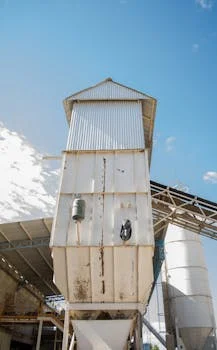
Selection of a package plant for Estado de México industry turns on flow, footprint, power, and the shell material. A nameplate that ignores the night trough will overstate both power and sludge.
Standard prefabricated units in this guide cover 1–200 m³/day, and a larger duty is met by stacking modules. An MBR system at 50 m³/day may need only 20 m². A conventional activated-sludge plant for the same 50 m³/day can demand 50 m². That gap is why an MBR is the usual pick on a tight industrial lot inside an existing fence.
Power follows the process, not the brochure adjective. A/O systems generally draw 0.4–0.8 kWh/m³. MBR systems draw 0.8–1.5 kWh/m³ because of membrane air and permeate pumping. That spread dominates a ten-year power bill more than the day-one equipment price.
Shell material decides service life for an underground sewage plant. Below-grade units in this guide use fiberglass-reinforced polyethylene (FRP) or carbon steel with an anti-corrosion coat. For MBR duty, the MBR membrane bioreactor module (DF series) uses PVDF membranes chosen for flux stability. Most buried tanks we open fail at a coating holiday, not in the biological calculation.
| Specification | A/O System (WSZ Series) | MBR System (DF Series) |
|---|---|---|
| Standard Flow Capacity | 1–80 m³/day (single unit) | 1–200 m³/day (single unit) |
| Footprint (for 50 m³/day) | ~35 m² | ~20 m² (60% less than conventional) |
| Power Consumption | 0.4–0.8 kWh/m³ | 0.8–1.5 kWh/m³ |
| Materials (Underground) | FRP, Carbon Steel (anti-corrosion) | FRP, Stainless Steel, Carbon Steel (anti-corrosion) |
| Typical BOD/TSS Effluent | <30 mg/L / <35 mg/L | <5 mg/L / <5 mg/L |
Cost Breakdown: CAPEX, OPEX, and ROI in Estado de México
Capital cost for a package plant in Estado de México splits by process and by the flow band printed on the nameplate. The equipment line is only the first cheque.
Capital expenditure for A/O plants at 1–50 m³/day falls between $18,000 and $45,000. MBR systems at 50–200 m³/day, with integrated ClO₂ disinfection, run from $60,000 to $120,000. Those figures generally include the prefabricated unit, pumps, blowers, and disinfection equipment. A package wastewater treatment plant Mexico budget that stops at this equipment line will miss membrane replacement and power.
Operational cost is the number that survives the purchase meeting. A/O OPEX is typically $1.20–$2.50/m³ because energy and routine care stay modest. MBR OPEX is $2.80–$4.20/m³, driven by scour air and by membrane replacement every 5–7 years at ~$8,000 per standard module. Analyzing sludge dewatering system ROI covers the solids side, while Wastewater Treatment Plant Cost in Mexico 2026: Engineering Specs, Loc sets the wider Mexico cost frame.
Industrial return in Estado de México is typically 2.5–4 years. The drivers are avoided sewer surcharges of $0.35–$0.60/m³ on non-compliant discharge and the value of reuse in cooling or irrigation. A fully assembled unit usually installs in 2–4 weeks. Civil works, covering excavation, the foundation, and backfill, add $5,000–$15,000 when soil or access is difficult. Plants we track reach the short end of that payback only when reuse actually replaces purchased water.
| Cost Category | A/O System (1-50 m³/day) | MBR System (50-200 m³/day) |
|---|---|---|
| CAPEX (Equipment) | $18,000–$45,000 | $60,000–$120,000 |
| OPEX (per m³) | $1.20–$2.50 | $2.80–$4.20 |
| Membrane Replacement | N/A | ~$8,000/unit (every 5-7 years) |
| Installation (Civil Works) | $5,000–$15,000 | $5,000–$15,000 |
| Typical ROI | 2.5–4 years | 2.5–4 years (with reuse benefits) |
mbr package plant cost mexico industrial
An industrial MBR package in this Mexico cost guide is $60,000–$120,000 for 50–200 m³/day, including the unit, pumps, blowers, and ClO₂ disinfection. OPEX of $2.80–$4.20/m³, plus a membrane set near ~$8,000 every 5–7 years, belongs on the same sheet as that CAPEX. A fully installed 50 m³/day total of $35,000–$75,000 can land in either technology once civil works of $5,000–$15,000 are added. Quotes we build for a one-shift factory sit in the upper half of the MBR band once the reuse pumps are on the order.
prefab sewage treatment plant nom-001 compliant
A prefabricated plant meets NOM-001 only when effluent matches the Table 1 column for the real receiving body. For rivers, streams, canals, and drains, the monthly limits are 35°C, 15 mg/L grease and oils, 60 mg/L TSS, and 150 mg/L COD. Total nitrogen is 25 mg/L monthly and total phosphorus is 15 mg/L monthly. Escherichia coli is 250 NMP/100 mL monthly, and pH is 6–9.
Daily E. coli on that river column is 500 NMP/100 mL, and the instantaneous value is 600 NMP/100 mL. Daily and instantaneous TSS limits are 72 mg/L and 84 mg/L. Daily and instantaneous COD limits are 180 mg/L and 210 mg/L. Conductivity at or above 3,500 µS/cm switches the pathogen test to fecal enterococci, at 250 NMP/100 mL monthly.
Chlorides at or above 1,000 mg/L switch COD to total organic carbon, at 38 mg/L monthly on the river column. Transitorio Segundo put Table 1 and Table 2, plus the sampling-port appendix, into force on 3 April 2023. Earlier guidance used BOD below 30 mg/L, TSS below 35 mg/L, and fecal coliforms below 1,000 NMP/100mL. Those three numbers are not the 2021 river test, which uses COD rather than BOD and E. coli rather than fecal coliforms.
An A/O effluent listed below 30 mg/L BOD and below 35 mg/L TSS can still sit under the river TSS limit of 60 mg/L monthly, but COD has to be measured on a sample. A reservoir, lake, or lagoon is tighter, at 20 mg/L TSS and 100 mg/L COD as monthly averages. Soil used to irrigate green areas is set at 30 mg/L TSS and 60 mg/L COD monthly. Samples we review miss the COD limit more often than they miss TSS.
True color limits in Table 1 are 7.0 m⁻¹ at 436 nm, 5.0 m⁻¹ at 525 nm, and 3.0 m⁻¹ at 620 nm. Transitorio Tercero delays true color and acute toxicity until the fourth year after publication on 11 March 2022. Acute toxicity, once that delay ends, is 2 UT at 15 minutes of exposure. A 2026 permit file should ask CONAGUA whether those two parameters are already being enforced on that outfall.
Compliance and Installation: Meeting NOM-001 and Local Permitting in Estado de México
Every discharge that reaches a national receiving body in Estado de México has to meet NOM-001-SEMARNAT-2021. Industrial effluent still needs pretreatment when pH sits outside 5-9 or oil and grease exceed 100 mg/L, before it enters the package plant. Local permitting through a municipal water authority, the source example being Sistema de Aguas de la Ciudad de México (SACM), or through the state environmental agency, can take 4–8 weeks. SACM is the Mexico City utility in that example, so an Estado de México site should confirm its own operator instead of assuming the Mexico City desk.
CONAGUA is the authority that grants a discharge permit into a national receiving body, which is separate from the municipal sewer connection. The norm’s appendix also requires a sampling port on that national outfall. A discharge at or below 30 L/s, stated as 2,600 m³/day, needs a port at least 2.00 m wide with an area of at least 5.50 m². A 200 m³/day package plant is far under that flow, so the small-user port is the one that applies. Sites we hand over often miss the 25 m maximum between the sample point and the vehicle bay.
Underground installation leaves the grade free for landscaping, parking, or a light yard. The shell needs a minimum 0.5m clearance all around for maintenance access, plus a drainage layer so hydrostatic pressure does not lift the tank. Remote monitoring (SCADA) is now common and can send flow and effluent values to the environmental authority. Most buried installs we review lose a week because the drainage layer was deleted to save excavation.
containerized wastewater treatment system estado de mexico
A containerized system in Estado de México is the above-grade form of the same 1–200 m³/day prefabricated train, picked when excavation is a poor bet. An MBR at 50 m³/day still targets about 20 m², against about 35 m² for the A/O column in the specification table. Installation of a fully assembled unit is still typically 2–4 weeks after the slab and the power feed are ready. Civil works of $5,000–$15,000 remain if the yard needs a foundation, a fence, or the sampling port. On yards we set in this state, the container wins when the bore hits rock or a high water table.
underground frp package wastewater plant mexico
An underground FRP package plant in Mexico uses the fiberglass-reinforced polyethylene or coated carbon-steel shell, with 0.5m clearance and a drainage layer. The specification table lists FRP and anti-corrosion carbon steel for the A/O underground column. The MBR underground column lists FRP, stainless steel, or coated carbon steel. Keep both the clearance and the drainage layer even when the architect wants the lid flush with the paving. A tank we bury without that layer comes back as a float or a coating stain, not as a biology failure.
Who This Plant Fits in Estado de México
A package plant in this guide fits an Estado de México industrial park, housing complex, or hospital at 1–200 m³/day that cannot get spare capacity from the municipal plant. The same unit fits a reuse loop for cooling or irrigation when the MBR column, below 5 mg/L BOD and TSS, is the quality the user actually needs.
Look elsewhere if the only outfall is a municipal sewer and the operator has already written discharge conditions, because NOM-001-SEMARNAT-2021 does not govern that tie-in. Also look elsewhere once the duty sits well above a single module of 200 m³/day and the site needs a civil plant rather than stacked prefabricated units. Teams searching wastewater treatment plant builders mexico should still score the train against measured load, the receiving-body column, and a ten-year OPEX, not against a brochure removal claim.
What to Confirm Before Ordering
- Name the receiving body on the permit: river, reservoir, soil, or municipal sewer.
- If the body is national, design to the Table 1 column, not to BOD below 30 mg/L.
- Measure flow through nights and weekends, not only the nameplate peak of 1–200 m³/day.
- Pretreat when pH is outside 5-9 or oil and grease exceed 100 mg/L.
- Compare footprint at 50 m³/day: about 20 m² for MBR and about 35 m² for A/O.
- Put OPEX beside CAPEX: $1.20–$2.50/m³ for A/O and $2.80–$4.20/m³ for MBR.
- Allow 4–8 weeks for the local file, plus a CONAGUA discharge permit if the outfall is a national water body.
Send the measured daily flow, the receiving-body type, and a recent influent sample when you request a sized quotation for this Estado de México duty.
Frequently Asked Questions
How much does a 50 m³/day plant cost in Mexico?
A 50 m³/day plant typically costs $35,000–$75,000 fully installed, depending on A/O versus MBR and on site conditions. Equipment-only bands here are $18,000–$45,000 for A/O at 1–50 m³/day and $60,000–$120,000 for MBR at 50–200 m³/day. Civil works add $5,000–$15,000, and any local sewer fee sits outside those sums. Most plants we price for one factory land near the middle of the installed band once the tank, blower, and disinfection skid share one order.
Can these plants handle industrial wastewater in factories?
Yes, package plants treat factory wastewater in Mexico when oil and grease above 100 mg/L, and pH outside 5-9, are corrected before the biological tank. Dissolved-air flotation or a neutralization tank protects the biomass. An A/O train in this guide still targets 90–95% BOD and TSS removal, and an MBR still targets effluent below 5 mg/L BOD and TSS. On factory jobs we see, the pretreatment skid decides whether the plant stays inside its design load.
What maintenance do package plants require?
Maintenance for an underground sewage plant is a monthly visual inspection, quarterly sludge removal, annual disinfection-system calibration, and a filter or backwash check twice a year. MBR duty adds membrane replacement about every 5–7 years at ~$8,000 per standard unit. A/O power stays near 0.4–0.8 kWh/m³, while MBR power stays near 0.8–1.5 kWh/m³ because of air scour and permeate pumping. Most plants we visit fail on a skipped sludge pull, not on the blower nameplate.
What is a package wastewater treatment plant used for in Estado de México?
A package wastewater treatment plant is a factory-assembled modular system that treats sewage or industrial wastewater with biological, physical, and chemical steps on a compact footprint. Units in this guide cover 1–200 m³/day and often install in 2–4 weeks once the slab is ready. They serve parks, housing, and hospitals where a central plant is overloaded or absent. They do not replace a CONAGUA discharge permit when the outfall reaches a national water body.