Saint Petersburg Industrial Wastewater: Regulatory Framework and 2026 Permit Pathway
Industrial wastewater treatment in Saint Petersburg operates under a two-tier Russian Federation legal framework that every EPC contractor and plant environmental manager must map before equipment selection. The umbrella statute is Federal Law No. 7-FZ "On Environmental Protection" (10 January 2002, last amended 2024), administered by Rosprirodnadzor (the Federal Service for Supervision of Natural Resources Use and Ecology). The substance-specific ceiling is Order of the Ministry of Natural Resources No. 83 (registered with the Ministry of Justice 2011, amended 2020), which fixes maximum permissible concentrations (MPC) for discharge into the Neva River basin — a Category 1 fishery water body. The 2026 limits a design engineer must hit: suspended solids ≤10 mg/L, BOD₅ 3–6 mg/L, oils 0.05 mg/L, sulfates 100 mg/L, chlorides 300 mg/L, iron 0.1 mg/L, copper 0.001 mg/L, and zinc 0.01 mg/L.
Because the Neva is fishery-classified, limits are roughly 20–40% tighter than for municipal-only discharge. A standard permit submission comprises an environmental impact assessment (OVOS), a draft maximum discharge standard (PDV) calculation referencing Order 83, a sanitary-protection-zone (SPZ) justification under SanPiN 2.1.3684-21, and equipment layout drawings compliant with GOST 12.3.006-75 for worker safety. From a customs and commissioning standpoint, 2026 import requirements are unambiguous: any skid entering through the Bronka or Marine Vyshny Volochyok port routes must carry a CE mark, EAC (Eurasian Conformity) declaration registered with Rosakkreditasiya, and Russian-language O&M documentation before customs will release it (per EAEU Technical Regulation TR CU 004/2011, reaffirmed 2025-09).
| Regulation / Standard | Scope | Key Parameter (2026) |
|---|---|---|
| Federal Law 7-FZ (2002, amended 2024) | Umbrella environmental statute | Permitting authority: Rosprirodnadzor |
| Order of the Ministry of Natural Resources No. 83 (2011, amend. 2020) | Substance-specific MPC for Neva basin | Oils 0.05 mg/L; Cu 0.001 mg/L; Zn 0.01 mg/L |
| GOST 12.3.006-75 | Worker safety in WWTP operations | Walkway, lift, and rail spacing |
| SanPiN 2.1.3684-21 | Hygiene and SPZ rules | SPZ ≥50 m for ≤200 m³/day biological plants |
| TR CU 004/2011 (EAC reaff. 2025-09) | Customs clearance for skids | EAC declaration + Russian O&M required |
Influent Characterization by Dominant Saint Petersburg Industry
The Saint Petersburg industrial cluster produces four characteristic influent profiles, and matching the right train starts with knowing which profile a facility actually generates. Refinery and petrochemical plants along the Kirishi-line feedstock corridor typically deliver COD 800–3,500 mg/L, total petroleum hydrocarbons (TPH) 50–500 mg/L, phenols 5–20 mg/L, and sulfides 2–10 mg/L — a stream that demands DAF pre-treatment to strip oils and sulfides before any biological polishing can survive. The historical pulp and paper cluster generates COD 1,500–6,000 mg/L, TSS 500–2,500 mg/L, color 1,500–4,000 Pt-Co units, and a high lignosulfonate fraction that resists biodegradation unless physico-chemical coagulation/DAF runs ahead of an MBR or activated-sludge stage.
Metallurgy and machine-building sites such as the Izhorsky Zavody group discharge heavy-metal-laden streams: Cu, Zn, Ni, and Cr each in the 0.5–50 mg/L range, oils 50–300 mg/L, pH 2–4, and elevated TDS. The standard recipe is hydroxide precipitation plus DAF for oil and TSS removal, then pH correction followed by selective ion exchange or RO if internal reuse is the target. Food and dairy processors (Piskaryovsky and similar) push COD 2,000–8,000 mg/L, BOD₅ 1,200–4,500 mg/L, FOG 200–800 mg/L, and total nitrogen 50–200 mg/L — a DAF-for-FOG plus Anox/Oxic MBR combination that comfortably meets Order 83 ammonia targets. Municipal-industrial hybrids from the Kurortny and Primorsky districts are weaker (COD 250–600 mg/L, BOD₅ 150–350 mg/L, ammonia 20–45 mg/L) and can be handled by a packaged MBR or SBR.
| Industry | COD (mg/L) | TSS (mg/L) | Key Pollutant | Treatment Hint |
|---|---|---|---|---|
| Petrochemical / refinery | 800–3,500 | 100–600 | TPH 50–500; phenols 5–20 | DAF → biological |
| Pulp & paper | 1,500–6,000 | 500–2,500 | Color 1,500–4,000 Pt-Co | Coagulation/DAF → MBR |
| Metallurgy / machine-building | 500–2,000 | 200–1,000 | Cu/Zn/Ni/Cr 0.5–50 each | Precipitation + DAF → IX/RO |
| Food / dairy | 2,000–8,000 | 300–1,200 | FOG 200–800; TN 50–200 | DAF for FOG → Anox/Oxic MBR |
| Municipal-industrial hybrid | 250–600 | 100–300 | NH₃-N 20–45 | Packaged MBR or SBR |
Three Treatment Train Options Benchmarked for 2026 Saint Petersburg Conditions
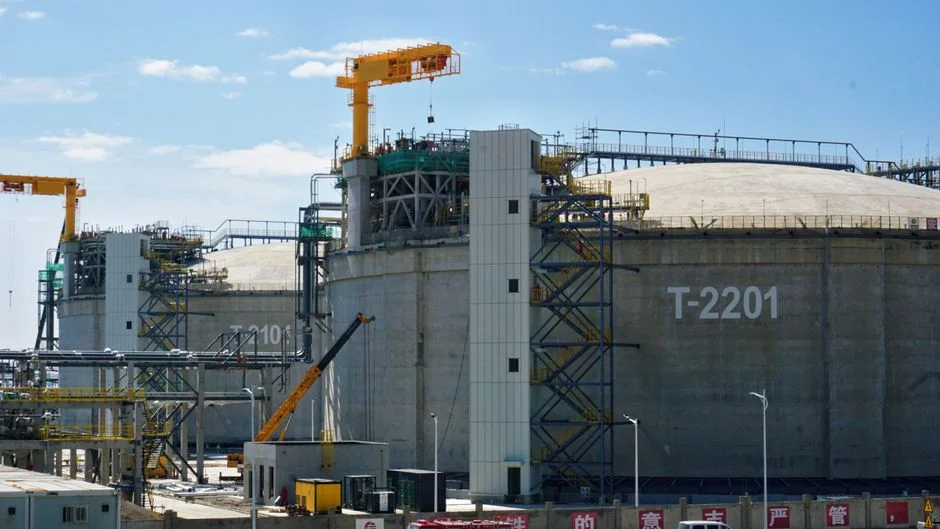
Selecting a train is a function of three variables: influent profile, discharge target, and the reuse requirement. The three configurations below cover roughly 90% of 2026 enquiries from the Saint Petersburg corridor. Train 1 (DAF-led physico-chemical): a DAF system handling 4–50 m³/h achieves 92–97% TSS and 85–95% FOG removal, followed by an automatic chemical dosing skid, a lamella clarifier operating at 20–40 m/h surface loading, a sand/multimedia filter, and a chlorine dioxide generator for final disinfection. This train fits refinery, metalworking, and food sites with high TSS/FOG and constrained footprints.
Train 2 (MBR-led biological): a GX-series rotary bar screen protects the downstream equalization basin, which feeds an anoxic/aerobic MBR using DF-series flat-sheet MBR modules (0.1 μm pore, 32–135 m³/day per cassette depending on model), then a UV or ClO₂ polish. The train achieves <10 mg/L TSS, <5 mg/L BOD₅, and NH₃-N <1 mg/L, comfortably inside Order 83 limits. Train 3 (Hybrid DAF+MBR+RO for reuse): the full Train 1 pretreatment followed by Train 2 MBR polishing, then an industrial RO system at 95% recovery with EDI for high-purity polishing. This is the configuration for semiconductor, pharmaceutical, and power-plant cooling-tower make-up where Neva raw water fees have risen roughly 12% in 2025 (per Saint Petersburg Vodokanal tariff filing, 2025-08).
Energy benchmarks for 2026 are 0.3–0.6 kWh/m³ for the DAF train, 0.8–1.4 kWh/m³ for the MBR train, and 1.6–2.4 kWh/m³ for the full hybrid. The winterization constraint is non-negotiable: all biological stages require enclosure heating to hold 10–15°C reactor temperature at ambient drops of −15 to −25°C; DAF and chemical stages need only heat-traced piping and insulated tanks, which materially changes equipment selection. For a closer look at design details, the DAF design guide for high-COD industrial wastewater covers similar high-load streams, and the MBR operating cost 2026 OPEX breakdown extends the MBR operating picture.
| Parameter | Train 1 DAF-led | Train 2 MBR-led | Train 3 Hybrid + RO |
|---|---|---|---|
| Best-fit industries | Refinery, metalworking, food | Food, dairy, pulp/paper, municipal-industrial | Semiconductor, pharma, power cooling |
| Effluent TSS / BOD₅ | ≤20 / ≤15 mg/L | <10 / <5 mg/L | <1 / <2 mg/L (RO permeate) |
| Footprint (200 m³/day) | ~80 m² | ~140 m² | ~220 m² |
| Energy (kWh/m³) | 0.3–0.6 | 0.8–1.4 | 1.6–2.4 |
| Reuse viability | None | Limited (irrigation, CIP) | Full (boiler feed, cooling make-up) |
2026 CAPEX and OPEX Benchmarks for a 50–500 m³/day Plant
The 2026 cost picture is best expressed as a band, not a point estimate, because vendor selection and EAC certification add measurable variance. Skid-only CAPEX (FOB Shanghai, excluding civil works) for a 50–500 m³/day plant: DAF train $45,000–$140,000, MBR train $95,000–$310,000, hybrid DAF+MBR+RO $180,000–$620,000. OPEX for the same envelope: DAF $0.18–$0.42 per m³ (polymer and sludge hauling dominate), MBR $0.35–$0.75 per m³ (energy plus membrane cleaning chemicals), hybrid $0.65–$1.10 per m³ (membrane replacement at 4–6 year cycle, RO high-pressure pump energy, concentrate disposal to the city's industrial sewer at Saint Petersburg Vodokanal 2025 rates).
Two cost lines are easy to forget when benchmarking vendor quotations. First, civil works and an enclosure for a 200 m³/day plant in Saint Petersburg's climate add $120,000–$260,000 versus a Central Russia baseline — the delta is almost entirely foundation depth (1.8–2.4 m frost line) and insulated biological-tank housing. Second, import duty plus EAC certification add 8–14% to landed cost versus CIF Saint Petersburg port. Sludge dewatering downstream of any of the three trains typically adds $25,000–$95,000 for a 5–30 m² plate-and-frame filter press with a polymer dosing skid, which reduces hauled-sludge volume by roughly 75–80%.
| Cost Line (2026, 50–500 m³/day) | DAF train | MBR train | Hybrid DAF+MBR+RO |
|---|---|---|---|
| Skid CAPEX (FOB China) | $45,000–$140,000 | $95,000–$310,000 | $180,000–$620,000 |
| OPEX ($/m³) | 0.18–0.42 | 0.35–0.75 | 0.65–1.10 |
| Civil + enclosure adder (200 m³/day) | $120,000–$200,000 | $160,000–$230,000 | $200,000–$260,000 |
| Duty + EAC landed-cost adder | 8–14% | 8–14% | 8–14% |
Equipment Selection Checklist for Saint Petersburg-Climate Operations
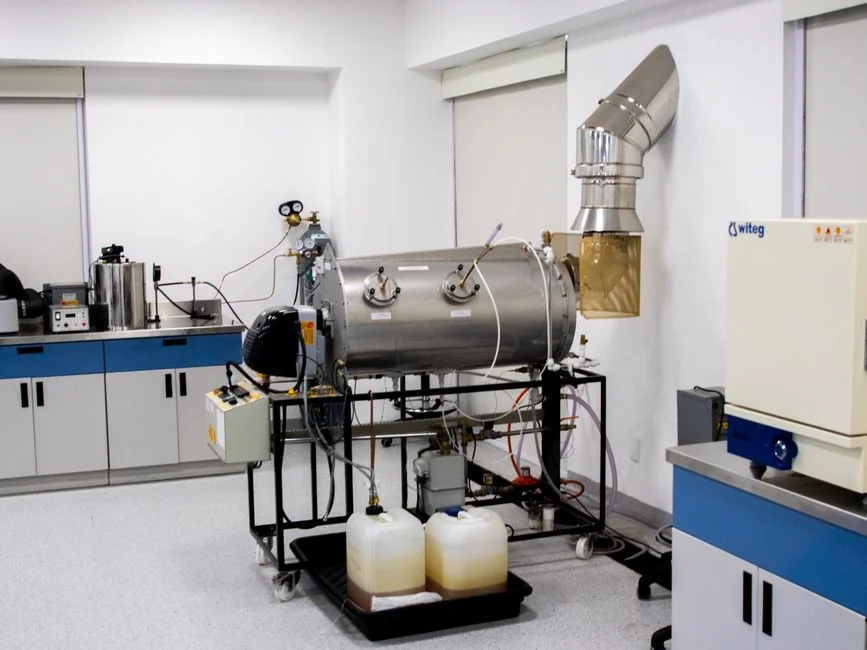
Five specifications separate a defensible Russian Federation bid from a winter-failure waiting to happen. First, insist on PVDF membranes rated to −10°C minimum with stainless frames; ABS frames crack below −20°C and have been the single most common cold-season failure mode in 2024–2025 field reports. Second, specify enclosure heating sized to hold biological basins at 12°C minimum when ambient falls to −25°C, with redundant glycol loops so a single heater failure does not kill the biomass. Third, require EAC certification registered with Rosakkreditasiya, Russian-language O&M manuals, and GOST-compliant electrical panels rated IP54 minimum for switchgear exposed to corridor humidity.
Fourth, demand a factory acceptance test (FAT) video with cold-room performance data when winter commissioning is planned — this is the only way to verify that blower and pump capacities hold at viscosity-corrected winter conditions. Fifth, confirm the supplier can ship spares from a European or Shanghai warehouse with a 5–10 day lead time to St. Petersburg; lead times above 21 days in winter have caused more than one plant to violate Order 83 because of a single missing membrane cassette. For a complementary European climate benchmark, the Hamburg 2026 industrial wastewater treatment guide addresses a comparable cold-port context.
Frequently Asked Questions
What permit documents are required for a 50–500 m³/day industrial discharge in Saint Petersburg in 2026? The standard package is an OVOS environmental impact assessment, a draft PDV maximum discharge standard referencing Order 83 substance-specific limits, an SPZ justification under SanPiN 2.1.3684-21, and GOST 12.3.006-75-compliant equipment drawings — submitted to Rosprirodnadzor with a typical review time of 60–90 days. The 2026 resource recovery trends in industrial wastewater article outlines which auxiliary permits apply to reuse schemes.
Is EAC certification mandatory for imported wastewater skids in 2026? Yes. Per TR CU 004/2011, reaffirmed 2025-09, any skid entering the EAEU must carry an EAC declaration and Russian-language O&M documentation before customs releases it, regardless of CE marking. Plants using skids without EAC face detention at the Bronka container terminal and a 8–14% landed-cost penalty even after release.
Can a DAF+MBR+RO hybrid train actually meet the Neva basin's Order 83 limits for a refinery? Yes — Train 3 above typically achieves <1 mg/L TSS, <2 mg/L BOD₅, non-detect oils, and 95–99% heavy-metal rejection at 95% RO recovery, well inside Order 83 ceilings. The constraint is winterization: biological stages need 10–15°C reactor temperature to keep nitrification above 1 mg/L NH₃-N, which the Bursa 2026 industrial wastewater treatment guide addresses in a similar climate.