An MBR system for distillery wastewater treatment always pairs anaerobic digestion with membrane polishing: the UASB stage cuts 80,000–100,000 mg/L raw COD by 90–98%, and the MBR finishes below 250 mg/L for discharge or 50 mg/L for reuse.
Why an MBR System for Distillery Wastewater Treatment Needs Anaerobic Pretreatment
No standalone MBR treats raw spent wash. Distillery stillage runs 80,000–100,000 mg/L COD — 10–20× the 2,000–8,000 mg/L feed ceiling of commercial MBR tanks — so an anaerobic UASB or ABR stage must cut COD by 90–98% first. The MBR then polishes 1,500–2,500 mg/L anaerobic effluent to below 250 mg/L.
Raw distillery spent wash carries 80,000–100,000 mg/L COD and BOD up to 50,000 mg/L, a concentration roughly 200× higher than domestic sewage and 10–20× beyond the operating ceiling of any commercial MBR (ResearchGate bioremediation overview, 2024; OALib anaerobic study). MBR tanks tolerate influent COD in the 2,000–8,000 mg/L range before mixed-liquor fouling, oxygen transfer, and sludge yield collapse. Loading raw stillage directly into an MBR would require diluting with 10–15 parts of clean water per part of waste — an approach no plant manager will sign off on.
The stream is also voluminous. According to Reis and Hu in Frontiers in Energy Research (2017), vinasse is produced at volumes as high as 20-fold of ethanol output, and peer-reviewed characterizations report COD spanning 32,000–109,700 mg/L across feedstocks. Volume plus concentration is what pushes distilleries toward high-rate anaerobic biology before any membrane.
The problem is not only concentration. Molasses spent wash runs hot at 70–90°C as it leaves the distillation column, sits at pH 3.5–4.5, and carries melanoidin color compounds (high-molecular-weight Maillard reaction products) that resist biological breakdown and stain the membrane surface. Sulfate concentrations of 2,000–4,000 mg/L and potassium above 3,000 mg/L add scaling risk on top of organic fouling. Grain-based distilleries see lower temperatures and slightly higher BOD/COD ratios (0.45–0.60) but still need biological reduction before any membrane step.
Process data from a Bulgarian pilot published in OALib confirms the architecture: 98% COD removal in an anaerobic baffled reactor at OLR 4.28 kg COD/m³·d and 20-day HRT. The same pilot produced 0.39 m³ CH₄ per kg COD removed. That single number — 98% reduction upstream — is the reason the dominant 2026 distillery process train is UASB (or ABR) followed by an MBR polishing step, never MBR alone.
Peer-reviewed work corroborates the degradability: Reis and Hu report that pretreated vinasse reached anaerobic degradability of around 80% of the total COD (Frontiers in Energy Research, 2017). The MBR's job is to take anaerobic effluent from roughly 1,500–2,500 mg/L COD down to below 250 mg/L for discharge or below 50 mg/L for reuse.
Distillery Wastewater Characterization: The Numbers Behind the Process
Distillery influent tables drive every downstream decision, so the engineer needs defensible numbers before specifying equipment. The values below are typical operating ranges for molasses and grain distilleries, with the OALib 85,520 mgO₂/L COD datapoint used as a real high-strength reference rather than a textbook rounded number.
| Parameter | Molasses spent wash | Grain spent wash | Condensate (column) |
|---|---|---|---|
| COD (mg/L) | 80,000–110,000 | 40,000–70,000 | 1,000–3,000 |
| BOD (mg/L) | 40,000–55,000 | 25,000–40,000 | 500–1,500 |
| BOD/COD ratio | 0.40–0.50 | 0.45–0.60 | 0.45–0.55 |
| pH | 3.5–4.5 | 4.0–5.5 | 4.0–6.0 |
| TSS (mg/L) | 8,000–15,000 | 5,000–10,000 | 200–600 |
| Total nitrogen (mg/L) | 800–1,500 | 1,200–2,500 | 20–80 |
| Sulfate (mg/L) | 2,000–4,000 | 200–800 | 50–200 |
| Temperature (°C) | 70–90 | 55–75 | 60–85 |
| Color (Pt-Co) | 50,000–150,000 | 20,000–60,000 | 500–2,000 |
Condensate streams — the aqueous distillate recovered from the evaporation column — sit in a different category. With COD around 1,000–3,000 mg/L, they can sometimes feed an MBR directly after cooling. Several Indian distilleries route condensate to a dedicated MBR while sending the heavier bottoms to the full anaerobic + MBR train. Membrane pore ratings for the MBR stage are typically 0.1–0.4 μm. They produce an effluent with TSS below 1 mg/L and turbidity below 1 NTU — clean enough for RO polishing or reuse as cooling tower makeup (per MBR product specifications, 2026).
For a packaged skid that integrates equalization, aerobic, and membrane stages, HydropureWater's integrated MBR system is rated for the 10–2,000 m³/day range typical of distillery side-streams.
How the MBR Process Train Works for Distillery Spent Wash
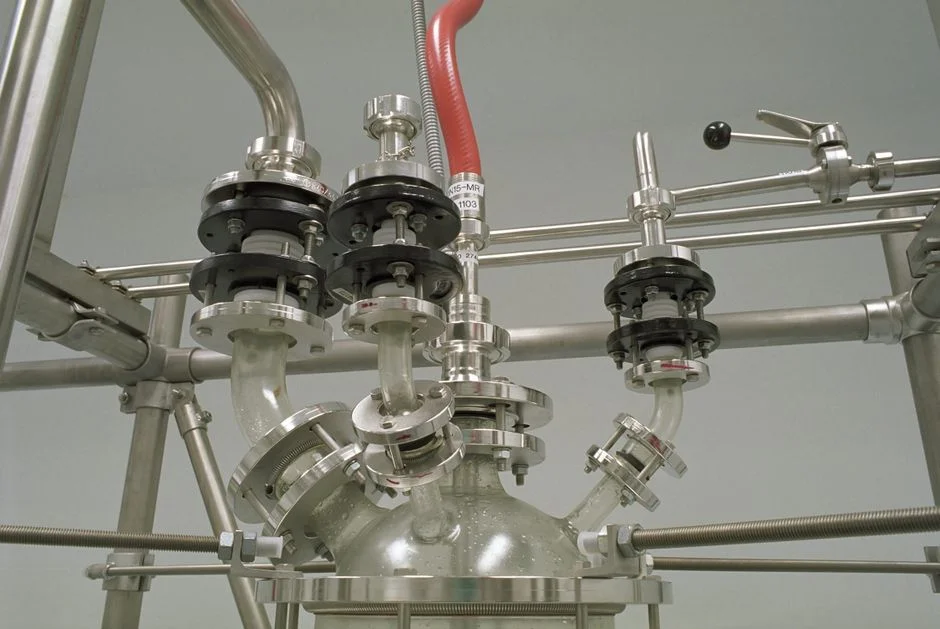
A distillery treatment train is a five-stage sequence. Skipping a stage shows up in the operating data within weeks — usually as rising transmembrane pressure and falling permeate flux.
Stage 1 — Cooling and heat recovery. Spent wash leaves the distillation column at 70–90°C. A plate heat exchanger drops it below 40°C before the anaerobic reactor, and the recovered heat can pre-heat boiler feedwater, cutting plant steam demand by 3–6% in energy-integrated designs. Cooling below 40°C is critical: methanogenic archaea lose activity sharply above 45°C, and most UASB designs in India and Southeast Asia are mesophilic.
Stage 2 — pH correction and nutrient balancing. Spent wash is dosed with NaOH or lime to pH 6.8–7.2. Urea or ammonia and phosphoric acid are added to bring the COD:N:P ratio toward 300:5:1. Anaerobic reactors tolerate N and P imbalance better than aerobic ones, but the downstream aerobic MBR tank will not.
Anaerobic MBR Polishing for Molasses Spent Wash
Anaerobic MBR polishing for molasses spent wash combines a UASB or ABR stage at 8–15 kg COD/m³·d with a membrane tank running 8,000–12,000 mg/L MLSS.
Stage 3 — UASB or anaerobic baffled reactor. The OALib pilot ran an ABR at 4.28 kg COD/m³·d OLR, 20-day HRT, achieving 98% COD reduction and 0.39 m³ CH₄/kg COD removed. Full-scale UASB reactors at Indian molasses distilleries run at 8–15 kg COD/m³·d with 5–10-day HRT, recovering 8–12 m³ of biogas per m³ of wastewater. The biogas offsets 25–40% of total plant OPEX in well-operated facilities. According to Wikipedia's UASB overview, expanded-granular variants (EGSB) sustain loading rates of 15–30 kg COD/m³·day, giving designers headroom on stronger feeds. Hot vinasse itself is a recognized biogas substrate — Wikipedia notes thermophilic digestion of pure, hot vinasse as a methane source, which suits energy-integrated distilleries.
Stage 4 — Anoxic/aerobic polishing and MBR. Anaerobic effluent at 1,500–2,500 mg/L COD flows into a small anoxic tank (denitrification of any residual nitrate) then into the aerated MBR tank fitted with PVDF flat sheet or hollow fiber membranes. Mixed liquor suspended solids run at 8,000–12,000 mg/L, roughly 3× the concentration in conventional activated sludge. The submerged membranes sit in the aerated tank with coarse-bubble scour air beneath the modules. A packaged integrated MBR system can handle flows from 10 m³/day for craft distilleries up to 2,000 m³/day for large molasses plants.
Stage 5 — Disinfection and reuse polishing. MBR permeate is disinfected with a chlorine dioxide generator or UV before discharge. For in-plant reuse (cooling tower makeup, boiler feed), the MBR permeate typically feeds an RO system to drop TDS below 500 mg/L. The membrane cassettes themselves are DF-series PVDF flat sheet membrane modules in 0.1 μm pore rating, with 80–225 m² area per module producing 32–135 m³/day per cassette.
MBR vs Conventional Activated Sludge vs SBR for Distillery Effluent
Process selection for a new distillery ZLD or reuse plant boils down to four engineering questions. What effluent COD do you need, how much land do you have, what is the reuse target, and what is your 20-year OPEX ceiling? The table below positions the realistic options. Membrane bioreactors paired with an anaerobic upflow reactor outperform single-stage options on every effluent quality metric except aeration energy.
| Criterion | Conventional Activated Sludge | SBR | UASB only | UASB + MBR |
|---|---|---|---|---|
| Influent COD tolerance (mg/L) | < 2,000 | < 3,000 | 50,000–100,000 | 50,000–100,000 |
| Effluent COD (mg/L) | 150–250 | 100–200 | 1,500–3,000 | < 50–100 |
| Effluent TSS (mg/L) | 20–40 | 15–30 | 200–500 | < 1–5 |
| Footprint (relative) | 1.0× (baseline) | 0.85× | 0.40× | 0.40× (60% smaller than CAS) |
| Reuse suitable (cooling/boiler) | Marginal | Marginal | No | Yes (with RO polish) |
| Biogas recovery | None | None | Yes | Yes (from UASB stage) |
| Typical OPEX (USD/m³) | 0.35–0.55 | 0.32–0.50 | 0.10–0.18 | 0.28–0.62 |
Conventional activated sludge and SBR cannot be fed raw spent wash — the COD is simply too high. They work only as a downstream polishing step. UASB alone produces biogas and reduces COD by 90–98%, but the effluent still has 1,500–3,000 mg/L COD and 200–500 mg/L TSS, well above what cooling towers or boilers will accept. Only the combined UASB + MBR train clears the dual thresholds of <50 mg/L COD and <5 mg/L TSS that reuse demands. It does so on a footprint roughly 40% of a CAS plant (per MBR product specifications, 2026).
For general industrial service, the sequencing-batch option carries its own trade-offs; our sbr vs conventional wastewater comparison works through them side by side.
For the process engineer sizing a new plant, a packaged integrated MBR system typically comes pre-skidded with the aerobic tank, membrane cassette, permeate pump, and backflush panel — shortening site installation to 2–4 weeks.
Membrane Selection and Fouling Control in High-Organics MBR
Distillery MBR tanks run dirtier than municipal installations. Mixed liquor carries melanoidin breakdown products, residual polysaccharides from yeast cells, and colloidal color bodies that deposit on membrane surfaces faster than typical sewage biomass. Membrane selection is the single largest design decision affecting OPEX.
PVDF flat sheet membranes win for this application. They tolerate MLSS up to 15,000 mg/L versus 10,000–12,000 mg/L for hollow fiber, and they can be wiped or spray-cleaned during maintenance without removing the cassette from the tank. Hollow fiber offers higher packing density but fouls irreversibly when scour air fails, and the fibers cannot be mechanically cleaned.
For high-MLSS distillery polishing, the DF-series PVDF flat sheet membrane modules are rated at 0.1 μm pore size and 80–225 m² per module. They consume 10–20× less energy than external cross-flow tubular systems (per DF-series product specifications, 2026).
Operating flux sits lower than municipal MBR: 10–18 LMH (liters per square meter per hour) versus 20–25 LMH for sewage, because the fouling load is heavier. Above 20 LMH on a distillery MBR, transmembrane pressure rises within 24–48 hours and chemical cleaning frequency doubles.
Clean-in-place protocol matters more than flux choice. Two regimes keep a distillery MBR operating:
- Weekly maintenance clean: 1,000–2,000 mg/L NaOCl soak for 30–60 minutes, in-situ, without removing the cassette. Controls organic and biological fouling.
- Quarterly CIP: 1–2% citric acid circulation for 2–4 hours, then alkaline wash with NaOH + NaOCl. Removes scaling from calcium, magnesium, and any sulfate deposits.
With this regime, membrane replacement interval runs 5–7 years in distillery MBR versus 8–10 years in municipal MBR. The shorter life comes from the constant organic loading — not from any defect in the membrane itself.
Distillery Wastewater MBR Design and Cost 2026: Benchmarks
Distillery wastewater MBR design and cost benchmarks for 2026 put the MBR stage at $380–$950 per m³/day of capacity, inside a full train of $1,100–$2,400 per m³/day. Procurement and finance will want ranges they can defend before RFQ. The numbers below are 2026 market benchmarks for distillery-scale installations in India, Southeast Asia, and East Africa, based on HydropureWater project data and the MBR market growth data for 2026.
| Cost item | Range (USD) | Notes |
|---|---|---|
| MBR stage only — CAPEX | $380–$950 per m³/day | Membrane cassettes, aeration, controls; excludes civil works |
| Full anaerobic + MBR train — CAPEX | $1,100–$2,400 per m³/day | Equalization, UASB, gas handling, MBR, disinfection |
| OPEX (total, treated water) | $0.28–$0.62 per m³ | Aeration, chemicals, membrane amortized replacement, labor |
| Aeration energy | 0.8–1.4 kWh/m³ | Dominant OPEX line in MBR stage |
| Biogas revenue offset | 25–40% of total OPEX | 0.39 m³ CH₄/kg COD removed (per OALib, 2007 pilot) |
| Membrane replacement | Amortized over 5–7 years | DF-series PVDF flat sheet cassettes |
| ROI (with 60%+ reuse) | 3.5–5.5 years | Cooling tower makeup + boiler feedwater substitution |
The wide CAPEX spread reflects site conditions: greenfield distilleries with full civil works land at the upper end, while brownfield retrofits to an existing UASB-equipped plant sit at the lower end. The MBR-stage-only CAPEX assumes the anaerobic reactor already exists. For a sense of how MBR costs compare to other food-and-beverage applications, the MBR for food processing cost guide breaks down parallel figures for dairy, brewery, and starch processing. The broader MBR market growth data for 2026 shows MBR pricing has stabilized after the 2022–2024 membrane supply volatility.
2026 Compliance Targets for Distillery Effluent Discharge and Reuse
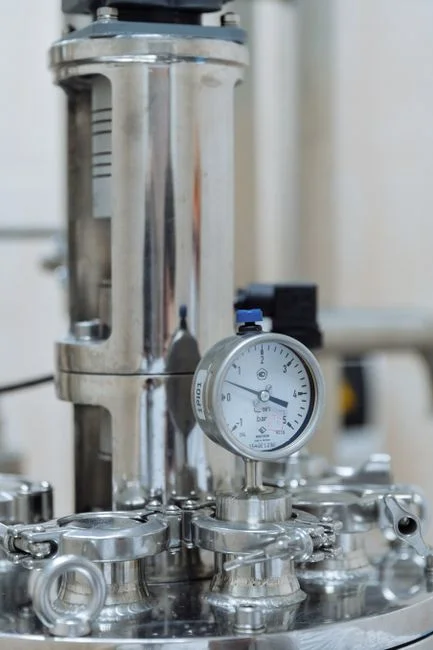
EHS managers need the design to clear local regulators before any PO is signed. The binding numbers in 2026 are:
- India CPCB discharge limits for distilleries: COD ≤ 250 mg/L, BOD ≤ 30 mg/L, TSS ≤ 100 mg/L. Post-2020 ZLD push requires zero liquid discharge for new molasses plants in several states, which is why in-plant reuse is the realistic path.
- EU BREF Common Waste Water and Waste Gas Treatment (2026 update): COD ≤ 250 mg/L for indirect discharge (to municipal sewer), COD ≤ 125 mg/L for direct discharge to surface water.
- In-plant reuse targets (typical 2026 spec): COD ≤ 50 mg/L, TDS ≤ 500 mg/L, achieved by adding RO after MBR permeate. Cooling tower makeup typically permits up to 100 mg/L COD and 200 mg/L TDS, but boiler feed is tighter.
For reuse polishing beyond MBR permeate, a HydropureWater industrial RO system sized at 50–70% recovery can take MBR permeate from roughly 100–200 mg/L TDS down to under 50 mg/L. That protects downstream heat exchangers and boiler tubes.
One operational note for 2026: India's Central Pollution Control Board is tightening TDS limits for distillery discharge in several state-level addenda. Even plants outside the strict ZLD states should design for TDS ≤ 2,100 mg/L in the final discharge stream to avoid retrofit costs later.
Next Steps for Specifying the Distillery Train
Who this is for: molasses and grain distilleries planning ZLD or water-reuse projects at 10–2,000 m³/day, and EPC teams scoping the anaerobic-plus-membrane train. Who should look elsewhere: sites with no space or biogas offtake for an anaerobic stage. Where above-ground space is tight, the Underground Package Sewage Treatment Plant (WSZ Series) handles low-strength sanitary and condensate streams below grade.
A complete MBR system for distillery wastewater treatment deserves a sized proposal, not a catalog guess. Send spent-wash characterization, flow, and target discharge limits through our quote request for a line-item CAPEX and OPEX model.
Frequently Asked Questions
Can MBR alone treat distillery wastewater?
No, an MBR cannot treat raw distillery spent wash alone. Raw spent wash runs 80,000–100,000 mg/L COD, roughly 10–20× the maximum MBR feed concentration. Anaerobic digestion upstream is mandatory to bring COD below 2,500 mg/L before the MBR stage, typically via UASB or ABR with biogas recovery offsetting 25–40% of plant OPEX.
What COD can an MBR handle when paired with an anaerobic reactor?
Anaerobic effluent at 1,500–2,500 mg/L COD is the realistic MBR feed window. The MBR polishes this to below 250 mg/L for discharge or below 50 mg/L for reuse, depending on disinfection and RO polish. Peer-reviewed degradability data support the split: around 80% of total COD degrades anaerobically in pretreated vinasse (Frontiers in Energy Research, 2017).
How often do MBR membranes need replacement in a distillery?
Membrane replacement runs every 5–7 years under a weekly NaOCl maintenance clean and quarterly citric acid CIP. Municipal MBR runs 8–10 years; the shorter interval reflects the heavier organic fouling load from distillery mixed liquor. Budget amortized replacement accordingly — it is the second-largest OPEX line after aeration energy.
What is the CAPEX for the MBR stage only in 2026?
MBR-stage CAPEX runs $380–$950 per m³/day of installed capacity in 2026. A full anaerobic + MBR train runs $1,100–$2,400 per m³/day including equalization, UASB, gas handling, and disinfection skids. Brownfield retrofits to existing UASB plants sit at the low end of both ranges.
Can MBR effluent be reused in cooling towers?
Yes. MBR permeate at COD <50 mg/L and TDS <500 mg/L is suitable for cooling tower makeup after RO polishing. A packaged integrated MBR system paired with RO typically cuts fresh-water draw by 60–75% in distillery plants, with boiler-grade feed requiring the tighter end of the RO recovery range.
Is it feasible to retrofit MBR to an existing UASB-equipped distillery?
Yes, retrofitting MBR to an existing UASB-equipped distillery is a common 2026 path. The shutdown window is 2–4 weeks for the MBR skid tie-in, assuming the existing UASB effluent quality and flow are within design. Most retrofits pay back in 3.5–5.5 years through water reuse and improved biogas capture.