What a "Wastewater Treatment Plant Supplier" Actually Means in Bahrain
A wastewater treatment plant supplier in Bahrain should be screened with this 2026 buyer's guide before any RFQ: CAPEX runs $80,000–$3.5 million by capacity tier, SCE discharge limits are BOD ≤30 and COD ≤150 mg/L, and containerized delivery takes 18–26 weeks.
A qualified supplier delivers a turnkey, Bahrain-EPD-compliant system sized to peak flow, typically 10–2,000 m³/day for industrial or municipal loads. Biological treatment is MBR or MBBR, targeting effluent BOD ≤30 mg/L, COD ≤150 mg/L, and TSS ≤30 mg/L. Expect 2026 CAPEX of $80,000–$3.5 million depending on capacity, with 18–26 week delivery and a 12-month warranty on membranes and blowers.
The search results page for this query currently misleads buyers. The top three results are chemicals distributors and generic "leading supplier" pages — one explicitly markets itself as a water treatment chemicals supplier with no engineered plant content. None publish a P&ID, a GA drawing, an influent/effluent parameter table, or a CAPEX band. Procurement teams waste 4–6 weeks on vendor calls that never produce a comparable quote.
Three supplier tiers exist in the Bahrain market, and they are not equivalent:
- Chemicals/service vendors — supply coagulants, biocides, antiscalants, and on-site servicing. They do not fabricate process skids and cannot issue a performance warranty on a treatment plant.
- Packaged plant OEM — manufactures skid-built MBR, MBBR, SBR, or DAF units in 20/40 ft containers, ships them, and commissions with the buyer's civil contractor. Documentation includes P&ID, GA drawings, electrical schematics, O&M manual, and FAT report.
- Full EPC turnkey contractor — owns design, supply, install, commissioning, and operator training under a single performance contract, typically required for >2,000 m³/day or regulated industrial effluents.
A qualified plant supplier must provide P&ID, GA drawings, electrical schematics, O&M manual, factory acceptance test (FAT) report, site acceptance test (SAT) protocol, and a 12-month performance warranty covering membranes and blowers. For Bahrain specifically, expect 18–26 week sea freight from China or India and 40HQ container loading limits for skids — max skid footprint ~12.0 × 2.45 × 2.60 m. Customs clearance runs via Khalifa Bin Salman Port (Hidd) or the Bahrain Logistics Zone (BLZ), with 5% customs duty on equipment under the GCC Common External Tariff (HydropureWater field data, 2026).
Bahrain Wastewater Discharge and Reuse Standards (2026 Compliance Map)
Bahrain's Supreme Council for Environment (SCE) sets treated sewage effluent (TSE) limits under Decree-Law No. 21 of 1996 (as amended) and the SCE Executive Bylaws. Discharge targets broadly track EPA Secondary Treatment Standards (40 CFR 133) and the EU Urban Waste Water Directive 91/271/EEC. TSE reuse for irrigation and cooling aligns with WHO 2006 Guidelines for the Safe Use of Wastewater in Agriculture. Industrial effluents from refineries, downstream petrochemical, and metal finishing require a separate SCE permit pathway and a site-specific discharge consent that is usually stricter than the municipal TSE limits (per SCE Executive Bylaws, 2025 update).
The US cross-reference deserves one level of understanding beyond citation. US EPA's secondary treatment framework expects effluent below 30 mg/L BOD on a monthly average and removal of at least 85 percent of BOD and suspended solids from domestic sewage. Weekly averages may run up to 50 percent higher. A Bahrain spec that holds a plant to ≤30 mg/L on every grab sample is therefore stricter than the American rule it quotes.
The EU reference explains the nitrogen lines in European-influenced specs. EU Directive 91/271/EEC prescribes collection and treatment for urban agglomerations above 2,000 population equivalent. It requires more advanced treatment above 10,000 p.e. in sensitive areas, which is where the ≤15 mg/L total nitrogen figure enters Bahrain tender documents.
Before you accept any supplier's performance claim, lock the following numbers into your technical specification:
| Parameter | Bahrain SCE discharge limit | Cross-reference |
|---|---|---|
| BOD₅ | ≤30 mg/L | EPA 40 CFR 133: ≤30 mg/L (30-day avg) |
| COD | ≤150 mg/L | EU 91/271/EEC: ≤125 mg/L (sensitive areas) |
| TSS | ≤30 mg/L | EPA 40 CFR 133: ≤30 mg/L |
| Total Nitrogen | ≤45 mg/L (if denitrification specified) | EU 91/271/EEC: ≤15 mg/L (sensitive areas) |
| Fecal coliform | ≤200 CFU/100 mL (restricted irrigation) | WHO 2006: ≤1,000 CFU/100 mL (unrestricted) |
| Residual chlorine | 0.5–1.0 mg/L | AWWA C654 disinfection standard |
| Oil & grease (industrial) | ≤10 mg/L | EPA 40 CFR 435 (refinery categorical) |
| pH | 6.0–9.0 | EPA 40 CFR 133: 6.0–9.0 |
TSE reuse for landscaping, golf-course irrigation, and cooling tower make-up is regulated separately under SCE Bylaws Article 14 (2025) and typically requires RO polishing when TDS in the secondary effluent exceeds 1,000 mg/L. That threshold is common in Bahrain because saline groundwater intrudes into sewer networks. Hotel, resort, and power plant buyers should flag reuse intent at the RFQ stage so the supplier sizes the RO skid and TSE storage tank for 24–48 hours of retention from day one.
Matching Process Technology to Bahrain's Industrial and Municipal Loads
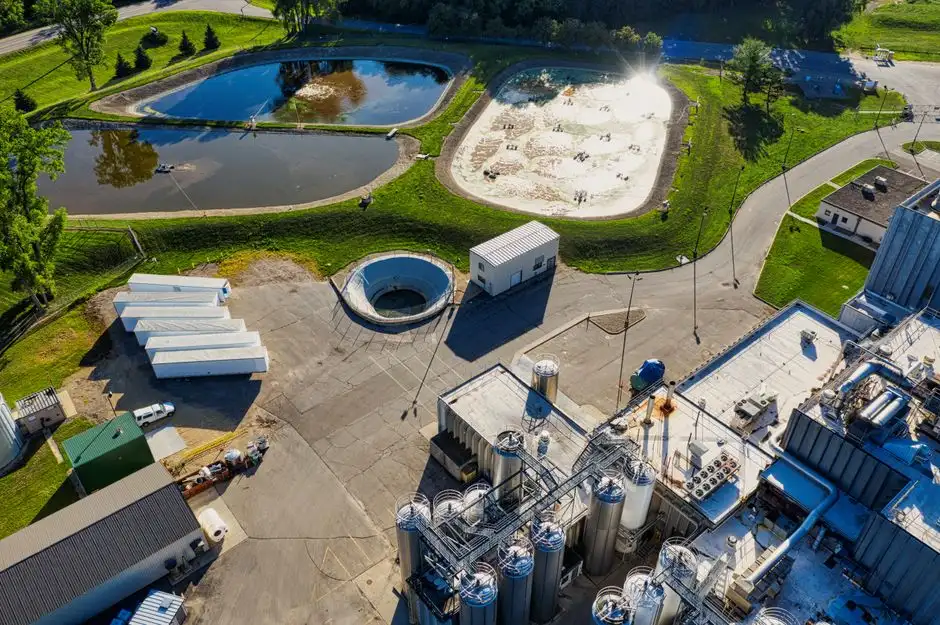
Process selection in Bahrain is driven by influent strength, footprint, and reuse intent — not by vendor preference. A defensible selection framework maps flow range, FOG load, and salinity to one of five core technologies:
| Process | Capacity sweet spot | Best-fit application | Effluent quality |
|---|---|---|---|
| MBR (Membrane Bioreactor) | 10–2,000 m³/day | Hotel/resort reuse, hospital, residential with TSE reuse | COD ≤50, BOD ≤10, TSS ≤5 mg/L |
| SBR (Sequencing Batch Reactor) | 500–5,000 m³/day | Municipal, small footprint, intermittent flow | COD ≤80, BOD ≤20, TSS ≤20 mg/L |
| MBBR (Moving Bed Biofilm Reactor) | 100–5,000 m³/day | Variable industrial loads, refinery, food processing | COD ≤150, BOD ≤30, TSS ≤30 mg/L |
| DAF (Dissolved Air Flotation) | 4–300 m³/h per unit | Pretreatment for high FOG/TSS, food, refinery | FOG ≤15 mg/L, TSS ≤30 mg/L (as pre-treatment) |
| Conventional ASP | >10,000 m³/day | Large municipal with land available | COD ≤150, BOD ≤30, TSS ≤30 mg/L |
Typical Bahrain influent profiles anchor the selection. Residential sewage runs BOD 200–250 mg/L, COD 400–500 mg/L, TSS 200–250 mg/L. Refinery and petrochemical streams reach COD up to 5,000 mg/L with oil & grease at 100–500 mg/L. Food processing runs BOD 800–2,000 mg/L with FOG 200–600 mg/L, and hospital sewage sits near BOD 250 mg/L with a pathogen load requiring tertiary disinfection (per SCE Bylaws industrial discharge categories, 2025). The bahrain sewage treatment plant influent bod cod tss typical values reference expands each profile by source industry for design-basis work.
Two climate factors override textbook sizing for Bahrain. Ambient air at 45–50°C reduces oxygen solubility by ~15% versus the standard 20°C reference, so aeration blowers need an alpha-factor correction (typically α = 0.85 at 45°C) and 20–25% more capacity than temperate-climate designs. Saline groundwater intrusion pushes influent TDS to 1,500–4,000 mg/L — well above the 1,000 mg/L threshold where MBR alone will not meet cooling-tower or irrigation reuse specs. An RO polish at 70–75% recovery is therefore standard for hotel, resort, and power plant projects.
Pre-treatment chain matters in this environment. A GX rotary mechanical bar screen with 3–6 mm aperture handles the sand ingress common in shallow Gulf sewer connections. A dissolved air flotation system at 4–300 m³/h strips FOG and TSS ahead of the biological stage using micro-bubble flotation.
Biological and polishing stages follow the pre-treatment train. A containerized MBR membrane bioreactor system at 10–2,000 m³/day hits the reuse-grade envelope, while a WSZ underground package sewage treatment plant at 1–80 m³/h covers small commercial and residential clusters. For pathogen control on polished effluent, a chlorine dioxide generator sized from 50 g/h to 20,000 g/h avoids the trihalomethane byproducts of chlorination, while keeping residual chlorine inside the 0.5–1.0 mg/L SCE band. Hotels and hospitals should specify it by name.
Refinery and food-plant buyers can go deeper on FOG removal in the DAF System in Bahrain: 2026 Engineering Guide with Costs, Compliance & companion page, which covers Gulf-specific sizing and compliance evidence.
How This Buyer's Guide Grades a Bahrain Wastewater Treatment Plant Supplier
The supplier-scoring matrix below grades each shortlisted vendor 1–5 on eight criteria, totalled against a 40-point scale. Anything below 32 is a broker, trading house, or service-only vendor — not an OEM you can hold accountable for performance.
| # | Criterion | What "pass" looks like | Weight |
|---|---|---|---|
| 1 | In-house manufacturing vs trading | Owns fabrication facility, publishes factory photos and annual capacity | 5 |
| 2 | GCC/Bahrain reference projects | ≥3 commissioned plants in region, with client references contactable | 5 |
| 3 | Documented FAT/SAT protocols | Sample FAT report and SAT protocol provided pre-award | 5 |
| 4 | Membrane and blower OEM partnerships | Named brands (e.g., Toray, LG, SUEZ, Siemens, Atlas Copco) | 5 |
| 5 | Local service partner or regional office | Service engineer within 4 hours of Manama, Riffa, or Sitra | 5 |
| 6 | ISO 9001 + ISO 14001 certified | Current certificates, not expired | 5 |
| 7 | Performance warranty ≥12 months | Written warranty covering membranes, blowers, and process performance | 5 |
| 8 | Operator training and 2-year spare parts commitment | On-site training, 2-year critical spares list with pricing | 5 |
Red flags that disqualify a vendor: no P&ID at the pre-sale stage, no third-party membrane brand named, only "we can source" language, no Bahrain-specific reference list, or no sample FAT report. The same questions can be put to any OEM — including HydropureWater, which operates containerized package plants with documented FAT and Middle East/Africa project experience — so buyers compare apples to apples instead of marketing copy to marketing copy. For a deeper framework, the prefabricated wastewater plant selection guide walks through de-risked sourcing in more depth.
MBR Package Plant Bahrain CAPEX 2026 Benchmarks
2026 cost bands for MBR package plants in Bahrain sanity-check vendor quotes and build a defensible budget before an RFQ. Equipment CAPEX is the skid price ex-works; turnkey EPC includes civil, installation, and commissioning.
| Capacity tier | Typical process | 2026 CAPEX (USD) | Lead time |
|---|---|---|---|
| <100 m³/day | WSZ underground package | $80,000–$180,000 | 8–12 weeks |
| 100–500 m³/day | MBR or MBBR skid | $180,000–$900,000 | 14–20 weeks |
| 500–2,000 m³/day | Containerized MBR (40HQ × 2–6) | $900,000–$2,200,000 | 18–24 weeks |
| >2,000 m³/day | Turnkey EPC MBR/MBBR + RO | $2,200,000–$3,500,000+ | 24–36 weeks |
OPEX per m³ treated for an MBR or MBBR in Bahrain typically breaks down as: energy 45–60%, chemicals 10–15%, sludge handling 15–25%, labor and maintenance 10–20%. The total lands at $0.18–$0.45/m³ in 2026 (HydropureWater field data, 2026). Power dominates because aeration blowers run continuously: high-efficiency turbo blowers at 0.35–0.45 kW/m³ versus legacy lobe blowers at 0.65–0.80 kW/m³ cut energy OPEX by 30–40% over a 5-year horizon.
Hidden cost lines frequently blow Bahrain budgets. Civil works add 20–35% of equipment CAPEX, containerization and sea freight add 6–9%, Bahrain customs adds 5%, and TSE storage for 24–48 hours of retention sizes at 25–40 L per m³/day of design flow.
Sludge dewatering changes the disposal math. A plate-frame filter press at 0.6–0.8 m³/h throughput with an automatic chemical dosing system for polymer conditioning typically adds $35,000–$95,000 to a 500 m³/day plant. The pair reduces sludge volume by 75–80% and cuts disposal cost accordingly.
Payback logic for reuse-class plants: MBR plus RO polishing displaces Bahrain municipal water at ~$0.80–$1.20/m³, recovering CAPEX in 3.5–5 years for hotel/resort and 4–6 years for industrial process water substitution. Package-plant buyers should also compare the Package Wastewater Treatment Plants in Bahrain: 2026 Engineering Guide for skid-level compliance checklists before shortlisting.
Choosing a Containerized Sewage Treatment Plant Supplier in Bahrain
Containerized sewage treatment plant supplier selection in Bahrain starts with the shipping envelope, not the biology. A 40HQ container caps skid footprint at ~12.0 × 2.45 × 2.60 m, which is why MBR trains above 500 m³/day ship as two to six coupled containers with flanged interconnects.
Sea freight from China or India runs 18–26 weeks door-to-site for a 100–2,000 m³/day plant: 6–8 weeks engineering, 10–14 weeks fabrication and FAT, then 8–12 days transit from Shanghai or Mundra. Customs clearance at Khalifa Bin Salman Port (Hidd) or the Bahrain Logistics Zone carries 5% duty on equipment under the GCC Common External Tariff. On-site reassembly takes 3–7 days per skid plus piping and electrical tie-in.
Ask any containerized supplier to pre-clear packing lists, HS codes, and FAT documentation before vessel departure. That habit is what keeps skids moving through Hidd without demurrage, and its absence is the usual reason Gulf projects lose two weeks at the quay.
RFQ Checklist and Next Steps for Bahrain Buyers
Send this 12-point checklist with your RFQ to every shortlisted supplier so responses can be compared on the same basis:
| # | RFQ item | Why it matters in Bahrain |
|---|---|---|
| 1 | Design flow (average + peak, m³/day) | Peak factor 1.5–2.0× for hotel/resort and hospital |
| 2 | Influent characterization (BOD, COD, TSS, FOG, TDS) | High TDS from saline groundwater requires RO sizing |
| 3 | Effluent targets per SCE Bylaws | Reference BOD ≤30, COD ≤150, TSS ≤30 mg/L table |
| 4 | Footprint constraints (m²) and containerization limits | 40HQ max skid 12.0 × 2.45 × 2.60 m |
| 5 | Power supply: 415V/3-phase/50Hz (Bahrain standard) | Site transformers must match |
| 6 | Climate derating for 45–50°C ambient | Aeration alpha-factor 0.85, blower oversize 20–25% |
| 7 | Automation level (PLC/SCADA preferred) | Remote monitoring for unmanned sites |
| 8 | TSE reuse requirement (irrigation, cooling, toilet flush) | Drives RO polish and storage tank sizing |
| 9 | Civil readiness and soil conditions | Sandy substrate needs pile or raft foundation |
| 10 | Commissioning scope and SAT protocol | Define performance test duration (typically 7–14 days) |
| 11 | Operator training (on-site, language, duration) | Arabic and English O&M manual preferred |
| 12 | Spare parts list with 2-year commitment | Critical spares: membranes, blowers, dosing pumps |
Procurement timeline: Week 1–2 technical query and shortlist (3–5 vendors), Week 3–4 bid issuance, Week 5–7 technical and commercial evaluation with the matrix above, Week 8–10 award and PO, Week 11–14 FAT and shipping. For hospital and high-purity reuse cases, add a hospital wastewater treatment engineering guide reference and an online ammonia analyzer selection spec for the SCADA panel.
For the disinfection stage, a chlorine dioxide generator sized to peak flow keeps residual chlorine inside the SCE 0.5–1.0 mg/L band without THM formation — worth specifying by name so the bidder does not default to hypochlorite. HydropureWater has delivered containerized MBR plants across the Middle East and Africa and is one of several qualified OEMs any Bahrain buyer should benchmark during bid evaluation.
The scoring matrix at the core of this Bahrain wastewater treatment plant supplier buyer's guide is worth re-running before award, not just at shortlist. If the comparison is down to two OEMs, request a quote against the 12-point checklist and let documentation quality decide the award.

Frequently Asked Questions
What is the typical lead time for a wastewater treatment plant from a Bahrain supplier?
Lead time runs 18–26 weeks sea freight from China or India for a 100–2,000 m³/day containerized MBR or MBBR plant, including 6–8 weeks engineering and 10–14 weeks fabrication and FAT (HydropureWater field data, 2026). Local customs clearance at Khalifa Bin Salman Port adds 7–10 days. Buyers on tighter schedules should ask which fabrication step the supplier can compress without cutting FAT scope.
What is the 2026 CAPEX range for a Bahrain wastewater treatment plant?
2026 CAPEX ranges from $80,000 for a sub-100 m³/day WSZ package to $3.5 million+ for a turnkey EPC MBR with RO polishing above 2,000 m³/day. Mid-range containerized MBR plants at 100–500 m³/day sit at $180,000–$900,000. Add civil works at 20–35% of equipment CAPEX and sea freight at 6–9% before board approval.
MBR vs MBBR for Bahrain — which is better?
MBR delivers reuse-grade effluent (BOD ≤10, TSS ≤5 mg/L) at 10–2,000 m³/day, suited to hotel, resort, and hospital reuse. MBBR tolerates variable industrial loads and higher FOG at 100–5,000 m³/day with simpler operation but effluent BOD ≤30 mg/L. Choose MBR when reuse intent or footprint drives the spec; choose MBBR when load variability and operability dominate.
How does the Bahrain EPD permit process work?
Industrial discharges require an SCE permit under Decree-Law No. 21 of 1996 (as amended), with site-specific limits, monthly self-monitoring, and quarterly SCE audits. Permit review typically takes 90–180 days from submission of the engineering design basis. Tell suppliers the permit status at RFQ stage so commissioning dates line up with consent issuance.
How are containerized plants shipped to Bahrain?
Containerized MBR and MBBR skids ship as 20/40 HQ FCL via Khalifa Bin Salman Port (Hidd) or BLZ, with 5% GCC customs duty and 8–12 day transit from Shanghai or Mundra. On-site reassembly takes 3–7 days per skid plus piping and electrical tie-in. The 40HQ envelope caps skid dimensions at roughly 12.0 × 2.45 × 2.60 m.
What does operator training cover?
A standard package includes 5–10 days on-site training for 4–6 operators covering start-up, shut-down, process control, membrane CIP, sludge handling, and safety. It comes with a bilingual (Arabic/English) O&M manual and a 2-year critical spares commitment. Plants that skip structured training usually pay for it in membrane fouling and unlogged excursions during the first summer.
When should a Manama industrial EPC wastewater treatment plant supplier be appointed?
A Manama industrial EPC wastewater treatment plant supplier should be appointed once design flow exceeds roughly 2,000 m³/day or the effluent falls under a regulated industrial consent. Below that, a packaged-plant OEM with a local service partner usually delivers faster at lower cost. EPC brings design, supply, install, commissioning, and operator training under one performance contract.