Why Mumbai Factories Are Switching to Advanced Sewage Treatment Systems in 2026
MPCB’s 2026 discharge limits for industrial units in Mumbai require a 50% reduction in average effluent Chemical Oxygen Demand (COD) compared to the 2020 baseline standards. According to 2024 MPCB audit data, approximately 68% of Mumbai’s industrial plants currently operate with aging infrastructure that will fail to meet the upcoming mandate of ≤50 mg/L COD, ≤30 mg/L BOD, and ≤10 mg/L TSS. The risk of non-compliance is no longer just a regulatory hurdle but a direct threat to operational continuity, often resulting in heavy daily fines or forced production halts for facility managers in areas like Andheri, Goregaon, and Kurla.
A pharmaceutical plant in Goregaon recently faced this reality when its 20-year-old conventional Activated Sludge Process (ASP) system consistently produced effluent with COD levels exceeding 120 mg/L. By replacing the outdated setup with a MBR system for MPCB-compliant effluent (<50 mg/L COD) in pharmaceutical and hospital applications, the facility reduced its effluent COD to 35 mg/L, effectively avoiding &₹;45L in projected annual fines and enabling onsite water recycling. This transition reflects a broader shift across Mumbai’s industrial corridors toward three dominant technologies: Membrane Bioreactors (MBR), Dissolved Air Flotation (DAF), and high-efficiency conventional Sewage Treatment Plants (STP).
The urgency for these upgrades is driven by the specific nature of Mumbai industrial wastewater. Textile units often struggle with Total Suspended Solids (TSS) spikes, while food processing plants in Navi Mumbai grapple with high Fats, Oils, and Grease (FOG) concentrations. Conventional systems, while lower in initial cost, lack the process stability to handle these fluctuations. Advanced systems like MBR and DAF provide the technical headroom necessary to guarantee compliance even during peak production loads, making them the preferred choice for a sewage treatment equipment supplier in mumbai looking to provide long-term value to high-stakes clients.
Sewage Treatment Equipment Specs: MBR vs. DAF vs. Conventional STP
MBR systems achieve 95–98% COD removal and maintain TSS levels below 5 mg/L by utilizing submerged membranes that act as an absolute barrier to solids. This technology is particularly effective for Mumbai’s space-constrained industrial zones because it eliminates the need for secondary clarifiers, resulting in a footprint 60% smaller than conventional STPs (per EPA 2024 benchmarks). For facilities requiring high-purity water for non-potable reuse, MBR effluent specs for food processing compliance in Mumbai demonstrate how ultrafiltration membranes reliably remove bacteria and viruses without heavy chemical disinfection.
DAF systems are engineered for the rapid removal of suspended solids and emulsified oils. By injecting micro-bubbles into the wastewater, a high-efficiency DAF system for Mumbai’s FOG-heavy industrial wastewater forces contaminants to the surface for mechanical skimming. DAF units are essential for Mumbai’s food processing and textile sectors, achieving 92–97% TSS removal and up to 95% FOG removal. Conventional STPs remain the lowest CAPEX option, but they typically require 2–3 times the land area of an MBR and struggle to maintain TSS below 20 mg/L, often necessitating tertiary treatment to meet 2026 MPCB standards.
| Parameter | Conventional STP (ASP) | MBR (Membrane Bioreactor) | DAF (Dissolved Air Flotation) |
|---|---|---|---|
| COD Removal Rate | 85–90% | 95–98% | 70–85% (Pre-treatment) |
| TSS Effluent Quality | 20–30 mg/L | <5 mg/L | 10–20 mg/L |
| Footprint Requirement | 100% (Baseline) | 35–40% of Baseline | 50–60% of Baseline |
| Energy Consumption | 0.3–0.6 kWh/m³ | 0.8–1.2 kWh/m³ | 0.5–0.9 kWh/m³ |
| Automation Potential | Medium | High (PLC/SCADA) | High |
The process flow for MBR involves a biological reactor where Mixed Liquor Suspended Solids (MLSS) concentrations are maintained at 8,000–12,000 mg/L, followed by membrane filtration. DAF systems utilize a pressure vessel to saturate water with air, which is then released into the flotation tank at atmospheric pressure to create the bubble blanket. For municipal and residential complexes in Mumbai, an underground package sewage treatment plant for Mumbai’s space-constrained sites offers a compromise, utilizing modular aerobic digestion to meet baseline compliance without occupying valuable surface real estate.
2026 Cost Models: CAPEX, OPEX, and ROI for Mumbai Sewage Treatment Systems
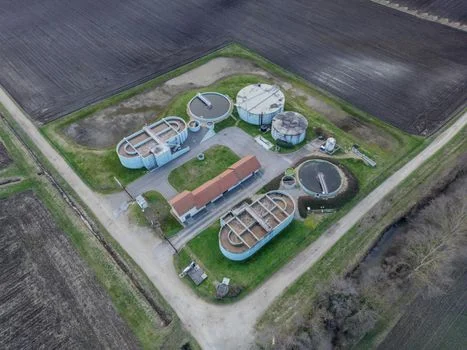
Capital expenditure (CAPEX) for sewage treatment equipment in Mumbai is influenced heavily by the degree of automation and the required effluent quality. For a standard capacity of 100–500 m³/day, conventional STPs range from &₹;12L to &₹;1.8Cr. MBR systems, due to the cost of membrane modules and sophisticated control logic, range from &₹;20L to &₹;4.5Cr. DAF systems fall in the middle at &₹;15L to &₹;3Cr. When comparing Gujarat’s compliance challenges and cost benchmarks for Mumbai buyers, Mumbai’s higher land costs often make the higher CAPEX of space-saving MBR systems more economically viable than cheaper, large-footprint STPs.
Operating expenditure (OPEX) is dominated by energy consumption, which accounts for roughly 40% of the total monthly cost. Chemicals for coagulation and pH adjustment represent 25%, while maintenance and labor make up the remainder. Implementing a PLC-controlled chemical dosing system to reduce OPEX by 25% is a critical strategy for Mumbai plants to offset rising electricity tariffs. Automated systems reduce the reliance on manual labor, which is increasingly expensive and prone to error in complex biological processes.
| System Type | Avg. CAPEX (100 m³/day) | Avg. OPEX (per m³) | ROI (Water Reuse) |
|---|---|---|---|
| Conventional STP | &₹;12L – &₹;18L | &₹;12 – &₹;18 | 5–7 Years |
| MBR System | &₹;22L – &₹;35L | &₹;22 – &₹;32 | 3–5 Years |
| DAF System | &₹;15L – &₹;25L | &₹;15 – &₹;24 | 2–4 Years* |
*ROI for DAF is accelerated in food processing via FOG recovery and byproduct sales.
The Return on Investment (ROI) for advanced systems is primarily realized through water reuse. In Mumbai, where industrial water tariffs are among the highest in Maharashtra, treated MBR effluent can be used for cooling tower makeup, boiler feed (with RO polishing), or gardening. Hidden costs that facility managers must budget for include civil works (&₹;5L–&₹;20L), automation upgrades (&₹;2L–&₹;10L), and mandatory MPCB compliance testing (&₹;50K–&₹;2L annually). Financing options such as equipment leasing or government subsidies for Zero Liquid Discharge (ZLD) projects are becoming more accessible to help offset these initial investments.
How to Choose a Sewage Treatment Equipment Supplier in Mumbai: Zero-Risk Framework
Selecting a sewage treatment equipment supplier in mumbai requires evaluating long-term engineering support and compliance guarantees. Turnkey suppliers manage the entire lifecycle from civil work to commissioning, which is often preferred for new greenfield projects. However, for existing brownfield sites in Mumbai, modular or containerized systems are superior, reducing site disruption by up to 60%. These "plug-and-play" units allow for rapid installation without the need for extensive onsite concrete work.
Compliance expertise is the most critical evaluation metric. A supplier must demonstrate a track record of MPCB-approved installations in your specific industry. It is vital to request effluent test reports from existing clients to verify that the equipment consistently meets <50 mg/L COD. Automation levels should also be scrutinized; a fully automated system with remote monitoring capabilities can reduce labor costs by 30%, but it requires an upfront investment of &₹;5L–&₹;15L. When evaluating how Tamil Nadu’s supplier market compares to Mumbai’s, Mumbai-based buyers should prioritize local service centers that can provide 24/7 response times for membrane cleaning or blower repairs.
Maintenance contracts are the final pillar of the zero-risk framework. Compare the cost of spare parts—specifically MBR membrane modules, which can cost &₹;2L–&₹;5L per module replacement—and ensure the supplier maintains a local inventory. Red flags during the selection process include a lack of onsite survey offers, vague guarantees regarding MPCB 2026 limits, and an inability to provide references from similar industrial applications. A reputable supplier will always conduct a comprehensive wastewater characterization study before proposing a technical solution.
MPCB Compliance Checklist: Ensuring Your Sewage Treatment System Meets 2026 Standards
To ensure your facility remains compliant with the MPCB 2026 mandate, a systematic audit of current effluent quality and monitoring equipment is necessary. The primary benchmarks are COD ≤50 mg/L, BOD ≤30 mg/L, and TSS ≤10 mg/L. While MBR systems are designed to meet these limits natively, older STPs or DAF-only systems may require the addition of a chlorine dioxide generator for tertiary disinfection and odor control to ensure final discharge safety.
Monitoring requirements have also become more stringent. MPCB now mandates online continuous effluent monitoring systems (OCEMS) for large-scale industrial units. These systems, costing between &₹;3L and &₹;8L, provide real-time data on COD, BOD, and TSS directly to the regulatory portal. Failure to maintain these systems is often treated with the same severity as a discharge violation. Documentation is equally critical; facilities must maintain at least three years of effluent test reports, maintenance logs, and chemical consumption records to pass an MPCB audit.
- Effluent Parameters: Verify COD (≤50 mg/L), BOD (≤30 mg/L), and TSS (≤10 mg/L) via an NABL-accredited lab.
- Online Monitoring: Install and calibrate OCEMS for continuous compliance reporting to MPCB servers.
- pH Control: Ensure automated dosing keeps effluent pH between 6.5 and 8.5 to prevent biological process upsets.
- <