Gujarat industrial wastewater treatment GPCB compliance starts at the Consent to Operate: many permits track COD <250 mg/L, BOD <30 mg/L, TSS <100 mg/L, with ZLD clauses in Ankleshwar and Vapi. CAPEX runs ₹5 lakh for DAF skids to ₹50 crore for ZLD plants.
Gujarat Industrial Wastewater Treatment GPCB Compliance: 2026 Specs
Gujarat factories treat effluent to GPCB consent values that commonly mirror inland limits of COD ≤250 mg/L, BOD ≤30 mg/L, and TSS ≤100 mg/L. DAF removes 92–97% of TSS and FOG; MBR permeate often holds COD below 50 mg/L. ZLD applies in Critically Polluted Areas, with CAPEX from ₹5 lakh to ₹50 crore.
Factory effluent treatment in Gujarat in 2026 centres on consent quality, reuse, and ZLD mandates in Critically Polluting Areas. Typical inland targets remain COD <250 mg/L, BOD <30 mg/L, and TSS <100 mg/L for many textile and chemical permits. Pharmaceutical trains often tighten COD toward <100 mg/L. Technology choice follows influent COD/TDS and the reuse or zero-liquid goal.
GPCB oversight has shifted toward continuous monitoring and denser corridor inspections. Field reports cite roughly a 30% rise in factory checks across Gujarat industrial belts. A Surat textile unit paid a ₹12 lakh penalty after legacy activated sludge let COD exceed the 250 mg/L consent limit during a dye-bath surge. Consent reviews now arrive faster, so outlet data has to hold up between inspections, not only during them.
Water allocation pressure compounds the compliance case. After the Gujarat Water Resources Department cut Narmada industrial allocations by 20% in 2025, Ahmedabad and Ankleshwar sites raised recycle targets. Purchased raw water now rivals treatment OPEX at many mills. A 200 m³/day Surat textile plant added DAF systems for high-TSS wastewater in Gujarat's textile and food industries ahead of MBR. That train cut influent COD from 1,200 mg/L to 220 mg/L and saved about ₹8 lakh per year through secondary-process reuse.
Sector loads differ sharply. Textile dye houses carry high TDS and colour. Ahmedabad API plants leave residual organics that resist simple aeration. Vapi–Ankleshwar chemical units face heavy metals and refractory COD, while food plants swing on BOD spikes. Wrong pretreatment fouls membranes fast and triggers shutdown notices.
For cross-market sizing context, see how the Ajman Industrial Effluent Guide: 2026 Specs and Compliance builds similar DAF–MBR trains under arid reuse limits. The EU Urban Wastewater Treatment Directive: Compliance, Deadlines & Tech page also shows how nutrient and micropollutant rules tighten on mixed municipal-industrial flows.
Gujarat GPCB Wastewater Standards: A Compliance Checklist
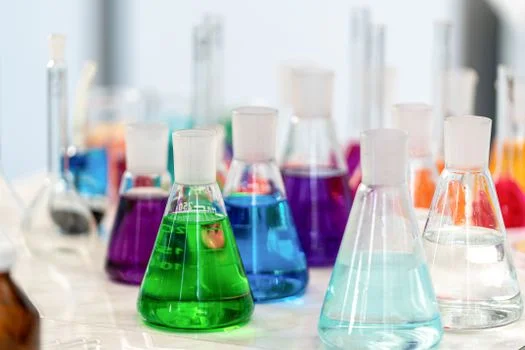
GPCB consent tables for Gujarat industries usually start from national inland-surface baselines, then tighten by sector and receiving environment. According to CPCB Schedule VI under the Environment (Protection) Rules, 1986, inland limits include COD ≤250 mg/L and BOD ≤30 mg/L (3 days at 27°C). The same schedule sets TSS ≤100 mg/L, oil and grease ≤10 mg/L, and arsenic ≤0.2 mg/L. GPCB 2023 enforcement summaries still show about 45% of violations tied to COD, 30% to TSS, and 15% to pH swings. In Critically Polluted Areas such as Ankleshwar and Vapi, ZLD consent language often requires full liquid recovery with no discharge to local water bodies.
The table below lists primary effluent parameters used in many GPCB-facing designs for Gujarat's dominant sectors. Keep the Consent to Operate as the binding sheet.
| Parameter | Textile Industry Limits | Pharmaceutical Industry Limits | Chemical Industry Limits |
|---|---|---|---|
| COD (Chemical Oxygen Demand) | < 250 mg/L | < 100 mg/L | < 250 mg/L |
| BOD (Biochemical Oxygen Demand) | < 30 mg/L | < 30 mg/L | < 30 mg/L |
| TSS (Total Suspended Solids) | < 100 mg/L | < 50 mg/L | < 100 mg/L |
| pH Value | 6.5 – 8.5 | 6.0 – 8.5 | 6.5 – 8.5 |
| Oil & Grease | < 10 mg/L | < 10 mg/L | < 10 mg/L |
| Specific Pollutants | Phenolic Compounds < 1 mg/L | Heavy Metals (Cr, Pb) < 0.1 mg/L | Arsenic < 0.2 mg/L, Cyanide < 0.2 mg/L |
To hold pharmaceutical COD under tighter consent bands, many Ahmedabad plants install MBR systems for pharmaceutical and chemical wastewater in Gujarat, achieving COD <50 mg/L. Where arsenic or lead sits near the 0.1–0.2 mg/L thresholds, plants add polishing after solids and organics control using ion exchange systems for arsenic and lead removal in Gujarat's industrial wastewater before RO or evaporators.
Arsenic polishing for Gujarat effluent trains
Arsenic removal for Gujarat chemical and specialty plants typically targets the Schedule VI inland limit of 0.2 mg/L as As, and many consents mirror that ceiling. Sulfide precipitation can drop dissolved arsenic when Fe/As chemistry and pH are controlled. Residual polishing often still needs ion exchange or adsorptive media before RO or ZLD evaporators. Most plants we size for Ankleshwar metal streams run precipitation first, then IX, because evaporator scaling from arsenic solids is expensive to clean.
DAF vs MBR vs ZLD: Which System Fits a Gujarat Plant?
DAF, MBR, and ZLD selection for Gujarat sites follows influent COD/TDS, reuse quality, footprint, and ZLD consent language. Dissolved Air Flotation removes suspended solids and fats as primary or secondary clarification. Membrane bioreactors couple biology with ultrafiltration-range membranes to produce reuse-ready permeate. ZLD stacks pretreatment, RO, evaporation, and crystallization so no liquid leaves the fence line.
The comparison table uses 2026 Gujarat project benchmarks from the original field models.
| Feature | DAF (Dissolved Air Flotation) | MBR (Membrane Bioreactor) | ZLD (Zero Liquid Discharge) |
|---|---|---|---|
| Primary Strength | TSS and FOG removal (92–97%) | COD/BOD removal & reuse quality | Full water recovery; Compliance |
| Typical Influent COD | 500 – 2,000 mg/L | 800 – 3,000 mg/L | Varies (Handles high TDS/COD) |
| Effluent Quality | TSS < 30 mg/L | COD < 50 mg/L, BOD < 5 mg/L | Distilled water quality (< 50 TDS) |
| Footprint (per 100 m³/day) | 10 – 20 m² | 15 – 30 m² | 50 – 100 m² |
| CAPEX Range | ₹10 – ₹25 lakh | ₹30 – ₹80 lakh | ₹20 – ₹50 crore (Large scale) |
| OPEX (per m³) | ₹0.3 – ₹0.8 | ₹0.5 – ₹1.2 | ₹0.8 – ₹1.5 |
| Best Fit Industry | Textile, Food, Dairy | Pharma, Chemical, API | Ankleshwar/Vapi Chemical Clusters |
Chemical and electroplating trains in Gujarat often place DAF and MBR upstream of tertiary recovery. Operators often add RO systems for chromium removal in Gujarat's chemical and electroplating industries to recover process chemicals and support ZLD water balances. Where hospital or high-biohazard streams enter the plant sewer, pathogens must be killed before membranes.
For those streams, plants place on-site ClO₂ generators for hospital and industrial wastewater disinfection in Gujarat ahead of MBR or RO.
Industrial Wastewater Treatment Cost in Gujarat 2026: CAPEX, OPEX, ROI
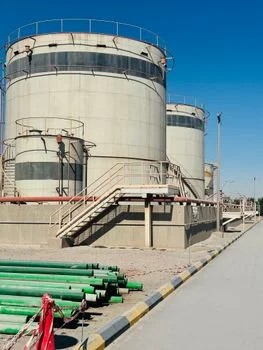
Treatment cost in Gujarat in 2026 still scales with capacity (m³/day), technology class, and ZLD duty. CAPEX splits roughly 60% core equipment, 20% civil works, 10% electrical and piping, and 10% commissioning plus GPCB documentation support. OPEX is typically about 40% energy, 30% chemicals, 20% labour, and 10% routine maintenance under steady loads.
The cost model below restates 2026 Gujarat market benchmarks by system size:
| System Type | Capacity (m³/day) | CAPEX Estimate (₹) | OPEX Estimate (₹/m³) | ROI Period (Years) |
|---|---|---|---|---|
| DAF System | 100 | 15 – 25 Lakh | 0.4 – 0.6 | 2 – 3 |
| DAF System | 500 | 60 – 110 Lakh | 0.3 – 0.5 | 3 – 4 |
| MBR System | 100 | 40 – 60 Lakh | 0.7 – 1.0 | 4 – 5 |
| MBR System | 500 | 1.5 – 2.5 Crore | 0.6 – 0.9 | 4 – 6 |
| ZLD Plant | 1,000 | 25 – 35 Crore | 1.0 – 1.4 | 6 – 8 |
ROI improves when industrial water tariffs rise and non-compliance fines stay steep. A 200 m³/day MBR at an Ahmedabad pharmaceutical plant can save about ₹12 lakh per year in water purchases. That case recycled 85% of permeate to cooling towers and floor washing. Adding avoided GPCB penalties of roughly ₹8 lakh per year often brings simple payback into the 4–5 year band (HydropureWater field data, 2025).
How capacity, cost, and compliance interact
Cost, capacity, and compliance interact through the Consent to Operate. Higher m³/day raises civil and membrane area. CPA or ZLD clauses jump CAPEX from lakh-scale DAF/MBR packages into crore-scale evaporators. Qualification time for GPCB CCA renewals stretches when OCEMS data, water balance, and salt-cake manifests are incomplete. Buyers who freeze capacity without a peak COD/TDS envelope usually under-size equalization and pay twice in retrofit months.
How to Select a Wastewater Treatment Supplier in Gujarat: A 7-Step Checklist
Supplier selection under Gujarat industrial wastewater treatment GPCB compliance rules should verify process depth, not brochure claims. Use this checklist before issuing a purchase order:
- Step 1: Verify GPCB fluency: Confirm the supplier can map your Consent to Operate limits, CETP inlet rules, and any ZLD clause—not generic “GPCB 2026 norms” slides.
- Step 2: Match technology to influent: Demand a mass balance for COD, BOD, TSS, TDS, oil and grease, and metals at your peak day, not average day.
- Step 3: Check reference plants: Visit at least one Gujarat reference of similar capacity and sector; ask for 12 months of outlet COD/TSS logs.
- Step 4: Stress-test OPEX: Model energy at your tariff, polymer/antiscalant dose at peak FOG or silica, and membrane replacement every 3–5 years for MBR/RO.
- Step 5: Confirm civil and footprint: Lock plot plan early; ZLD at 50–100 m² per 100 m³/day will not fit a pad sized for DAF alone.
- Step 6: Require commissioning KPIs: Write contracted outlet values (for example COD <50 mg/L after MBR under stated influent) into the contract with sampling methods.
- Step 7: Plan documentation: Include OCEMS integration, water-balance reports, and CCA renewal support so compliance files stay audit-ready.
If you are comparing overseas plant packages, apply the same diligence to Christchurch industrial treatment cost and compliance checklists. For a broader process overview outside Gujarat corridors, see this companion page on industrial wastewater treatment equipment selection.
Who This Is For / Who Should Look Elsewhere / Next Step
Plant engineers, EPC leads, and procurement managers use this page when sizing DAF, MBR, or ZLD for Gujarat textile, pharma, chemical, or food sites. Look elsewhere if you need only municipal sewage packages without industrial COD/TDS spikes. Also look elsewhere if a locked OEM standard already forbids alternate process trains. Next step: send influent analyses (COD, BOD, TSS, TDS, metals) and your Consent to Operate limits, and include a request for a Gujarat treatment quote so capacity and CAPEX can be checked against the tables above.
Frequently Asked Questions
What effluent limits apply to textile plants in Gujarat?
Many Gujarat textile consents track inland surface-water style limits around COD <250 mg/L, BOD <30 mg/L, TSS <100 mg/L, pH 6.5–8.5, and oil and grease <10 mg/L. CPCB Schedule VI lists the same COD, BOD, and TSS ceilings for inland surface water as a national baseline. Always read your Consent to Operate and any CETP inlet sheet, because cluster rules can be tighter than the general table.
How much does a 100 m³/day DAF system cost in Gujarat?
A 100 m³/day DAF package in Gujarat typically budgets about ₹15–25 lakh CAPEX with OPEX near ₹0.4–0.6 per m³ under steady FOG/TSS loads. ROI often falls in 2–3 years when reused water displaces purchased supply and fines are avoided. Final price still moves with stainless grade, sludge handling, and civil scope.
When is ZLD mandatory for Gujarat factories?
ZLD is commonly written into GPCB consents for units in Critically Polluted Areas such as Ankleshwar and Vapi, especially chemical and high-TDS dischargers. Those consents expect full liquid recovery at the factory boundary rather than treated discharge to a river or drain. Large 1,000 m³/day ZLD plants often sit in the ₹25–35 crore CAPEX band with OPEX around ₹1.0–1.4 per m³.
Should a pharma plant choose MBR or only ASP?
Pharmaceutical and API plants in Ahmedabad usually prefer MBR when reuse or COD <50 mg/L permeate is required, because membranes hold solids and improve nitrification stability versus legacy activated sludge alone. CAPEX for 100 m³/day MBR is typically ₹40–60 lakh with OPEX about ₹0.7–1.0 per m³. ASP upgrades can work for milder loads, but API residues often need the tighter MBR barrier before RO.
What documents should a Gujarat ETP supplier deliver?
A competent Gujarat supplier should deliver a peak-day mass balance, P&ID, contracted outlet values tied to stated influent, OCEMS integration plan, and CCA/GPCB documentation support. Ask for twelve months of outlet data from a same-sector reference plant before award. Missing water-balance and salt-cake records are a common reason ZLD CCA renewals stall.
How is arsenic removed from Gujarat effluent?
Arsenic removal typically targets the Schedule VI inland limit of 0.2 mg/L as As, which many consents mirror. Sulfide precipitation drops dissolved arsenic when Fe/As chemistry and pH are controlled, then ion exchange or adsorptive media polishes residuals before RO or ZLD evaporators. Plants we size for Ankleshwar metal streams run precipitation first, then IX, because evaporator scaling from arsenic solids is expensive to clean.
How do cost, capacity and compliance interact?
Cost, capacity, and compliance interact through the Consent to Operate: higher m³/day raises civil works and membrane area, while CPA or ZLD clauses jump CAPEX from lakh-scale DAF/MBR packages into crore-scale evaporators. GPCB CCA renewals stretch when OCEMS data, water balance, and salt-cake manifests are incomplete. Freezing capacity without a peak COD/TDS envelope under-sizes equalization and doubles retrofit cost.
What does Gujarat wastewater treatment cost in 2026?
Treatment cost scales with capacity, technology class, and ZLD duty. A 100 m³/day DAF package budgets ₹15–25 lakh CAPEX, a 100 m³/day MBR about ₹40–60 lakh, and a 1,000 m³/day ZLD plant ₹25–35 crore, with OPEX near ₹0.4–0.6, ₹0.7–1.0, and ₹1.0–1.4 per m³ respectively. CAPEX splits roughly 60% equipment, 20% civil, 10% electrical, and 10% commissioning plus documentation.
Which system fits a Gujarat plant: DAF, MBR, or ZLD?
Match the barrier to influent COD, TDS, and consent language. DAF handles TSS and FOG at 92–97% removal for textile and food loads; MBR delivers COD below 50 mg/L and BOD below 5 mg/L for pharma and API reuse; ZLD stacks RO, evaporation, and crystallization where Ankleshwar or Vapi consents demand full liquid recovery. Footprint follows the same order: 10–20, 15–30, and 50–100 m² per 100 m³/day.