In Dallas, wastewater treatment plant costs for industrial buyers range from $0.85/m³ (chemical dosing) to $4.20/m³ (MBR), with CAPEX for a 130,000 GPD activated sludge plant at $2.34M–$2.6M. Dallas’ high water hardness (300–500 mg/L) and summer temperatures (>100°F) reduce MBR efficiency by 15–20% during peak months, while DAF systems achieve 92–97% TSS removal. Annual OPEX spans $50K–$150K, with TCEQ compliance adding $20K–$50K/year. Selecting the right technology requires balancing local water conditions, discharge limits, and long-term operational costs.
Why Dallas’ Water Conditions Make Wastewater Treatment Harder (and More Expensive)
Dallas’ raw water possesses a high mineral content, typically ranging from 300–500 mg/L hardness, which significantly exceeds the national average of 120 mg/L (per EABM 2024 data, confirmed in Top 1). This elevated hardness increases the risk of scaling in critical equipment such as membranes within MBR systems and heat exchangers, leading to reduced efficiency by 15–20% and higher maintenance demands. During Dallas’ summer months, air temperatures frequently surpass 100°F, contributing to higher wastewater temperatures that reduce dissolved oxygen levels to below 4 mg/L. This oxygen depletion severely limits the efficiency of aerobic biological treatment processes; for instance, MBR systems can experience a 15–20% lower BOD removal rate in July and August due to these conditions (Top 1).
Beyond treatment efficiency, the high mineral content in Dallas’ water accelerates biofilm growth in cooling towers and exacerbates corrosion in metal piping, which collectively increases maintenance costs for industrial facilities by 20–30% annually. For example, a food processing plant in Dallas might see accelerated fouling in heat exchangers used for blanching wastewater, while a metalworking facility could experience more frequent pipe replacements due to mineral deposition and galvanic corrosion. the City of Dallas Pretreatment Program enforces strict discharge limits for industrial facilities, including 250 mg/L TSS, 250 mg/L BOD₅, and 10 mg/L oil & grease (per Dallas Water Utilities 2024, Top 1). These stringent requirements necessitate advanced pretreatment for industries like petrochemical refining and food processing, adding complexity and cost to achieve statewide CAPEX and OPEX benchmarks for Texas wastewater treatment plants.
Dallas Wastewater Treatment Technologies Compared: Performance, Costs, and Limitations
The selection of industrial wastewater treatment technology in Dallas hinges on balancing influent characteristics, desired effluent quality, and the high operational costs imposed by local water conditions. Dissolved Air Flotation (DAF) systems achieve 92–97% TSS removal and cost $1.20–$2.50/m³ to operate, proving ideal for applications with high FOG (fats, oils, and grease) loads such as food processing and metalworking (Top 1). These systems excel at removing suspended solids and oil & grease but often require chemical dosing for optimal flocculation and separation, influencing overall PLC-controlled chemical dosing for Dallas’ high-scaling wastewater. For industries targeting near-reuse-quality effluent, MBR (Membrane Bioreactor) systems offer advanced filtration, but their TSS removal can drop to 75–85% during Dallas summers due to temperature-induced biological stress and membrane scaling (Top 1). MBR operational costs range from $3.50–$4.20/m³, with energy consumption representing 30–40% of OPEX due to aeration and membrane scouring (Top 2). Chemical dosing, while the lowest in per-cubic-meter cost at $0.85–$1.50/m³, is typically effective only for low-flow applications (<50 m³/day) and generates significantly more sludge, contributing 20–30% to OPEX. This method requires frequent monitoring, often involving jar tests to optimize coagulant and flocculant dosages based on parameters like turbidity and pH.
A side-by-side comparison under Dallas’ challenging conditions reveals distinct advantages and limitations for each primary technology:
| Technology | TSS/BOD Removal (Dallas Conditions) | CAPEX (per 10,000 GPD) | OPEX (per m³) | Key Limitations in Dallas | Maintenance Requirements |
|---|---|---|---|---|---|
| DAF System | 92–97% TSS, 70–85% BOD | $80K–$150K | $1.20–$2.50 | Requires chemical dosing; sludge disposal. | Moderate (chemical pump calibration, sludge removal) |
| MBR System | 75–85% TSS/BOD (summer), 95%+ (winter) | $150K–$250K | $3.50–$4.20 | High energy, scaling risk, temperature sensitivity. | High (membrane cleaning, antiscalant dosing) |
| Chemical Dosing | 60–80% TSS, 40–60% BOD | $30K–$70K | $0.85–$1.50 | High sludge volume, less effective for complex waste. | Moderate (chemical replenishment, sludge removal) |
For industrial facilities in Dallas, a high-efficiency DAF system for Dallas’ high-mineral wastewater offers robust performance against TSS and FOG. However, facilities considering an MBR system with antiscalant dosing for Dallas’ hard water must factor in the increased energy costs and specialized maintenance to combat membrane fouling exacerbated by local water hardness and high temperatures.
CAPEX Breakdown: How Much Does a Wastewater Treatment Plant Cost in Dallas?
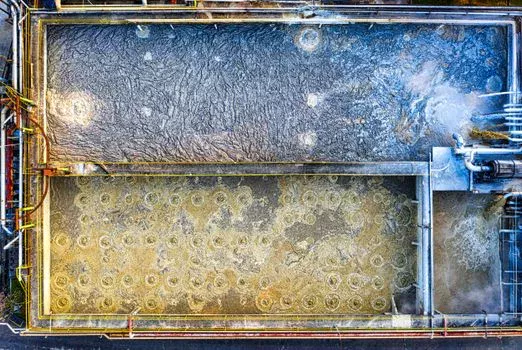
The capital expenditure (CAPEX) for a wastewater treatment plant in Dallas varies significantly based on capacity, technology, and site-specific factors, with a 10,000 GPD package plant costing $800K–$1.2M all-in, including permitting and installation (Top 2). For a 50,000 GPD DAF-based system designed for robust primary treatment, industrial buyers can expect CAPEX to range from $1.5M–$1.8M. This figure can increase by 15–20% if food-grade stainless steel construction is required, as seen in meat processing plants where sanitation standards are paramount. A larger 130,000 GPD activated sludge plant, a common size for medium-to-large industrial facilities, carries a CAPEX of $2.34M–$2.6M (Top 2). Upgrading such a system to include MBR technology adds an estimated $500K–$700K for specialized membrane modules, advanced aeration systems, and associated controls, primarily driven by the need for enhanced TSS and BOD removal to meet stringent discharge limits.
Beyond core equipment and installation, several hidden costs frequently impact the total wastewater treatment plant cost in Dallas. TCEQ permitting fees typically range from $20K–$50K, covering application review, public notices, and engineering assessments, especially for compliance with the TCEQ nutrient reduction strategy 2024. Site preparation, particularly in older industrial zones, can add $100K–$300K for soil remediation, grading, and foundation work. Engineering design for custom systems, including process flow diagrams, P&IDs, and structural plans, usually accounts for $150K–$250K. Below is a detailed wastewater treatment plant CAPEX breakdown:
| Cost Category | 10,000 GPD (Package Plant) | 50,000 GPD (DAF-based) | 130,000 GPD (Activated Sludge) |
|---|---|---|---|
| Equipment (Base System) | $400K–$600K | $900K–$1.2M | $1.4M–$1.7M |
| Installation & Commissioning | $150K–$250K | $300K–$400K | $400K–$500K |
| Site Prep & Civil Works | $100K–$150K | $150K–$250K | $200K–$350K |
| Engineering Design | $50K–$80K | $100K–$150K | $150K–$250K |
| TCEQ Permitting | $20K–$30K | $30K–$40K | $40K–$50K |
| Contingency (10-15%) | $70K–$100K | $130K–$200K | $210K–$300K |
| Total CAPEX Range | $800K–$1.2M | $1.61M–$2.64M | $2.34M–$3.3M |
OPEX Deep Dive: Energy, Sludge Disposal, and Maintenance Costs in Dallas
Energy costs represent 30–40% of the total OPEX for industrial wastewater treatment plants, with MBR systems consuming 0.8–1.2 kWh/m³ compared to DAF systems at 0.3–0.5 kWh/m³ (Top 2). Dallas’ high summer temperatures significantly impact these figures, increasing aeration demand for biological systems by 15–20% as dissolved oxygen levels decrease, requiring more energy to maintain optimal microbial activity. Sludge disposal constitutes another major component of wastewater treatment OPEX components, accounting for 20–30% of annual operational expenses, with landfill disposal averaging $150–$300/ton. Local hauling costs in Dallas can fluctuate, making on-site dewatering solutions, such as a sludge dewatering solution to reduce disposal costs in Dallas, a viable strategy to reduce volume and associated transport fees, thereby lowering sludge disposal costs in Texas.
Labor costs for a 130,000 GPD plant typically range from $50K–$80K/year, covering operator salaries and benefits. MBR systems, due to their specialized membrane cleaning protocols and more complex process controls, often require 20% more operator time than conventional activated sludge or DAF systems (Top 2). Compliance monitoring, driven by TCEQ nutrient reduction strategy 2024 requirements and the City of Dallas Pretreatment Program, adds an estimated $20K–$50K/year to OPEX. This includes routine lab testing for parameters like TSS, BOD₅, pH, and nutrients, with specific fees outlined in Dallas Water Utilities’ 2024 fee schedule. These ongoing costs highlight the need for a comprehensive understanding of long-term operational expenditures when evaluating wastewater treatment plant cost in Dallas.
How to Select the Right Wastewater Treatment Technology for Dallas Conditions
Selecting the right wastewater treatment technology in Dallas begins with a thorough assessment of influent characteristics, which directly dictates the necessary treatment intensity and system design. Step 1 involves assessing influent parameters such as TSS, BOD₅, FOG, and pH, and comparing them against the City of Dallas Pretreatment Program limits (250 mg/L TSS/BOD₅, 10 mg/L oil & grease) (Top 1). This initial evaluation determines the degree of treatment required to prevent surcharges or non-compliance penalties. Step 2 focuses on matching technology to the industrial facility's flow rate; DAF systems are well-suited for medium-to-high flows of 50–300 m³/h, particularly in metalworking or food processing due to their effectiveness in FOG removal. MBR systems are typically deployed for lower-to-medium flows of 10–200 m³/day when high-quality effluent or potential reuse is a priority, while chemical dosing is best for very low flows, typically less than 50 m³/day, or as a polishing step.
Step 3 involves factoring in Dallas’ unique water hardness and summer temperatures. MBR systems, while providing superior effluent quality, require consistent antiscalant dosing ($0.10–$0.20/m³) to prevent membrane fouling from the 300–500 mg/L hardness. In extreme summer heat, supplemental cooling or chillers may be necessary to maintain optimal biological activity, impacting both CAPEX and OPEX. For instance, an ROI calculation might show that the added cost of antiscalants and potential chillers for an MBR system in Dallas is offset by reduced membrane replacement frequency and consistent compliance. Step 4 requires evaluating long-term OPEX, as DAF systems generally have lower energy costs due to less intensive aeration but often incur higher sludge disposal costs. MBR systems, conversely, have higher initial CAPEX and energy consumption but produce near-reuse-quality effluent, potentially reducing water intake costs. A five-year cost comparison can illustrate these trade-offs:
| Cost Component | DAF System (50,000 GPD) | MBR System (50,000 GPD) |
|---|---|---|
| CAPEX (Initial) | $1.5M–$1.8M | $2.0M–$2.5M |
| Annual Energy Cost | $30K–$50K | $80K–$120K |
| Annual Sludge Disposal | $40K–$60K | $20K–$30K |
| Annual Chemical/Antiscalant | $20K–$30K | $30K–$50K |
| Annual Maintenance/Labor | $20K–$30K | $30K–$50K |
| Estimated 5-Year Total Cost | $1.85M–$2.35M | $2.6M–$3.5M |
Step-by-Step Budgeting Checklist for Dallas Wastewater Treatment Projects
Accurate budgeting for wastewater treatment plant cost in Dallas requires a comprehensive checklist that accounts for all phases of a project, from initial studies to ongoing maintenance. Pre-project costs are the first consideration, including a feasibility study ($10K–$30K) to evaluate technical and economic viability. Pilot testing, particularly for MBR or DAF systems, can range from $20K–$50K to confirm performance under actual influent conditions. TCEQ permitting, a critical early step, typically costs $20K–$50K for application processing and regulatory review. Equipment costs represent the core investment, with a base system for a 50,000 GPD DAF plant estimated at $1.2M. An additional 10–15% should be allocated for instrumentation and automation, such as PLC-controlled chemical dosing for Dallas’ high-scaling wastewater, ensuring precise operation and compliance.
Site costs encompass soil testing ($5K–$15K), civil works ($100K–$300K) for foundations, grading, and access roads, especially if soil remediation is needed in industrial zones. Utility connections for power, water, and sewer can add $50K–$100K. Installation costs typically amount to 20–30% of the equipment cost, covering labor, piping, and electrical work. MBR systems often require 15% more labor for precise membrane module installation and integration, extending project timelines. Post-installation costs include operator training ($10K–$20K), ongoing compliance monitoring ($20K–$50K/year for lab analyses and reporting), and annual maintenance contracts ($15K–$30K/year) to ensure system longevity and prevent unexpected downtime. This detailed budgeting checklist helps industrial buyers in Dallas mitigate financial surprises and plan effectively for their wastewater infrastructure investments.
Frequently Asked Questions
What are the City of Dallas Pretreatment Program limits for industrial discharges?
The City of Dallas Pretreatment Program enforces strict limits for industrial discharges, typically requiring effluent to meet 250 mg/L TSS, 250 mg/L BOD₅, and 10 mg/L oil & grease. Additional limits for metals, pH, and nutrients (Total Nitrogen, Total Phosphorus) may apply depending on the specific industry and the nature of the wastewater.
How does Dallas’ water hardness affect wastewater treatment plant costs?
Dallas’ high water hardness (300–500 mg/L) significantly increases wastewater treatment plant costs. It can raise CAPEX by 10–15% for the inclusion of antiscalant dosing systems and specialized materials. OPEX can increase by 20–30% due to higher maintenance for descaling, increased chemical consumption for antiscalants, and reduced efficiency, particularly for MBR systems where membrane fouling is a major concern.
What’s the most cost-effective wastewater treatment technology for a 50,000 GPD food processing plant in Dallas?
For a 50,000 GPD food processing plant in Dallas, DAF systems are generally the most cost-effective technology. With an estimated CAPEX of $1.5M–$1.8M and annual OPEX of $80K–$100K, DAF systems excel at removing high concentrations of FOG and suspended solids common in food processing wastewater, offering lower energy costs compared to MBR systems for the required effluent quality.
How much does TCEQ compliance add to annual OPEX for a 130,000 GPD plant?
TCEQ compliance typically adds $20K–$50K/year to the annual OPEX for a 130,000 GPD industrial wastewater treatment plant in Dallas. This cost covers permitting fees, routine monitoring and lab testing for regulated parameters (TSS, BOD₅, nutrients, metals), and reporting to the Texas Commission on Environmental Quality, with the exact amount depending on specific discharge limits and monitoring frequency.
Can I reuse treated wastewater in Dallas for industrial processes?
Yes, treated wastewater can be reused in Dallas for industrial processes, but it requires advanced treatment to achieve near-reuse-quality effluent. MBR systems are typically required for this purpose, as they provide <1 μm filtration, removing suspended solids and pathogens to a high degree. Additional permitting and compliance with Dallas Water Utilities’ reuse standards are necessary for such applications.