Wastewater Treatment Plant Cost in Texas 2026: CAPEX, OPEX & Tech-Specific Breakdown for Industrial Buyers
In Texas, wastewater treatment plant costs vary widely by technology and scale. A 130,000 GPD activated sludge plant costs $2.34M–$2.6M to construct, while a 10,000 GPD package plant runs ~$1M all-in. Annual OPEX ranges from $50K for small plants to $150K+ for larger facilities, with energy (30–40% of OPEX) and sludge disposal (20–30%) as the largest recurring expenses. TCEQ compliance adds $20K–$50K/year in permitting and monitoring costs, depending on discharge limits and plant size.
For a factory manager in the Permian Basin or an electronics manufacturer in the Silicon Hills, the sticker shock often comes not from the equipment itself, but from the cascading costs of regulatory alignment and operational overhead. As Texas continues to experience rapid industrial expansion, the margin for error in budgeting for wastewater infrastructure has narrowed. Understanding the granular data behind these figures is essential for justifying capital requests and ensuring long-term facility viability.
Why Texas Wastewater Treatment Costs Are Rising in 2026
TCEQ’s 2024 Nutrient Reduction Strategy (NRS) has fundamentally altered the capital landscape by lowering effluent limits for Total Nitrogen (TN) and Total Phosphorus (TP), which necessitates the integration of advanced tertiary treatment or membrane-based systems. These regulatory shifts can increase initial CAPEX by 15% to 25% as facilities move away from simple secondary treatment to meet non-degradation standards in sensitive Texas watersheds.
Operational costs are simultaneously being squeezed by regional economic factors. Texas industrial energy costs, currently averaging $0.12/kWh, sit approximately 20% above the national average for heavy industrial users, significantly impacting the 24/7 power requirements of aeration blowers and high-head pumping stations. labor market data from the 2025 AWWA survey indicates a tightening supply of licensed Class B and A operators in Texas, driving O&M labor costs up by 10–15%. Skilled operators in metropolitan hubs like Houston or Dallas now command annual salaries ranging from $80,000 to $110,000.
Sludge management represents the third pillar of rising costs. Since 2020, sludge disposal fees at Texas Type I landfills have surged by 35%, with current rates for non-hazardous industrial cake ranging from $300 to $500 per ton. For plants with high biosolids production, these tipping fees, combined with rising diesel surcharges for transport, can consume nearly a third of the total annual OPEX. When compared to how West Coast compliance costs compare to Texas, Texas buyers face unique challenges in energy and disposal that require specific technological mitigations.
Wastewater Treatment Plant Cost Framework: CAPEX vs. OPEX Breakdown
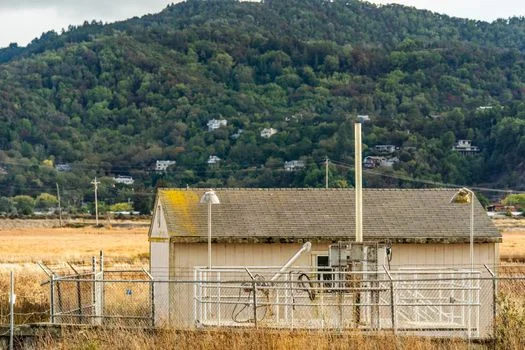
Capital expenditure (CAPEX) for Texas industrial wastewater facilities typically follows a distribution where equipment and construction account for 70-80% of the initial investment. Design and engineering services generally require 10–15% of the budget, while the remaining 5–10% is consumed by TCEQ permitting and site-specific civil works. In the Texas market, local labor and material costs for concrete and steel often add an 8–12% premium compared to national averages due to the high demand from the oil, gas, and semiconductor sectors.
The operational expenditure (OPEX) framework is often governed by the 80/20 rule: 20% of the capital equipment—specifically the aeration and solids handling systems—drives 80% of the long-term operational costs. For instance, selecting high-efficiency turbo blowers over standard PD blowers may increase CAPEX slightly but can reduce aeration energy consumption by 25%, significantly lowering the 20-year TCO. This is a critical consideration for those looking at industrial wastewater treatment cost benchmarks for manufacturing hubs where energy efficiency is a primary driver of profitability.
| Cost Component | Percentage of Total | Texas-Specific Driver |
|---|---|---|
| CAPEX: Equipment | 40–50% | Demand for modular/pre-fabricated units |
| CAPEX: Construction/Civil | 30–40% | High cost of Texas skilled trade labor |
| OPEX: Energy | 30–40% | $0.12/kWh industrial rate (ERCOT volatility) |
| OPEX: Sludge Disposal | 20–30% | Landfill tipping fees ($300-$500/ton) |
| Compliance/Monitoring | 5–10% | TCEQ TPDES permit maintenance |
Tech-Specific Cost Comparison: MBR vs. Activated Sludge vs. DAF vs. Package Plants
Membrane Bioreactor (MBR) systems in Texas command a higher initial CAPEX of $3.2M–$4.5M for 130,000–300,000 GPD flows but offer a 60% reduction in physical footprint compared to traditional activated sludge plants. This technology is increasingly favored for industrial reuse applications because it produces high-quality effluent (<10 mg/L TN, <1 mg/L TP) that meets the strictest TCEQ standards. Buyers must budget for membrane replacement every 8–10 years, which typically costs approximately $500,000 per module. For high-performance requirements, MBR systems for high-efficiency Texas wastewater treatment provide the most reliable path to compliance.
Traditional activated sludge remains the baseline for medium-scale plants, with a CAPEX of $2.3M–$3.8M for similar flow ranges. While the initial investment is lower, the footprint is substantial, often requiring 2–3 acres for a 1 MGD facility. Dissolved Air Flotation (DAF) systems are the standard for pretreatment in food processing and pulp and paper, with a CAPEX of $1.8M–$2.5M for 100K–200K GPD. DAF systems for Texas food processing and industrial pretreatment are highly effective at removing Fats, Oils, and Grease (FOG), though they require significant chemical dosing (OPEX of $80K–$120K/year).
For remote sites or smaller industrial developments, WSZ Series package plants for small-scale Texas applications offer the most competitive entry point. These modular systems cost between $450K and $1.2M for 10K–50K GPD flows and can be deployed rapidly, significantly reducing the civil engineering burden.
| Technology | CAPEX (130K-300K GPD) | Annual OPEX | Footprint | Effluent Quality (TN/TP) |
|---|---|---|---|---|
| MBR | $3.2M – $4.5M | $120K – $180K | Minimal (Compact) | <10 / <1 mg/L |
| Activated Sludge | $2.3M – $3.8M | $90K – $140K | Large (2-3 acres) | 20-30 / 3-5 mg/L |
| DAF | $1.8M – $2.5M | $80K – $120K | Moderate | N/A (Pretreatment) |
| Package Plants | $450K – $1.2M* | $30K – $60K | Very Small | 30/30 (BOD/TSS) |
*Package plant pricing based on 10K-50K GPD capacity.
Hidden Costs of TCEQ Compliance: Permitting, Monitoring, and Reporting
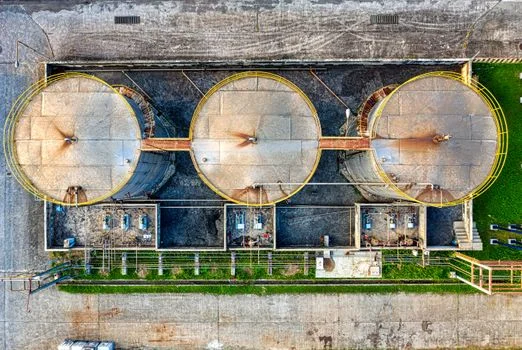
TCEQ permitting costs for industrial wastewater discharge (TPDES) range from $15,000 to $40,000 for the application phase alone. This includes necessary engineering studies such as anti-degradation analyses and mixing zone modeling required for discharge into Texas waterways. Once operational, the facility must budget $5,000–$15,000 annually for certified laboratory testing of parameters including BOD, TSS, Total Nitrogen, and E. coli. For larger facilities, the installation of SCADA systems for real-time monitoring can add an additional $20,000–$50,000 in capital costs but is often required to ensure zero-violation performance.
Reporting costs are another recurring line item, with Discharge Monitoring Reports (DMR) and annual compliance audits typically costing $10,000–$30,000 per year in professional service fees. The financial risk of non-compliance is severe; 2023 TCEQ enforcement actions show fines ranging from $10,000 to over $100,000 per violation. To mitigate these risks, many facilities incorporate advanced disinfection, such as using a chlorine dioxide generator, to ensure consistent microbial control and avoid effluent limit excursions.
A real-world example of compliance-driven ROI can be seen in a North Texas food processor that faced $50,000 in annual surcharges and fines due to high nutrient discharge. By upgrading to an MBR system, they not only eliminated these fines but also reduced their monitoring labor by 30% through automation. The total savings reached $80,000 per year, providing a clear path to capital recovery while satisfying the TCEQ’s 2024 Nutrient Reduction Strategy requirements.
How to Calculate Your Plant’s Total Cost of Ownership (TCO)
Calculating the 20-year Total Cost of Ownership (TCO) for a Texas wastewater plant requires a weighted analysis of initial CAPEX, annual OPEX indexed at a 3-5% inflation rate, and scheduled equipment replacement cycles. This lifecycle cost analysis (LCCA) allows procurement managers to see beyond the initial purchase price to the true cost of the asset over its functional life.
- Define Design Flow and Effluent Limits: Determine your GPD and the specific TCEQ permit tier (e.g., <10 mg/L TN).
- Select Technology: Use the comparison table above to align your quality needs with technology (e.g., MBR for high purity, Package Plants for low flow).
- Estimate CAPEX with Texas Multipliers: Apply a 10% contingency for inflation and a 1.1x multiplier for Texas-specific labor and civil costs.
- Project OPEX: Use $0.12/kWh for energy, $90K/year for labor per operator, and $400/ton for sludge disposal.
- Factor in Compliance and Replacements: Include $25K/year for TCEQ-related costs and set aside sinking funds for membrane or blower replacements.
- Calculate Payback: Compare the TCO of a high-CAPEX/low-OPEX system (like MBR) against a low-CAPEX/high-OPEX system (like Activated Sludge).
| TCO Metric (100K GPD) | MBR System | Activated Sludge |
|---|---|---|
| Initial CAPEX | $3,200,000 | $2,400,000 |
| Annual OPEX | $120,000 | $140,000 |
| 20-Year Cumulative OPEX* | $3,224,000 | $3,762,000 |
| Major Replacements (Membranes/Blowers) | $500,000 | $150,000 |
| Total 20-Year TCO | $6,924,000 | $6,312,000 |
*Assumes 3% annual inflation. While MBR has a higher TCO in this example, its 60% smaller footprint and water reuse potential often offset the $600k difference in land-constrained Texas markets.
Texas-Specific Cost Drivers: Energy, Labor, and Sludge Disposal
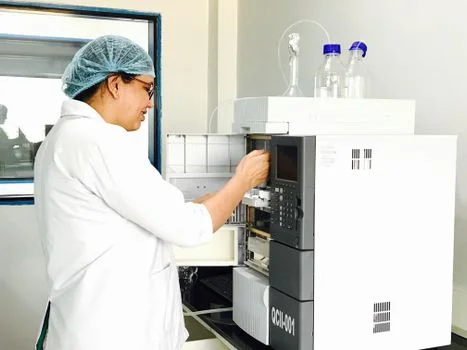
Industrial electricity rates in Texas, averaging $0.12/kWh in 2025, make aeration the single largest operational cost, frequently accounting for 50–60% of a plant's total energy consumption. In the ERCOT market, price volatility can further spike these costs during peak summer months. Mitigating this requires investment in high-efficiency aeration technology; for example, upgrading to magnetic-bearing turbo blowers can reduce energy consumption by up to 30% compared to traditional lobe blowers.
Labor costs for wastewater operators in Texas are roughly 15% above the national average, driven by the competition for technical talent in the energy sector. Automation through SCADA and remote monitoring systems is no longer an optional luxury but a cost-saving necessity, capable of reducing required operator hours by 20%. Similarly, the rising cost of sludge disposal—driven by landfill scarcity and transport fuel costs—can be mitigated by installing filter presses to reduce Texas sludge disposal costs. These systems can reduce sludge volume by up to 70%, turning a high-volume liquid waste into a manageable, low-volume cake.
Finally, Texas’s chronic water scarcity and recurring drought conditions are driving a shift toward "purple pipe" reuse. While advanced treatment for reuse (incorporating reverse osmosis or UV disinfection) adds $0.50–$1.00 per GPD to the initial CAPEX, the ability to offset expensive municipal water purchases often results in a significantly shorter ROI period for industrial facilities. This trend aligns with municipal wastewater treatment cost benchmarks in the southern U.S., where water conservation is becoming a financial imperative.
Frequently Asked Questions
What’s the cheapest wastewater treatment technology for a 50K GPD plant in Texas?
Package plants (such as the WSZ Series) are the most cost-effective for small flows, with a CAPEX of $450K–$700K and annual OPEX of $30K–$50K. They offer a compact, modular solution that minimizes civil construction costs.
How much does TCEQ permitting cost for a new industrial plant?
Expect to pay $15,000–$40,000 for the initial TPDES/NPDES application process, which includes engineering and modeling. Ongoing monitoring and reporting will cost an additional $5,000–$15,000 per year. The timeline for approval is typically 6 to 12 months.
What’s the payback period for upgrading to an MBR system in Texas?
The typical payback period is 8–12 years. While the CAPEX is higher, MBR systems reduce footprint by 60%, eliminate most TCEQ non-compliance fines, and produce high-quality water suitable for industrial reuse, which offsets municipal water costs.
How do Texas energy costs impact OPEX?
Energy accounts for 30–40% of total OPEX. Because Texas industrial rates are higher than the national average, aeration efficiency is critical. High-efficiency blowers and automated dissolved oxygen (DO) control can cut energy costs by 25–30%.
What are the hidden costs of sludge disposal in Texas?
Beyond tipping fees ($300–$500/ton), transportation costs ($0.50–$1.00 per mile) and the labor required for handling are significant. On-site dewatering equipment like plate and frame filter presses can reduce these costs by 50% or more by decreasing the weight and volume of waste.