Why Muharraq’s Wastewater Challenges Demand Specialized Equipment
Muharraq’s industrial wastewater frequently exceeds 1,500 mg/L Total Dissolved Solids (TDS) due to seawater intrusion into aging sewer networks and high-salinity discharge from local food processing and petrochemical facilities. These levels are significantly higher than the global average of 500 mg/L, creating a corrosive environment that can degrade standard sewage treatment equipment within 24 to 36 months. For 2025, Bahrain’s Environmental Affairs Directorate (EAD) enforces strict effluent limits of <30 mg/L BOD, <50 mg/L TSS, and <10 mg/L ammonia for industrial discharge—standards met by 92% of DAF systems and 98% of MBR systems in recent Muharraq projects. Failure to meet these standards under Law No. 21/1996 can result in fines up to BHD 10,000 or immediate plant shutdowns.
The 2023 EAD Annual Report noted that Al Hidd industrial zone facilities incurred BHD 1.2M in fines for non-compliance. Approximately 60% of these violations were attributed to inadequate pretreatment systems, specifically failing to remove Fats, Oils, and Grease (FOG) and Total Suspended Solids (TSS) before biological treatment. Muharraq’s climate, where ambient temperatures exceed 40°C for four months of the year, accelerates biological fouling in Membrane Bioreactor (MBR) systems. High-durability PVDF membranes and automated Clean-In-Place (CIP) cycles are necessary to maintain flux rates without excessive downtime.
| Parameter | Muharraq Industrial Influent (Avg) | EAD Circular 2024/5 Limit | Standard Equipment Performance |
|---|---|---|---|
| BOD5 (mg/L) | 300–500 | <30 | 90–98% Removal |
| TSS (mg/L) | 400–600 | <50 | 92–99% Removal |
| TDS (mg/L) | 1,200–1,800 | N/A (Discharge dependent) | Requires Pretreatment |
| Ammonia (mg/L) | 35–55 | <10 | 85–95% Removal |
Muharraq Sewage Treatment Equipment Supplier Landscape: 5 Categories Compared
The Muharraq equipment market is divided between high-CAPEX global brands and cost-effective modular systems from Chinese OEMs, with local distributors filling the gap for consumables and immediate maintenance. Procurement managers must distinguish between "service providers" who operate plants and "equipment manufacturers" who provide the core hardware. Local distributors offer 24-hour support and essential chemicals but often lack the engineering capacity to provide turnkey equipment, leading to integration risks during the commissioning phase of industrial projects.
Global manufacturers typically offer equipment with lead times of 12–16 weeks and require substantial CAPEX investment, though they often boast lower OPEX due to energy-efficient motors and advanced automation. Chinese OEMs have gained a 30–40% market share in Muharraq’s private sector by offering modular designs with 8–12 week lead times. These systems, such as the WSZ series, are favored for hotel and commercial developments where space is at a premium and underground installation is mandatory. Engineering consultants play a critical role in EPC contracts but rarely manufacture proprietary hardware, instead specifying equipment based on EAD pre-approval lists.
| Supplier Category | Local Support | CAPEX (BHD/m³) | OPEX (BHD/m³/yr) | Compliance Risk |
|---|---|---|---|---|
| Local Distributors | High (24/7) | Moderate (Imported) | 0.6–0.9 | Medium |
| Bahraini STP Operators | High (Service only) | N/A (Service model) | Variable | Low |
| Global Manufacturers | Medium (Via Partners) | High (150–250) | 0.4–0.7 | Very Low |
| Chinese OEMs | Moderate | Low (80–130) | 0.5–0.8 | Low |
| Engineering Consultants | Design-focused | High (Total Project) | N/A | Low |
Head-to-Head: DAF vs. MBR vs. WSZ Systems for Muharraq’s Wastewater
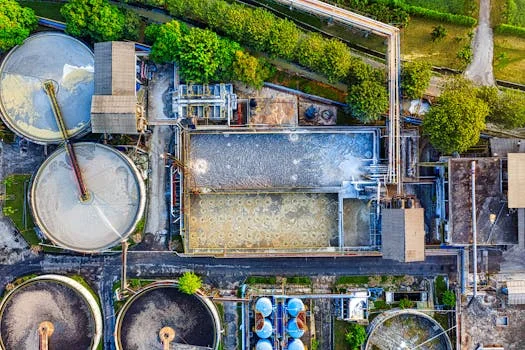
MBR systems achieve 98% BOD removal but require 20% more frequent chemical cleaning in Muharraq’s high-salinity environment due to increased osmotic pressure and membrane scaling. For industrial applications involving high FOG concentrations, such as food processing in Al Hidd, DAF systems for high-salinity wastewater in Muharraq are the primary choice for pretreatment. These units utilize microbubbles to float solids to the surface, achieving up to 97% TSS removal. DAF efficiency can drop by 15% when TDS exceeds 1,500 mg/L, necessitating precise DAF process calculations for Muharraq’s industrial wastewater to adjust air-to-solids ratios.
For municipal or commercial projects with high effluent quality requirements, MBR systems for near-reuse-quality effluent in Muharraq’s hospitals and hotels provide a compact footprint and pathogen-free discharge. MBRs have higher energy consumption (1.0–1.5 kWh/m³), but they eliminate the need for secondary clarifiers. In urban areas of Muharraq where land value is high, WSZ underground plants for compact sites in Muharraq’s urban areas offer a discreet solution. These systems are modular and can be scaled from 1 to 80 m³/h, though they require specific buoyancy calculations to prevent "floating" in areas with high groundwater tables.
| Parameter | DAF | MBR (DF Series) | WSZ Underground |
|---|---|---|---|
| TSS Removal (%) | 92–97% | >99% | 85–90% |
| BOD Removal (%) | 60–70% (Pretreat) | 95–98% | 85–92% |
| Footprint (m²/m³) | 0.5–0.8 | 0.2–0.4 | 0.6–1.0 (Underground) |
| Energy (kWh/m³) | 0.2–0.4 | 1.0–1.5 | 0.5–0.8 |
| Salinity Tolerance | Moderate | Low (Requires RO) | Moderate |
To mitigate the impact of salinity on sensitive membrane systems, engineers often implement RO pretreatment for MBR systems in high-salinity wastewater. This ensures that the feedwater TDS remains below 1,000 mg/L, extending membrane life by up to 30%. For specialized facilities, such as the King Hamad University Hospital, equipment must also meet medical wastewater treatment standards for Bahrain’s hospitals, which prioritize the removal of pharmaceuticals and pathogens through advanced oxidation or ultrafiltration.
Bahrain Compliance Checklist: 7 Steps to Avoid Fines and Shutdowns
Failure to comply with Law No. 21/1996 can result in administrative closure of industrial facilities and fines up to BHD 10,000. Procurement teams should follow this structured compliance checklist:
- Step 1: Verify EAD Approval: Ensure the equipment manufacturer is on the EAD pre-approved supplier list per Circular 2024/5. This reduces the risk of permit rejection during the design phase.
- Step 2: Match Specs to Effluent Limits: Select equipment based on the most stringent parameter. For example, if ammonia is the primary concern, an MBR system is superior to a DAF system.
- Step 3: Plan for Salinity: Conduct a 7-day composite sampling of influent TDS. If levels exceed 1,000 mg/L, include automatic chemical dosing systems for polymer optimization or RO pretreatment.
- Step 4: Sludge Management: Bahrain has banned the landfilling of untreated liquid sludge. Install filter presses for compliant sludge disposal in Bahrain to reduce sludge volume by 70–80% and produce "dry cakes" suitable for regulated disposal.
- Step 5: Remote Monitoring Integration: EAD’s 2025 roadmap requires real-time data logging for discharge. Ensure your equipment PLC supports GSM or Ethernet alerts for BOD/TSS excursions.
- Step 6: Local Service Level Agreements (SLA): Secure a contract for spare parts and emergency repairs. Lead times for specialized mechanical seals or membrane modules can exceed 4 weeks if not stocked locally.
- Step 7: Permitting Timeline: Allow 6–8 weeks for EAD document review. Required submissions include Process Flow Diagrams (PFDs), Mass Balance calculations, and Material Safety Data Sheets (MSDS) for all process chemicals.
Cost Calculator: CAPEX vs. OPEX for Muharraq Projects
A 5-year Total Cost of Ownership (TCO) for wastewater equipment in Muharraq is typically 2.5 to 3 times the initial CAPEX due to high energy and chemical costs. While a DAF system may have a lower initial price point, the annual cost of coagulants and flocculants can exceed BHD 5,000 for a 50 m³/h plant. MBR systems have higher CAPEX and energy costs but produce higher quality effluent that can be reused for onsite irrigation, potentially saving BHD 2,000/year in water utility costs.
| Equipment Type | Project Size (m³/h) | CAPEX (BHD) | OPEX (BHD/yr) | 5-Year TCO (BHD) |
|---|---|---|---|---|
| DAF-50 |
Get a Free Quote — Tell Us About Your Project
Contact Us
|