Start with the wastewater profile, not the equipment name
For Jensen mining and metals factories, choose DAF when wastewater contains FOG, cutting oils, low-density metal hydroxide floc, or little installation space. Choose a lamella clarifier when solids are coarse and readily settleable, FOG is absent, pH is stable, and lower capital and chemical costs are priorities. For variable sites combining quarry wash water and metal-finishing rinse water, use lamella for bulk solids and DAF for polishing. Both systems can meet 40 CFR Part 437 when properly conditioned, but current influent testing and the site-specific KPDES permit determine the final design.
The equipment decision begins with separate wastewater streams. A blended daily average can hide an oily coolant slug, an acidic drainage contribution, or a high-solids wash-water period. The mining pretreatment comparison in the HydropureWater 2026 article uses process wash water, pit dewatering, acid rock drainage, coolant, and cutting oil as distinct sources because their chemistry and separation requirements differ.
For acid rock drainage, the upstream treatment decision is more important than the clarifier model. Determine whether lime or another alkalinity source will raise pH and precipitate iron and manganese as hydroxides. Without sufficient alkalinity, the stream may not condition or separate as designed. If DAF follows pH correction, the conditioned hydroxide floc can be floated; if lamella follows, the resulting floc density and settling rate must be demonstrated rather than assumed.
The regulatory basis includes 40 CFR Part 437 for the Ore Mining and Dressing Point Source Category, covering TSS, settleable solids, and metals including iron, manganese, aluminum, copper, lead, and zinc. The current KPDES permit remains the controlling project document because it may impose tighter residual-metals limits, a settleable-solids limit—less than 0.5 mL/L per hour is common—and whole-effluent toxicity requirements, according to HydropureWater’s 2026 mining wastewater article.
| Design input | What the buyer must obtain | Decision affected |
|---|---|---|
| Stream flow | Average and peak flow for each source and combined discharge | Duty arrangement, equalization, treatment capacity |
| Solids | TSS, settleable solids, particle distribution, grit and fines | DAF flotation versus lamella bulk settling |
| Chemistry | pH, alkalinity, iron and manganese | Upstream pH correction and precipitation |
| Organics | FOG, cutting oil, and metalworking-fluid characterization | DAF selection and chemical conditioning |
| Site and permit | Available pad, elevation, KPDES limits, WET requirement, sludge destination | Footprint, treatment train, dewatering, compliance |
A rotary mechanical bar screen may be needed before treatment to protect downstream equipment, but screening does not replace flow equalization or stream characterization. Collect the table’s missing data before asking suppliers to size a unit.
Compare how DAF and lamella remove solids
DAF separates conditioned solids by attaching 30–50 µm microbubbles to floc and floating it to a skimmer, while lamella separates coarse settleable material by gravity in inclined plates. That mechanism difference—not the equipment label—determines which stream each technology can handle reliably.
In DAF, compressed air dissolves under pressure in a recycle stream. Releasing that stream through fine nozzles creates microbubbles that attach to floc, carry it to the surface, and leave the tank through a paddle skimmer. Heavier particles that do not float fall to a bottom collection zone for removal. Clearwater Industries’ DAF technical article, dated 2026-04-27, attributes this arrangement to the 30–50 µm microbubble range and identifies chemical coagulation and flocculation as necessary for effective contact.
Chemical conditioning is central rather than incidental. HydropureWater’s 2026 article cites oil removal of roughly 60% without conditioning and above 90% with a coagulant-polymer program. That result concerns oil removal, not general TSS performance, so it should not be transferred automatically to every mining stream. It nevertheless explains why DAF is more appropriate when FOG or metalworking fluid is present: the chemical program and bubble attachment work together.
A lamella clarifier uses parallel inclined plates as shallow settlers. HydropureWater product data cited in its 2026 comparison reports an effective surface loading of 20–40 m/h and up to 30% lower chemical use for straight TSS-removal applications. Those figures are screening inputs for straight mineral-solids removal, not a substitute for vendor settling analysis. Lamella is less suitable for buoyant or oily floc because its separation depends on solids moving downward along the plates.
Separation time offers an early comparison: approximately 3 minutes for DAF, 30–60 minutes for lamella, and 1–3 hours for conventional gravity clarification, according to HydropureWater’s 2026 article and the cited EPA design parameters. A shorter flotation residence time does not make DAF less dependent on chemical control; it moves the control point from settling area and sludge scraping to conditioning quality, recycle saturation, and skimming.
| Selection factor | Dissolved air flotation | Lamella plate clarifier |
|---|---|---|
| Primary mechanism | Microbubble attachment and surface flotation | Gravity settling on inclined plates |
| Best-matched solids | Low-density, fragile, oily, or hydroxide floc | Coarse, dense, readily settleable mineral solids |
| Chemical dependence | Coagulant and polymer are central to performance | Chemical use reported up to 30% lower for straight TSS-removal applications |
| Separation-time screen | Approximately 3 minutes | 30–60 minutes |
| Reported solids concentration | Float sludge at 2–3% solids | Clarifier underflow well under 1% solids |
| Key operating concern | Chemical tuning, saturation, and skimming | Plate loading, sludge withdrawal, and feed distribution |
For an initial Jensen comparison, the industrial DAF system should be considered where flotation-prone material dominates. The lamella clarifier is the stronger candidate for mineral grit and coarse aggregate solids. Mechanical completeness must also be compared: DAF includes a saturator, recycle pump, compressor, and skimmer, while lamella requires a tank, inclined-plate package, feed distribution, and sludge withdrawal.
Match the technology to Jensen site and sludge conditions
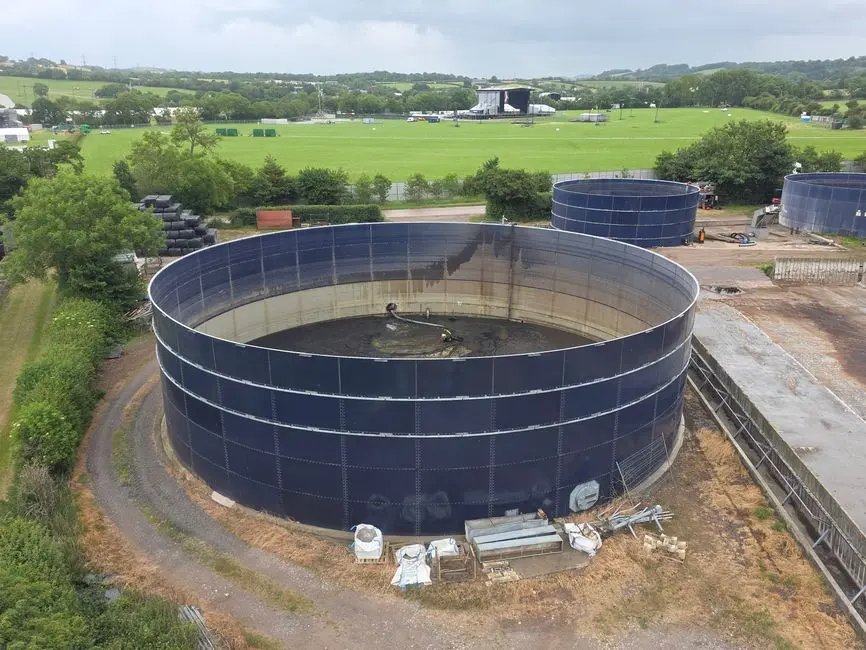
DAF is the stronger fit when FOG, cutting oils, low-density hydroxide floc, constrained space, or compatible downstream sludge dewatering determines the project. Lamella is the stronger fit for coarse settleable solids, stable pH, no FOG, limited chemical-conditioning experience, and capital cost as the binding constraint.
HydropureWater’s 2026 article identifies four DAF triggers: FOG or metalworking fluids; low-density hydroxide or metal-precipitate floc; a space-constrained hillside footprint; or an existing plate-and-frame filter press that can accept DAF float sludge. These triggers often occur together at a metal-processing or combined mining site.
Lamella has a defensible screening threshold in the same 2026 article: TSS routinely above 2,000 mg/L, stable pH from 6–9, absent FOG, and coarse settleable material. Under those conditions, the article identifies lamella as the more forgiving selection with a wider chemical window and lower chemical use. Those are selection criteria, not universal operating limits.
Site geometry changes the capital comparison. A Jensen buyer should compare installed value per treated cubic meter per square meter of usable pad, not equipment purchase price alone. A DAF package costs more to buy than a comparable lamella installation because it adds air-generation and recycle equipment. On a narrow or sloped site, however, reduced footprint and possible above-grade installation can change the result. Civil work, access, foundations, and available elevation therefore belong in the bid comparison.
Sludge consequences can reverse the operating-cost comparison. HydropureWater’s 2026 article reports DAF float sludge at 2–3% solids, compared with clarifier underflow well below 1%. If the site has an industrial sludge dewatering train, the additional solids concentration can reduce hauling and downstream press burden. A facility without mechanical dewatering and with short trucking distances to a drying bed may find lamella less costly to operate. If DAF is selected, confirm actual press suitability and cake performance rather than assuming the float will dewater as intended. The plate-frame filter press is a downstream process decision, not a reason by itself to select DAF.
- DAF path: Route oily, low-density, or space-constrained streams to DAF after pH correction where needed.
- Lamella path: Route heavy, coarse, FOG-free mineral solids to lamella when the operating team has less chemical-control experience.
- Hybrid path: Route mixed or shift-variable streams to lamella bulk clarification followed by DAF polishing.
Use a hybrid when the site receives mixed or variable streams
A hybrid is appropriate when one treatment unit must accommodate both bulk settleable solids and residual fines, oil, or colloidal metals that change materially by shift or production campaign. In that arrangement, lamella removes the coarse bulk load first and DAF provides polishing rather than duplicating the same separation function.
HydropureWater’s 2026 article identifies combined quarry wash water and metal-finishing rinse water as a representative Jensen hybrid case. Lamella can handle the heavy mineral fraction economically; DAF then captures remaining low-density floc, oils, and particulate metals. The final stage and performance target still depend on the site-specific KPDES permit and current influent testing.
Treat chemical dosing as part of the process, not an accessory. The same train may require coagulation before DAF, flocculation to form stable floc, pH correction for acid rock drainage, and different chemical adjustments as stream composition changes. An automatic chemical dosing system should therefore be evaluated together with the clarification equipment, including tanks, pumps, controls, chemical storage, and operating interlocks.
Equalization and screening belong upstream of both technologies. Equalization prevents a concentrated wash-water or coolant slug from overwhelming the selected flow and solids basis. Screening protects flotation nozzles and clarifier mechanisms from rocks, rags, and debris that can enter pit-dewatering and quarry-wash streams. A supplier’s proposal should identify where these protections sit in the complete train and who is responsible for them.
Use the hybrid path only after each stage has a defined purpose. Lamella should have a specified solids-removal duty, DAF a specified polishing or flotation duty, and the dosing system a defined control response. Otherwise, the added equipment becomes two units doing the same job without a defensible process basis.
Build the equipment-selection and procurement record
A defensible bid compares complete treatment trains, not isolated tank or flotation packages. The procurement record should connect each stream to a technology, identify every missing design input, and define what the supplier must guarantee.
For each proposed path, require the supplier to state design flow, TSS basis, pH and alkalinity correction, FOG loading, flotation or settling basis, sludge concentration, duty arrangement, and expected performance basis. Require a clear distinction between guaranteed design values, reported operating data, and vendor assumptions. HydropureWater’s 2026 article cites DAF effluent TSS of 20–30 mg/L and site-dependent removal of 70–95%; those are reported operating values, not guaranteed 2026 design values for Jensen.
| Bid item | DAF proposal | Lamella proposal | Hybrid proposal |
|---|---|---|---|
| Design basis | Flow, TSS, FOG, pH, alkalinity, flotation duty | Flow, TSS, particle distribution, pH, settling duty | Separate primary and polishing duties |
| Equipment scope | Tank, saturator, recycle pump, compressor, skimmer, controls | Tank, inclined plates, feed distribution, sludge withdrawal, drive | Both trains, transfer, controls, and integrated sludge handling |
| Chemistry | Coagulation, flocculation, pH correction, chemical storage | Conditional coagulant use and sludge conditioning | Stage-specific dosing and control logic |
| Sludge basis | Expected float concentration and discharge arrangement | Expected underflow concentration and withdrawal rate | Separate solids and dewatering routes |
| Performance basis | Influent/outlet TSS, FOG, and site-specific metals criteria | Influent/outlet TSS and settleable-solids criteria | Overall permit basis plus stage duties |
| Owner inputs required | Current tests, permit, pad geometry, dewatering route | Current tests, permit, pad geometry, sludge destination | All inputs plus stream variability and equalization duty |
Compare installed cost and operating cost over the same boundary. A DAF package includes the saturator, recycle pump, compressor, and skimmer; a lamella package includes the tank and inclined plates. For operating cost over the 10–15-year horizon identified in HydropureWater’s 2026 article, include chemical tuning, compressed-air power, operator labor, sludge hauling, downstream dewatering, maintenance, and equipment availability. A quote that omits air power, polymer, sludge disposal, or press operating cost is not a lifecycle comparison.
The final selection record should preserve the condition attached to the recommendation. Size only after current influent testing, KPDES permit review, site survey, and downstream sludge-handling review. Do not convert reported operating data into an acceptance guarantee without a site-specific basis.
Frequently Asked Questions
What should a Jensen plant budget for DAF versus a lamella clarifier?
Request a bid using installed scope and a 10–15-year operating-cost comparison, as described in HydropureWater’s 2026 article. Include chemical tuning, compressed-air power, labor, sludge hauling, dewatering, maintenance, and equipment availability. No defensible price can be stated without flow, TSS, FOG, pH, alkalinity, pad geometry, permit limits, and sludge-disposal inputs.
Which supplier scope is most important when comparing mining wastewater bids?
Require each supplier to define the design flow, TSS basis, chemical correction, flotation or settling basis, sludge concentration, duty arrangement, and performance evidence. Reject a comparison based only on tank price. The buyer should also confirm equalization, screening, controls, utilities, installation, startup support, and downstream dewatering responsibilities.
Can DAF or lamella meet the permit limits for AMD wastewater?
Both technologies can meet 40 CFR Part 437 when correctly designed and conditioned, according to HydropureWater’s 2026 article. The site-specific KPDES permit controls the project. AMD also requires an upstream alkalinity and pH strategy so iron and manganese can precipitate before clarification; otherwise, conditioning and separation will be unreliable.
What influent data must be collected before sizing either clarifier?
Measure flow, TSS, settleable solids, pH, alkalinity, iron, manganese, FOG, and oil-and-greases characteristics for each stream rather than relying on a blended average. Include particle distribution and sludge dewatering properties. These results determine the DAF, lamella, or hybrid path and expose any pretreatment still missing from the design.