DAF or Clarifier for a Pine Bluff Pulp and Paper Mill?
For Pine Bluff pulp and paper factories, dissolved air flotation (DAF) generally merits first review for whitewater clarification, fiber recovery, rapid separation, or reuse preparation, while a gravity clarifier merits review where solids settle predictably, space is available, and simple separation is adequate. The 2026 decision depends on stream characteristics, flow variation, recovered-fiber value, sludge handling, reuse objectives, and the current permit—not the equipment name alone. Krofta reports raw-water clarification in 3–5 minutes for its DAF systems, compared with longer gravity-settling times, but that is a supplier claim rather than a guarantee for mill wastewater. Neither device alone establishes final effluent compliance.
The mechanisms are not interchangeable. DAF dissolves air under pressure, releases it as microbubbles in a flotation tank, and skims floated solids. A conventional clarifier separates solids by gravity; the HydropureWater lamella clarifier adds sludge recirculation, flocculation, and inclined-plate separation. The HydropureWater DAF system is relevant where mill streams contain fibers or solids that are difficult to settle reliably.
EPA’s historical findings still support characterization of the actual waste, but not reuse as current performance guarantees. EPA’s April 1973 review found satisfactory methods for removing bulk suspended solids from most pulp and paper mill effluents, while noting that finely dispersed pigments and debris in filled-paper, coated-paper, and waste-reclamation wastes remained difficult to remove. EPA’s June 1973 development document segmented mills into unbleached kraft, neutral sulfite semi-chemical, and waste-paperboard categories and considered plant size, process, climate, and waste treatability.
Accordingly, the defensible Pine Bluff recommendation is conditional: shortlist DAF for recoverable whitewater fibers or unreliable settling; retain a clarifier as the baseline where solids are predictably settleable and footprint is available; and evaluate both where final-effluent treatment or reuse is involved. The current authorization, approved treatment train, and site-specific wastewater data must govern final compliance.
Where Each Technology Fits in the Mill Treatment Train
DAF and gravity clarification belong at specific points in the treatment train; neither should be specified as a complete wastewater plant without downstream and upstream obligations.
- Screen or fractionate fibers before primary solids separation.
- Recover or clarify process-side whitewater where appropriate.
- Apply biological or chemical treatment where required.
- Polish the effluent before permitted discharge or reuse.
- Manage sludge dewatering and disposal as part of the same design.
Krofta identifies fiber fractionation, fiber recovery, shower-nozzle protection, raw-water clarification, and whitewater clarification as established DAF applications in pulp and paper. Its combined configuration uses a spray filter to retain longer fibers for return to papermaking, followed by DAF to separate shorter fibers and total suspended solids and recover water for reuse. For warm-effluent reuse, Krofta describes the spray filter as a polishing step after DAF that captures smaller particles and protects shower nozzles.
EPA’s June 1973 process diagrams show that paper-machine whitewater contains suspended fiber, pulp fines, and paper additives. They also place clarifiers within kraft chemical-recovery systems, demonstrating that clarification may occur upstream of the wastewater plant. Process-side fiber recovery, mill raw-water clarification, and final effluent treatment are therefore separate decisions.
| Mill application | Technology position | Evidence and qualification |
|---|---|---|
| Whitewater clarification | DAF first review; clarifier comparison | Krofta identifies DAF as an established whitewater application. Fiber quality and settleability still require mill testing. |
| Fiber recovery | DAF, potentially preceded by fractionation | Krofta describes spray-filter/DAF arrangements that recover longer fibers for papermaking and separate shorter fibers and TSS. |
| Warm-water reuse | DAF plus particle protection | Krofta reports polishing with a spray filter to reduce nozzle plugging before warm-whitewater reuse. |
| Raw water | DAF or clarifier | Krofta presents DAF for raw-water clarification, including seasonal algae and dissolved-iron considerations. |
| Final mill effluent | Clarification followed by required treatment | Neither flotation nor settling alone addresses every dissolved constituent, color demand, BOD, or COD issue. |
Where coarse debris could damage equipment, rotary mechanical bar screening should be evaluated upstream. Clarification remains valuable for primary solids removal before biological treatment, provided its hydraulic loading and sludge route are designed for the mill waste rather than copied from another facility.
Head-to-Head Performance and Operating Comparison
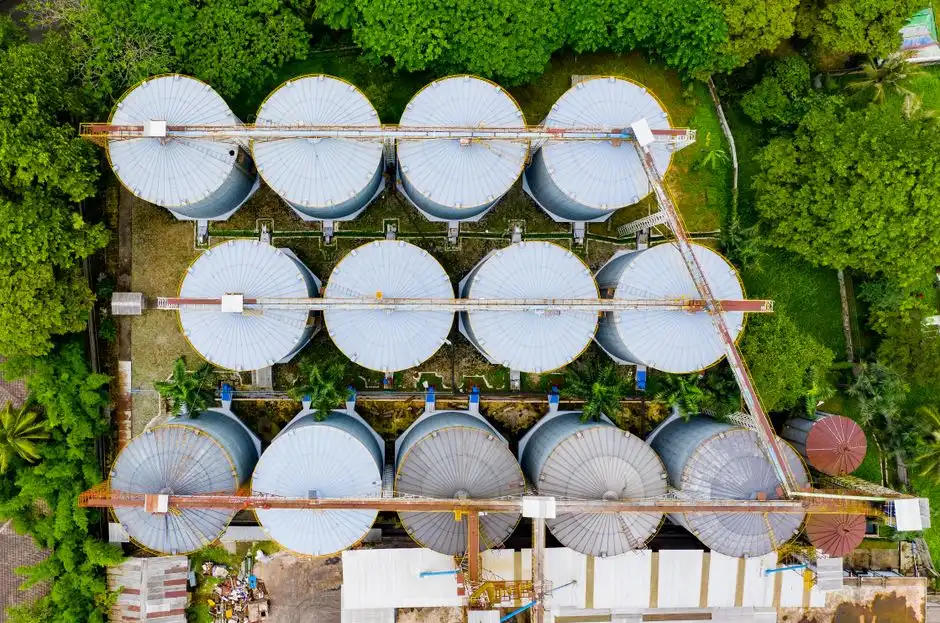
DAF offers the stronger separation mechanism when fibers or other low-settling solids must be captured rapidly; a lamella clarifier combines gravity separation with flocculation and inclined plates in a more compact structure.
DAF uses microbubble-assisted flotation to concentrate suspended material at the water surface for skimming. The HydropureWater lamella clarifier uses sludge recirculation, flocculation, and inclined-plate separation. Its catalog surface-loading parameter is 20–40 m/h, but that is a manufacturer specification, not a project performance guarantee.
For hydraulic behavior, Krofta states that DAF raw-water clarification can occur in 3–5 minutes, compared with longer settling times for gravity clarifiers. The scope is raw-water clarification; it does not establish a 3–5-minute guarantee for kraft mill effluent, coated-paper solids, or every whitewater condition. Pilot testing must examine actual fiber length, filler carryover, temperature, chemical demand, and peak-flow behavior.
| Criterion | DAF | Lamella gravity clarifier | Engineering decision |
|---|---|---|---|
| Separation | Microbubble-assisted flotation | Flocculation and inclined-plate gravity separation | Test against actual mill solids rather than generic descriptions. |
| Primary application in this decision | Whitewater, fiber recovery, rapid clarification, reuse preparation | Predictably settleable solids where simple gravity separation is adequate | Define the duty before requesting a price. |
| Hydraulic behavior | Krofta reports 3–5 minutes for raw-water clarification | Longer settling time than DAF, according to Krofta | The cited DAF timing is supplier-reported and not a mill guarantee. |
| Footprint | Needs a flotation, saturation, recycle, and skimming arrangement | Catalog configuration combines several treatment functions in a compact structure | Compare installed area, access, utilities, and civil work. |
| Recovered material | Direct relevance to fiber capture and concentration | Potential solids recovery where settling is reliable | Value recovered fiber and fibers that cannot return to process. |
| Sludge | Concentrated floated material requiring a defined route | Settled sludge affected by recirculation and flocculation | Include dewatering and disposal before selecting equipment. |
Recovered-fiber value must come from a mill-specific mass balance covering fiber length, filler contamination, and suitability for return to papermaking. If the recovered stream cannot be reused, its disposal cost changes the economics. Downstream impacts also differ: solids sent to biological treatment affect organic loading; fine particles can impair filters or shower nozzles; and sludge consistency affects dewatering. For any selected solids route, evaluate an industrial sludge dewatering filter press against the actual sludge properties.
Choose by Mill Stream, Not by Equipment Name
The technology decision should follow the stream’s treatment objective: fiber recovery, whitewater clarification, raw-water clarification, final effluent treatment, or reuse protection.
| Stream or condition | Preferred first evaluation | Required checks |
|---|---|---|
| Whitewater containing recoverable fiber | DAF pilot | Fiber length distribution, filler carryover, recovered-water quality, and return-to-process quality. |
| Raw water | DAF versus clarifier service | Seasonal algae, dissolved iron, clarification speed, and available footprint. |
| Final mill effluent with bulk solids | Test both against the permit | Biological capacity, color, BOD, COD, solids fractionation, and sludge route. |
| Filled, coated-paper, or waste-reclamation waste | Require stream-specific testing | Finely dispersed pigments, debris, chemical treatment, and achievable solids separation. |
| Unreliable settling with high-value fiber recovery | DAF shortlist | Winter conditions, production surges, chemical demand, and pilot results. |
| Predictable solids, low chemical complexity, available space | Clarifier baseline or complement | Hydraulic loading, sludge handling, maintenance access, and downstream performance. |
For recoverable whitewater, quantify dry fiber recovered, usable fiber, filler loss, and avoided disposal. For raw water, Krofta specifically presents DAF for rapid clarification, seasonal algae handling, and dissolved-iron reduction; a clarifier remains credible where settling and land are not constraints.
For final effluent, neither option should be evaluated by TSS removal alone. The decision must account for the current permit, downstream biological capacity, color, BOD, COD, and the solids-fractionation strategy. EPA’s April 1973 review specifically flags finely dispersed pigments and debris in filled and coated papers and waste-paper reclamation, so those streams require a dedicated test program rather than transfer of performance from cleaner whitewater.
One plant may need both technologies. A clarifier can handle predictable bulk solids, while DAF captures valuable fibers from a selected whitewater stream. If chemical conditioning is part of the decision, specify an automatic chemical dosing system only after pilot work establishes the required treatment and control strategy.
Size the Equipment with Mill Data, Not Catalog Capacity
Equipment sizing should begin with the wastewater mass and hydraulic record, not a supplier’s standard-model table.
The minimum procurement data package should include a flow-duration curve; average and peak flows; TSS separated by particle class; settleability; fiber-length distribution; BOD; COD; color; temperature; pH; and current permit limits. Add the daily dry-solids load, required capture rate, expected concentration of the recovered fiber or sludge stream, and available dewatering and reuse capacity.
HydropureWater’s verified product catalog lists a DAF range of 4–300 m³/h across 13 standard models. That is a preliminary catalog screen only. It does not establish the correct Pine Bluff size because peak flow, batch operation, redundancy, solids loading, and recycle hydraulics remain undefined. Similarly, the lamella clarifier’s 20–40 m/h surface-loading specification is a manufacturer product parameter; the actual hydraulic basis, feed condition, and applicable design standard must be confirmed during engineering.
| Procurement input | Why it is required | Decision affected |
|---|---|---|
| Flow-duration curve and peak conditions | Establishes hydraulic capacity and operating envelope | Model selection, redundancy, controls, and civil scope |
| Particle, fiber, and settleability data | Tests whether flotation or gravity separation fits the solids | DAF versus clarifier and chemical demand |
| Dry-solids mass balance | Links capture performance to sludge and recovery capacity | Solids handling, equipment sizing, and downstream load |
| Current permit and reuse specification | Defines the compliance and water-quality boundary | Treatment train and acceptance criteria |
| Scope schedule | Prevents omitted equipment from becoming a change order | Comparable bids and lifecycle cost |
Require quotations to state whether the scope includes screening, coagulation or flocculation, air saturation, recycle, sludge collection, controls, odor control, installation, and commissioning. Trial mixed and seasonal mill wastewater rather than clean dilution water. Where feasible, conduct a blinded side-by-side comparison of DAF and clarification, recording TSS removal, recovered-fiber quality and quantity, sludge concentration, and downstream effects.
Total Cost, Reliability, and Compliance Risk
The economically relevant comparison covers the complete treatment train and its operating envelope, not the purchase price of a flotation or settling tank.
Build a lifecycle comparison for equipment, civil work, chemicals, compressed air, power, operator attention, maintenance, sludge handling, disposal, and recovered-fiber value. The supplied research provides no reliable project-price range, so capital cost should remain an invitation for scope-defined quotations rather than an unsupported estimate.
| Cost or risk element | DAF evaluation | Clarifier evaluation |
|---|---|---|
| Capital scope | Flotation tank, air saturation, recycle, skimming, and controls | Basin, flocculation, sludge recirculation, inclined plates, and controls |
| Operating inputs | Compressed air, recycle pumping, chemicals, and skimming | Chemical conditioning, recirculation, sludge removal, and pumping |
| Recovered material | Potential fiber return requiring quality verification | Settled solids requiring a defined value or disposal route |
| Sludge | Concentrated floated solids | Settled sludge affected by flocculation and recirculation |
| Compliance | Must fit the approved treatment train and permit basis | Must fit the approved treatment train and permit basis |
Reliability testing should include production swings, changing fiber character, chemical-demand variability, low-temperature conditions, and freeze exposure relevant to Pine Bluff operations. Confirm maintenance access, utility availability, odor control, and the operating response to a failed recycle pump or air-saturation system.
Obtain the current authorization and treatment requirements before finalizing the specification. Ask whether primary solids removal is credited in the approved treatment train; an equipment purchase cannot amend that basis. EPA’s April 1973 review treated sludge treatment, disposal, water reuse, and reclamation as separate parts of mill wastewater management, so those obligations belong in the comparison.
Warm-water reuse also requires its own case. It may retain heat value, but DAF alone does not establish particle protection, process compatibility, or water-quality suitability. The reuse decision should follow clarification, filtration where required, verification, and confirmation that the recovered stream can enter the intended mill service.
Procurement Checklist for a 2026 Pine Bluff Decision
A defensible procurement process should move from the permit and operating history to a mill-specific trial, then convert the result into a performance-based specification.
- Establish the compliance and operating record. Obtain the current permit, process-flow diagrams, wastewater characterization, and five-year operating history.
- Define the duty. State whether the equipment will perform final clarification, whitewater clarification, fiber recovery, raw-water clarification, or reuse protection.
- Test representative waste. Use a jar or pilot comparison that records TSS, settleability, fiber recovery, sludge concentration, and downstream effects.
- Write performance criteria. Include feed assumptions, operating envelope, guarantees, controls, materials, service scope, and acceptance tests.
- Price the complete train. Include pretreatment, sludge handling, utilities, access, redundancy, installation, and commissioning support.
- Apply weighted criteria. Decide from reliability, compliance, recovered material, lifecycle cost, footprint, and operator burden—not nominal capacity alone.
Require each bidder to identify what is guaranteed, what is a catalog parameter, and what depends on mill feed conditions. The HydropureWater DAF system may be relevant for the shortlist, but the award should follow the defined duty and trial results. Keep the clarifier in the comparison where the stream presents a credible gravity-separation opportunity.
Final approval should be conditional on permit applicability, successful pilot evidence, a complete mass and hydraulic balance, and an acceptance procedure capable of detecting failure under the specified operating envelope. That sequence gives the mill a defensible record rather than relying on general equipment claims.
Frequently Asked Questions
What size DAF unit does a Pine Bluff pulp and paper mill need?
The 4–300 m³/h range in HydropureWater’s verified catalog is a preliminary standard-model range, not a sizing result. Provide the flow-duration curve, average and peak flow, batch conditions, TSS and fiber loading, daily dry-solids mass, recovery target, and redundancy requirement. Require the supplier to demonstrate how those inputs determine the selected capacity, recycle system, sludge handling, and operating envelope.
How should procurement compare DAF and clarifier suppliers?
Require each supplier to define the mill-specific duty and submit comparable evidence: relevant pilot results, feed assumptions, performance criteria, hydraulic basis, controls, utilities, full-scope pricing, and acceptance testing. Do not compare a turnkey DAF offer against a tank-only clarifier quote. Also verify that each proposal addresses sludge, recovered material, utilities, installation, commissioning, and maintenance.
What will DAF or gravity clarification cost?
The supplied research does not support a reliable project-price range for either technology. Request quotations only after the stream, flow, solids mass, treatment objective, site constraints, and complete equipment scope are defined. Compare capital and civil work separately from chemicals, compressed air, power, labor, sludge handling, disposal, and any verified recovered-fiber value.
Does selecting DAF demonstrate permit compliance?
No. Equipment selection does not establish compliance; the current permit and approved treatment train govern. Confirm the applicable authorization, treatment requirements, credited primary-removal provisions, and compliance points before specifying performance guarantees. A successful pilot can support the treatment design, but the facility must still demonstrate and document compliance with its actual authorization.