Select the route from the wastewater profile
MBR is usually the stronger choice when mining or metals wastewater is variable, a compact installation is valuable, or clarified effluent is required for reuse. Conventional activated sludge is often more economical when flow and loading are stable, the site has adequate land and the treated water does not need membrane-grade solids separation. Neither technology removes every metal or dissolved contaminant without suitable pretreatment or polishing. A 2026 life-cycle study found a low-cost MBR scenario outperformed centralized extended-aeration activated sludge in 13 of 15 impact categories, but that arid-region result is not proof for every Price-area mine. Final selection requires a mine-specific wastewater characterization and pilot trial.
The first engineering step is to establish the treatment duty rather than begin with equipment selection. Request a time-series characterization covering flow, pH, suspended solids, oil and grease, metals, hardness, toxicity and organic loading. The supplied research provides no mine-specific values for Price, so any numerical design basis must come from the facility’s records and sampling program.
Map each contaminant to a removal mechanism: biological treatment for biodegradable organics, physical separation for suspended solids, and appropriate chemical or membrane treatment for dissolved metals. The dissolved air flotation equipment and mining wastewater pretreatment design are relevant to evaluating solids and metals removal before biological treatment.
Membrane fouling remains a main obstacle to widespread MBR adoption according to the 2021 review Membrane bioreactor for wastewater treatment: A review. Test whether equalization, grit or solids removal, oil control, pH adjustment and biological pretreatment can reduce membrane fouling before treating MBR as a standalone solution. A conventional activated-sludge-to-MBR hybrid should remain in the comparison when biological pretreatment improves the membrane feed.
| Wastewater characteristic | Primary treatment question | Selection implication |
|---|---|---|
| Flow and organic loading | How much does flow, biodegradable organic load and toxicity vary? | Variable or shock loading strengthens the case for equalization and biological pretreatment; stable conditions favor a simpler activated-sludge comparison. |
| Suspended solids, oil and grease | What solids or hydrocarbons can reach the biological system and membranes? | Define the pretreatment and fouling-control duty before comparing MBR configurations. |
| Dissolved metals, hardness and pH | Which contaminants require chemical control or dedicated polishing? | Do not assume biological treatment or membrane filtration alone establishes the required effluent quality. |
| Effluent use | Is the objective discharge compliance, process-water reuse or another end use? | Define the receiving route and required quality before selecting a separation technology. |
Compare MBR and conventional activated sludge
MBR integrates biological treatment with membrane separation to avoid reliance on a conventional final settling stage, though membrane fouling remains a central engineering challenge. Conventional activated sludge separates biological solids by gravity settling, so available land, settling performance and sludge handling are material comparison criteria. The supplied excerpts do not provide mine-specific lifecycle cost data, so neither route can be called lower cost from the evidence alone.
HydropureWater specifies its integrated submerged-PVDF MBR system for flows from 10 to 2,000 m³/day, filtration below 1 μm and a footprint 60% smaller than conventional systems. These are product specifications, not independent field guarantees for a Price-area mine. Bidders should demonstrate the stated performance using the mine’s representative wastewater and the site’s specified footprint.
For space-constrained sites or industrial effluent reuse, MBR separation characteristics may be decisive. For stable flows, sufficient land and simpler gravity separation, conventional activated sludge may warrant serious consideration. Neither process automatically removes dissolved metals: biological treatment can alter metal speciation, but that does not establish final compliance without site-specific analysis.
| Decision criterion | MBR | Conventional activated sludge | Hybrid to test |
|---|---|---|---|
| Biological treatment | Integrated with membrane separation. | Biological reactor followed by gravity settling. | Equalization and biological pretreatment before MBR. |
| Solids separation | Membrane-based; clarified solids stream without a conventional final settling stage. | Requires settling performance and adequate area. | Can reduce membrane-feed solids before membrane separation. |
| Flow variability | Needs equalization and fouling controls suited to variable feed conditions. | Needs biological and hydraulic capacity for loading changes. | Equalization can protect both the biological stage and membranes. |
| Footprint | May suit constrained sites; the cited 60% reduction is a product specification, not a field guarantee. | Requires additional space for settling and associated operations. | Adds process units but may reduce membrane-related operating burden. |
| Effluent reuse | Potentially appropriate where clarified solids separation is required. | Requires reliable clarification and additional polishing where reuse criteria demand it. | Can retain activated-sludge biological treatment while improving membrane feed quality. |
| Sludge route | Concentrated membrane-retentate solids require handling. | Waste activated sludge and settled solids require handling. | Produces multiple sludge or residuals streams that need separate accounting. |
Test lifecycle and operating risks
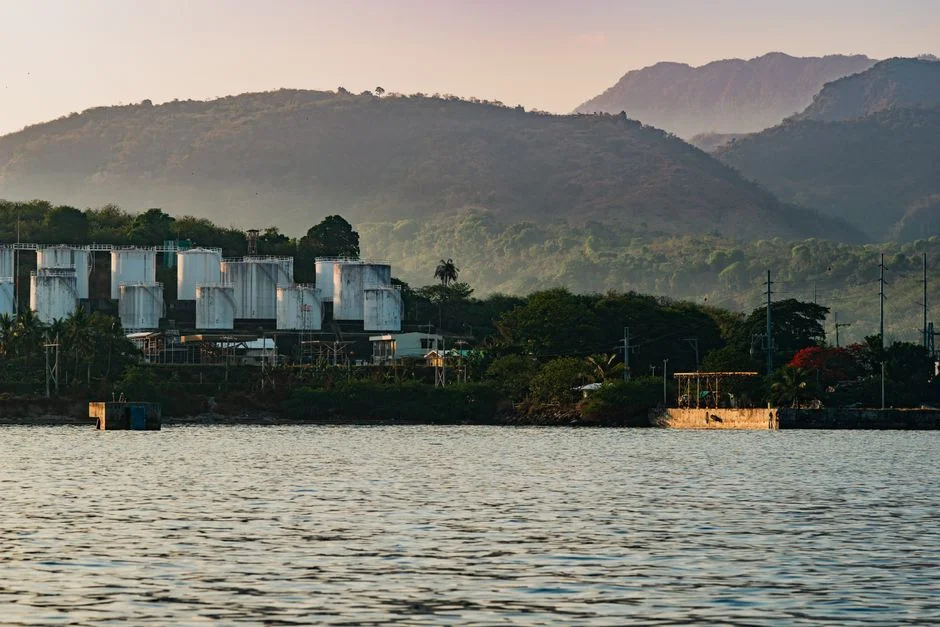
The treatment boundary can change the apparent environmental advantage of decentralized MBR, as illustrated by a 2026 life-cycle assessment. The study compared a low-cost MBR serving 1,300 people in Al Qaraa, Saudi Arabia, with centralized extended-aeration activated sludge connected to a 49 km wastewater-transport route; it was a decentralized municipal case study, not a mining benchmark.
According to Life Cycle Assessment of Low-Cost Membrane Bioreactor and Activated Sludge Systems for Decentralized Wastewater Treatment in Arid Regions, published in Membranes on 22 February 2026, the low-cost MBR scenario outperformed the centralized option in 13 of 15 selected midpoint impact categories. Normalized endpoint results showed 8% lower human-health impacts and 60% lower resource-depletion impacts. The study found comparable ecosystem impacts. In the activated-sludge scenario, primary treatment dominated most categories because pumping over the transport route created a high energy demand; in the MBR scenario, tertiary treatment used coagulation and granular activated carbon.
That finding cannot be transferred directly to a Price-area mine. Mining duty may involve different transport distances, treatment objectives, chemical consumption, sludge routes, power sources and effluent standards. The MBR cost and selection guide is useful for framing a project-specific comparison, not for supplying a Price price.
Request a life-cycle and operating-cost comparison using actual flow, aeration demand, membrane cleaning, standby power and sludge-disposal routes. Identify whether transport infrastructure is part of the project boundary, and include chemical use, residuals treatment and membrane replacement. The 2026 Al Qaraa study supports the principle that pumping and transportation can dominate an LCA; it does not establish the result for this site.
- Define the flow and loading basis across production, shutdown, washdown and upset periods.
- Model biological treatment, solids separation, pumping, aeration, cleaning, chemicals, standby power and residuals handling.
- Compare identical effluent objectives and transport assumptions for each route.
- Test sensitivity for water and energy sources, membrane replacement and sludge disposal.
- Compare the resulting lifecycle burden with capital cost, operability and compliance risk.
Build the site selection matrix
A defensible selection matrix scores the same criteria for MBR, conventional activated sludge and a hybrid rather than allowing each bidder to define its own comparison basis. The evidence supports separate evaluation of effluent objective, flow variability, metals load, suspended-solids loading, footprint, reuse requirements, fouling risk and sludge route. Price-area permit requirements, climate conditions and reuse criteria remain verification inputs because the supplied sources do not establish them.
Assign weights with the mine’s operations, environmental team and procurement staff before reviewing equipment proposals. Use a transparent scale from poor to strong fit, record the evidence supporting each score and require clarification where the data are missing. Do not award a footprint advantage from a catalog claim alone, and do not treat reuse quality as equivalent to discharge compliance.
| Criterion | Weight | Evidence required | Bidder response |
|---|---|---|---|
| Effluent objective and receiving route | Site-defined | Applicable permit route and verified reuse requirement. | Guaranteed effluent values and test protocol. |
| Flow variability and toxicity | Site-defined | Time-series flow, loading and toxicity data. | Equalization, biological response and upset-handling strategy. |
| Metals and solids load | Site-defined | Representative wastewater characterization. | Pretreatment, polishing and solids-removal scope. |
| Available footprint | Site-defined | Confirmed plot area and operating clearances. | Installed-area drawing and equipment arrangement. |
| Reuse requirements | Site-defined | End-use water-quality criteria. | Documented reuse performance and additional treatment. |
| Membrane fouling and reliability | Site-defined | Pilot results and representative feed data. | Flux, cleaning method, redundancy and spare-parts strategy. |
| Sludge and residuals route | Site-defined | Characterization, handling and disposal constraints. | Mass balance, destination and operating responsibility. |
| Lifecycle cost and burden | Site-defined | Common flow, power, chemical, cleaning and transport basis. | Comparable cost and project-specific LCA. |
Run a pilot with representative mine wastewater. Record membrane flux, cleaning frequency, solids capture, pH adjustment demand, biological toxicity, effluent response to loading changes and behavior under the anticipated shock loads. Require each bidder to state design flow, membrane configuration, guaranteed effluent values, cleaning method, spare-parts strategy, power demand and acceptance-test protocol. A DF flat-sheet MBR membrane module may be proposed for evaluation, but its suitability must be demonstrated with the actual feed.
Verify the receiving authority, permit route and Price-area water-reuse criteria separately. These local requirements are not established by the supplied research and should not be inferred from the arid-region LCA.
Frequently Asked Questions
What will an MBR versus conventional activated sludge system cost for a Price-area mine?
No defensible price can be selected without site flow, wastewater characterization, treatment targets and system-boundary assumptions. Ask each bidder for a like-for-like capital and operating cost covering biological treatment, aeration, solids separation, membrane cleaning or replacement, chemicals, standby power, residuals handling and sludge disposal. Also request the inputs behind the quote so that sensitivity to flow, power and cleaning frequency can be evaluated.
How should an MBR supplier be screened before selection?
Screen the supplier against verifiable operating and acceptance data, not a generic performance statement. Request representative-feed pilot results, membrane configuration, guaranteed effluent values, cleaning method, power demand, spare-parts strategy and a contractual acceptance-test protocol. Confirm who performs commissioning, operator training, maintenance support and membrane replacement work.
Does clarified effluent from an MBR satisfy both reuse and discharge requirements?
No. Effluent reuse and discharge compliance are separate decision gates with different evidence requirements. Confirm the applicable receiving authority, permit route and local reuse criteria before selecting equipment, because the supplied sources do not establish Price-area requirements. Pilot performance should be measured against the verified objective for the intended discharge or reuse route.
When does a hybrid train make more engineering sense than a single MBR or activated-sludge system?
A hybrid deserves evaluation when hydraulic variability, biological toxicity, suspended solids, oil and grease, pH or metals characteristics make a direct membrane feed unreliable. Equalization can stabilize hydraulic and loading conditions, while biological pretreatment can reduce membrane fouling; a solids-removal stage may also be required upstream. The mining wastewater MBR comparison provides a route-specific reference, but the hybrid should be justified by pilot evidence from representative mine wastewater.