Confirm the discharge route and controlling authority
An indirect industrial discharge to a municipal sewer is governed through Clean Water Act §307(b), 40 CFR Part 403, and the receiving publicly owned treatment works (POTW) implements those requirements through its sewer-use ordinance. Ore mining and dressing generally fall under 40 CFR Part 437; applicable plating, pickling, or anodizing operations may also be subject to 40 CFR Part 433 (HydropureWater, “How Mining & Metals Plants Meet Pretreatment Limits Before Sewer Discharge,” 2026). No supplied source establishes Sharpsville-specific limits, so the receiving POTW must provide the binding local requirements before treatment selection or pricing. Begin the worksheet by identifying the authority, permit, categorical subcategory, discharge point, and submission deadline.
The sewer route must remain separate from surface-water permitting. The US EPA states that point-source discharges from mining operations, including discharges from associated impoundments, require NPDES authorization (US EPA, “Industrial Wastewater,” 2026). A facility can therefore need an NPDES permit for a surface-water outfall while also requiring pretreatment approval for a separate sewer connection. Equipment procurement should identify which outfall and permit each design basis serves.
| Fillable worksheet field | Record before design | Responsible source |
|---|---|---|
| POTW and sewer-use ordinance | Legal name, current revision, industrial-user chapter, permit contact | Receiving POTW |
| Industrial-user permit | Permit number, status, renewal date, discharge point | Plant and POTW |
| Categorical classification | Part 437 subcategory; Part 433 applicability for metal-finishing operations | Plant, POTW, regulatory reviewer |
| Applicable limits | Local limits, federal categorical limits, monitoring frequencies, analytical methods | POTW and applicable federal rules |
| Submittal requirements | Design drawings, process narrative, land application or disposal information, analyses | POTW |
| Compliance point | Sample location, flow meter, automatic sampler, access and monitoring provisions | POTW and design engineer |
Characterize every wastewater stream before selecting equipment
Representative source-by-source data, rather than a single plant-average sample, establishes the process basis for a mining or metal-finishing pretreatment train. Separate acid mine drainage, spent process solutions, leach-pad runoff, brine, wash water, sanitary wastewater, and stormwater because their flow patterns and pollutant contributions differ. The sector profile identifies raw drainage and spent solutions at pH 2–4, suspended solids from hundreds to several thousand mg/L, dissolved Pb, Cu, Zn, Cd, Ni, and As, and elevated sulfate or TDS in runoff and brine (HydropureWater, “How Mining & Metals Plants Meet Pretreatment Limits Before Sewer Discharge,” 2026). Those findings identify what to sample; they do not establish the plant’s actual discharge values.
The flow record must distinguish continuous production discharge from batch events. Capture average flow, the peak two-hour flow, batch frequency and duration, shift changes, dump-leach cycles, mill clean-outs, and any discharge restrictions imposed by the POTW. If several process areas discharge to the same sewer, document whether they can be isolated or sampled independently. This prevents a diluted compliance sample from concealing a short, high-strength batch.
EPA explains that POTW local limits are site-specific and are imposed at the end-of-pipe discharge from an industrial user (US EPA, “Pretreatment Standards and Requirements—Local Limits,” 2026). The worksheet should therefore distinguish three evidence classes: measured plant data, confirmed permit obligations, and engineer-selected design values.
| Worksheet input | Minimum record | Evidence owner |
|---|---|---|
| Waste stream | Source, process, batch or continuous status, seasonal variability, segregation controls | Plant operations |
| Flow | Average flow, peak two-hour flow, batch frequency, duration, diurnal profile | Plant operations |
| pH and solids | pH range, TSS, oil and grease, settleability | Accredited laboratory using representative samples |
| Metals | Pb, Cu, Zn, Cd, Ni and As; add POTW-required analytes | Laboratory and POTW |
| Solids and salinity | Sulfate, TDS, and other parameters requested by the POTW | Laboratory and POTW |
| Emerging analytes | PFAS analytical requirements only if requested or otherwise applicable | POTW determines requirement |
| Design basis | Worst confirmed case, selected operating strategy, mass and hydraulic loading | Design engineer |
Size equalization and chemical precipitation for batch control
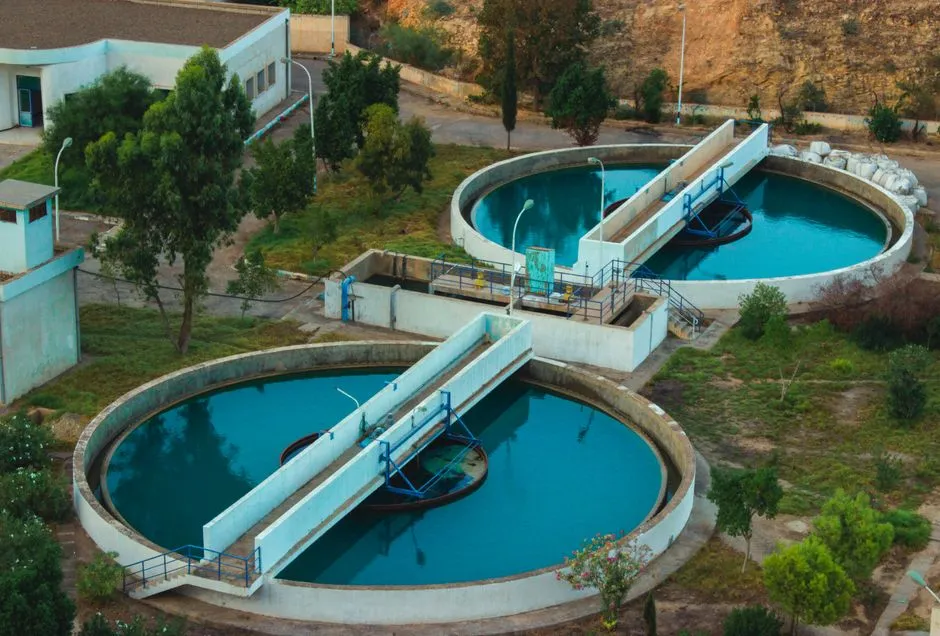
Equalization should be sized for batch attenuation rather than selected from average flow alone. HydropureWater recommends 8–24 hours of average daily flow to damp shift-change, dump-leach, and mill-cleanout discharges and contrasts that provision with an inadequate four-hour basin (HydropureWater, “How Mining & Metals Plants Meet Pretreatment Limits Before Sewer Discharge,” 2026). Use the confirmed batch inventory and discharge restrictions to select the duration; do not assume that hydraulic buffering alone can correct a chemically incompatible stream.
Place pH adjustment downstream of equalization so the treatment train receives a blended influent. The same source identifies pH 6.5–9.0 as the design target and recommends staged reactors when influent variation exceeds two pH units (HydropureWater, “How Mining & Metals Plants Meet Pretreatment Limits Before Sewer Discharge,” 2026). Hydroxide precipitation is the normal starting point because lime and sodium hydroxide are established reagents. Sulfide polishing is justified when the confirmed local limit cannot be met by hydroxide precipitation; that route requires sealed reactors and hydrogen sulfide control. The source reports sulfide residual metals at 0.01–0.05 mg/L compared with 0.5–2.0 mg/L for hydroxide, while sulfide reagent cost is two to four times higher (HydropureWater, same title, 2026).
Jar testing must determine the pH window for each metal. Properly controlled systems in mining and metals service routinely achieve 85–95% total metals removal (Fluence, 2024-11, as cited by HydropureWater, 2026). Specify PLC-controlled pH and coagulant dosing to hold pH within a ±0.2 band, a control recommendation attributed to HydropureWater (2026). This is a control target, not proof of regulatory compliance.
| Decision point | Select when | Required verification |
|---|---|---|
| Equalization duration | Batch releases can exceed downstream hydraulic or chemical capacity | Batch inventory, peak two-hour flow, POTW discharge restrictions |
| Hydroxide precipitation | Metal solubilities can meet confirmed local limits at practical pH | Jar-test pH profile and residual metals |
| Sulfide polishing | Confirmed residual-metal limit remains unmet by hydroxide treatment | Jar tests, reagent demand, sealed-reactor and H₂S-scrubber design |
| Polymer aid | Jar tests show improved settling or reduced carryover | Confirm dose, mixing, and effect on filtrate quality |
| Dosing control | pH and reagent demand vary with wastewater composition | PLC control, pH feedback, operator alarms, chemical storage |
Choose DAF or lamella from the solids and flow
DAF is the stronger candidate when oil, grease, or fine colloidal metals dominate; lamella is stronger for a primarily metal-hydroxide sludge at higher flow or where footprint is constrained. The supplied comparison reports DAF hydraulic loading of 5–25 m/h, 90–98% TSS removal, and 85–95% oil-and-grease removal in mining or metal-finishing service. It reports lamella surface loading of 20–40 m/h and describes lamella as less effective for free oil and colloidal fines (HydropureWater, “How Mining & Metals Plants Meet Pretreatment Limits Before Sewer Discharge,” 2026). These performance figures support screening, but final sizing still requires representative solids and flow data.
The same source describes a DAF product range of 4–300 m³/h across 13 models, with packaged skids common below 10 m³/h and parallel DAF trains or lamella often more economical above 100 m³/h (HydropureWater, 2026). A published model range is not a basis for selecting a vendor unit. The engineer must reconcile peak batch flow, selected hydraulic loading, tank dimensions, turndown, and redundancy with the plant’s actual records.
For an oil-bearing or colloidal stream, evaluate a dissolved air flotation system. For a dense metal-hydroxide sludge stream with a larger flow basis and constrained site area, evaluate a lamella clarifier. The broader mining pretreatment DAF versus lamella design comparison provides a useful engineering framework, but it does not replace site-specific testing.
| Selection factor | DAF | Lamella |
|---|---|---|
| Primary wastewater characteristic | Oil, grease, or fine colloidal metals | Metal-bearing hydroxide sludge |
| Reported hydraulic loading | 5–25 m/h | 20–40 m/h |
| Reported mining or metal-finishing removal | 90–98% TSS; 85–95% oil and grease | Heavy metal-hydroxide floc separation |
| Footprint implication | Compare available area against recovered floc and oil handling | Compact footprint relative to conventional clarification |
| Required plant inputs | Oil and grease, colloid character, floc test, peak flow | Solids production, settling velocity, peak flow, sludge-blanket criteria |
Use polymer coagulant aid at 0.5–3 mg/L only where jar testing demonstrates improved settling (HydropureWater, 2026). A supplier should demonstrate performance with the plant’s representative chemistry, not only a clean-water test.
Add filtration, disinfection and regulated sludge handling
Solids control after clarification can require a multimedia safety filter, but its necessity depends on residual solids and the confirmed POTW limit. HydropureWater describes anthracite, sand, and garnet media, a filtration rate of 1–2 m/h, and backwash triggered by differential pressure. The source reports residual TSS below 10 mg/L after filtration (HydropureWater, “How Mining & Metals Plants Meet Pretreatment Limits Before Sewer Discharge,” 2026). A multimedia filter should therefore be sized around the required solids-removal duty and validated backwash cycle, not only average effluent flow.
Add disinfection only when the POTW’s ordinance or collection-system conditions require it. The supplied source identifies chlorine dioxide at 1–5 mg/L where a residual is required (HydropureWater, 2026). This is a conditional design input, not evidence that a Sharpsville discharge requires chlorine dioxide.
Clarifier and flotation solids become a managed waste stream. The supplied treatment concept uses a plate-and-frame filter press to produce cake at 25–35% dry solids and returns filtrate to the plant headworks only after POTW approval (HydropureWater, 2026). The plate-and-frame filter press must be selected from the confirmed solids mass, batch cake volume, polymer demand, filtrate quality, and cake-disposal route. The filtration design should also include backwash or wash-water disposition and an operating contingency for an unavailable sludge-dewatering unit.
The final operating plan should define routine discharge monitoring, upset notification, chemical and power-loss response, and contingency storage. These controls are necessary because the treatment train must handle both continuous flow and intermittent batch loads while protecting the POTW from prohibited discharges.
Build the submittal and compliance-acceptance checklist
A purchasable pretreatment package should begin with confirmed regulatory inputs, not generic equipment performance. The proposal must state the governing POTW ordinance, categorical subcategory, design flows, treatment objectives, reagent consumption, automation scope, sampling location, sludge-disposal route, and unresolved assumptions. It should identify which items remain contingent on POTW confirmation or additional plant testing.
Make final acceptance conditional on written POTW acceptance of the treatment concept, local-limit calculation, monitoring plan, and sludge-disposal route. Do not accept a generic statement that the equipment “meets pretreatment requirements.” Tie performance guarantees to the confirmed local limits and representative influent data, with test methods and operating conditions stated.
The procurement scope should also cover startup, operator training, chemical storage, maintenance, spare parts, emergency shutdown, and permit-renewal support. For a more regional approach to mining wastewater treatment for regional sewer compliance, compare the same sequence: authority confirmation, source characterization, treatment selection, and acceptance testing.
| Acceptance item | Required response | Status field |
|---|---|---|
| Regulatory basis | POTW ordinance, permit, categorical subcategory, discharge point | Confirmed / unresolved |
| Design basis | Average flow, peak two-hour flow, batch inventory, representative analyses | Confirmed / unresolved |
| Treatment objectives | Confirmed local limits mapped to each unit operation | Confirmed / unresolved |
| Equipment scope | Flow capacity, materials, automation, controls, redundancy, utilities | Confirmed / unresolved |
| Performance test | Representative influent, sampling method, test parameters, acceptance criteria | Confirmed / unresolved |
| Sludge route | Mass balance, cake endpoint, filtrate disposition, disposal documentation | Confirmed / unresolved |
| Operations | Startup, training, maintenance, spares, chemicals, emergency response | Confirmed / unresolved |
| Permit support | Drawings, operating narrative, monitoring plan, renewal assistance | Confirmed / unresolved |
Frequently Asked Questions
Is a Sharpsville mining plant governed by NPDES or pretreatment for a sewer discharge?
A sewer discharge is governed through the CWA §307(b) pretreatment program and 40 CFR Part 403, with the receiving POTW enforcing the sewer-use ordinance (HydropureWater, 2026). NPDES covers separate point-source discharges to surface water; the US EPA states that mining point sources, including associated impoundment discharges, require NPDES authorization (US EPA, “Industrial Wastewater,” 2026). Confirm the exact discharge route and outfall before ordering treatment equipment.
When is DAF preferable to a lamella clarifier for mining wastewater?
Prefer DAF when oil, grease, or fine colloidal metals are present. The supplied comparison reports DAF performance of 90–98% TSS removal and 85–95% oil-and-grease removal in mining or metal-finishing service, with hydraulic loading of 5–25 m/h (HydropureWater, 2026). Prefer lamella when the main stream is metal-hydroxide sludge, flow is higher, or area is constrained; its reported surface-loading range is 20–40 m/h. Confirm the choice with representative settling and solids tests.
What should a mining pretreatment proposal include before equipment purchase?
Require the POTW ordinance, industrial-user permit, categorical subcategory, local-limit calculation, representative wastewater analyses, average and peak flow records, treatment train, reagent demands, automation, sampling location, sludge route, and performance-test method. Identify every unresolved input and its owner. Do not rely on generic removal percentages because the compliance guarantee must correspond to confirmed limits and representative influent.
How should the equalization basin be sized for batch mine-drainage flows?
Use the measured batch inventory, peak two-hour flow, and POTW discharge restrictions. HydropureWater recommends 8–24 hours of average daily flow to attenuate batch discharges (2026), but that recommendation does not replace a site hydraulic and chemical mass balance. Confirm the selected volume, mixing performance, diversion capability, and contingency route with the design engineer.
Are there verified Sharpsville-specific discharge limits or prices in this guide?
No. The supplied evidence establishes federal pathways and general treatment guidance, but it does not establish a Sharpsville POTW ordinance, local limits, monitoring rules, or equipment price. Request the current sewer-use ordinance and written industrial-user permit from the receiving POTW. For budgeting, ask each bidder for a quotation using the confirmed flow, wastewater analyses, selected chemistry, utilities, sludge route, and required acceptance testing. Also request lead time, installation scope, training, and performance guarantees.
Related Equipment
- dissolved air flotation system — specifications, capacity range, and technical data