Identify the permit that controls the discharge
Mining and metals plants near Greenville generally comply with sewer-discharge requirements through Clean Water Act Section 307(b), 40 CFR Part 403 local pretreatment program, the receiving POTW industrial-user permit, and the local sewer-use ordinance. Applicable categorical standards may apply under 40 CFR Part 437 or Part 433, but the POTW limits control equipment sizing. A defensible train typically starts with equalization and pH adjustment, then uses hydroxide precipitation with DAF or lamella clarification, filtration and optional membrane polishing. South Carolina may also require approval before constructing a pretreatment facility.
The first step is to identify the receiving authority and discharge point, not to choose a treatment package. A discharge entering a POTW is evaluated through the local pretreatment program; a point-source discharge to surface water requires NPDES coverage. A mine can have both, with different outfalls and different obligations. EPA states that point-source mining discharges, including releases from associated impoundments, require NPDES authorization (U.S. EPA, Industrial Wastewater).
For sewer discharge, the South Carolina Department of Environmental Services (SCDES) explains that the federal pretreatment framework requires POTWs with significant industrial users to control industrial discharges so pollutants do not cause problems at the treatment facility (SCDES, Sewer Pretreatment Program). Confirm with the Greenville-area POTW whether the plant is a significant industrial user, which categorical subpart applies, and whether the industrial-user permit incorporates local limits.
Construction approval is a separate checkpoint. If pretreatment equipment is required to meet the POTW ordinance or industrial-user permit, SCDES must issue a wastewater construction permit before construction of the treatment facility. SCDES identifies the Wastewater Management Section as responsible for POTW pretreatment-program approval and the Federal/Energy/Pretreatment Section as responsible for permitting industrial pretreatment facilities (SCDES, Sewer Pretreatment Program). For a broader local workflow, see the regional mining wastewater sewer-compliance guide.
| Discharge route | Controlling authority | Equipment-sizing implication | Required confirmation |
|---|---|---|---|
| Wastewater enters a Greenville-area POTW | Clean Water Act Section 307(b), 40 CFR Part 403, sewer-use ordinance and POTW industrial-user permit | Size against applicable local limits and sampling or enforcement conditions | Obtain the final ordinance and permit; confirm significant-industrial-user status |
| Point-source discharge enters surface water | NPDES permit under Clean Water Act Section 402 | Size against the NPDES permit and its monitoring conditions | Identify every discharge point, including any associated impoundment discharge |
| Separate sewer and surface-water outfalls | Both routes may apply independently | Keep separate influent, treatment and compliance bases for each outfall | Map each stream to its receiving point and authorization |
Build the permit and influent basis of design
No treatment concept should proceed beyond the conceptual stage until the permit document and stream-specific influent data define the duty. The supplied research does not establish one Greenville-wide numerical limit for pH, TSS or metals. Request the final POTW sewer-use ordinance and industrial-user permit, then extract the permitted pH range, TSS and metal limits, toxicity provisions, monitoring frequency, sampling protocol, flow restriction and enforcement terms.
Sample mine drainage, ore-processing water, tailings-pond effluent and dewatering discharge separately. A blended site sample can conceal an acidic dewatering slug, process reagents or a high-solids tailings release. For each stream, obtain representative laboratory results alongside simultaneous flow measurements. Record peak and average flow rather than relying on an annual production average, and characterize pH, TSS, copper, zinc, lead, arsenic, cadmium and nickel. Add cyanide, ammonia, chloramines, oils, salts or other constituents when the process warrants it. The stream-specific approach is documented in the regional mining pretreatment basis-of-design research.
Determine whether 40 CFR Part 437 governs ore mining and dressing or whether Part 433 applies to metal-finishing operations. Apply the appropriate subpart, then compare those requirements with the POTW’s permit conditions. For a site with several distinct discharges, keep a worksheet for each stream because the applicable unit operations and final disposal point may differ.
| Fillable input | Owner or source | Procurement use |
|---|---|---|
| Final sewer-use ordinance and industrial-user permit | Receiving POTW | Defines controlling discharge conditions, monitoring and enforcement requirements |
| Peak and average flow for each stream | Measured plant records and simultaneous sampling | Sets equalization and hydraulic capacity |
| Representative pH, TSS and metals data | Accredited laboratory, by stream | Determines precipitation chemistry, filtration and polishing needs |
| Applicable categorical subpart | Regulatory review based on actual operations | Identifies federal pretreatment requirements that must be reconciled with local limits |
| Process-specific constituents | Process engineers and laboratory | Prevents selection of a train that omits treatment for cyanide, ammonia, oils or salts |
| Sludge destination and filtrate-return assumptions | POTW, waste handler and treatment designer | Defines dewatering, storage and disposal interfaces |
Match each wastewater stream to the treatment train
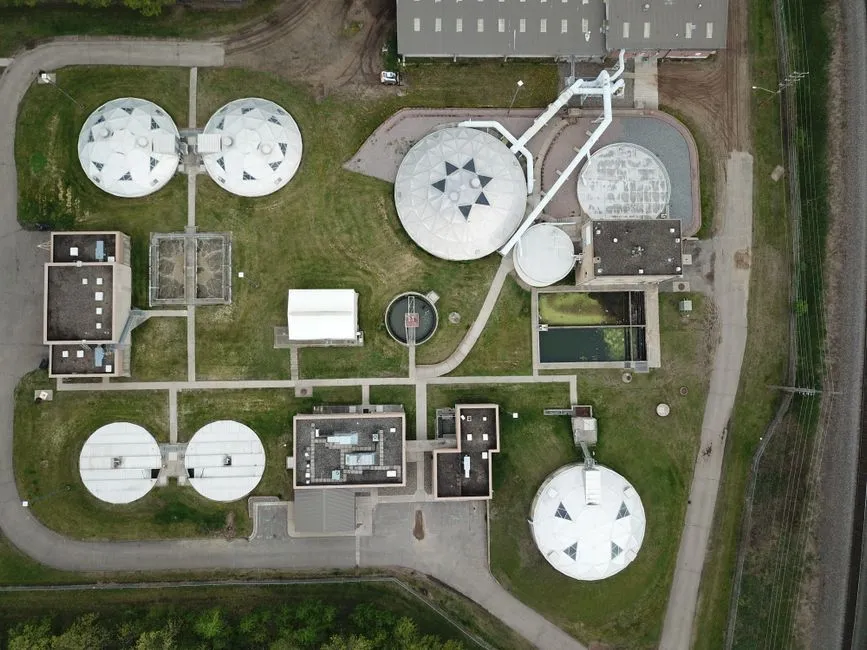
The treatment train should follow the contaminant and flow characteristics of each stream, not a fixed sequence copied from another mine. Equalization, pH correction, precipitation, clarification, filtration and optional membrane polishing may be justified by the data, but each unit must have a stated design duty.
Equalization is the first buffer against batch discharges. The mining pretreatment guide cites 8–24 hours of average daily flow as a common design range and warns that a 4-hour basin may pass upstream spikes into clarification (HydropureWater, How Mining & Metals Plants Meet Pretreatment Limits Before Sewer Discharge). Use the actual discharge sequence to test whether that detention can absorb dump-leach, mill-cleanout or shift-change releases. Then correct pH before separation. Metal hydroxide precipitation is the default because the chemistry is established and widely used; sulfide polishing should be considered only where residual-metal requirements justify additional reagent and hydrogen-sulfide off-gas controls (HydropureWater, How Mining & Metals Plants Meet Pretreatment Limits Before Sewer Discharge).
Select clarification according to the solids. Use a DAF system for mining wastewater solids separation when oil, grease, buoyant fines or difficult colloids dominate. Use lamella clarification for dense metal-hydroxide sludge, higher flow or a constrained footprint. The cited hydraulic-loading ranges are 5–25 m/h for DAF and 20–40 m/h for lamella (HydropureWater, How Mining & Metals Plants Meet Pretreatment Limits Before Sewer Discharge). The mining pretreatment DAF versus lamella comparison provides a more detailed selection framework.
Use multimedia filtration as a residual-solids barrier and as pretreatment for membranes. Where ultrafiltration is selected, the supplied catalogue range is 2,000–40,000 L/h with 0.03-micron PVDF membranes, automatic backwash and air scour. Add reverse osmosis only when local limits or reuse objectives require dissolved-metal and salt removal. The regional guide cites 50–70% recovery for AMD feed and 70–85% when RO precedes a thermal zero-liquid-discharge stage (HydropureWater, How Mining & Metals Plants Near Enterprise, US Meet 2026 Pretreatment Limits, 2026-02). For a separate site-condition comparison, consult the mining wastewater DAF and clarifier selection guide.
| Stream or condition | Primary treatment decision | Next-step criterion |
|---|---|---|
| Acid mine drainage with variable flow and acidic pH | Equalization followed by controlled pH adjustment and hydroxide precipitation | Add sulfide polishing only if residual-metal limits require it and off-gas controls are included |
| Ore-processing water containing oils, reagents or fine colloids | Equalization and chemical conditioning; use DAF when solids are buoyant or oily | Use filtration to protect downstream membrane or discharge limits |
| Tailings-pond effluent with dense suspended solids | pH correction, precipitation and lamella clarification | Confirm sludge-blanket handling and filtrate return |
| Dewatering discharge with sharp chemistry swings | Dedicated equalization and stream-specific pH control | Keep it separate until sampling demonstrates compatible treatment |
| Dissolved metals or salts remain above permit conditions | Multimedia filtration followed by RO if required | Require a recovery curve for the actual feed and any reuse objective |
Specify controls, monitoring and sludge handling
Specify the control system around the permit, not around a generic PLC panel. A PLC-controlled chemical dosing system should meter pH adjusters, coagulants and flocculants using the measured pH, flow and treatment-stage signals. The final control narrative should define control modes, chemical storage limits, fail positions, alarms and operator response.
Require continuous or interval-based pH and flow monitoring, plus representative sampling for permit parameters. The monitoring frequency and sampling method must be checked against the industrial-user permit. Define the response when a limit is approached: isolate the affected stream, stop the batch release, divert to equalization, or place the discharge on hold. Without that logic, an automatic skid may continue treating a chemically unsuitable load and produce a noncompliant discharge.
Include mine water sludge dewatering as part of the treatment scope. The mining pretreatment guide identifies a plate-and-frame filter press for metal-bearing sludge and describes filtration as a route to a stackable cake (HydropureWater, How Mining & Metals Plants Meet Pretreatment Limits Before Sewer Discharge). Route filtrate back to the process only after confirming hydraulic loading, chemistry compatibility and the POTW’s acceptance of the recycle stream. Otherwise, provide a separate holding or disposal route.
Require guarantees against each applicable permit limit under representative influent conditions. A removal percentage or equipment-capacity statement does not establish compliance unless the guarantee states the load, flow, pH and operating conditions to which it applies. Include bypass, backwash and power-loss responses in the acceptance protocol.
Issue a vendor-ready equipment and compliance checklist
A comparable proposal begins with the controlling documents and measured wastewater data. Send bidders the POTW ordinance, industrial-user permit, stream-by-stream flow records, laboratory results, selected treatment concept, monitoring points and sludge-handling assumptions. Require each bidder to identify missing inputs, develop preliminary sizing, state permit-based performance guarantees, list instruments and controls, quantify utility and chemical requirements, and identify lead-time-critical items. The supplied research does not establish a defensible market price or standard delivery period for a complete mining pretreatment train.
Request references for mining or metals installations at comparable flow and wastewater variability. A supplier should show that its proposed DAF or lamella, filtration, membrane and dewatering equipment operates as an integrated process rather than as disconnected packages. Require a site-specific basis of design before final pricing, including the duty assigned to each stream and the operating envelope used for guarantees.
Also assign construction-approval responsibilities. SCDES states that a wastewater construction permit must be issued before an industry constructs a pretreatment facility needed to meet POTW requirements (SCDES, Sewer Pretreatment Program). The project schedule should therefore distinguish conceptual design, permit documentation, construction approval, fabrication, installation and commissioning. The mining pretreatment DAF versus lamella comparison can support the equipment-selection portion of the bid package.
| Vendor-package section | Required bidder response | Buyer acceptance check |
|---|---|---|
| Permit basis | List each controlling permit condition and design margin | Matches the final POTW ordinance and industrial-user permit |
| Influent basis | Show sizing calculations by stream | Uses measured peak and average flows and representative chemistry |
| Equipment | Provide preliminary sizing, materials and operating range | Every unit has a defined contaminant-removal or buffering function |
| Controls and monitoring | List instruments, alarms, interlocks and data outputs | Supports permit sampling, flow control and upset response |
| Performance guarantee | State enforceable outlet conditions and test conditions | Written against permit limits rather than removal percentage alone |
| Sludge and filtrate | Define solids capture, dewatering and filtrate destination | Includes compatible recycle or a separate disposal route |
| Approvals and schedule | List submission deliverables and long-lead items | Places construction approval before fabrication or installation where required |
| Price | Provide a site-specific quotation with exclusions | States assumptions, exclusions, utilities, chemicals and freight basis |
Frequently Asked Questions
How should a mining plant size pretreatment equipment for a Greenville-area sewer discharge?
Size from peak and average flows, representative stream chemistry and the final POTW industrial-user permit. Sample mine drainage, process water, tailings effluent and dewatering discharge separately; identify the appropriate categorical subpart; then assign equalization, precipitation, clarification and polishing duties by stream. The mining pretreatment research requires peak and average flow, stream-specific pH and metals data, local limits and any reuse target for supplier sizing (HydropureWater, How Mining & Metals Plants Near Enterprise, US Meet 2026 Pretreatment Limits, 2026-02).
Which checks should buyers use when selecting a treatment-equipment supplier?
Compare bidders against the submitted basis of design, treatment-train fit, controls scope, permit-based acceptance criteria, comparable mining or metals references and construction-approval responsibilities. Require a site-specific basis of design before final pricing and ask for references at comparable flow and wastewater variability. A reference should substantiate the proposed combination of unit operations, not merely show that the supplier sells a DAF, clarifier or membrane skid.
What does a complete mining pretreatment train cost?
Request a site-specific quotation; the supplied research provides no standard price range for a complete mining pretreatment train (HydropureWater, How Mining & Metals Plants Near Enterprise, US Meet 2026 Pretreatment Limits, 2026-02). Give each bidder the permit limits, stream-specific flows and chemistry, proposed treatment concept, utilities, sludge destination and controls scope. Require the quotation to identify exclusions and assumptions so the bids can be compared on the same basis.
What is the main compliance risk when selecting treatment equipment?
The main risk is sizing against the wrong permit or an unverified local limit. For sewer discharge, confirm the POTW ordinance, industrial-user permit and applicable categorical standards before equipment selection; for surface-water releases, obtain NPDES coverage for the applicable point source. Then require written performance guarantees tied to the controlling permit conditions. SCDES also requires construction approval before building a treatment facility needed for POTW compliance (SCDES, Sewer Pretreatment Program).