Establish the Controlling Discharge and Compliance Route
Mining and metals plants near Demopolis that discharge to a municipal sewer generally comply through Clean Water Act §307(b) and the local POTW’s pretreatment program under 40 CFR Part 403, not through an NPDES permit for that sewer discharge. EPA confirms that local limits are site-specific and are imposed at the industrial user’s end-of-pipe connection. The equipment train should cover equalization, pH adjustment, metals precipitation, solids separation, filtration, and sludge dewatering, while meeting any applicable 40 CFR Part 437 or Part 433 requirements. Because no Demopolis-area ordinance or site permit was supplied, the first step is to obtain the controlling POTW limits and characterize the wastewater before sizing DAF or lamella equipment.
The first engineering decision is to identify the receiving authority for every proposed outfall. An indirect industrial discharge to a POTW is subject to pretreatment requirements under 40 CFR Part 403, while a direct discharge to surface waters is governed through the NPDES program under Clean Water Act §402 (HydropureWater, 2026). A mine may operate both routes, so the sewer connection cannot be assumed to cover runoff or other direct discharges. EPA identifies NPDES permitting as the framework for industrial wastewater discharges (U.S. EPA, Industrial Wastewater, January 19, 2017 snapshot).
For the sewer route, request the controlling sewer-use ordinance, industrial-user permit application, issued permit, local limits, monitoring forms, sampling instructions, approved analytical methods, and enforcement provisions from the receiving POTW. EPA states that local limits are site-specific, may be numeric or narrative, and are imposed at the point where the industrial user connects to the POTW collection system (U.S. EPA, “Pretreatment Standards and Requirements—Local Limits,” supplied research). No Demopolis-area ordinance, numerical limit, sampling protocol, or permit condition appears in the supplied research; those items remain verification gates, not assumed design inputs.
| Decision gate | Document or fact required | Engineering consequence |
|---|---|---|
| Discharge route | Approved site layout identifying sewer connections and surface-water outfalls | Assign each stream to POTW pretreatment, NPDES, or separate authorization. |
| POTW authority | Name of receiving sewer authority, sewer-use ordinance, and industrial-user permit | Establish the legally controlling local requirements before selecting equipment. |
| Local limits | Pollutant-specific daily and monthly limits, prohibited discharges, pH range, and monitoring frequency | Set preliminary performance targets and the analytical suite. |
| Compliance procedure | Sampling location, sample type, approved methods, reporting forms, and monitoring records | Define monitoring equipment, chain of custody, data validation, and reporting responsibilities. |
| Authorization boundary | Written confirmation of connection acceptance and any direct-discharge permits | Prevent a treatment train intended for sewer discharge from being substituted for an NPDES compliance basis. |
Map Categorical Duties and Stream-by-Stream Wastewater Risks
Ore mining and dressing operations typically fall under 40 CFR Part 437, while plating, pickling, or anodizing operations may also fall under 40 CFR Part 433 (HydropureWater, 2026). Classification determines the applicable federal categorical framework, but it does not replace the site-specific POTW limits. The buyer should obtain the applicable subcategory, production-based applicability information, and any federal or local replacement limits before treating them as design criteria.
For metal finishing, the supplied source identifies copper limits of 3.38 mg/L daily maximum and 2.07 mg/L monthly average, and total chromium limits of 2.77 mg/L daily maximum and 1.71 mg/L monthly average under 40 CFR Part 433 (HydropureWater, 2026). These values apply only after metal-finishing categorical applicability has been established. The controlling Demopolis-area POTW requirements must be confirmed separately; no supplied source verifies the local limits applicable to a particular Demopolis-area operation.
Do not characterize a mixed plant as one wastewater stream. Acid drainage, process solutions, contact water, storm runoff, wash water, and sanitary flow can differ sharply in chemistry and flow behavior. The supplied mining profile reports pH values of 2–4 in raw acid mine drainage and spent process solutions, suspended solids from hundreds to several thousand mg/L, and elevated sulfate and TDS in runoff and brine streams (HydropureWater, 2026). Each source therefore needs its own flow, variability, constituent, and discharge-route assessment before treatment units are combined.
- Sample each source separately across representative operating periods, including batch dumps, clean-outs, storm events, and normal production.
- Measure pH, TSS, dissolved and total metals, sulfate, TDS, oil and grease, and any constituent identified by the categorical standard or POTW permit.
- Determine whether toxicity testing is required and identify the test species and analytical method specified by the POTW.
- Calculate both average and peak mass loads, not concentration alone, for sizing equalization, chemical feed, solids separation, filtration, and sludge handling.
| Wastewater source | Primary risks to verify | Design implication |
|---|---|---|
| Acid mine drainage | Low pH, dissolved metals, suspended solids, sulfate, variable flow | Confirm whether the stream reaches the sewer and characterize its contribution to hydraulic and metal loading. |
| Spent process solutions | Concentrated metals, extreme or variable pH, batch discharges | Use source segregation, equalization, staged pH control, and parameter-specific precipitation. |
| Runoff and contact water | Suspended solids, variable flow, episodic rainfall response | Separate storm-driven hydraulic peaks from process flows and verify each receiving authorization. |
| Plating, pickling, or anodizing streams | Complexed metals, chromium-bearing waste, pH variation, oil and grease | Test applicability of Part 433 and examine DAF and chemical-precipitation requirements for the individual stream. |
| Sanitary flow | Organic load and pathogens | Keep domestic wastewater separate unless the POTW expressly approves any combined treatment route. |
Select the Treatment Train from Mass Load to Final Discharge
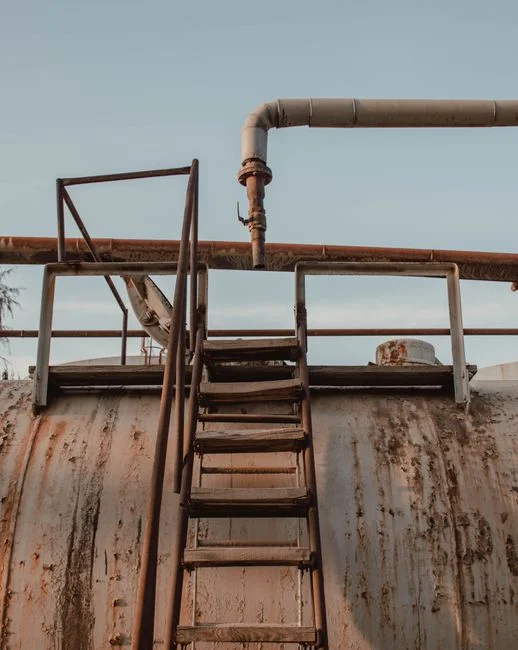
The treatment train should follow the waste’s chemical and hydraulic behavior: equalization first, controlled pH adjustment and metals precipitation next, solids separation after floc formation, filtration as a final solids barrier, and sludge handling in parallel with the liquid stream. Each stage needs a measurable output tied to the controlling permit rather than a general removal claim.
- Equalization. Size the basin for 8–24 hours of average daily flow to dampen batch discharges associated with shift changes, dump-leach cycles, and mill clean-outs (HydropureWater, 2026). Confirm available footprint, mixing, settling, and bypass provisions before fixing that basis.
- pH control and hydroxide precipitation. Use staged lime or caustic adjustment, followed by hydroxide precipitation and polymer aid where floc formation requires it. Properly controlled precipitation systems are reported to achieve 85–95% total metals removal in mining and metals service (HydropureWater, 2026). A PLC-controlled chemical dosing skid should be specified around the actual reagent, feed range, control sequence, and alarm requirements.
- Solids separation. Select DAF or lamella after examining oil, colloidal content, flow, footprint, sludge properties, and required turndown. The separation unit must prevent metal-hydroxide floc carryover rather than merely provide a nominal settling surface.
- Filtration. A multimedia filter provides a final solids barrier and is described in the supplied source as capable of reducing residual TSS below 10 mg/L (HydropureWater, 2026). Final design must also satisfy the actual POTW limit and permit-specific monitoring requirements.
- Disinfection. Add UV or chlorine dioxide only where the POTW’s requirements or discharge route call for it. The supplied research states that chlorine dioxide can be dosed at 1–5 mg/L, but the required residual, contact conditions, and analysis method must come from the controlling permit.
- Sludge handling. Route clarifier or DAF sludge to thickening and dewatering, with filtrate returned to the process headworks only after confirming hydraulic and mass-balance effects.
Design the liquid train around the peak 2-hour flow and include 20–30% turndown capacity (HydropureWater, 2026). Those values are a design basis from the supplied commercial source, not a substitute for site flow data. The governing target remains the Demopolis-area POTW’s local limit where it is more restrictive than the applicable categorical standard. For chromium and other metal-finishing chemistry, review the chemical precipitation design for electroplating wastewater, then validate the resulting train against the actual stream and permit.
Choose DAF or Lamella Using Stream and Site Conditions
DAF is the stronger starting candidate when the wastewater contains oil, grease, or fine colloidal metals; lamella is generally the stronger candidate for high-flow metal-hydroxide sludge where footprint is constrained. The separation equipment still must be sized from the peak mass and hydraulic loads, because a nominal capacity comparison does not establish permit performance.
The supplied source reports DAF hydraulic loading of 5–25 m/h, TSS removal of 90–98%, and oil-and-grease removal of 85–95% in mining or metal-finishing service; standard capacity ranges from 4 to 300 m³/h across 13 models (HydropureWater, 2026). For a metal-bearing stream requiring flotation, an industrial DAF system for metal-bearing wastewater should be evaluated as a possible project-specific solution. These published values are starting references, not guarantees for the Demopolis-area wastewater.
The same source reports lamella surface loading of 20–40 m/h and a footprint approximately one-third that of a conventional clarifier (HydropureWater, 2026). Lamella is therefore relevant where high flow, dense floc, and limited land area dominate. Its separation duty, sludge blanket, recirculation arrangement, and final hydraulic loading must be confirmed through site-specific testing and vendor design. See the project comparison of DAF and lamella for mining pretreatment before fixing the preliminary configuration.
| Selection factor | Prefer DAF when | Prefer lamella when |
|---|---|---|
| Wastewater character | Oil, grease, or fine colloidal metals are significant. | The primary solids are settled or flocculated metal hydroxides. |
| Hydraulic basis | The flow and load fit the demonstrated DAF hydraulic range and available surface area. | Higher surface loading and a compact footprint justify the inclined-plate configuration. |
| Site constraint | There is adequate footprint for the flotation cell and associated recycle saturation equipment. | Available land is insufficient for a conventional clarification footprint. |
| Sludge behavior | Floated sludge and recovered water require the DAF-specific thickening route. | A dense, continuous metal-hydroxide sludge can be withdrawn from the lamella compartment. |
| Permit risk | Selected when pilot data demonstrate the required solids and pollutant removal at peak conditions. | Selected when pilot data demonstrate low carryover, effective sludge withdrawal, and required turndown. |
| Required checks | Oil condition, recycle saturation, floc integrity, peak loading, and floating-sludge withdrawal. | Surface loading, feed chemistry, floc condition, sludge blanket, and polymer demand. |
Build the Procurement and Compliance Acceptance Package
Equipment procurement should begin only after the discharge route, source characterization, POTW limits, and preliminary mass balance are documented. A supplier then has a defined basis on which to guarantee hydraulic capacity, treatment performance, chemical consumption, sludge generation, and compliance instrumentation. A general equipment brochure is not an acceptance test.
Use jar testing to establish parameter-specific precipitation conditions before fixing reagent dosing and clarifier design (HydropureWater, 2026). The test should vary the conditions relevant to the actual metals and identify pH, reagent dose, mixing, settling or flotation behavior, residual concentration, and sludge settleability. A pilot test should then confirm hydraulic behavior and integrated solids capture where scale, chemistry, or control risks justify it.
For sludge, a plate-and-frame filter press is one dewatering option; the supplied article describes 25–35% dry-solids cake (HydropureWater, 2026). The waste code, recovered-metal routing, disposal-site acceptance, filtrate quality, and liability allocation remain site- and waste-specific and must not be inferred from equipment capacity.
| Procurement package item | Required supplier deliverable | Buyer acceptance check |
|---|---|---|
| Regulatory basis | Identified POTW, permit, categorical standard, local limits, and assumed applicability | Verify against current controlling documents supplied by the authority and owner. |
| Design basis | Stream-by-stream flow, mass load, operating envelope, and turndown | Reconcile every assumption with the approved sampling program. |
| Performance guarantee | Defined inlet conditions, outlet parameters, test duration, and sampling protocol | Ensure the guarantee tests the controlling permit endpoint rather than a selected point in the train. |
| Chemical and utility demand | Reagent consumption, electrical demand, water, air, and backwash requirements | Check the basis against pilot chemistry and operating variability. |
| Sludge balance | Expected yield, solids concentration, dewatering result, filtrate return, and disposal route | Confirm waste acceptance and custody requirements before pricing. |
| Controls and records | PLC logic, pH and flow control, alarms, data logging, calibration, and maintenance records | Match monitoring requirements to the POTW’s sampling and reporting rules. |
| Performance test | Protocol for startup, stabilization, sampling, laboratory coordination, and deficiency correction | Define what constitutes a failed test and the remedy for noncompliance. |
Frequently Asked Questions
What Demopolis-area POTW limits apply to mining and metals wastewater?
No supplied source verifies a Demopolis-specific numerical limit, sampling protocol, or permit condition. The responsible POTW must provide the controlling sewer-use ordinance and industrial-user permit. Use the factory guide to mining DAF and clarifier selection as a method framework, not as a source of Demopolis limits.
How should a buyer estimate the cost of a pretreatment train near Demopolis?
Request a quotation tied to the verified permit, source-by-source mass balance, pilot results, and treatment basis rather than asking for a generic unit price. Require the quotation to separate equipment, civil work, chemical storage, electrical service, controls, installation, startup, performance testing, sludge handling, and annual operating inputs. Without a site design basis and supplier proposal, no defensible price can be stated from the supplied research.
Does choosing DAF or lamella equipment establish pretreatment compliance?
No. Equipment selection establishes a treatment capability; compliance also depends on source characterization, pilot testing, operating controls, monitoring, reporting, and permit acceptance. Select the preliminary separator from stream and site conditions, then require performance testing at defined inlet conditions against the controlling discharge endpoint.
Can sulfur or chloride reduction requirements be inferred from the mining and metal-finishing provisions?
No. The cited provisions do not establish site-specific sulfur-reduction, chloride-reduction, sulfate-removal, or TDS limits. Identify those needs from the Demopolis-area POTW requirements, applicable categorical standard, source characterization, and any direct-discharge authorization. Do not infer that hydroxide precipitation alone resolves those parameters.