Establish the discharge route before selecting equipment
Mining and metals plants near the Canada–United States border meet pretreatment obligations by identifying the legal discharge route, the receiving authority and the applicable wastewater limits before selecting treatment equipment. A U.S. sewer discharge is evaluated under Clean Water Act §307(b) and 40 CFR Part 403, with categorical standards under 40 CFR Part 437 or 40 CFR Part 433 where applicable. A Canadian mine may instead require authorization under the Metal and Diamond Mining Effluent Regulations, but sewer acceptance must be confirmed separately with the receiving authority.
For a U.S. sewer discharge, determine whether the facility is a categorical industrial user under 40 CFR Part 437, Part 433 or another applicable category. The pretreatment route protects the receiving POTW, its biological process, sludge-handling system and workers; it is not the same authorization as an NPDES permit for direct surface-water discharge. A mine may require both authorizations because its stormwater and process outfalls can discharge to different receiving waters, as explained in the mining and metals wastewater pretreatment guide.
In Canada, do not apply an MDMER requirement to a sewer connection until the proposed route and authorized final discharge point have been established. Environment and Climate Change Canada’s 2023 status report describes MDMER final discharge points as identifiable points beyond which the operator no longer controls effluent quality; mines must discharge only through those authorized points. That framework does not establish whether a municipal sewer will accept the stream. The receiving municipality or sewer authority must confirm acceptance criteria, prohibited constituents, sampling and enforcement.
| Decision field | Fill before equipment selection | Verification source |
|---|---|---|
| U.S. route | Sewer, surface water, or both; identify each outfall and destination | Site drawings and permits |
| U.S. pretreatment authority | POTW, categorical category, local limits and enforcement terms | POTW and applicable federal category |
| Canadian route | Sewer acceptance, MDMER-regulated discharge point, or both | Receiving authority and mine authorization records |
| Controlling specification | The stricter confirmed sewer, categorical or other applicable requirement | Approved permit or sewer agreement |
Build a site-specific limit and wastewater inventory
Equipment should be selected against confirmed site-specific limits and wastewater characteristics, not federal limits alone. The pretreatment worksheet should record the POTW sewer-use ordinance, categorical applicability, prohibited discharges, monitoring frequency, sampling protocol and enforcement terms. Where an NPDES permit also applies, maintain a separate compliance register because its monitoring and receiving-water requirements are not interchangeable with sewer pretreatment conditions.
The wastewater inventory must cover the parameters that control treatment chemistry: pH, TSS, lead, copper, zinc, cadmium, nickel and arsenic, with sulfate and TDS included because they affect reagent consumption and sludge generation. The HydropureWater pretreatment source reports pH of 2–4 in raw acid drainage and spent process solutions, TSS from hundreds to several thousand mg/L, and dissolved heavy metals, elevated sulfate and TDS in mine-related streams. Those values describe the source stream, not a substitute for site sampling.
Obtain diurnal and batch-flow records, process-origin information, chemical use, temperature, oil and grease, and representative laboratory data from the client. Do not let a supplier infer these inputs from the metal or ore description. Record whether runoff, contact water, process solution, floor wash and spent chemical streams are combined because segregation may provide a lower-cost treatment route. The fabricated metals pretreatment compliance guide provides a useful adjacent-sector review, but the governing limit set still must come from the identified authority.
| Worksheet item | Required entry | Owner |
|---|---|---|
| Limits and monitoring | Maximum and average limits, sampling point, frequency, analytical method and enforcement provisions | Compliance manager |
| Wastewater profile | pH, TSS, Pb, Cu, Zn, Cd, Ni, As, sulfate, TDS, oil and grease | Client and laboratory |
| Flow record | Average, diurnal, batch peak, shift-change and clean-out conditions | Client operations team |
| Process origins | Source streams, segregation, chemical usage, temperature and batch sequence | Process engineer |
| Missing information | Open item, responsible party and required-by date | Project manager |
Decide between DAF and lamella clarification
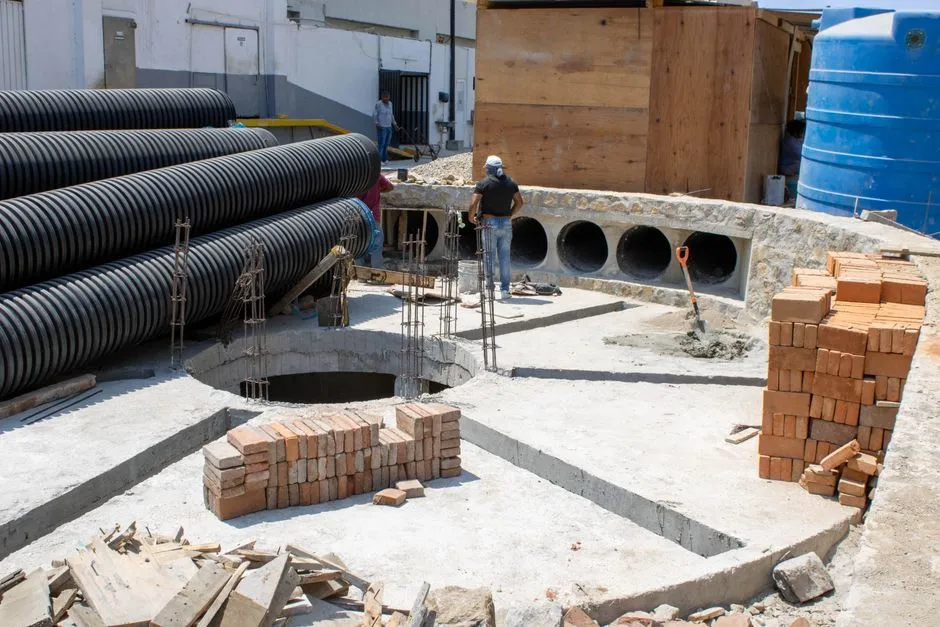
DAF is the appropriate primary clarifier when oil, grease or fine colloidal metals must be separated; lamella clarification is the stronger fit for a stream dominated by metal-hydroxide sludge at high flow or where available footprint is constrained. The HydropureWater source reports DAF hydraulic loading of 5–25 m/h and a supplied equipment range of 4–300 m³/h across 13 models. It reports lamella surface loading of 20–40 m/h. These are source-specific design ranges, not a substitute for sizing against the verified wastewater and peak-flow record.
DAF uses microbubbles to float oil-coated and colloidal particles, whereas lamella uses inclined settling surfaces to separate precipitated flocs. If the wastewater contains free oil, DAF should normally precede or protect conventional clarification. If the principal solids are dense metal-hydroxide precipitates and hydraulic loading is the governing constraint, evaluate a lamella clarifier for metal-hydroxide sludge. If oil and colloidal fines remain in the selected stream, assess a DAF system for mining wastewater.
Use polymer-assisted precipitation when the selected clarification method cannot settle the particles within the available hydraulic loading. The supplied source gives a polymer coagulant-aid application of 0.5–3 mg/L and reports that properly controlled precipitation systems commonly achieve 85–95% total metals removal. Neither the dose nor removal performance can be transferred directly to another site: jar tests must establish the pH optimum, reagent sequence, floc condition and carryover risk.
| Selection condition | DAF | Lamella | Required confirmation |
|---|---|---|---|
| Primary contaminant | Oil, grease or fine colloidal metals | Metal-hydroxide sludge | Representative analytical dataset |
| Hydraulic basis | Within the source range of 5–25 m/h hydraulic loading | Within the source range of 20–40 m/h surface loading | Verified peak and turndown conditions |
| Layout | Requires an appropriate flotation and saturation system | Useful where footprint is constrained | Civil space, access and sludge withdrawal |
| Sludge | Float sludge and possible oil-bearing residue | Dense settled metal-hydroxide sludge | Destination, dewatering and filtrate route |
| Polishing | Residual solids removal if required | Residual solids removal if required | Final limit and upset allowance |
Size the treatment train around batch peaks
Size equalization for the verified batch and shift-change discharge pattern because a brief hydraulic surge can carry pollutants through precipitation and overload clarification. The HydropureWater source specifies 8–24 hours of average daily flow and contrasts that provision with a 4-hour basin that passes upstream spikes directly into the clarifier. The correct duration depends on the measured batch volume, operating schedule, storage constraints and downstream treatment capacity.
Use the source’s preliminary basis of the peak two-hour flow with 20–30% turndown capacity, then check each unit against dump-leach cycles, mill clean-outs and other identified batch discharges. Turndown matters because clarification performance can deteriorate when the feed is too dilute for stable floc formation or when the sludge blanket and solids handling become unstable. Require the bidder to identify whether each proposed unit is installed in parallel, how flow is distributed and how minimum operating flow is maintained.
Place pH correction immediately after equalization. The source recommends staging in two reactors when influent pH swings exceed two units. Jar testing must establish the chemical form, dose and control objective before equipment capacity and reagent systems are fixed. Where automatic dosing is proposed, require confirmation of sensor location, control range, fail-safe response, duty capacity and the treatment response during a sustained batch discharge.
- Establish average flow, peak two-hour flow and maximum batch volume from operating records.
- Calculate equalization storage from the confirmed discharge schedule and operating constraints.
- Check that precipitation reactors, clarifiers, filters and sludge systems retain hydraulic capacity at the governing peak.
- Check minimum operating flow and turndown against the proposed control strategy.
- Confirm batch-disposal sequencing with operations before finalizing tank and pipe capacities.
Select polishing and sludge-handling steps
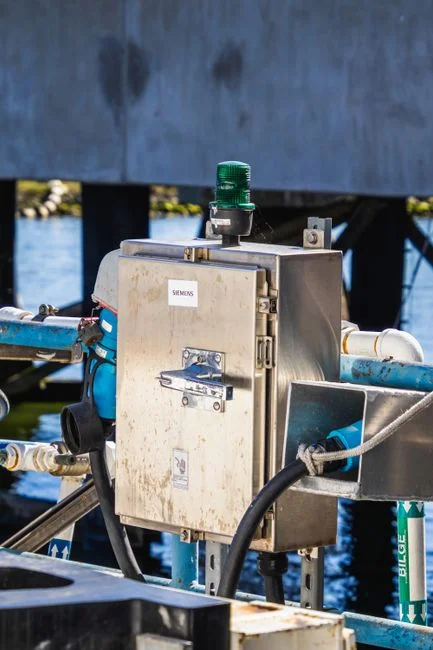
Hydroxide precipitation is the default treatment for dissolved metals, while sulfide polishing should be selected only when the confirmed limit and jar-test results justify its lower residual-metal capability and additional controls. The HydropureWater source reports residual metals of 0.01–0.05 mg/L with sulfide precipitation, compared with 0.5–2.0 mg/L for hydroxide precipitation, but also reports 2–4× higher reagent cost for sulfide. Sulfide systems require sealed reactors and controlled hydrogen sulfide venting and scrubbing.
Provide filtration after clarification when the limit or upset analysis requires a solids barrier. The supplied multimedia-filter application uses a 1–2 m/h filtration rate and reports residual TSS below 10 mg/L. Size the filter around its required backwash cycle rather than average flow, and define how filtration, backwash and equalization interact during batch discharges. If dissolved-metal limits require polishing beyond filtration, add the verified chemistry rather than assuming media filtration will meet it.
Include sludge collection, thickening, dewatering and a final destination in the equipment scope. The source reports 25–35% dry-solids cake from a plate-and-frame filter press. Actual press capacity depends on sludge characteristics and operating cycle, while waste classification and disposal acceptance must be confirmed for the site. Identify whether the cake is a regulated waste, can be hauled for metal recovery or must enter another authorized disposal route. Evaluate filtrate return against the head-of-plant mass balance rather than treating it as an unqualified recycle.
Turn the design into acceptance criteria
A bid should be evaluated against a closed set of site-specific limits, flow conditions and demonstration requirements. Require the proposal to identify the controlling local limit, categorical applicability, peak-flow basis, turndown requirement, sampling method and analytical suite. Supplier claims about removal efficiency should not substitute for guaranteed final effluent quality or the applicable compliance frequency.
Require performance demonstration using the actual wastewater chemistry, including pH, TSS and each metals parameter identified by the governing requirement. Define who supplies the wastewater, who performs sampling, whether results are instantaneous or composite, where samples are taken and which laboratory methods apply. Include clarifier carryover, filter effluent and final sewer-connection samples so that a compliant upstream result cannot conceal an upset downstream.
For a Canadian MDMER-regulated release, the acceptance review must also address authorized final discharge points, monthly-mean concentrations and reported acute-lethality information. Environment and Climate Change Canada’s 2023 status report states that ECCC compares monthly mean concentrations with authorized monthly mean limits and publishes operator-reported acute-lethality results. That source covers final discharge points and the MDMER regime; it does not establish municipal sewer acceptance.
| Bid acceptance item | Required supplier commitment | Evidence required |
|---|---|---|
| Compliance basis | Named route, authority, limit set and applicable category | Permit, ordinance and supplier compliance schedule |
| Hydraulic basis | Peak two-hour flow, batch volume, turndown and minimum flow | Calculation package and process flow diagram |
| Performance | Limits for pH, TSS and applicable metals | Representative-water demonstration and analytical results |
| Control | Automatic dosing, instrumentation and fail-safe response | Control narrative and functional test criteria |
| Solids | Sludge quantity, moisture and destination route | Mass balance and written disposal acceptance |
| Canadian final discharge, where applicable | Authorized point, monthly means and acute-lethality reporting | Mine authorization and reporting records |
Frequently Asked Questions
Are federal categorical limits sufficient for a mining or metals sewer discharge?
No. The federal categorical standard is a compliance floor, while the receiving POTW’s sewer-use ordinance may impose tighter operating limits. Require the bidder to list each governing limit, averaging period, monitoring frequency and enforcement term, and to demonstrate the final effluent against the controlling local requirement.
Should a mining wastewater plant use DAF or a lamella clarifier?
Use DAF when the wastewater contains oil, grease or fine colloidal metals that must be floated. Use lamella when the stream consists mainly of metal-hydroxide sludge, flow is high or
Frequently Asked Questions
How do I know whether my mine wastewater discharge is subject to POTW pretreatment or NPDES requirements?
If your facility discharges process water directly into surface waters such as rivers, lakes, or streams, it falls under the National Pollutant Discharge Elimination System (NPDES) program, governed by the Clean Water Act and specific Effluent Limitations Guidelines (ELGs) for the Ore Mining and Dressing point source category (40 CFR Part 440). These permits typically impose stringent, technology-based limits on metals and total suspended solids.
If your wastewater is routed to a Publicly Owned Treatment Works (POTW), you are subject to the General Pretreatment Regulations (40 CFR Part 403). In this scenario, you must comply with local limits established by the municipal sewer authority to prevent interference with biological treatment processes or pass-through of toxic pollutants, often requiring an industrial user permit.
Should I choose DAF or a lamella clarifier for mining wastewater with oil and colloidal metals?
Dissolved Air Flotation (DAF) is generally superior for removing free and emulsified oils, as well as low-density suspended solids or colloidal materials that tend to float. DAF systems typically achieve high removal efficiencies (often 80-95%) for oil and grease by saturating the influent with micro-bubbles that attach to hydrophobic particles, forcing them to the surface for skimming.
A lamella clarifier is preferred for high-density inorganic solids and precipitated metal hydroxides that readily settle by gravity. While lamella units have a smaller footprint due to inclined plate packs that increase effective settling area, they are less effective than DAF for oil removal and may require significant chemical flocculation to achieve the settling velocities necessary for fine colloidal metal particles.
How much more does sulfide precipitation cost than hydroxide treatment, and when is it justified?
Sulfide precipitation typically involves 20% to 50% higher operating costs compared to hydroxide precipitation due to the higher cost of reagents like sodium sulfide or organosulfides and the need for more complex pH control and toxicity monitoring. However, sulfide precipitation is justified when discharge limits for heavy metals (such as lead, cadmium, or mercury) are extremely low—often in the parts-per-billion (ppb) range—where hydroxide solubility limits are insufficient.
Sulfide precipitation is technically superior because metal sulfides have significantly lower solubility products (Ksp) than metal hydroxides, allowing for compliance with stringent water quality standards. It is specifically justified when dealing with complexed metals or when the effluent must meet "best available technology" standards that exceed the performance capabilities of traditional lime or caustic neutralization.
What flow, sampling and wastewater data should I require from a treatment-equipment supplier before approving a proposal?
You should require a detailed mass balance and hydraulic design basis including peak hourly flow (gpm), average daily flow (gpd), and anticipated variations in influent concentrations (min/max/average). The proposal must include a comprehensive characterization of the wastewater, specifically total and dissolved metal concentrations, oil and grease levels, total suspended solids (TSS), and chemical oxygen demand (COD).
Additionally, request documentation on bench-scale or pilot-scale testing results that demonstrate the specific removal efficiency for your site-specific water chemistry. Ensure the supplier provides the expected sludge production rates (dry tons/year), chemical consumption rates (lbs/day), and the resulting effluent quality compared against your specific NPDES or local sewer discharge permit limits.
How does the Canadian MDMER review differ from a sewer discharge near the United States?
The Canadian Metal and Diamond Mining Effluent Regulations (MDMER) apply specifically to direct discharges into the environment and focus on federal performance standards for deleterious substances, including specific requirements for acute lethality testing using rainbow trout and Daphnia magna. These regulations mandate strict environmental effects monitoring (EEM) programs to assess the impact of effluent on fish populations and benthic invertebrate communities in the receiving water body.
In contrast, a sewer discharge near the United States focuses on protecting the infrastructure and biological health of a municipal POTW. While the MDMER is concerned with regional aquatic ecosystem health and bioaccumulation, sewer pretreatment requirements are localized and prioritize preventing the inhibition of the POTW’s secondary treatment bacteria and ensuring that heavy metal concentrations in the municipal sludge remain low enough to allow for beneficial land application.