Confirm Lawrenceburg's pretreatment compliance route
Mining and metals plants near Lawrenceburg generally need an industrial-user permit before discharging to the city's publicly owned treatment works (POTW), and the permit must be obtained before connection or contribution. The practical route is to characterize pH, acidity, metals, suspended solids, and average and peak flows, then combine chemical adjustment and precipitation with solids separation and polishing as required. DAF, lamella clarification, and UF are not interchangeable: each addresses a different contaminant barrier. Lawrenceburg's industrial-user permit application is the controlling local route, while NPDES establishes the federal framework for industrial wastewater; the supplied research does not provide Lawrenceburg's numeric sewer limits.
Lawrenceburg's pretreatment program requires all significant industrial users proposing to connect to or contribute to the POTW to obtain an Industrial User Permit before connecting or contributing (Lawrenceburg, Kentucky, Pretreatment Program Administration, Ordinance 1991-7 as amended). New users must apply at least 90 days before connection or contribution, while existing permit holders must apply no later than 60 days before permit expiration. The application must include:
- Wastewater constituents and characteristics determined by a laboratory acceptable to the city, with sampling and analysis conducted under EPA Section 304(g) procedures and 40 CFR Part 136.
- Average daily and 30-minute peak wastewater flow rates, including daily, monthly, and seasonal variation.
- Site, floor, mechanical, and plumbing plans showing sewers, connections, and appurtenances.
- Descriptions of activities, facilities, and plant processes, including all materials that are or could be discharged.
- Known pollutant concentrations limited by city, state, or federal pretreatment standards, current consistent compliance, and whether additional pretreatment is required.
- If additional pretreatment is required, the shortest proposed schedule for providing it, with dated commencement and completion milestones. The schedule must be acceptable to the city, and a progress report is due no later than 14 days after each milestone.
The application therefore evaluates the facility as a whole, not only the final discharge point. This distinction matters for a mine or metals operation: materials that could enter the sewer, intermittent washdown, and proposed onsite treatment all affect the permit and equipment basis. Use the industrial wastewater pretreatment compliance guide as a document-checklist reference, but verify all local requirements and unresolved limits directly with the city.
Build the wastewater characterization before choosing equipment
Lawrenceburg's permit application requires average daily flow, 30-minute peak flow, and daily, monthly, and seasonal variation, so equipment selection must begin with a representative sampling plan rather than a nominal production rate. The same code requires constituents and characteristics to be determined by a city-acceptable laboratory using EPA Section 304(g) and 40 CFR Part 136 procedures (Lawrenceburg, Kentucky, Pretreatment Program Administration). A sample collected during a stable production period does not establish the design envelope for storm, washdown, or slug events.
The characterization should cover production swings, storm and washdown events, and the 30-minute peak contribution condition. Request pH, acidity or alkalinity, dissolved and total metals, total suspended solids (TSS), settleable solids, oil and grease where relevant, and sulfate when the discharge may involve acid mine drainage pretreatment. Include metals species where treatment depends on precipitation or biological conversion; total metals alone do not show whether a dissolved fraction will precipitate under the proposed chemistry.
The OSMRE raw mine-drainage pH range of 3.13–4.58 applies to the raw mine-drainage sources studied in the OSMRE co-treatment report issued June 30, 2023. It demonstrates that acidity can be material, but it does not establish the chemistry of any Lawrenceburg discharge. Do not transfer that range into a Lawrenceburg design assumption without site sampling.
| Design-basis input | Why it changes equipment selection | Evidence or decision required |
|---|---|---|
| Average and 30-minute peak flow | Sets hydraulic capacity and equalization requirements. | Lawrenceburg-required flow data, including daily, monthly, and seasonal variation. |
| pH, acidity or alkalinity | Determines whether neutralization is needed before other treatment steps. | Representative analytical results; site chemistry, not a generic range. |
| Dissolved and total metals | Distinguishes a soluble metals load from particulate solids and supports precipitation trials. | Species-specific results and permit limits to be confirmed with the city. |
| TSS and settleable solids | Indicates the required clarification, flotation, filtration, or polishing barrier. | Event-based sampling and applicable local discharge criteria. |
| Oil, grease, floatables, and turbidity | Separates DAF candidates from sedimentation-only options and identifies polishing needs. | Representative stream data and receiving-plant sensitivity. |
| Sulfate and acid mine drainage indicators | Flags acidity and sulfate loading associated with mine drainage. | Results specific to the discharge, plus any co-treatment constraints. |
| Sewer limits and slug criteria | Provides the actual performance boundary for the train. | Not supplied in the research; obtain written confirmation from Lawrenceburg. |
Include complete process information, materials that could be discharged, and all existing or proposed pretreatment operations. For a site operating near Lawrenceburg, use the mining wastewater sewer-compliance process as a model for turning a permit application into a treatment design, while keeping Lawrenceburg's unresolved inputs separate from verified obligations.
Map contaminants to the treatment barriers
A defensible mine-drainage and metals treatment train is organized by function: neutralize acidity, precipitate dissolved metals, separate solids, polish the remaining suspended material, and manage the resulting residuals. Selecting equipment solely because a pollutant appears in its description leaves a gap in the treatment train.
- Adjust mine drainage pH. Use automatic chemical dosing for pH and metal precipitation where process testing supports the sequence. Dosing must be tied to measured acidity, alkalinity, pH, and treatment chemistry rather than a generic setpoint.
- Remove dissolved metals. Evaluate precipitation followed by clarification and filtration. In a commercial power-plant wastewater example, chemical addition, sedimentation, and filtration reduced mercury, arsenic, and other heavy metals; the metals were first precipitated, then coagulated with polymer and removed through solids separation (WesTech, commercial case study, publication date not stated).
- Separate suspended solids and colloids. Compare DAF, lamella clarification, and UF according to floatables, oil, settleable solids, turbidity, and required final quality.
- Address selenium by species and process conditions. Do not assume precipitation alone is sufficient. In the same WesTech example, selenium treatment was biological and was followed by ultrafiltration because selenium removal depends on speciation and influent conditions.
- Manage generated solids. Design capture, storage, and dewatering as part of the water-treatment system. Sludge characteristics and destination cannot be decided from the liquid-process diagram alone.
| Permit concern | Primary treatment barrier | Verification point | Residual issue to resolve |
|---|---|---|---|
| Low or variable pH and acidity | Chemical neutralization and mixing | After chemical addition | Chemical demand, storage, and dosing-control range |
| Dissolved metals | Precipitation, coagulation, clarification, and filtration as required | After solids separation and after polishing | Metal-bearing sludge and disposal route |
| Floatable material, oil, or low-density solids | DAF | DAF effluent | Float sludge capture and handling |
| Precipitated metals and settleable solids | Lamella clarification | Clarifier overflow and underflow | Underflow consistency and sludge dewatering |
| Colloids and residual TSS | UF or another validated polishing barrier | Final discharge | Membrane cleaning, integrity monitoring, and waste stream |
| Selenium | Biological or other validated treatment based on species and site conditions | Before final UF and at discharge | Sludge impacts and co-treatment limitations |
UF is not a substitute for chemical neutralization, precipitation, or biological selenium treatment when those mechanisms address the required pollutant. Likewise, the OSMRE study found potential effects from mine-drainage co-treatment, including increased effluent iron loading, an approximately 0.5 pH-unit decrease in some SBR results, and approximately 25% less volatile sludge (OSMRE, June 30, 2023). Those findings do not validate co-treatment at Lawrenceburg; they show why receiving-plant sensitivity, residual analysis, and a written acceptance route are required.
Choose DAF, lamella clarification or UF
DAF is the primary option when floatable contaminants, oil and grease, or low-density solids are important; lamella clarification is the primary option when precipitated metals and settleable solids dominate; UF is a downstream solids barrier or polishing stage when colloids and suspended solids must be removed without chemical addition. These are conditional choices, not a ranking of equipment.
| Selection question | If yes | Reason to select | Required design checks |
|---|---|---|---|
| Are oil, floatables, or low-density solids important? | DAF | Float removal is the relevant barrier. | Average and peak flow, floatable loading, oil characteristics, sludge withdrawal, floor area, residuals, and reliability requirements. |
| Are precipitated metals and settleable solids primary? | Lamella clarification | Clarification captures settled precipitate. | Solids loading, settling behavior, chemical demand, overflow quality, underflow handling, and treatment-stage sequence. |
| Must colloids and residual suspended solids be removed without additional chemical addition? | UF | UF provides a downstream membrane solids barrier. | Feed quality, flux behavior, membrane area, backwash, air scour, cleaning, integrity monitoring, and reject or solids handling. |
| Do dissolved metals remain above applicable criteria after chemical adjustment? | Precipitation and clarification before solids polishing | UF alone does not establish the required heavy-metals precipitation mechanism. | Jar or pilot testing, metals species, residual chemical demand, and solids separation. |
Use total and peak flow, contaminant load, floor area, residual-handling requirements, and required reliability to make the final selection. Do not size from flow alone. For a side-by-side process discussion, see the mining pretreatment DAF versus lamella clarification guide.
Convert the design into a permit-ready verification plan
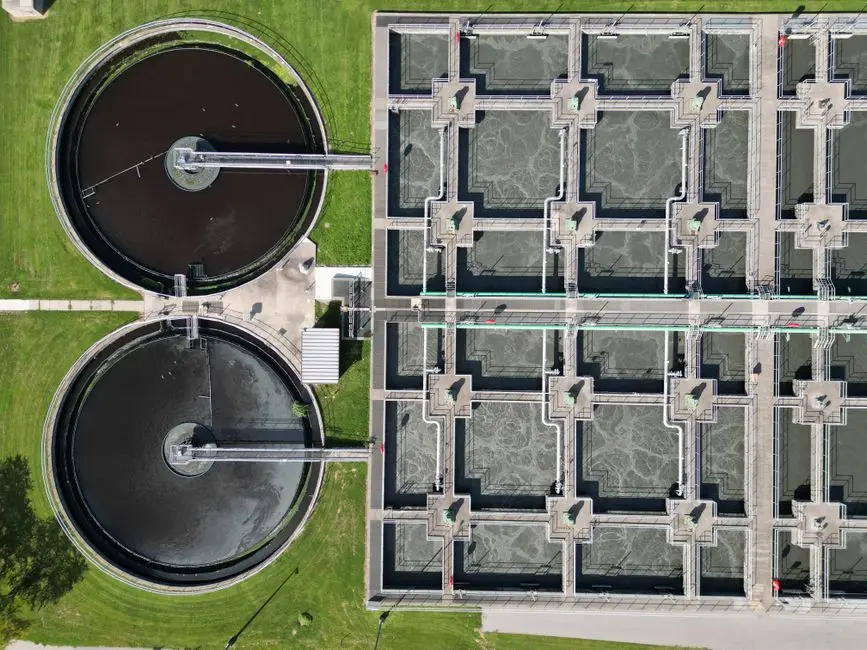
The permit submittal and commissioning plan should use the same analytical basis as the equipment design. Include wastewater constituents and characteristics, average daily and 30-minute peak flows, daily, monthly, and seasonal variation, process descriptions, materials that could be discharged, site and equipment plans, and the operating assumptions for every proposed pretreatment step. These items correspond directly to the application requirements in Lawrenceburg's Pretreatment Program Administration.
- Confirm the permit boundary. Obtain the applicable sewer discharge limits, prohibited discharges, slug-loading conditions, monitoring requirements, and receiving-plant sensitivities in writing.
- Establish sampling points. Sample after chemical addition, after solids separation, after polishing, and at final discharge. Use a laboratory acceptable to the city, with analytical methods consistent with EPA Section 304(g) and 40 CFR Part 136.
- Set acceptance criteria from the permit. Do not invent numeric Lawrenceburg thresholds because the supplied research does not state them. Define performance requirements for each treatment barrier using the confirmed local criteria and process-test results.
- Use a dated compliance schedule when needed. If additional pretreatment is required, submit the shortest schedule for the work, identify commencement and completion milestones, and provide progress reports no later than 14 days after each milestone.
- Complete operational readiness checks. Verify bypass prevention, chemical inventory controls, alarms and response procedures, sludge capture and storage, dewatering arrangements, spare-parts strategy, operator training, and startup testing.
For the solids side, obtain an independent filter-press sizing for metals-treatment sludge assessment based on expected solids mass, sludge characteristics, and dewatering objectives. The water-treatment performance demonstration is incomplete if the residual cannot be captured, stored, and moved to an authorized destination.
A practical Lawrenceburg design-basis worksheet should record, for each stream: source and material; average and 30-minute peak flow; pH; acidity or alkalinity; dissolved and total metals; TSS; settleable solids; oil and grease where applicable; sulfate where applicable; confirmed local limit; selected unit operation; control parameter; sampling point; acceptance criterion; residual destination; and responsible operator. Entries marked “unknown” should remain open until supported by analytical data, the permit, or process testing.
Frequently Asked Questions
How should a Lawrenceburg mining or metals plant size DAF, lamella clarification, or UF?
Request the confirmed average and 30-minute peak flows, event flows, contaminant loads, floor-area constraints, and local discharge criteria. Then verify the selected equipment against those inputs through process testing; the catalogue flow ranges alone do not establish Lawrenceburg capacity or compliance.
What should a buyer ask a treatment supplier when selecting equipment?
Require a process-specific proposal showing feed assumptions, treatment sequence, control strategy, hydraulic basis, solids-residual handling, monitoring points, commissioning tests, and performance criteria tied to the applicable permit. Ask what information would invalidate the sizing or guarantee.
When must an industrial-user permit application be submitted?
Lawrenceburg requires new users to apply at least 90 days before connecting or contributing to the POTW; existing permit holders must apply no later than 60 days before permit expiration (Lawrenceburg, Kentucky, Pretreatment Program Administration). The application must include the required analytical data, flows, plans, process description, and compliance information.
Can mine drainage be sent directly to Lawrenceburg's wastewater treatment plant?
Do not assume co-treatment is acceptable. The OSMRE study identified possible effluent iron increases, pH reduction, and changes to sludge properties (OSMRE, June 30, 2023). Obtain written confirmation of sewer limits, slug criteria, receiving-plant sensitivity, and pretreatment acceptance from Lawrenceburg before designing around co-treatment.
How should treatment residuals be handled?
Characterize the solids mass and chemistry generated by precipitation, coagulation, flotation, or clarification, then specify capture, storage, dewatering, and an authorized disposal route. Confirm the required plate-and-frame filter press duty from those inputs rather than selecting a unit from water flow alone.
Related Equipment
- DAF system for mining wastewater pretreatment — specifications, capacity range, and technical data