Why Foundry Wastewater Is a Distinct Filter Press Duty
Foundry wastewater is not a generic industrial sludge, and the equipment choice must reflect that. Streams from casting washdown, shakeout, sand-reclaim overflow, baghouse dust slurry, and scrubber blowdown combine abrasive mineral fines — silica sand, bentonite, and clay binders — with tramp metal particles, oils and greases from release agents and hydraulic systems, and occasional alloying elements such as chromium. A ferrous or non-ferrous foundry that sends all of these streams to a single mechanical dewatering device requires the equipment to handle a feed that swings from acidic metal-bearing slurry to oily, fines-laden water in the same shift.
Recessed-plate filter presses are recognized by the US EPA as producing the highest cake solids concentration of any mechanical dewatering equipment and are more commonly used in industrial applications than in municipal wastewater facilities (US EPA Fact Sheet 832-F-00-058, September 2000). Abrasive slurries shorten cloth life and demand robust plate construction; oily streams need pre-treatment such as dissolved air flotation before pressing; metal-bearing streams trigger effluent compliance obligations. Belt filter presses are an established baseline mechanical dewatering technology, as documented in the ASCE Journal of Environmental Engineering 114(5):991 (1988), and they remain a useful reference point for comparison, not a default recommendation for foundries.
How a Filter Press Handles Foundry Sludge: Mechanism and Cake Output
A recessed-plate filter press feeds slurry under pressure into cavities between plates; water passes through the filter cloth, solids build as cake on the cloth surface, and the press is opened to discharge cake once the cycle ends (US EPA Fact Sheet 832-F-00-058, September 2000). Plate-frame presses, which use cotton or synthetic cloth as the separation medium, are a long-established configuration for solid-liquid separation of activated sludge and similar slurries, as demonstrated in a plate-frame study using simulated CaCO₃ sludge at the National Research and Innovation Agency (BRIN ejournal). Cake dryness is the primary metric for foundries because it drives disposal cost, landfill tipping fees, and the potential to reuse solids back in the sand system. Cycle time, feed solids concentration, and cloth permeability together determine throughput and cake moisture — these are the variables a foundry engineer must lock in during sizing. A press does not change the chemistry of the feed; it only expresses what conditioning and chemistry have already prepared.
Plate Type and Cloth Selection for Foundry Streams
Plate configuration and cloth specification are the two decisions a foundry engineer makes on the purchase order, and they are not interchangeable across waste streams. Recessed-plate (chamber) presses produce drier cake and tolerate abrasive slurries well; plate-frame presses are typically lower cost and are used for lower-pressure duties. The BRIN study used a plate-frame unit to test cloth performance on simulated sludge, and the result is the only quantitative cloth-performance data point available in the research: cotton cloth delivered better solute removal than drill cloth, reaching 56.00% efficiency at 4% w/w solids (BRIN ejournal, S1). Foundries translating this number into a real specification should treat cloth choice as a controlled trial, not a default. For oily foundry streams, a polyester or polypropylene monofilament cloth with downstream washing resists blinding better than cotton. For abrasive silica-dominated streams, a coarser weave or a backing-support cloth extends cloth life. For fine metal hydroxide or Cr(VI) sludge, a tighter micron-rated cloth improves capture. Plate and frame filter presses for foundry sludge dewatering cover filtration areas from 1 m² to 500 m² with manual, hydraulic, or fully automatic PLC-controlled operation per the verified HydropureWater product catalog, so cloth and plate selection can be matched to a wide duty range on a single platform.
| Foundry stream | Primary contaminants | Recommended plate type | Recommended cloth | Pre-treatment required |
|---|---|---|---|---|
| Casting washdown | Silica fines, tramp metal, light oil | Recessed plate | Polyester monofilament, mid micron rating | DAF for oil, polymer dosing |
| Shakeout / sand-reclaim overflow | Spent sand, bentonite, clay binder | Recessed plate | Coarse weave or backing-support cloth | Polymer dosing |
| Baghouse dust slurry | Fine silica, metal oxides | Recessed plate | Tight micron-rated cloth | Polymer dosing |
| Scrubber blowdown | Variable pH, dissolved metals | Plate-frame or recessed plate | Polypropylene, chemical-resistant | pH adjustment, coagulant |
| Cr(VI)-bearing sludge | Hexavalent chromium, fine solids | Recessed plate | Tight micron-rated, chemical-resistant | Bioreduction per receiving limits |
| Oily foundry streams | Free and emulsified oil, FOG | Recessed plate | Polyester or polypropylene monofilament | DAF, polymer dosing |
Pre-Treatment and Feed Conditioning Before the Press
The press amplifies upstream chemistry; it does not fix it. Dissolved air flotation is the standard pre-treatment for removing free and emulsified oils and FOG from foundry wastewater before mechanical dewatering. Coagulation and flocculation with an automatic chemical dosing for foundry sludge conditioning step is the standard way to condition fine foundry solids so they release water in the press; PLC-controlled dosing skids are the prevailing configuration. Feed pH adjustment, polymer selection, and solids concentration target should be locked in bench-scale before any press is purchased — a foundry that commissions a press before locking these inputs will see cycle times drift and cake moisture climb. Where Cr(VI) is present in foundry sludge — historically documented at sites contaminated by chrome foundries, where bioreduction using bacterial consortia from contaminated sludge has been studied as a remediation route (Chemical Engineering Transactions, doi:10.3303/CET2188019, 2021) — the receiving discharge limits dictate whether cake can be landfilled directly or must be stabilized. A DAF system for foundry oil and FOG removal ahead of the press is standard for any stream that carries release agents or hydraulic oil. The pre-treatment train determines whether a press runs a clean eight-hour shift or blinds its cloth in two hours.
Sizing a Filter Press for a Foundry: Inputs and Calculation Steps
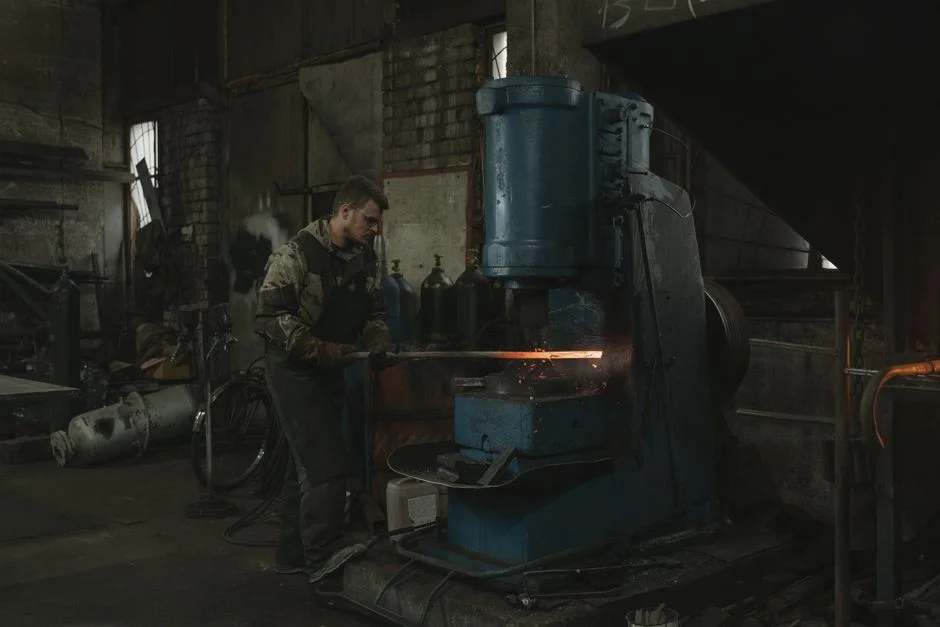
A defensible sizing workflow is the difference between a press that meets spec and one that bottlenecks the plant. The six steps below use only inputs a buyer can request or measure on site; the cycle-volume factor in Step 4 must come from bench or vendor tests because no universal value applies across slurry chemistries.
- Quantify the feed stream. Hourly flow (m³/h), average and peak solids concentration (%), specific gravity of solids, and temperature.
- Define the cake target. Required moisture content for disposal or reuse, expressed as % dry solids, drives cycle time and press selection.
- Select cloth and plate configuration using the table in the previous section, and confirm against vendor data for the specific slurry.
- Calculate required filtration area: total slurry volume per shift ÷ cycle volume per m² of plate area, with a 15–25% margin for peak load and cloth conditioning time — exact factor depends on cycle data from bench or vendor tests.
- Specify automation level: manual, hydraulic, or fully automatic PLC-controlled operation; the verified HydropureWater product catalog offers all three tiers on the same platform.
- Plan cake handling: conveyors, bins, and downstream stabilization must be sized to the press throughput or the press becomes a bottleneck.
| Sizing input | Unit | Source | Notes |
|---|---|---|---|
| Hourly feed flow | m³/h | Site flow measurement | Use peak, not average |
| Feed solids concentration | % w/w | Site TSS / TS test | Average and peak |
| Specific gravity of solids | — | Lab test on dried cake | Needed for mass balance |
| Feed temperature | °C | Site measurement | Affects polymer selection |
| Target cake dry solids | % w/w | Disposal or reuse spec | Drives cycle time |
| Filtration area | m² | Vendor data, bench test | Apply 15–25% margin |
| Cycle volume per m² | L/m² per cycle | Bench or vendor test | Slurry-specific |
| Automation level | Manual / hydraulic / PLC | Labor and throughput case | Affects OPEX, not sizing |
Filter Press vs Belt Press and Other Dewatering Options
The trade-off between a filter press and a belt press for foundry duty comes down to cake dryness, capital cost, and tolerance for abrasive or oily feed. Recessed-plate filter presses deliver the highest cake solids of any mechanical dewatering technology (US EPA Fact Sheet 832-F-00-058, September 2000), which directly reduces disposal mass and cost for foundries shipping cake to landfill. Belt filter presses are a proven mechanical dewatering technology for wastewater sludge (ASCE Journal of Environmental Engineering 114(5):991, 1988) and have lower capital cost, but they produce wetter cake and struggle with abrasive foundry fines. For oily foundry streams, a DAF unit ahead of either press is standard; without it, the press cloth blinds and cycle time collapses. For low-volume foundries with intermittent discharge, a small plate-frame unit may be more economical than a continuously running belt press; for very high volumes, recessed-plate automation pays back in labor and cake transport. A side-by-side look at a related metals-fabrication stream is available in this DAF vs clarifier for fabricated metals wastewater comparison.
Frequently Asked Questions
What should a foundry engineer put on a filter press purchase specification?
The specification should fix six items: hourly feed flow with peak value (m³/h), average and peak feed solids concentration (% w/w), target cake dry solids (% w/w) tied to the disposal or reuse route, plate type (recessed or plate-frame) matched to the abrasive and oily character of the feed, cloth specification including material and micron rating, and automation level (manual, hydraulic, or PLC). Each of these should be backed by site flow data and at least one bench-scale dewatering test on the actual slurry before the order is placed.
When is a filter press the right choice over a belt press for a foundry?
Choose a filter press when the foundry needs the highest cake solids achievable from mechanical dewatering (US EPA Fact Sheet 832-F-00-058, September 2000), handles abrasive silica or bentonite-laden streams, or needs a closed-cycle press that contains dust and odor during cake discharge. A belt press is defensible when capital cost dominates the decision, the feed is already well-clarified, and the cake destination accepts higher moisture. For oily streams, a DAF unit must precede either technology.
How should Cr(VI)-contaminated foundry sludge be handled before pressing?
Cr(VI)-contaminated sludge must be evaluated against the receiving discharge limits before any dewatering step. Bioreduction using bacterial consortia isolated from contaminated sludge has been studied as a remediation route for Cr(VI) (Chemical Engineering Transactions, doi:10.3303/CET2188019, 2021). The buyer should request the receiving facility's Cr(VI) and total chromium limits, and confirm the cake disposal route — landfill direct, stabilization, or separate hazardous-waste classification — before specifying the press.
What operating cost items should a foundry budget for a filter press?
The buyer should request line-item quotes for cloth replacement frequency, polymer and coagulant consumption per m³ of feed, hydraulic oil and seal replacement intervals, energy draw per cycle, and labor hours per shift at the proposed automation level. The HydropureWater product catalog confirms that plate and frame filter presses are available in manual, hydraulic, and fully automatic PLC-controlled configurations, so labor and energy assumptions must match the chosen tier. A broader view of filter press operating cost items is covered in this filter press maintenance cost in 2026 guide, and a comparable industrial wastewater specification example is in the filter press for distillery wastewater engineering guide.