What East Hempfield Fabricated Metals Plants Are Actually Discharging
Fabricated metals plants along the US-30 / PA-283 corridor typically combine stamping wash water, machining coolant overflow, phosphating rinse, and occasional hex-chrome or zinc-bearing rinses from the same building, and the equalization tank downstream of those lines sees all of those streams at once. The dominant separation problem is emulsified oil and tramp oil from stamping and machining, not free oil that a simple skim box can catch.
EPA's Process Design Manual for Suspended Solids Removal (1975) places wastewater solids into soluble, colloidal (0.001–1 µm), supracolloidal (1–100 µm), and settleable (>100 µm) fractions; once a coolant emulsion enters the waste stream, the mass shifts toward the colloidal and supracolloidal bands, which is exactly the size range that gravity settling handles poorly. Heavy metals (Zn, Ni, Cr) and pH swings are intermittent upsets that a primary separator must absorb without being knocked off-spec for the rest of the day. That combination of stable emulsions, episodic metal-bearing rinses, and a small footprint drives the 2026 DAF-vs-clarifier decision for any East Hempfield line. For a process-by-process view, the Canton fabricated metals comparison applies the same framework to a parallel market.
How a DAF Clarifier Works on Metals Wastewater
Clearwater Industries defines DAF as a clarification process that generates 30–50 µm micro-bubbles from a pressurized recycle stream; the bubbles attach to chemically flocculated particles and float them into a surface blanket that a paddle skimmer removes (Clearwater Industries, 2026). Most DAF tanks also retain a bottom collection zone where heavier settleable solids drop out and an auger pulls that grit, so a DAF handles a small sedimentation duty in parallel with flotation rather than purely as a float cell. Kemco lists metal finishing among DAF's target industries and is explicit that coagulant plus flocculant dosing is required to enlarge colloidal and emulsified particles enough for bubble attachment (Kemco Systems). The process is a flotation variant of sedimentation as classified by EPA's Process Design Manual for Suspended Solids Removal (1975), not a separate technology family.
Two operational constraints follow from the physics. A DAF needs clean water for initial fill because the saturator cannot pressurize dirty water without damaging the recirculation pump and air-saturation system (Clearwater Industries). A pressurized recycle — typically 20–30% of throughput — must be continuously available to feed the saturator, so any retrofit has to leave room for a recycle pump, an air compressor or eductor, and a small clean-water buffer. A packaged DAF system in the 20–80 GPM range that matches a single East Hempfield line will normally include the saturator, skimmer, and control panel on one skid; chemical conditioning is delivered as a separate automated coagulant and polymer dosing skid.
How a Lamella or Conventional Clarifier Works on Metals Wastewater
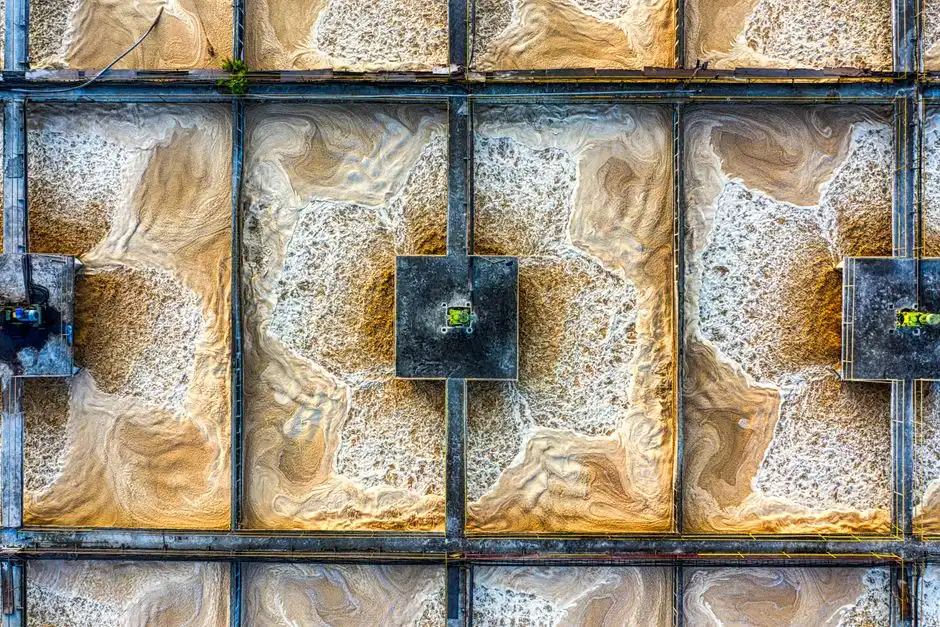
EPA's Process Design Manual for Suspended Solids Removal (1975) defines gravity sedimentation as the default suspended-solids removal step and tabulates the design parameters for primary and secondary clarifiers in Chapter 7. A lamella clarifier is the high-rate version of that same process: inclined plates shrink the effective settling depth so that fine, slow-settling particles are captured in a much smaller footprint than a conventional basin. A high-rate lamella clarifier operating at 20–40 m/h surface loading uses roughly half the area of a conventional clarifier at 1–2 m/h overflow rates for the same hydraulic duty, which matters in a tight East Hempfield plant bay where floor space is limited. A clarifier is also more tolerant of feed upsets — pH excursions, slug loads of metal hydroxide from a phosphating line dump — because the separation does not depend on bubble attachment.
Gravity, even with inclined plates, will not consistently remove emulsified oils to below 50 mg/L, while bubble-assisted flotation will. Engineers must first determine if the load is floatable, settleable, or both. When the load is settleable metal-hydroxide sludge with little oil, a high-rate lamella clarifier is the appropriate choice. When free or emulsified oil dominates, a DAF should be the primary system and the clarifier should be reserved for downstream polishing or thickening.
DAF vs Clarifier: A 2026 Side-by-Side for Fabricated Metals
The table below scores the two technologies against criteria relevant to a CAPEX review. Numeric values are taken from the cited sources; since 2026 cost-per-GPM figures are not published in the research, users should request a budget quote based on their specific 20–80 GPM duty rather than relying on estimated ranges.
| Criterion | DAF (dissolved air flotation) | Lamella / high-rate clarifier |
|---|---|---|
| Best-fit target contaminant | Free + emulsified oil, FOG, light TSS in one pass (Clearwater Industries, 2026; Kemco Systems) | Settleable metal-hydroxide sludge, grit, precipitated metals (EPA Process Design Manual, 1975) |
| Bubble size | 30–50 µm micro-bubbles from pressurized recycle (Clearwater Industries, 2026) | N/A — gravity only |
| Surface loading | Comparable to a high-rate clarifier in footprint for the same hydraulic load | 20–40 m/h with inclined plates vs ~1–2 m/h conventional overflow rate (HydropureWater catalog) |
| Chemical demand | Coagulant + flocculant required; bubble attachment only works on conditioned floc (Clearwater Industries, 2026; Kemco Systems) | Coagulant + flocculant typical; less critical than for DAF but still required for colloidal material (EPA Process Design Manual, 1975) |
| Operator skill | Routine management of saturator pressure, recycle rate, polymer dose | Sludge rake/withdrawal management; no pressurized water system |
| Upset tolerance (pH slug, metal spike) | Lower — bubble blanket can be lost | Higher — separation is not bubble-dependent |
| Sludge character | Float typically 3–6% dry solids; dewaters well on a plate press (Kemco Systems) | Underflow typically 1–3% dry solids; larger press or thicker feed |
| 2026 CAPEX ($/GPM) | Not published in cited research — request budget range | Not published in cited research — request budget range |
| Retrofit disruption | Higher — new pad, saturator, chemical skid, control panel | Lower — inclined-plate packs can drop into existing concrete basins |
For the engineering assumptions behind each row — detention time, recycle ratio, plate spacing — the 2026 DAF design criteria guide details the same parameters in spec-sheet form.
Matching the Equipment to the Sub-Process
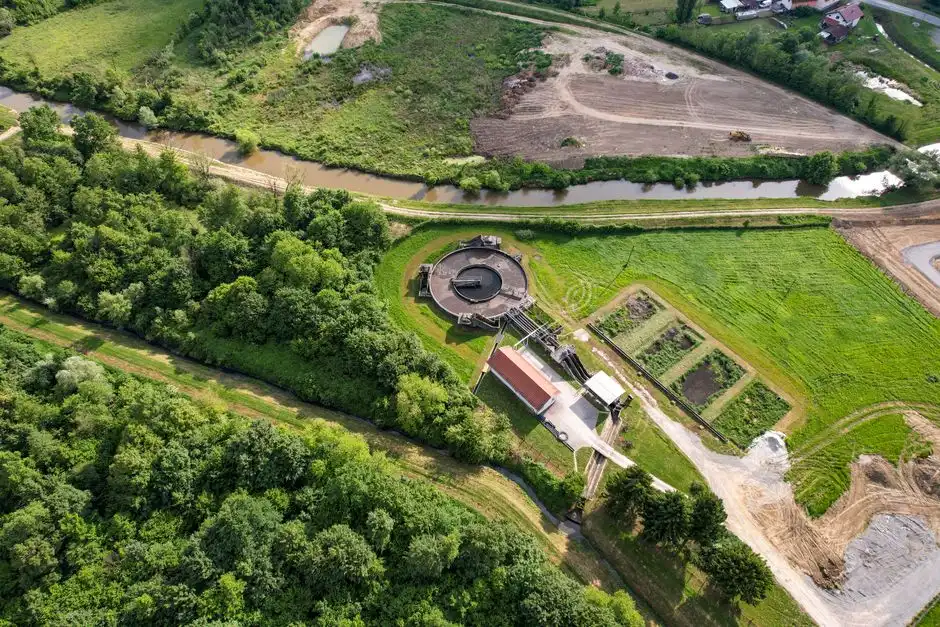
The specific sub-process dictates the technology choice more than the label "primary clarifier." A stamping line with a wash stage and visible tramp oil puts emulsified load ahead of settleable load, making a DAF-first/lamella-polish arrangement the only combination that keeps visible oil out of the discharge. A precision machine shop running synthetic coolant at low flow produces a stable emulsion that needs the bubble-attachment step; a tight polymer dose is the operating variable, not the tank choice. A phosphating or zinc rinse generates metal-bearing sludge where the dominant load is settleable, so a lamella clarifier should be primary and a DAF only added as polish if oils leak in from a nearby process. A hex-chrome rinse requires reduction at low pH followed by precipitation and sedimentation, with the DAF or lamella strictly downstream of the chrome step. Weldment-only operations with no wet process usually do not need a primary clarifier at all; a simple oil-skimming prefilter ahead of pH neutralization is sufficient.
| Sub-process | Dominant load | Primary separator | Secondary / polish |
|---|---|---|---|
| Stamping with wash + tramp oil | Emulsified oil, FOG | DAF | Lamella clarifier as sludge thickener |
| Precision machining, synthetic coolant | Stable emulsion | DAF with tight polymer control | Optional lamella for sludge handling |
| Phosphating / zinc rinse | Metal-hydroxide sludge | Lamella clarifier | DAF only if oil cross-contamination is present |
| Hex-chrome rinse | Dissolved Cr(VI) | Reduction + precipitation train | DAF or lamella downstream, never upstream |
| Weldment only, no wet process | Minor oils, neutral pH | Skim prefilter | pH neutralization only |
Regulatory and Site Considerations in East Hempfield, PA
Discharges from East Hempfield industrial sites flow under PA DEP industrial-waste rules, and most pretreatment programs are managed locally; site-specific limits for oils, TSS, and metals must be confirmed with the local POTW authority before equipment is ordered. Lancaster County is located within the Chesapeake Bay watershed, so nutrient and total-dissolved-solids reporting can affect even small industrial users through annual monitoring, and any separator that pushes more dissolved load downstream will be visible in that dataset. If a plant produces hexavalent chromium, total chromium limits apply, and DAF or clarifier selection must be downstream of the chrome-reduction step — neither technology precipitates chrome on its own. From a 2026 audit-trail standpoint, a DAF pairs naturally with online flow, pH, and TSS instrumentation feeding the same PLC that controls chemical dosing; a lamella clarifier typically relies on jar testing and operator logs to demonstrate compliance. A useful cross-reference is the 2026 industrial pretreatment compliance guide, which covers the same instrumentation question from a different industry angle.
2026 Cost, Footprint, and Retrofit Reality
DAF packaged skids in the 20–80 GPM range typically require a flat, load-bearing pad, a clean-water supply for startup, a compressed-air or eductor feed, and a chemical dosing skid. Lamella clarifiers retrofit into existing concrete basins by dropping in inclined-plate packs, which is often the lowest-disruption path for an East Hempfield plant adding capacity to a line that cannot be shut down for an extended period. Downstream sludge handling is another 2026 decision: a DAF float paired with a plate-and-frame filter press is the standard configuration, and the press should be sized for the 3–6% dry-solids range that DAF float produces, rather than the 1–2% underflow a clarifier generates. CAPEX and OPEX figures are not provided in the cited research; the right approach is to require a line-item budget separating equipment, installation, chemistry, and sludge hauling so that DAF and clarifier quotes are directly comparable.
Decision Framework: Which One Should Your Plant Specify in 2026?
The decision relies on four rules an East Hempfield engineer can apply in a single sitting. If free or emulsified oil is visible in the equalization tank, specify DAF. If the dominant load is metal-hydroxide sludge with little oil, specify a lamella clarifier. If both are present — the common case for a mixed stamping-and-machining line — specify DAF as the primary unit with a lamella as a sludge thickener or polish. If hex-chrome is present, add reduction and precipitation upstream of either separator, as DAF and lamella units are not chrome-removal steps. In every branch, chemical coagulation and flocculation are required to make either technology work on colloidal or emulsified material, and EPA's Process Design Manual for Suspended Solids Removal (1975) is explicit on that point. For a parallel framing in a different geography, the mining and metals wastewater DAF vs clarifier guide covers the same logic at higher flow rates.
Frequently Asked Questions
What 2026 budget range should
Frequently Asked Questions
What size DAF do I need for a 50 GPM stamping wash line in East Hempfield, PA?
For a 50 GPM (gallons per minute) stamping wash line, a DAF system should be sized to handle at least 60 to 75 GPM to account for surge capacity and potential process expansion. Given the high oil and grease (FOG) content typical of stamping lubricants, a hydraulic loading rate of 1.5 to 2.0 GPM per square foot of surface area is recommended, requiring an effective surface area of approximately 30 to 40 square feet.
How much does a packaged DAF system cost in 2026 for a small fabricated metals shop?
In 2026, a fully integrated, packaged DAF skid for a small fabricated metals shop—including the saturation pump, air compressor, flocculation tank, and integrated control panel—typically ranges from $85,000 to $145,000. This price point varies based on the material of construction, with 304 stainless steel being the industry standard for durability in corrosive wash environments, and the degree of automation required for chemical dosing.
Can a lamella clarifier remove emulsified cutting oil, or do I need a DAF?
A lamella clarifier alone is generally ineffective for removing emulsified cutting oils, as the oil droplets are often neutrally buoyant and smaller than the settling threshold. While a clarifier can remove heavy metal precipitates and suspended solids, a DAF is required to float emulsified oils by attaching micro-bubbles to the contaminants, typically achieving 90% to 98% oil and grease removal efficiency when paired with proper emulsion-breaking chemistry.
What discharge limits apply to fabricated metals plants in Lancaster County under PA pretreatment rules?
Fabricated metals plants in Lancaster County must comply with the categorical pretreatment standards found in 40 CFR Part 433, which typically restrict Total Toxic Organics (TTO), Cyanide, and heavy metals such as Chromium, Copper, Lead, Nickel, and Zinc. Local discharge limits set by the specific Publicly Owned Treatment Works (POTW) in the East Hempfield area may impose stricter numeric thresholds, often limiting Oil and Grease to below 100 mg/L and pH levels to between 5.0 and 10.0 standard units.
How long does it take to install and commission a DAF skid in an existing plant bay?
For a pre-piped and pre-wired packaged DAF skid, the installation and commissioning timeline typically spans 3 to 5 weeks. This includes 1 to 2 weeks for site preparation, utility tie-ins (compressed air, power, and influent/effluent piping), and 1 week for on-site water testing, chemical dosing optimization, and operator training to ensure the system meets local discharge compliance.