Why Mining/Metals Wastewater in Hattiesburg Forces a Fraction-by-Fraction Choice
A Hattiesburg-area mining or metals stream is not a single-fraction problem. A typical plant discharge combines dense mineral fines from a tailings thickener overflow or mill, colloidal clays that resist clean settling, oils and greases from mobile equipment, residual flotation reagents, and dissolved heavy metals that have crossed the pH boundary into solution or back into hydroxide precipitate (hydropurewater.com 2026 selection guide, citing Clearwater Industries and Fluence).
The same source is explicit on the limit: a dissolved air flotation unit is not well suited to water with high silt and clay loadings, and a gravity clarifier leaves colloidal, buoyant, and dissolved loads untouched. Fluence's application note states that flotation is increasingly used in mineral and mining waste treatment for benefits including less sludge and efficient removal of heavy metals and oil wastes, but is not well suited to water sources that contain high levels of heavier particles that don't float, for example silt and clay particles (Fluence, via hydropurewater.com 2026 selection guide).
That boundary is the reason a 2026 specification for an ore processor, smelter, fabricated-metals finisher, or aggregate/mineral plant near Hattiesburg must start with stream characterization, not with vendor preference. The Leaf River Forest Products mill and the Southern Mississippi Electric Power Association Purvis station appear in the EPA's 1984 industrial NPDES permit abstracts (EPA 1984 Abstracts of Industrial NPDES Permits, second edition), alongside Mississippi Power & Light, International Paper at Vicksburg and Natchez, and St. Regis Paper, confirming that the Mississippi mining, metals, pulp/paper, and power corridor is fully inside the NPDES system the spec must answer to. Hattiesburg-area plants sit inside the Leaf River and Pascagoula basins; permit writers apply both the national effluent guidelines and the State water-quality standards, and the 1984 EPA preface warns that BPJ-based permits vary by locality and may be more stringent than national effluent guidelines dictate (EPA 1984).
How a DAF System for Mining and Metals Wastewater Actually Works
A dissolved air flotation unit separates suspended matter by attaching micro-bubbles to flocculated particles and floating the resulting aggregate to the surface, where a skimmer pulls the sludge blanket into a collection trough; the bubbles are 30–50 µm in diameter, small enough to adhere to oil droplets, fine precipitates, biological flocs, and the loose floc produced by polymer conditioning (Clearwater Industries, via hydropurewater.com 2026 selection guide). Chemical conditioning is paired with the flotation step: coagulant, pH adjustment, and polymer flocculant are dosed either into flocculation tubes that give a 15–45 s flash mix, or into impeller mix tanks for longer contact, with the dose set empirically by jar testing (Clearwater Industries, via hydropurewater.com 2026 selection guide). At startup the unit is filled with clean water, the recirculation loop pulls clarified effluent, pressurizes it with air, and returns the saturated stream to the tank, where on depressurization the micro-bubbles nucleate and attach to the incoming floc (Clearwater Industries, via hydropurewater.com 2026 selection guide).
DAF Corp's micro-bubble generator is rated to produce 20–40 µm bubbles with no coarse air, 24/7, 365 days per year, confirming the 30–50 µm engineering range as the operating window a Hattiesburg spec should call out (DAF Corp, dafcorp.com). The Logan, Utah wastewater treatment plant study recorded an optimum dose of 30 mg/L aluminum sulfate for algae and phosphorus removal on a lagoon effluent, and the work framed DAF optimization as an empirical jar-test exercise rather than a default supplier value (Elder, 2011, Utah State University, via hydropurewater.com 2026 selection guide). A well-conditioned DAF on the DAF Corp FC Maximizer produces thickened sludge at 2–4% consistency, which is the documented downstream cost lever for a 2026 sludge-dewatering spec (DAF Corp). A DAF system for mining and metals wastewater is the unit that targets the colloidal, precipitated, and buoyant fraction that escapes a clarifier.
Where a Lamella or Conventional Clarifier Earns Its Place in the Train
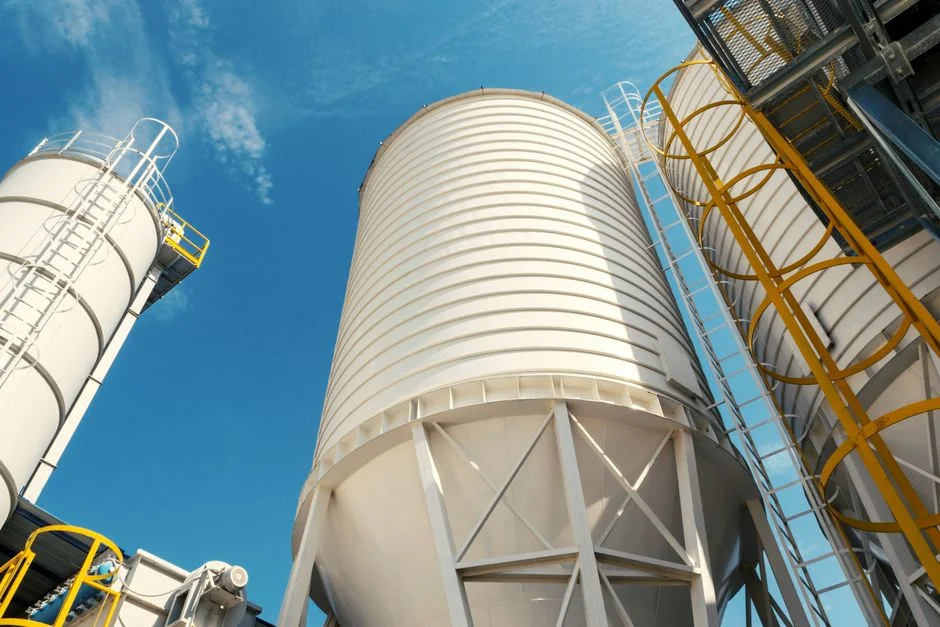
A clarifier separates by gravity: particles with specific gravity greater than water settle under the surface overflow rate set by the tank geometry, the sludge is withdrawn from the bottom, and clarified water overflows a peripheral launder (hydropurewater.com 2026 selection guide). A conventional clarifier is the workhorse of mineral processing — a thickener on the tailings side, a primary sedimentation tank ahead of any downstream treatment — and its performance is set by particle settleability, surface overflow rate, and the sludge withdrawal mechanism, not by chemical conditioning intensity. Lamella designs compress the footprint of that same mechanism: inclined plates multiply the effective settling area inside a much smaller tank volume, which raises the allowable surface loading rate for a given footprint, and is the right call for a Hattiesburg site with a fixed pad and a high underflow-solids target (hydropurewater.com 2026 selection guide).
The trade-off is that the plates do not change the mechanism. Dense mineral fines and metallurgical sludges settle, but colloidal fines, oils, surfactants, and dissolved metals do not, and that fraction passes to whatever polishing step follows. The research confirms that DAF — not a lamella plate — is the unit that targets the colloidal and buoyant load (Clearwater Industries and Fluence, via hydropurewater.com 2026 selection guide). A high-rate lamella clarifier for mineral fines on the bulk-solids side pairs naturally with a downstream DAF polisher and a plate-and-frame filter press handling the combined underflow.
DAF vs Clarifier Comparison Matrix for a 2026 Hattiesburg Spec
The matrix below scores the two units against the contaminant fractions a 2026 specification has to address. The dominant mechanism — micro-bubble flotation at 30–50 µm versus gravity sedimentation — determines which stream belongs in which unit (Clearwater Industries and Fluence, via hydropurewater.com 2026 selection guide; DAF Corp, dafcorp.com).
| Parameter | Dissolved Air Flotation (DAF) | Clarifier (Conventional or Lamella) |
|---|---|---|
| Separation mechanism | Micro-bubbles (30–50 µm, with DAF Corp generators rated 20–40 µm) attach to floc and float it to the surface; skimmer removes the sludge blanket (DAF Corp; Clearwater Industries) | Gravity settling under surface overflow rate; lamella plates multiply effective settling area for the same footprint (hydropurewater.com 2026 selection guide) |
| Target contaminant fraction | Oils, greases, flotation reagents, biological flocs, fine precipitates, and colloidal fines after coagulation (Clearwater Industries; Fluence) | Dense mineral fines, tailings, and metallurgical sludges with specific gravity greater than 1 (hydropurewater.com 2026 selection guide) |
| Documented removal performance | DAF Corp FC Maximizer: 92–98% TSS removal, 10–11,000 gpm, 6–70 ft diameter; DAF Corp RC UniMax: 85–90% TSS removal, 10–1,000 gpm rectangular (DAF Corp, dafcorp.com) | Removal governed by surface overflow rate and sludge withdrawal design; coagulant aid is optional (hydropurewater.com 2026 selection guide) |
| Known exclusion | High silt and clay loadings, which DAF is not well suited to lift (Fluence, via hydropurewater.com 2026 selection guide) | Emulsified oils, colloids, and low-specific-gravity precipitates that do not settle (hydropurewater.com 2026 selection guide) |
| Chemistry control | Coagulant, pH, and flocculant dose set by jar testing; 30 mg/L aluminum sulfate optimum recorded at Logan, UT for algae and phosphorus on a lagoon effluent (Elder, 2011, USU, via hydropurewater.com 2026 selection guide) | Coagulant aid is optional; performance is governed by surface overflow rate and sludge withdrawal design (hydropurewater.com 2026 selection guide) |
| Sludge consistency | 2–4% thickened sludge on the FC Maximizer; well-conditioned DAF may need little further dewatering (DAF Corp; Clearwater Industries) | Thickener underflow; usually handed to a thickener or filter press (hydropurewater.com 2026 selection guide) |
| Civil footprint | Compact tank; high-rate designs available for medium-to-large flows (Clearwater Industries) | Large civil footprint for conventional units; lamella designs compress the footprint significantly (hydropurewater.com 2026 selection guide) |
| Role in 2026 train | Primary for oil, reagent, and colloid loads; polisher after a clarifier for combined streams (Fluence; Clearwater Industries) | Primary for bulk settleable solids; pre-step ahead of DAF in a combined train (hydropurewater.com 2026 selection guide) |
For most mining and metals operations the streams are combined, so the matrix points to a clarifier ahead of a DAF polisher. Tightening heavy-metal discharge limits push factories to remove the colloidal and precipitated metal fraction that escapes a clarifier alone, exactly the fraction DAF targets, with users citing efficient heavy-metal and oil-waste removal as a documented benefit (Fluence, via hydropurewater.com 2026 selection guide). A PLC-controlled coagulant and flocculant dosing skid is the standard way to hold the dose at the value jar testing sets.
Hattiesburg Regulatory Reality: NPDES, MSDEQ, and What the Permit Will Demand
EPA's ICIS-NPDES database covered more than 229,000 permitted industrial facilities and an estimated 15,700 POTWs nationwide using calendar-year 2015 DMR data as the screening baseline, with DMR data the most comprehensive source quantifying pollutants discharged directly to surface waters of the United States (EPA, Review of Nutrients in Industrial Wastewater, downloads.regulations.gov, EPA-HQ-OW-2018-0618). The EPA's Abstracts of Industrial NPDES Permits (1984 second edition) lists Mississippi industrial permit holders including Mississippi Power & Light Co. (Baxter Wilson station), International Paper at Vicksburg and Natchez, Mississippi Power Co. (Eaton and Jack Watson plants), St. Regis Paper, Masonite Corp., Leaf River Forest Products, and the Southern Mississippi Electric Power Association Purvis station, which is the documentation that the Mississippi mining, metals, pulp/paper and power corridor is fully inside the NPDES system (EPA 1984).
40 CFR Part 432 (Meat and Poultry) and 40 CFR Part 430 (Pulp, Paper and Paperboard) were the two nutrient categories the EPA reviewed for effluent guidelines development alongside other point source categories (EPA, Review of Nutrients in Industrial Wastewater), and a Hattiesburg-area ore processor or metals finisher sits inside the ore mining and dressing point source category that the same regulatory machinery covers. The EPA also flags a limitation that affects every spec: ICIS-NPDES does not explicitly identify the type of wastewater being discharged at a given outfall, and in some cases total flow rates reported may include non-process wastewater such as stormwater and noncontact cooling water as well as process wastewater (EPA, Review of Nutrients in Industrial Wastewater). That is the reason a Hattiesburg spec must define its own influent characterization rather than rely on permit defaults. The 1984 EPA preface adds a second reason: BPJ-based permits vary by locality, and State water quality standards may impose limits more stringent than the national effluent guidelines (EPA 1984).
Capital Cost, Sludge Handling, and the 2026 RFQ Line Items
The research does not supply a 2026 unit price for either a DAF or a clarifier, so the engineer must request a budgetary quotation tied to the specific flow, TSS, and contaminant-fraction profile of the stream. What the sources do support is the cost lever inside the train: capital expenditure for industrial-grade DAF systems is reported in a broad range from $150,000 to over $1,500,000 depending on flow rate and materials of construction, with a 20–30% premium over base-model municipal units to account for heavy-duty sludge handling on high-solids mineral loading (hydropurewater.com 2026 selection guide). For mining applications, the same source requires 316L stainless steel or specialized coatings to resist acidic or abrasive mineral slurries, and that materials choice should appear in the RFQ before price, not after (hydropurewater.com 2026 selection guide).
The 2026 cost lever inside the train is the DAF sludge consistency: a correctly conditioned DAF produces thickened sludge at 2–4% consistency on the FC Maximizer (DAF Corp, dafcorp.com) and may need little further dewatering, which is a direct reduction in the downstream sludge-handling line item (Clearwater Industries, via hydropurewater.com 2026 selection guide). Hattiesburg-area buyers should require the vendor to quote the DAF, the chemical-conditioning skid, and the sludge-dewatering step as a single line, so the sludge-handling saving is visible rather than hidden across multiple line items. Qualifying criteria for 2026 procurement should include ISO 9001 certification, documented pilot study data from similar metallurgical processes, and post-commissioning support for automated chemical dosing (hydropurewater.com 2026 selection guide). A plate-and-frame filter press for the combined underflow closes the train. For a parallel decision in a different regulatory corridor, see the DAF vs clarifier for fabricated metals wastewater guide.
Data the Vendor Must Receive Before They Can Size Your Unit
The hydropurewater.com 2026 selection guide is explicit: failure to provide consistent data across seasonal flow variations will lead to undersized equipment and non-compliance, and that is the known failure mode a Hattiesburg spec should pre-empt. The table below maps the data the vendor needs to the engineering parameter it sets.
| Required input | What it sets | Source for the requirement |
|---|---|---|
| Total suspended solids (TSS), particle size distribution, pH, temperature, dissolved heavy metals (Cu, Pb, Zn) | Influent characterization, reactor sizing, and chemistry envelope | hydropurewater.com 2026 selection guide (citing standard influent characterization requirements) |
| Bench-scale jar testing with coagulant and flocculant doses, plus required rise rate (m/h) or air-to-solids ratio | DAF dose and surface overflow rate; clarifier dose is optional | hydropurewater.com 2026 selection guide; Logan, UT study (30 mg/L aluminum sulfate optimum, Elder 2011, USU) |
| Seasonal flow variation as a single consistent dataset | Prevents undersized equipment and non-compliance | hydropurewater.com 2026 selection guide |
| Pilot study data on a similar metallurgical effluent, with optional on-site pilot | Validates the design before purchase | hydropurewater.com 2026 selection guide; DAF Corp offers laboratory feasibility analysis and on-site pilot feasibility studies (dafcorp.com) |
EPA's ICIS-NPDES database does not always identify the wastewater stream type at a given outfall (EPA, Review of Nutrients in Industrial Wastewater), which means the buyer cannot rely on permit defaults to fill this table. For a parallel compliance question in a different geography, see the mining and metals pretreatment compliance guide and the mining pretreatment and discharge-limit guide.
Frequently Asked Questions
Do I need both a clarifier and a DAF, or can I get away with just one?
For a combined mining/metals stream in the Hattiesburg corridor you almost always need both. A single-mechanism clarifier sized only for the settleable fraction discharges the colloidal, buoyant, and dissolved loads; a DAF unit forced to handle raw tailings is overwhelmed by the silt and clay fraction it cannot lift. The Fluence application note states that DAF is not well suited to water sources that contain high levels of heavier particles that don't float, for example silt and clay particles (Fluence, via hydropurewater.com 2026 selection guide). The defensible 2026 spec is a clarifier (conventional or lamella) followed by a DAF polisher, sized from jar-test data and tied to MSDEQ/NPDES permit limits.
What is the realistic 2026 capital range for a DAF sized to a small Hattiesburg metals plant, and what drives the premium?
The research reports a broad $150,000 to over $1,500,000 range for industrial DAF capital, depending on flow rate and materials of construction, with a 20–30% premium over base-model municipal units for heavy-duty sludge handling on mineral slurries (hydropurewater.com 2026 selection guide). For mining applications 316L stainless steel or specialized coatings are required to resist acidic or abrasive mineral slurries, and that materials choice should appear in the RFQ before price. The vendor should be asked to quote the DAF, the chemical-conditioning skid, and the sludge-dewatering step as a single line so the 2–4% thickened sludge saving on the FC Maximizer (DAF Corp) is visible rather than buried across line items.
What jar-test and influent data should I send to a vendor before they will quote?
Send total suspended solids, particle size distribution, pH, temperature, and dissolved heavy-metal concentrations including copper, lead, and zinc; send bench-scale jar testing results that identify the optimum coagulant and flocculant doses, with the required rise rate (m/h) for a clarifier or the air-to-solids ratio for a DAF; and send seasonal flow variation as a single consistent dataset so the unit is not undersized (hydropurewater.com 2026 selection guide). Request pilot study data on a similar metallurgical effluent, and budget for an on-site pilot for streams outside the vendor's reference base, including the laboratory feasibility analysis and on-site pilot feasibility studies DAF Corp offers (dafcorp.com).
Will a clarifier alone meet 2026 heavy-metal and TSS limits, or do I need a DAF polisher?
A clarifier alone rarely meets 2026 heavy-metal and TSS limits because the colloidal and precipitated metal fraction escapes gravity settling. Relying solely on a clarifier often results in the carryover of fine, non-settleable colloidal metals and emulsified oils, which leads to violations of discharge limits for TSS and total metal concentration (hydropurewater.com 2026 selection guide). A DAF polisher is the unit that captures the colloidal, precipitated, and buoyant fraction, and Fluence documents efficient heavy-metal and oil-waste removal as a benefit of flotation in mining waste treatment (Fluence, via hydropurewater.com 2026 selection guide).
How do I package DAF, chemical dosing, and sludge dewatering so the sludge saving is visible in the RFQ?
Ask the vendor to quote the DAF, the PLC-controlled coagulant and flocculant dosing skid, and the plate-and-frame filter press for the combined underflow as a single line item rather than three, so the 2–4% thickened-sludge consistency on the FC Maximizer (DAF Corp) and the documented reduction in downstream dewatering load (Clearwater Industries, via hydropurewater.com 2026 selection guide) appear on one cost line. State 316L stainless steel or specialized coatings as a required material of construction in the RFQ before price, and require ISO 9001 certification, documented pilot study data, and post-commissioning support for automated chemical dosing as qualifying criteria (hydropurewater.com 2026 selection guide).