Why Distillery Wastewater Needs a Filter Press Step
According to a 2007 Stellenbosch University SUNScholar dissertation, wine-distillery wastewaters feature COD concentrations ranging from 10,000 to 60,000 mg/L and pH levels of 3.5 to 5.0, with specific site measurements varying from 12,609 to 21,150 mg/L COD. Grain, molasses, and fruit distilleries generate an organic cocktail rich in unfermented sugars, residual alcohols, soluble proteins, carbohydrates, lipids, and recalcitrant polyphenols. While biological treatment systems—such as anaerobic digesters, aerobic reactors, or constructed wetlands—substantially break down dissolved organics, they convert those dissolved pollutants into wet, gelatinous biological sludge. Settling alone or basic gravity draining cannot dewater this sludge to a transportable solid, leaving high volumes of liquid sludge that are costly to haul off-site.
Environmental regulations often mandate strict final discharge benchmarks, such as the direct-discharge limit of less than 75 mg/L COD cited in the 2007 SUNScholar dissertation. Achieving compliance requires separating the suspended biomass and remaining stillage solids from the liquid phase. A filter press for distillery wastewater acts as the definitive liquid-solid separation step. Equipment supplier data compiled by Thomasnet highlights that filter presses are uniquely suited for applications where both streams have utility: the high-clarity liquid filtrate can be routed back for process reuse or sent to final polishing, while the compacted dewatered cake is easily transported for land application, composting, or by-product recovery.
Where the Filter Press Fits in a Distillery Effluent Train
A typical distillery wastewater treatment train routes segregated process flow through equalization, pH correction, biological treatment, and clarification before solids reach the dewatering press. Wastewater streams from fermentation, distillation bottoms (stillage), bottle washing, and vessel clean-in-place (CIP) operations enter an equalization basin to buffer flow and organic load spikes. Because raw distillery effluent is acidic (pH 3.5 to 5.0), automatic chemical dosing units neutralize the stream prior to biological reactors or physical separation systems. For high-solids pre-treatment, plants may deploy a DAF system for distillery wastewater guide or a winery wastewater DAF sizing guide to remove free fats and gross suspended solids.
Downstream biological treatment (anaerobic digestion, activated sludge, or MBBR) generates waste biological sludge. This sludge is combined with primary stillage solids and sent to a lamella clarifier for sludge thickening. An automatic polymer dosing for sludge conditioning adds flocculants to transform fine particles into fast-filtering flocs. The conditioned slurry enters the plate and frame filter press at a solids concentration of 1% to 4% w/w—the exact feed range evaluated in solid-liquid separation trials. Advanced secondary treatment configurations may incorporate pre-ozonation; the 2007 SUNScholar study demonstrated that pre-ozonation increased constructed wetland COD reduction efficiency from 62% to 73% during off-season flows (2,200 mg/L feed COD) and from 74% to 84% during peak season flows (7,000 mg/L feed COD), producing a far more consistent and less refractory biological sludge for final press dewatering.
| Treatment Stage | Primary Function | Influent COD / Solids Range | Key Process Output |
|---|---|---|---|
| Equalization & Neutralization | Buffers 2x+ flow/COD swings; adjusts pH from 3.5–5.0 to neutral | 10,000–60,000 mg/L COD | Homogenized, pH-neutral raw wastewater |
| Biological & Pre-Ozonation | Metabolizes dissolved organics; optional ozone lowers polyphenols | 12,609–21,150 mg/L COD feed | Degraded organic liquid + biological biomass |
| Clarification & Thickening | Concentrates waste biomass via gravity or lamella settling | 1%–4% w/w suspended solids | Thickened sludge slurry + clarified effluent |
| Chemical Conditioning & Dewatering | Flocculates sludge; dewaters via hydraulic filter press | 1%–4% w/w feed sludge | 55%–75% moisture cake + clear filtrate (<75 mg/L COD target) |
Chamber, Membrane, or Plate-and-Frame: Which Press for Distillery Sludge
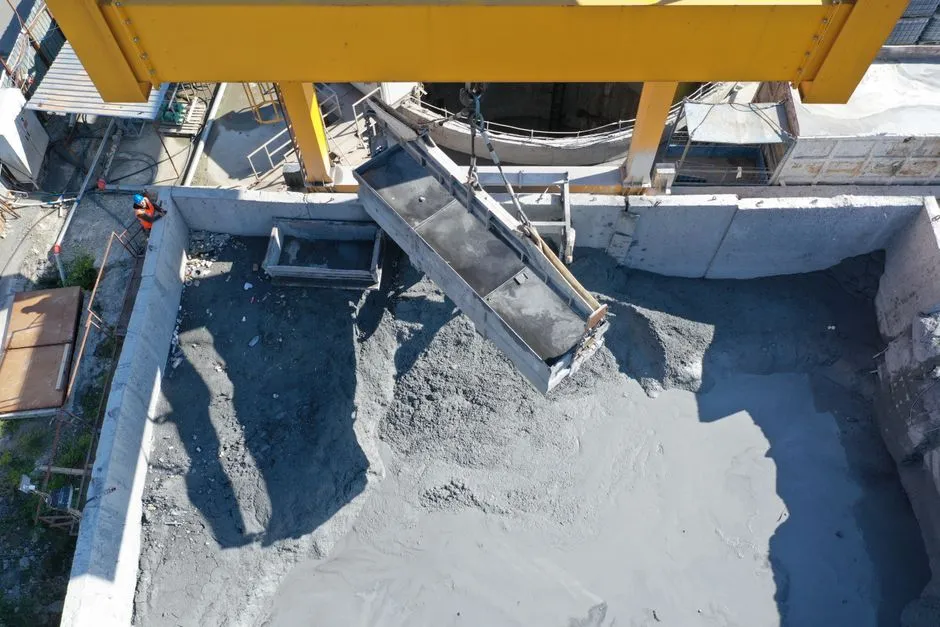
Commercial filter presses operating in industrial sludge dewatering typically apply hydraulic closing pressures between 100 and 225 psi across recessed, membrane, and plate-and-frame plate designs, as cataloged by Thomasnet supplier data. Selecting the correct plate architecture depends on whether the stream consists of fibrous spent grain, diatomaceous earth (DE) filter media, or gelatinous waste yeast and biological sludge.
A recessed chamber filter press serves as the standard baseline for spent grain and stillage solids. According to a 2026 beverage press engineering guide from Senjie, chamber presses dewater beverage waste streams to a typical cake moisture range of 55% to 75%. However, when dewatering pure yeast slurry or waste biological sludge, fine cell structures retain bound water. In these applications, a membrane (squeeze) filter press is preferred; the 2026 Senjie guide notes that membrane presses consistently reduce cake moisture by an additional 10 to 15 percentage points compared to chamber presses on identical streams by inflating an elastomeric membrane during the secondary squeeze phase.
For classic activated sludge dewatering, plate-and-frame presses remain highly effective. A 2024 solid-liquid separation study published by the National Research and Innovation Agency (BRIN) evaluated plate-and-frame dewatering performance using a simulated activated sludge suspension (CaCO3 surrogate) across 1% to 4% w/w concentrations. The BRIN study reported a solute solids removal efficiency of 56.00% at a 4% w/w feed concentration when using cotton filter media, validating plate-and-frame architecture for fine inorganic and biological solids separation.
| Press Configuration | Dewatering Mechanism | Achievable Cake Moisture | Best Fit for Distillery Streams |
|---|---|---|---|
| Recessed Chamber Press | Fixed-volume chamber filled under high pump feed pressure | 55%–75% moisture (Senjie 2026) | Fibrous stillage solids, spent grain slurry, DE waste |
| Membrane Squeeze Press | Variable-volume chamber with secondary hydraulic/air diaphragm squeeze | 10–15 percentage points lower than chamber | Gelatinous biological sludge, excess yeast slurry, fine lees |
| Plate-and-Frame Press | Alternating flush plates and hollow frames holding filter media | 56.00% solute removal at 4% w/w solids (BRIN 2024) | Polishing filtration, secondary activated sludge dewatering |
Filter Cloth, Plate Material, and Pump Selection for Distillery Duty
Selecting filter media in the 20 to 60 micron range prevents cloth blinding while maintaining solid retention for product-adjacent beverage waste streams, according to Senjie engineering specifications. Synthetic woven cloths made of food-grade polypropylene (PP) or polyester are standard for industrial distillery effluent treatment. Polypropylene offers chemical resistance across acidic stillage (pH 3.5–5.0) and caustic cleaning washdowns. While the 2024 BRIN study documented that cotton cloth achieved 56.00% solute removal efficiency outperforming drill cloth on fine suspensions, natural fiber cotton is generally avoided in continuous food-grade beverage operations due to microbial degradation risks and lower tensile durability under high hydraulic cycling.
Plate metallurgy and structural wetted components must withstand both acidic feed conditions and sanitation chemical regimens. Carbon steel frames equipped with gasketed polypropylene plates provide a durable, cost-effective solution for standard biological sludge dewatering. However, if the press handles direct process waste or receives acidic CIP flushes containing chlorides, specifying SS304 or SS316 stainless steel wetted components prevents frame pitting and corrosion over time, as detailed in the 2026 Senjie technical manual.
Feed pump selection determines cycle time and filter cake density. Air-operated double diaphragm (AODD) pumps are recommended for shear-sensitive yeast slurry and delicate biological flocs because their gentle displacement prevents cell rupture that could release intracellular bound water into the filtrate. For thick diatomaceous earth cake or viscous stillage solids, progressive cavity pumps deliver the steady, high-pressure volumetric delivery needed to quickly fill the press chambers against rising backpressure.
Sizing the Filter Press for Peak-Season Distillery Loads
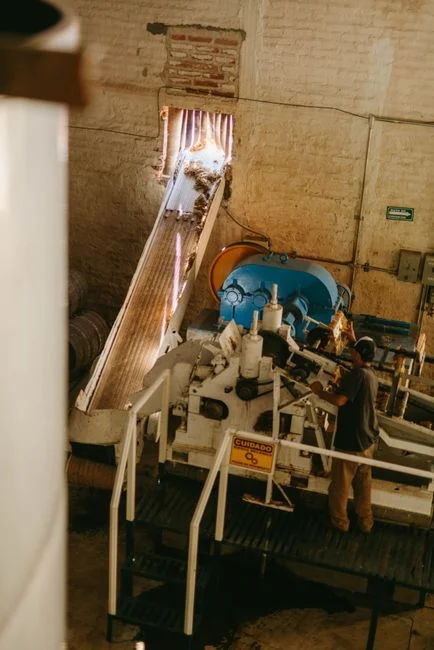
Data from the Stellenbosch University SUNScholar study shows that distillery wastewater streams can experience over a three-fold increase in COD loading during peak production, jumping from approximately 2,200 mg/L in the off-season to 7,000 mg/L at peak. Sizing a press solely on annual average production results in severe dewatering bottlenecks during harvest and distillation surges. Engineers must size the system based on peak daily dry solids production mass (kg DS/day) rather than volumetric liquid flow alone.
To establish a defensible duty specification, plant engineers must gather five primary operational parameters before consulting equipment manufacturers:
- Peak Daily Sludge Volume: Total cubic meters per day ($m^3/day$) generated by upstream biological reactors and clarifiers during maximum distillation output.
- Influent Dry Solids Concentration: Percentage of dry solids (% DS) in the feed slurry, typically ranging from 1% to 4% w/w for biological sludge.
- Target Cake Dryness: Required moisture content (e.g., 55% to 75% moisture) dictated by disposal or by-product transport agreements.
- Complete Cycle Time: Total duration (minutes) including pump fill time, cake formation, membrane squeeze (if applicable), core blow, and plate shift/cake discharge.
- Total Filtration Area: Required surface area ($m^2$) to accommodate the target volume of cake generated per cycle.
To match these varied operational demands, the HydropureWater plate and frame filter press line offers filtration surface areas spanning from 1 $m^2$ for pilot facilities up to 500 $m^2$ for major industrial distilleries, with control options ranging from manual hydraulic closures to fully automated, PLC-driven plate shifters and cloth wash systems. To verify regional discharge compliance frameworks alongside equipment sizing, engineers should consult our food and beverage pretreatment compliance guide. Always execute bench-scale jar tests or pilot-scale filtration trials with actual site sludge prior to finalizing press capacity, as synthetic benchmarks (such as the CaCO3 surrogate used in the BRIN study) do not fully replicate real-world biological cake compressibility.
Operating Costs, Compliance, and Common Mistakes
Achieving a 10 to 15 percentage point reduction in cake moisture directly reduces haulage mass and off-site disposal expenditure for high-volume beverage operations, as demonstrated in Senjie process documentation. Dewatering biological sludge from 85% moisture down to 65% moisture cuts the total mass of waste hauled off-site by more than half. Over a 7-day high-season distillation run, this volume reduction provides significant operational savings in freight and landfill tipping fees.
From an environmental compliance perspective, the filter press operates as part of an integrated treatment sequence. Achieving direct discharge limits—such as the legal benchmark of less than 75 mg/L COD cited in the SUNScholar study—requires proper performance across equalization, biological degradation, and clarification stages. The filter press isolates and dewaters the solid fraction; it does not eliminate soluble COD present in the liquid phase. Expecting the filter press alone to solve high dissolved COD without upstream biological oxidation is a critical process design oversight.
Distillery engineers commonly make three operational errors during system design:
- Sizing for Off-Season Averages: Failing to account for the >3x peak-season COD and solids load swings identified in the SUNScholar research leads to incomplete chamber filling, wet sludgy cakes, and blinded filter cloths during peak operations.
- Bypassing Equalization: Pumping variable-density sludge directly from biological basins without prior equalization causes fluctuating cake thickness, unpredictable pump cycle times, and uneven wear on hydraulic plates.
- Specifying Industrial non-Food-Grade Cloths: Utilizing standard industrial filter cloths on product-adjacent spent grain or yeast streams introduces potential hygiene and migration risks. Always specify food-grade polypropylene or polyester media from a dedicated filter press cloth range.
Frequently Asked Questions
What is the typical purchase price and budgetary capital expenditure for a distillery filter press?
Filter press capital costs depend directly on total filtration area (m²), plate metallurgy (polypropylene vs. SS304/SS316 stainless steel), hydraulic closing mechanisms, and the level of PLC automation. Small units (1 to 10 m²) with manual hydraulic closures represent lower capex entries for craft sites, while large-scale industrial units (up to 500 m²) with automatic plate shifters, diaphragm squeeze, and automated cloth washing require higher initial capital investment. Buyers must request vendor quotations based on peak dry solids output (kg DS/day), stream acidity (pH 3.5–5.0), and pump feed pressure requirements rather than relying on generic square-meter estimates.
How should a plant engineer determine press capacity and select a supplier for seasonal distillation loads?
Engineers should select a supplier capable of offering filtration surface areas ranging from 1 m² to 500 m² and demand a sizing evaluation anchored in peak harvest solids mass (kg DS/day) rather than average flow. The supplier evaluation must verify hydraulic closing pressure ratings (100 to 225 psi), food-grade cloth options in the 20 to 60 micron range, and compatibility with variable-viscosity feed pumps (AODD or progressive cavity). Sizing calculations must be confirmed via pilot testing on actual site sludge to ensure the unit accommodates seasonal COD and solids swings like the 12,609–21,150 mg/L COD variations documented in distillery research.
When should a distillery choose a membrane press over a standard recessed chamber press?
A membrane press should be selected when handling fine, gelatinous biological sludge or yeast slurry where maximum cake dryness is required to reduce off-site disposal costs. The secondary squeeze phase reduces final cake moisture by an extra 10 to 15 percentage points compared to a standard chamber press (which typically yields 55% to 75% moisture). If the stream consists primarily of coarse, fibrous spent grain or diatomaceous earth waste, a standard recessed chamber press provides a durable, lower-capex alternative.
Can a filter press alone reduce distillery wastewater COD to meet direct environmental discharge limits?
No, a filter press is a solid-liquid separation device designed to remove suspended solids and dewater sludge, not a biological oxidation unit. While it removes the particulate COD tied to suspended biomass and stillage solids, soluble COD remains in the liquid filtrate. Meeting direct-discharge standards—such as the <75 mg/L COD limit referenced in Stellenbosch University research—requires an integrated treatment chain combining equalization, biological treatment (anaerobic/aerobic), clarification, and final filtration dewatering.