Start with the discharge route and wastewater profile
The right choice for an industrial effluent treatment plant in Nice depends on the pollutant profile and final destination. Use a bar screen for rags and solids, DAF for oil, grease, colloids and suspended solids, biological treatment or MBR for biodegradable organic load, and UF for low-solids polishing before reuse or sensitive downstream treatment. HydropureWater's DAF range is 4–300 m³/h, while MBR systems span 10–2,000 m³/day. The supplied evidence does not establish Nice-specific discharge limits, so the final route requires confirmation from the sewer authority or receiving-water requirements and a wastewater characterization.
Begin by fixing the destination: direct sewer discharge, controlled pretreatment before sewer entry, on-site treatment followed by discharge, or industrial water reuse. Each destination changes the required effluent quality, monitoring burden and residual-sludge route. The industrial effluent treatment plant selection method provides a comparable selection sequence, but Nice compliance must be established locally.
Wastewater characterization should cover average and peak flow, operating schedule, batch variability, pH, COD, BOD, suspended solids, oil and grease, nitrogen, phosphorus, temperature and sector-specific contaminants. The 2022 review in pmc.ncbi.nlm.nih.gov states that industrial wastewater can arise from washing, cooking, cooling, heating, extraction, reaction by-products, separation and quality-control rejection. Sampling must therefore cover the operations that generate the discharge, including clean-up flows and rejected product.
| Design input | Record before quotation | Why it changes the route |
|---|---|---|
| Discharge destination | Sewer, receiving water or on-site reuse | Sets the compliance and polishing requirements |
| Flow | Average, peak, batch discharge and operating hours | Determines hydraulic and equalisation duties |
| Organic load | COD, BOD and biodegradability | Indicates whether biological treatment is justified |
| Solids and floatables | Suspended solids, oil and grease, colloids | Indicates screening, DAF or solids separation |
| Chemical condition | pH, temperature, nitrogen, phosphorus and process-specific contaminants | Defines chemical control and residual treatment |
| Reuse target | Required end use and water-quality specification | Determines whether UF or another polishing step is required |
| Local approval | Applicable sewer permit and receiving-water requirements | Converts an engineering route into a compliant discharge route |
No Nice-specific sewer limits or receiving-water standards appear in the supplied evidence. Require written confirmation from the competent local authority and the sewer operator, including allowable discharge parameters, sampling requirements, connection conditions and any pretreatment obligation. Until that information is received, treat the final treatment train as provisional.
Match the dominant contaminant to the first treatment step
The first unit process should remove the contaminant most likely to impair downstream equipment or biological treatment. Screen for rags, plastics and fibrous debris; float oil, grease, colloids and floatable solids; and use chemical or biological treatment only after the wastewater has been characterized sufficiently to establish the operating envelope.
Continuous-duty fine screening is appropriate where suspended solids, rags, plastics or fibrous debris could overload pumps, valves or biological processes. A rotary mechanical bar screen can form the protection stage rather than the complete treatment train. It protects downstream equipment; it does not remove dissolved contaminants or establish discharge compliance.
Use a DAF system for oil, grease and suspended solids when floatable material or colloids are prominent. HydropureWater’s DAF catalogue covers 4–300 m³/h across 13 standard models and supports automatic skimming. The 2022 review in pmc.ncbi.nlm.nih.gov identifies dissolved air flotation among treatment options for chemical-industry wastewater alongside neutralization, coagulation and flocculation. This supports a process selected for the dominant pollutant, not a generic ETP assembled without a design basis.
Before biological treatment, confirm whether pH correction or another chemical stage is necessary. Automatic dosing can be integrated with PLC-controlled injection, but the required chemical, dose range, storage arrangement and control response must be identified from the wastewater analysis. For a broader comparison of solids separation before biological treatment, see DAF versus Lamella clarifier for pretreatment.
| If the characterization shows | First-stage decision | Key procurement question |
|---|---|---|
| Rags, plastics or fibrous debris | Fine screening | What screen opening and duty suit the flow and debris type? |
| Oil, grease, floatable solids or colloids | DAF, supported by equalisation and chemical preparation where required | What are the design flow, feed characteristics and skimming arrangement? |
| Material requiring pH correction | Neutralisation and controlled dosing | Which chemical, storage, duty and automatic control are included? |
| Non-floatable suspended solids requiring separation | Evaluate clarification against DAF | Which process provides the required solids handling and footprint? |
The practical rule is straightforward: do not let screening, DAF, clarification and biological treatment compete in the quotation as interchangeable items. Define what each stage removes, what remains in the water, and how the residual sludge will be collected and removed.
Choose biological treatment, MBR or advanced polishing
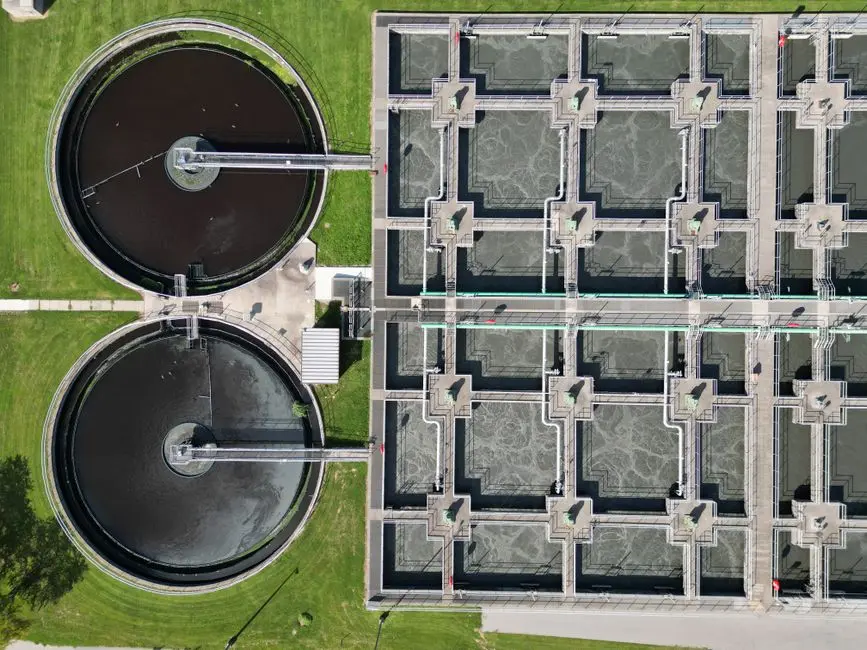
Biological treatment is the correct choice when biodegradable organic load and BOD are central treatment targets, while MBR is appropriate when the required separation performance justifies adding membrane solids separation within the biological stage. The 2022 review in pmc.ncbi.nlm.nih.gov defines BOD as a measure of biodegradable organic matter; that makes biodegradability more useful for process selection than COD alone.
HydropureWater specifies filtration below 1 μm, a 60% smaller footprint than conventional systems, and capacities from 10 to 2,000 m³/day for its integrated MBR wastewater treatment system. These are catalog specifications, not a site guarantee. Ask the supplier to state the guaranteed feed flow, organic loading, hydraulic condition, membrane configuration, cleaning method and replacement conditions for the characterized wastewater.
UF is a distinct polishing option rather than a substitute for biological treatment. The supplied UF catalogue specifies 0.03 micron PVDF membranes, 2,000–40,000 L/h, automatic backwash and air scour. Use it where membrane polishing or pretreatment ahead of RO is required, and request a UF polishing system proposal tied to the preceding process.
The University of Twente thesis Direct nanofiltration of wastewater treatment plant effluent evaluated direct nanofiltration for polishing WWTP effluent with a view to reclamation. This supports treating polishing as a separate design question, not automatically bolting a membrane onto a biological system without checking the feed and operating requirements.
| Selection condition | Candidate route | Evidence or required confirmation |
|---|---|---|
| Biodegradable organic load is the primary target | Biological treatment | Confirm biodegradability, temperature, pH, nutrients and required effluent quality |
| Compact biological treatment with fine solids separation is required | MBR | HydropureWater catalogue: filtration below 1 μm, 60% smaller footprint, 10–2,000 m³/day |
| Low-solids polishing or pretreatment ahead of RO is required | UF | HydropureWater catalogue: 0.03 micron PVDF, 2,000–40,000 L/h, automatic backwash and air scour |
| Advanced reclamation beyond the selected route | Evaluate polishing separately | University of Twente thesis evaluated direct nanofiltration for WWTP-effluent reclamation |
Every supplier should demonstrate the proposed process against the same wastewater data and state its required pretreatment, cleaning strategy, membrane replacement conditions and performance guarantee. Generic membrane claims do not establish suitability for the factory’s actual effluent.
Build a complete treatment train and acceptance checklist
A complete industrial effluent treatment train may combine screening, equalisation, pH control, DAF, biological treatment, solids separation, polishing, disinfection and sludge dewatering, but only those stages supported by the wastewater characterization should enter the quotation. The equipment list must also show how the stages connect, where flow splits, and how each residual stream leaves the plant.
Use a Lamella clarifier where inclined-plate separation, sludge recirculation and flocculation are appropriate. The supplied catalogue states surface loading rates of 20–40 m/h and chemical consumption reduced by up to 30%. Require the supplier to identify the basis of that reduction and the corresponding duty, because the claimed value cannot be transferred automatically to every wastewater.
The high-efficiency sedimentation tank should be assessed as a solids-separation option, while a plate-frame filter press can form part of sludge dewatering. Confirm whether dewatering is necessary for the chosen discharge and sludge-disposal arrangements; do not add it merely because a complete ETP may include sludge handling.
| Acceptance item | Evidence required before order | Responsible party |
|---|---|---|
| Design basis | Flow, pollutant analyses, operating hours and required effluent or reuse quality | Client and laboratory |
| Guaranteed duty | Defined duty points, operating envelope and performance guarantee | Supplier |
| Controls and automation | PLC scope, interlocks, alarms, probes, duty/standby arrangements and data logging | Supplier and client |
| Installation boundary | Tanks, pumping, electrical supply, civil works, connections and access routes identified | Supplier and client |
| Commissioning | Pre-commissioning checks, trial runs, acceptance samples and training | Supplier and client |
| Maintenance | Maintenance intervals, cleaning strategy, spares, membrane replacement conditions and support | Supplier |
| Local compliance | Written sewer permit, connection requirements and applicable receiving-water criteria | Authority, sewer operator and client |
Assign every input so quotations are comparable: flow and operating schedule to the client, analysis to an accredited laboratory, discharge limits to the authority and sewer operator, reuse quality to the client’s process owner, utilities and installation constraints to the site team, and duty guarantees to the supplier.
Advanced effluent polishing remains an active research field. Wageningen University’s 2022 thesis, Removal of micropollutants from wastewater treatment plant effluent by constructed wetlands, examined micropollutant removal in constructed wetlands. The implication for procurement is direct: the proposed train must be project-specific, and acceptance criteria should refer to the characterized wastewater and agreed discharge or reuse specification rather than generic performance claims.
Before comparing industrial ETP and DAF selection for factories, freeze one common design basis and issue it to every bidder. A useful industrial ETP and DAF selection for factories comparison can then expose differences in process logic, scope exclusions and guarantees instead of differences in the wastewater being treated.
Frequently Asked Questions
How should an industrial effluent treatment plant in Nice be sized?
Size the plant from the maximum relevant flow and contaminant load, but obtain a wastewater analysis before selecting DAF, biological or membrane equipment. Flow alone cannot establish whether oil and grease, biodegradable organics or low-solids polishing control the design. Give suppliers the same average flow, peak flow, operating schedule, batch profile, analyses and reuse or discharge target so their duty proposals are comparable.
How do I compare quotations without paying for an unsuitable train?
Request itemised quotations separating equipment, tanks, pumping, chemicals, controls, civil works, installation, commissioning, sludge handling and disposal. Also request the guaranteed duty points, utilities demand, controls scope, maintenance intervals, operator training, spares, membrane or filter replacement conditions, commissioning tests and the precise boundary between equipment supply and civil works. Then test whether each proposed process is justified by the characterized wastewater rather than by a generic equipment package.