Start with the factory's wastewater and permit requirements
An Amman factory should select an industrial ETP or DAF system based on wastewater characterization, peak flow, oil and grease, TSS, biodegradability, discharge or reuse targets, available space, and Jordanian permit conditions. DAF is usually most appropriate for oil, grease, FOG, colloidal solids, or fine suspended solids, either as pretreatment ahead of biological treatment or as tertiary polishing. The leading technical source provides DAF reference values: 3–6 m³/m²·hr hydraulic loading, 4–6 bar gauge saturation pressure, a 15–50% recycle ratio, and 1–3 minute contact-zone retention. These are engineering benchmarks, not Jordanian discharge standards.
Begin with a representative industrial wastewater characterization covering peak and average flow, TSS, COD, BOD, oil and grease, FOG, pH, temperature, and conductivity. Add process-specific contaminants where relevant, such as solvents, dyes, pharmaceuticals, metals, detergents, or high salinity. Sampling should represent normal production, cleaning cycles, and batch discharges; a single grab sample will not establish a defensible factory wastewater ETP design basis.
Define the destination before selecting equipment. A municipal sewer connection, an approved discharge route, irrigation, cooling, boiler feed, process reuse, and zero-liquid-discharge handling impose different quality, reliability, and concentrate-management requirements. Confirm the current Jordanian permit, sewer acceptance conditions, and applicable sector requirements with the relevant authority. The Spans Envirotech source discusses CPCB requirements and consent processes in India; its numerical examples are engineering references, not Jordanian legal limits.
Document production schedules, washdown volumes, cleaning frequency, batch-discharge timing, and future capacity changes. Peak hydraulic and contaminant loads may control DAF tank area and recycle-pump capacity. The best DAF unit decision framework is useful for translating this information into a supplier brief, but its technical benchmarks still need to be checked against the factory’s wastewater.
Choose the treatment train that matches the contaminant
DAF is a physical-chemical separation process where bubbles attach to suspended solids, colloids, oils, greases, and fine fibers, after which the floating material is mechanically skimmed. This defines a specific treatment role rather than a complete treatment category. If emulsified oil, FOG, or fine solids would interfere with biological treatment, place DAF upstream; if polishing is required after biological treatment, consider DAF at the end of the train.
Use the following decision sequence:
- If dense, readily settleable solids dominate, test whether clarification provides sufficient capture.
- If oil, grease, FOG, colloidal material, or fine suspended solids dominate, evaluate DAF.
- If the wastewater is biodegradable but the target requires BOD and COD removal, include biological treatment.
- If the reuse target requires dissolved-solids control or a non-discharge outcome, assess filtration, UF, RO, or ZLD only after confirming the required water quality and concentrate route.
A practical flow includes screening, equalization, pH or chemical conditioning, DAF or clarification, biological treatment where needed, filtration, disinfection where required, and advanced polishing or concentrate management. The industrial ETP and DAF process-flow guidance shows the same architecture, but its location-specific requirements must be replaced with the Amman permit basis.
| Wastewater or target condition | Primary treatment role | Key design question |
|---|---|---|
| Dense, settleable solids | Clarification | Does gravity separation meet the required solids capture without DAF? |
| Emulsified oil, FOG, fine or colloidal solids | DAF, with chemical conditioning | What removal and float-handling duties must the DAF cover? |
| Biodegradable organics with BOD or COD removal required | Biological treatment, potentially after DAF | What influent variation and pretreatment does the biology need? |
| Process reuse, boiler feed or restricted discharge | Filtration and advanced polishing as required | What final water quality and concentrate destination are confirmed? |
| No liquid discharge | ZLD with concentrate management | Are recovery, solids handling, and disposal technically and operationally feasible? |
Clar Aqua describes UF as a barrier for suspended solids, bacteria, viruses, and colloidal particles; RO for purified water; and ZLD as a system that recovers water and converts residual liquid waste into solids for disposal or reuse. These are functional distinctions, not substitutes for one another; advanced systems require compatible pretreatment and a defined solids destination.
Size a DAF system from hydraulic and contaminant loading
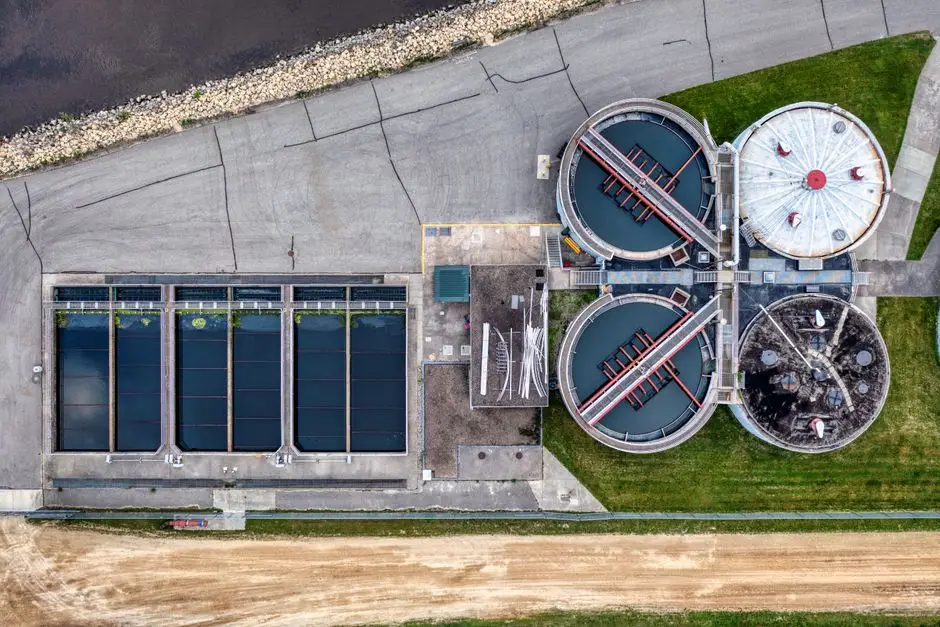
Use peak wastewater flow for the preliminary hydraulic envelope, then examine equalization. A short, high-volume discharge may justify equalization because it avoids oversizing the DAF and recycle system. Daily average flow alone will not establish the required DAF tank area calculation.
The Spans Envirotech design guide, published in 2025, gives a standard industrial hydraulic surface loading rate of 3–6 m³/m²·hr and states that 100 m³/hr at that rate requires approximately 17–33 m² of tank plan area. For dairy and food ETPs, it identifies 4 m³/m²·hr as a common conservative design point. That is an industry-specific reference, not an Amman requirement.
The same source gives an industrial recycle ratio of 15–50%, with 25–35% common in dairy and food applications. It states that 40–50% may be needed when influent TSS exceeds 500 mg/L to reach the source’s cited CPCB TSS reference of 100 mg/L. That CPCB value must not be presented as a Jordanian discharge limit.
| Design parameter | Spans Envirotech reference | How to use it |
|---|---|---|
| Hydraulic surface loading rate | 3–6 m³/m²·hr | Preliminary plan-area calculation |
| Example at 100 m³/hr | Approximately 17–33 m² | Source example for preliminary comparison |
| Recycle ratio | 15–50%; 25–35% common in dairy and food applications | Check against solids loading and required capture |
| Saturation pressure | 4–6 bar gauge | Define the recycle-pump and saturation-system duty |
| Contact-zone retention | 1–3 minutes | Confirm inlet mixing and floc preservation |
| Air-to-solids ratio | 0.005–0.060 mL air/mg solids, or 5–60 mL/g | Refine through testing against particle properties |
The calculation sequence is:
- Select the governing peak flow.
- Choose a trial hydraulic loading rate from the source range or another defensible project basis.
- Calculate preliminary tank plan area as peak flow divided by surface loading rate.
- Apply the selected recycle ratio to determine recycle flow and pump capacity.
- Check solids loading, air demand, contact-zone design, hopper capacity, and float-removal rate.
Review DAF machine specifications and the equipment-selection guidance during vendor clarification. Final sizing also requires wastewater testing, chemical trials, and confirmation by a qualified design engineer; the published values are preliminary selection criteria, not a guaranteed duty.
Design pretreatment and sludge handling with the DAF
Coagulation and flocculation are essential where emulsified or colloidal contaminants must be captured. The Spans Envirotech guide identifies alum at 50–200 mg/L, ferric chloride at 30–100 mg/L, PAC at 10–50 mg/L, and polyacrylamide at 0.5–3 mg/L as typical starting ranges for many industrial DAF applications. These are not default Amman doses: confirm them by jar testing with representative wastewater and the selected coagulant products.
For emulsified oil, the source cites adjustment to approximately pH 4.5–5.5 before coagulant addition to improve separation. Test the combined effect of pH correction, coagulant, and flocculant rather than specifying pH and dose independently. The resulting pH and residual chemistry must remain compatible with any downstream biological process. Detailed coagulant dosing system design criteria should cover storage, metering, dilution, control, and containment.
Do not evaluate the DAF in isolation. Specify equalization, screening, chemical conditioning, mixing, recycle pumping, aeration, float collection, sludge transfer, dewatering, storage, and approved disposal. A PLC-controlled chemical dosing system still requires a verified chemical basis, tank sizing, duty cycles, alarms, and operator procedures.
The source reports DAF float solids of typically 2–6% total solids. It also notes that float may be blended with biological sludge before filter-press or belt-press dewatering, although that treatment route depends on float chemistry and the permitted disposal route. Require the supplier to identify the final sludge destination, expected solids concentration, dewatering method, container or storage requirement, transport method, and disposal basis. Sludge handling can determine both the ETP footprint and operability.
Compare equipment proposals on performance, lifecycle and compliance
Comparable quotations must state the same design basis. If one proposal is based on average flow and another on peak flow, or one excludes equalization and sludge handling while another includes them, their prices are not comparable. A procurement decision should combine technical duty, compliance risk, operating resources, and whole-life obligations.
Ask every supplier to state the design flow, wastewater basis, treatment objective, guaranteed performance parameters, tank area, recycle ratio, saturation pressure, chemical assumptions, and operating envelope. Require a process flow, equipment list, electrical and control drawings, materials of construction, utilities, chemical consumption estimates, and O&M manual.
| Evaluation area | Information to require | Buyer check |
|---|---|---|
| Design basis | Peak and average flow, wastewater analysis, destination and permit basis | Is the proposal based on the factory’s actual duty? |
| DAF performance | Tank area, recycle ratio, pressure, contact time, air-to-solids basis and treatment guarantees | Can the claimed duty be traced to test data or calculation? |
| Chemicals | Product, dose range, storage, metering, mixing and control philosophy | Were doses established on representative wastewater? |
| Operations | Automatic skimming, controls, redundancy, maintenance access, utilities and local support | Can plant staff operate it during batch-load changes? |
| Sludge | Float characteristics, collection, transfer, dewatering, storage and disposal route | Is the complete residue route documented? |
| Commissioning | Startup, training, optimization, testing and handover | Are acceptance criteria and responsibilities defined? |
| Lifecycle | Energy, chemicals, maintenance, consumables and spare parts | Are operating assumptions consistent across suppliers? |
Ask how the supplier will handle startup, operator training, chemical optimization, performance testing, and changing industrial batch loads. Treat application data as vendor claims until checked against representative wastewater tests and the final Jordanian permit basis. The DAF selection and cost framework can structure this comparison, but neither it nor an equipment price replaces a site-specific process basis.
Frequently Asked Questions
What flow rate determines the size of an ETP or DAF system for a factory in Amman?
No single flow rate determines the design. Peak flow, contaminant loading, wastewater characteristics, treatment targets, and equalization all affect the result. Use the peak flow and the source’s 3–6 m³/m²·hr hydraulic surface loading range only for a preliminary plan-area comparison, then validate the duty through wastewater testing and process design.
Are DAF, biological ETP, UF, RO and ZLD interchangeable products?
No. DAF removes floatable and attachable material, biological ETP removes biodegradable organics, UF provides a membrane barrier for suspended material and colloids, RO produces purified water
Frequently Asked Questions
What size DAF system does a factory in Amman need for 100 m³/hr of wastewater?
For a flow rate of 100 m³/hr, a DAF system must be sized based on the hydraulic surface loading rate, typically ranging between 5 to 10 m³/m²/hr depending on the pollutant density. Consequently, you will require a DAF unit with a clarifier surface area of 10 to 20 square meters to ensure effective solids separation and adequate retention time for bubble-floc attachment.
It is critical to account for peak flow variations common in industrial cycles. The system should include a balance tank upstream with a capacity of at least 200 to 300 m³ to normalize flow and pollutant concentrations, ensuring the 100 m³/hr DAF unit operates at a steady state rather than experiencing hydraulic surges that would compromise effluent quality.
How much does an industrial ETP or DAF system cost in Jordan?
In the Jordanian market, a standalone DAF unit for industrial applications typically ranges from 25,000 to 60,000 JOD, depending on the material of construction (stainless steel 304 vs. 316L) and the complexity of the automated chemical dosing skids. A full-scale turnkey ETP, including pre-treatment, DAF, and secondary biological stages, can range from 150,000 to over 500,000 JOD depending on the specific industrial sector and effluent discharge requirements.
These costs are heavily influenced by the import duties on specialized pumps, sensors, and PLC components, as well as local civil works requirements. Budgeting should also include an annual operational expenditure (OPEX) of approximately 10% to 15% of the initial capital cost to cover power, chemical flocculants, and specialized labor for maintenance.
Should our factory use DAF, biological treatment, UF or a full ZLD system?
The choice depends entirely on your discharge destination and influent chemical oxygen demand (COD). DAF is primarily a physical-chemical primary treatment used to remove fats, oils, and suspended solids (TSS), and is essential if your effluent has high oil content. Biological treatment is necessary if your dissolved COD exceeds 500-1,000 mg/L and must be reduced to meet local municipal sewer discharge standards.
Ultrafiltration (UF) is recommended only if you intend to reuse the treated water for cooling towers or irrigation, as it acts as a barrier for bacteria and fine particles. A Zero Liquid Discharge (ZLD) system, which typically involves evaporation and crystallization, is only economically viable if your facility is located in a water-scarce area where local regulations strictly prohibit any liquid discharge or if you require high-purity water recovery for sensitive production processes.
What wastewater tests should I give a DAF supplier before requesting a quotation?
To receive an accurate quotation, you must provide a laboratory report detailing the following parameters: Chemical Oxygen Demand (COD), Biological Oxygen Demand (BOD5), Total Suspended Solids (TSS), Oil and Grease (O&G), and pH levels. Additionally, providing the temperature of the influent and the presence of any heavy metals or surfactants is vital, as these significantly impact the selection of coagulants and flocculants.
You should also specify the flow profile, including average daily flow, peak hourly flow, and the operating hours of the factory. If the wastewater contains high levels of chlorides or sulfates, this must be disclosed to ensure the supplier selects the correct grade of stainless steel or epoxy coating to prevent corrosion of the DAF tank and piping infrastructure.
How do I compare DAF suppliers in Amman without comparing price alone?
Evaluate suppliers based on the "Specific Energy Consumption" (kWh per m³ of treated water) and the chemical consumption efficiency (mg/L of coagulant required to achieve the target TSS). A supplier should be able to demonstrate these figures through jar testing or pilot plant data specifically conducted on your wastewater, rather than providing theoretical brochure statistics.
Assess the local technical support capabilities by requesting a list of reference sites in Jordan where the supplier has installed similar systems. Verify their response time for maintenance, the availability of critical spare parts—such as air saturation pumps and scraping motor gearboxes—within the local market, and the transparency of their PLC programming, ensuring you have access to the software logic for future troubleshooting.