Define the Effluent Destination Before Choosing Equipment
An industrial wastewater treatment plant for a Lyon operation should be selected by matching each wastewater stream to its final destination, rather than ordering a generic treatment unit. A 2024 modular life-cycle assessment used a decision tree to configure treatment from pollutant composition, intended end use, available technologies and environmental impact (ScienceDirect, 2024). The same study assessed fifteen conventional and advanced modules for treating one cubic metre of effluent; nanofiltration, reverse osmosis and ion exchange had the highest overall impacts, while cartridge filtration, sand filtration and ultraviolet treatment had the lowest (ScienceDirect, 2024). No Lyon-specific discharge limits, reuse criteria or industrial wastewater profile were supplied, so those inputs must be verified before an effluent treatment train is fixed.
Start with a separate destination for every stream. A sanitary sewer discharge requires a route accepted by the relevant sewer authority. Direct environmental discharge requires the applicable permit, receiving-water considerations and analytical compliance method. Process reuse requires the receiving process’s water-quality specification. Reuse requiring further treatment remains open until that additional quality requirement is defined.
Do not combine streams merely because they eventually reach the same outlet. Flow, temperature, pH, solids, oils and soluble contaminants may differ substantially by production line. Separate streams can reduce treatment complexity, but segregation should follow both the waste profile and the permitted discharge route.
Use the industrial effluent treatment plant decision guide for the same sequence applied in another municipality: define the destination, establish the design basis, allocate treatment functions, compare operating consequences, and request comparable equipment schedules. The useful decision principle comes from the 2024 ScienceDirect study: specify only the modules required for the verified profile and intended end use.
Build a Verified Lyon Design Basis
A quotation-ready Lyon design basis requires measured flow and contaminant data, a confirmed discharge or reuse route, and written confirmation from the applicable French authority.
Request average and peak flow, operating hours, wastewater temperature, pH and a contaminant-by-contaminant analysis. Include production changes, batch discharges, cleaning water, storm-water entry and any streams excluded from the proposed train. Treatment plant sizing should follow these duties rather than a generic daily-average figure alone.
Identify the sewer authority or environmental authority, applicable permit, discharge point, reuse rules and analytical compliance method with the client and an accredited local consultant. Record each document, contact and unresolved assumption. A supplier may offer an industrial wastewater sewer compliance guide, but that cannot substitute for verification of the site’s French permit conditions.
Do not use the LYON POTW figures as French market data. UtilityRadar identifies Lyon, Mississippi, where the secondary treatment plant serves 403 people, discharges 189.27 megaliters annually and has a designed capacity of 340.69 megaliters (UtilityRadar, source date not supplied). Those values describe a different location and do not establish Lyon France wastewater characteristics.
The University of Twente thesis, Direct nanofiltration of wastewater treatment plant effluent, provides technical background on membrane polishing and effluent reclamation, but it does not prove a local permit position or guarantee suitability for reuse in Lyon France.
| Design-basis field | Buyer entry | Verification action before quotation |
|---|---|---|
| Wastewater source | Production line, cleaning, laboratory, cooling or other source | Confirm sampling points, exclusions and future changes |
| Flow | Average flow, peak flow and operating schedule | Reconcile production records with a representative monitoring period |
| Quality | pH, temperature, solids, oils, organics, salts and relevant contaminants | Obtain laboratory analysis using agreed methods |
| Destination | Sanitary sewer, direct environmental discharge or reuse | Confirm discharge point, permit and receiving-process specification |
| Site constraints | Footprint, utilities, installation route and access | Confirm available area, power, drainage and connection constraints |
| Governing document | Permit reference or authority correspondence | Attach the applicable text and obtain professional interpretation |
Match Each Wastewater Problem to a Treatment Function
DAF should be selected as the primary physical-removal function when the verified wastewater contains oils, fats, suspended solids or colloidal material; MBR should be compared with activated sludge when biological treatment is required; and RO should be reserved for a defined reuse quality that cannot be met by upstream treatment alone.
For oils, fats, suspended solids and colloidal matter, screen a DAF wastewater pretreatment system as the physical-removal function. The supplied catalogue describes removal of suspended solids, FOG, oil and grease and colloidal matter. DAF is not a substitute for biological treatment, disinfection or a permit-compliant polishing stage.
For biologically treatable industrial effluent, compare the integrated MBR wastewater treatment system with activated-sludge alternatives. The supplied catalogue specifies an MBR combining activated sludge with submerged PVDF membrane filtration and gives a capacity range of 10 to 2,000 m³/day. Use the MBR versus activated sludge comparison to examine process fit rather than assuming membrane separation is automatically preferable.
For industrial effluent reuse, assess reverse osmosis only after upstream solids, organics and scaling risks have been controlled. The supplied catalogue states that industrial RO can reach recovery rates of up to 95%. Recovery is not a reuse specification: dissolved contaminants, salt rejection, permeate quality and the intended end use still require verification.
Use chemical dosing as a controllable support process for pH adjustment, coagulation or flocculation. Every chemical system should have a stated target, dosing basis, control response, safety requirements and residual handling arrangement. The 2024 ScienceDirect LCA also identifies chemical consumption as a sensitivity factor, so chemical demand belongs in module selection rather than being added after the process route is fixed.
| Verified wastewater problem | Primary function | Downstream check |
|---|---|---|
| Oils, fats, free oil, suspended solids or colloids | DAF physical separation | Characterize the separated oil and sludge streams |
| Biodegradable dissolved organics | Biological treatment using MBR or activated sludge | Compare solids separation, sludge handling and energy demand |
| Fine solids remaining after biological treatment | Membrane filtration within the MBR or a separate membrane stage | Define cleaning, fouling control and replacement access |
| Dissolved salts or contaminants preventing reuse | Reverse osmosis or another qualified polishing function | Confirm pretreatment, recovery, permeate quality and disposal route |
| Microbial requirement in the confirmed destination | Disinfection function | Agree monitoring method and permit condition |
| pH or coagulation-dependent contaminant | Targeted chemical dosing | Confirm reaction control and chemical consumption |
Compare Modules by Performance, Energy and Life-Cycle Impact
The 2024 comparative LCA assessed fifteen conventional and advanced treatment modules during the operation phase for treating one cubic metre of effluent; its environmental results should be used to frame trade-offs, not replace project-specific testing (ScienceDirect, 2024).
In that study, nanofiltration, reverse osmosis and ion exchange had the highest overall environmental impacts, whereas cartridge filtration, sand filtration and ultraviolet treatment had the lowest. These findings compare the studied scenarios; they do not establish that one equipment set will satisfy a Lyon discharge permit or reuse specification.
Energy consumption was a major impact factor in the sensitivity analysis, while resin and chemical consumption also strongly influenced the results (ScienceDirect, 2024). Ask each supplier to state the treatment basis and expected utility consumption for the quoted duty. Do not compare an energy-intensive polishing module against a lower-impact module without defining the final water quality each one must deliver.
Use the following commercial comparison for each candidate train:
- Verified inlet and outlet requirements against the permit or reuse specification.
- Treatment basis, including flow, operating hours, contaminant loading and applicable peak conditions.
- Expected energy, chemical and resin consumption, plus membrane replacement exposure.
- Maintenance requirements, available footprint, controls and utility connections.
- Residual handling, installation constraints, expansion provisions and end-of-life considerations.
The research supplies no Lyon prices; therefore, purchase price should not be converted into a supposedly representative total cost without a site-specific duty and supplier quotations.
Turn the Selection into a Supplier-Ready Equipment Schedule
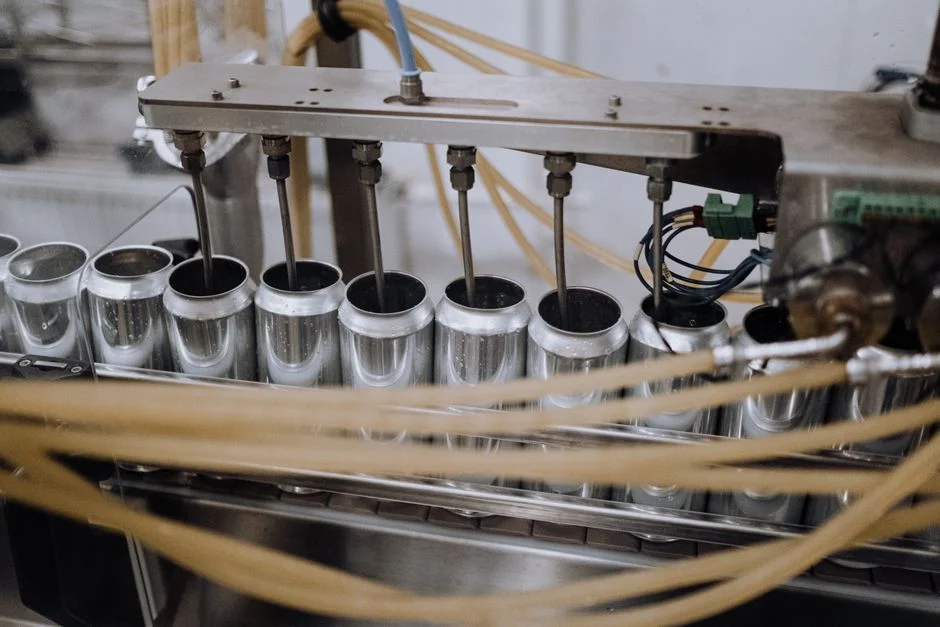
A comparable quotation package requires the verified design basis, the proposed treatment sequence and measurable acceptance criteria; a product list alone does not allow suppliers to quote a complete effluent treatment train.
Include verified flow, laboratory analysis, duty hours, final-use quality, available utilities, footprint, installation constraints, permit conditions and future expansion allowance. Require each supplier to identify every treatment stage, design duty basis, material of construction, control scope, utility consumption, maintenance provision and performance-test method.
Ask suppliers to mark each line as supplied, excluded or by others. This includes inlet and outlet works, equalization, chemical storage, sludge or oil removal, analyzers, alarms, electrical supply, installation, commissioning, training and maintenance access. A future expansion allowance is more useful when defined by the treatment functions and verified duties it must accommodate.
State that compliance remains subject to verification against the applicable French authority and site permit. No site-specific limits were supplied in the research, and the provided municipal record concerns Lyon, Mississippi rather than Lyon, France (UtilityRadar, source date not supplied).
Compare total operating considerations—including energy, chemicals, resin and membrane replacement—not purchase price alone. This follows the 2024 ScienceDirect assessment, which identified energy, resin and chemical consumption as important impact drivers. The same comparison should include supplier support, spare-parts strategy and the conditions under which performance guarantees apply.
Frequently Asked Questions
What should determine the budget for an industrial wastewater treatment plant in Lyon?
Request a quotation based on the verified flow, analysis, operating hours, final-use quality and site constraints. Ask the supplier to separate equipment, installation, utilities, chemical dosing, media or resin, membranes, maintenance and consumables. No verified Lyon ETP price was supplied in the research, so budget approval should wait for comparable quotations using the same design basis and scope.
Should the selected train include MBR, DAF, UF, RO and disinfection?
Not automatically. DAF addresses oils, fats and floatable or colloidal material; MBR combines biological treatment with membrane solids separation; ultrafiltration may provide a separate solids barrier; RO is a soluble-contaminant polishing function; and disinfection responds to a confirmed microbial requirement. Add each module only after mapping the verified wastewater problem and final-use specification. The 2024 ScienceDirect LCA supports modular configuration rather than a fixed all-module train.
What information is needed before sizing treatment plant capacity?
Obtain average flow, peak flow, operating hours, production schedules, batch-discharge information, wastewater temperature, pH and a contaminant-by-contaminant analysis. Also record future production changes and the available footprint. The catalogue MBR range of 10 to 2,000 m³/day is a product range, not a basis for sizing a Lyon installation.
How should the permit and compliance risk be managed?
Identify the applicable French authority, permit, discharge point, reuse conditions and analytical method with the client and an accredited local consultant. Require the governing limits to be attached to the equipment schedule and acceptance test. Do not use the LYON POTW figures as French evidence: UtilityRadar describes a secondary treatment plant in Lyon, Mississippi serving 403 people, with annual discharge of 189.27 megaliters and designed capacity of 340.69 megaliters (source date not supplied).