Start with the discharge route and wastewater profile
Choosing an effluent treatment plant in Munich starts with the industrial wastewater profile and its discharge or reuse route, not the city name or a generic package. A DAF system is generally indicated where wastewater contains high fats, oils and grease or suspended solids above 500–1,000 mg/L; an MBR can be considered when biological treatment and fine solids separation are required in a compact footprint. For every bid, request representative wastewater analyses, average and peak flows, the permit route, process flow diagrams, utilities, controls, civil scope, commissioning plans and performance evidence. Final equipment suitability must be demonstrated for the actual project wastewater.
The first procurement decision is whether the water will be discharged directly, sent through an indirect sewer route, or treated for reuse. The supplied research does not establish a universal Munich permit route, current local effluent limit, or site-specific approval. Separate confirmed German inputs from local checks: AbwV requirements provide the regulatory framework, while the actual receiving route, applicable limits, pretreatment agreement and reporting conditions must be verified for the Munich installation. The German direct and indirect discharge decision path is useful for structuring that verification.
Give every bidder the same verified inputs. The German industrial ETP selection guide, published by HydropureWater in 2026, calls for average flow, peak flow, batch-discharge timing, wastewater variability, representative analyses, the permit route and the final-water target. Each proposed stage should then have a duty point derived from the complete wastewater profile. Flow and pH alone cannot size an ETP reliably.
Characterization should include COD, BOD5, TSS, nitrogen, phosphorus and pH, with sector-relevant heavy metals or halogenated hydrocarbons where applicable under AbwV, according to the HydropureWater guide (2026). The table below is the minimum information register for a Munich RFQ; it is also a record of missing information rather than an invitation for suppliers to fill gaps by assumption.
| RFQ field | Information to issue | Verification action before pricing |
|---|---|---|
| Discharge and reuse route | Direct discharge, indirect sewer discharge or reuse; required final-water use | Confirm route, receiving authority requirements and applicable discharge parameters with the responsible Munich authority or sewer operator. |
| Flow | Verified average flow, peak flow, batch-discharge timing and wastewater variability | Reconcile production records, metering data and discharge schedules; identify the controlling design flow. |
| Wastewater analysis | COD, BOD5, TSS, nitrogen, phosphorus, pH and applicable sector contaminants | Use representative samples across relevant production conditions and record sampling dates and analytical methods. |
| Site and utilities | Drawings, footprint, available utilities, access, drainage and sludge-disposal constraints | Verify utility capacities, interfaces, easements and permitted waste routes. |
| Commercial basis | Final-water target, supply boundary, required documentation and commissioning expectations | Confirm each requirement with the project owner, operator and relevant authority before bids are opened. |
Match treatment equipment to the contaminants and reuse target
Technology selection follows the contaminant and quality objectives, not the available footprint alone. The HydropureWater guide (2026) identifies dissolved air flotation as pretreatment where fats, oils and grease are high or suspended solids exceed 500–1,000 mg/L. That makes an industrial DAF pretreatment system a candidate for a stream where oil, floatable material or high solids are central removal duties.
Where biodegradable organics require biological treatment and fine solids separation in a compact installation, assess an integrated MBR wastewater treatment system. HydropureWater’s 2026 guide describes MBR systems for industrial process-water and reuse applications from 10 to 2,000 m³/day. That range is a supplier-stated equipment envelope, not a Munich sizing conclusion; the buyer must demonstrate that the selected configuration covers the project’s verified flow, wastewater characteristics and final-water target.
Nanofiltration and constructed wetlands are project-specific options. University of Twente research assessed direct nanofiltration for polishing wastewater treatment plant effluent toward EU Water Framework Directive standards, with potential agricultural or direct and indirect potable-use scenarios. The source does not establish nanofiltration as a universal solution for every industrial stream. Separately, Wageningen University’s doctoral thesis on constructed wetlands for micropollutant removal was awarded on 23 September 2022. That supports research into a specialized treatment option, not automatic selection for a Munich plant.
| Condition or objective | Technology to assess | Evidence bidder must provide |
|---|---|---|
| High fats, oils and grease, or suspended solids above 500–1,000 mg/L | DAF pretreatment | Duty point, feed specification, recovered-solids characteristics, chemical demand and performance under the project wastewater profile. |
| Biodegradable organics plus fine solids separation in a compact footprint | Integrated MBR | Process basis, membrane configuration, biological duty, solids separation, cleaning strategy and enforceable performance test. |
| Advanced polishing for a defined reuse destination | Nanofiltration or another membrane train | Fouling tendency, cleaning method, recovery, energy use, replaceable-element cost, permeate quality and whole-life evidence. |
| Specialized micropollutant-removal objective | Constructed wetlands | Project-specific removal evidence, land and hydraulic requirements, seasonal limitations and fit with the final-water target. |
For every membrane stage, request confirmed wastewater chemistry, fouling tendency, cleaning strategy, recovery, energy use, replaceable-element cost and whole-life cost. The HydropureWater guide (2026) requires evidence from the actual wastewater or a defensible worst-case matrix. A technology name is not a treatment guarantee.
Build one Munich procurement data pack for every bidder
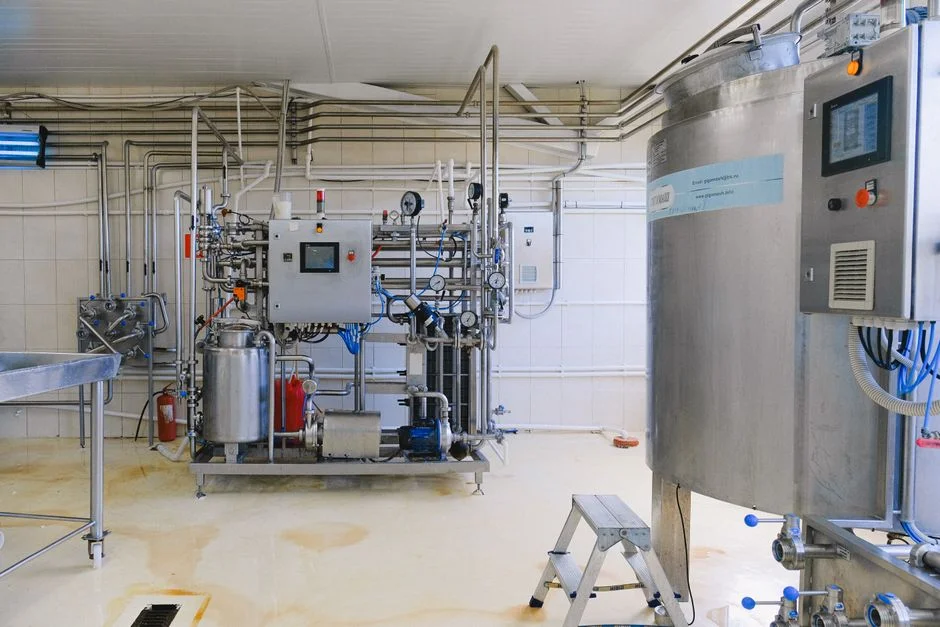
A common data pack is the mechanism that makes bids technically comparable. The HydropureWater guide (2026) requires the same peak and average flows, representative wastewater analyses, site drawings, permit route, final-water target, available utilities, footprint constraints and sludge-disposal constraints for every bidder. Give suppliers the same design basis, but do not disguise unverified information as confirmed project data.
Where an input is missing, record three things: who will verify it, how it will be verified and by what date. This applies particularly to the discharge route, local approval conditions, utility capacities and wastewater variability. Equipment suppliers should not be asked to infer the duty from flow and pH alone. If the information cannot be verified before pricing, require bidders to price a defined base case and state the assumption, sensitivity, exclusion and commercial consequence of a different outcome.
Ask each bidder to return a process flow diagram, tagged equipment list, stage-by-stage duty points, utility consumption, control philosophy, civil requirements, commissioning plan and references for comparable wastewater. Require the feed specification, chemical demand, recovered-solids concentration, controls and a proposed performance test under the project wastewater profile. These deliverables form the technical comparison sheet.
Use the following fillable register during issue and clarification. Complete the response column before evaluating technical or commercial deviations.
| Bidder deliverable | Required response | Buyer check |
|---|---|---|
| Design basis | Confirmed flow, analyses, variability, discharge route, final-water target and duty points | Same inputs and boundaries across bids? |
| Process and equipment | Process flow diagram, equipment list, feed specifications and recovered-solids characteristics | Does every stage have a defensible duty? |
| Utilities and controls | Utility demand, chemical use, control philosophy, alarms, interfaces and data requirements | Are consumption and availability measurable? |
| Civil and installation scope | Foundations, bunding, pipework, access, drainage, sludge handling, power and interfaces | Are site-specific works clearly priced or excluded? |
| Commissioning and performance | Test protocol, acceptance criteria, training, documentation and performance evidence | Can the test be completed with project wastewater? |
| Assumptions and exclusions | Explicit boundary, exclusions, dependencies, risks and commercial effects | Can bid prices be compared without hidden gaps? |
The German industrial ETP selection guide supports this sequence: establish the wastewater profile, derive each treatment stage’s duty, and only then compare package and site-specific equipment and civil scope. A price requested without this basis is only an equipment indication, not a comparable ETP offer.
Compare bids with measurable acceptance criteria
Bid comparison should test whether each supplier has solved the same treatment problem, not merely which package has the lowest price. Require the selected duty point, feed specification, chemical demand, recovered-solids concentration, controls and a performance test under the project wastewater profile, as specified in the HydropureWater guide (2026). Check that comparable wastewater assumptions and exclusions reveal whether the bidder has priced the same objective.
Compare capital cost alongside operating and lifecycle exposure. The commercial schedule should cover chemical demand, energy use, membrane cleaning, recovery, replaceable elements, sludge handling, controls, civil work and commissioning. The HydropureWater guide (2026) states that German industrial ETP capital expenditure typically ranges from 250,000 EUR for small-scale modular systems to several million EUR for complex, high-capacity installations. This is a German market context, not a Munich quotation; neither the final price nor the applicable site scope can be derived from it.
| Acceptance area | Comparable evidence to require | Acceptance question |
|---|---|---|
| Process performance | Duty points, feed limits, proposed test protocol and project-wastewater results | Does the bid meet the final-water target under the agreed duty? |
| Operating exposure | Chemical demand, energy use, cleaning frequency, recovery and replaceable-element cost | Are operating assumptions measurable and supported? |
| Sludge and residuals | Recovered-solids concentration, handling route and disposal assumptions | Is the residual stream technically and contractually defined? |
| Controls and commissioning | Control philosophy, alarms, interfaces, training, testing and handover documents | Can operation and acceptance be demonstrated? |
| Civil and supply boundary | Site works, utilities, exclusions, dependencies and responsibility matrix | Are gaps visible and priced consistently? |
| Supplier capability | Comparable operating references and German regulatory familiarity | Has the supplier demonstrated experience in the required framework? |
Require references for plants operating within the German regulatory framework and evidence of familiarity with reporting requirements of the local Umweltamt and technical standards of DWA, according to the HydropureWater guide (2026). These references should match comparable wastewater, treatment objectives and scale rather than merely confirm that a plant exists.
Market counts provide context, not a shortlist or quality score. RevenueBase identified 215 company matches associated with effluent treatment plant construction in Germany as of September 2026, while its November 2026 search reported 145 exact business-description matches for effluent treatment plant companies associated with Germany. The latter is not a similarity ranking. Selection should therefore remain based on the verified duty, acceptance criteria and contractual evidence.
Frequently Asked Questions
How should an industrial ETP for a Munich facility be sized?
Sizing starts with the verified average flow, peak flow, batch-discharge timing, wastewater variability and representative analyses. COD, BOD5, TSS, nitrogen, phosphorus, pH and sector-relevant contaminants must inform the treatment duties. The HydropureWater guide (2026) states that flow and pH alone cannot size an ETP reliably. Ask each bidder to define and demonstrate every stage duty point.
How should I compare ETP suppliers before requesting a final quotation?
Issue the same RFQ data pack to every bidder, then compare process flow diagrams, duty points, feed specifications, utilities, controls, civil scope, commissioning plans, performance tests, references, assumptions and exclusions. Require any performance test to use the project wastewater profile. This gives procurement a traceable technical basis for comparing bids rather than relying on package price or equipment terminology alone.
What budget should I expect for industrial wastewater treatment in Germany?
The HydropureWater guide (2026) gives a German capital-cost context of 250,000 EUR for small-scale modular systems to several million EUR for complex, high-capacity installations. This is not a Munich quotation. Request a site-specific price after confirming wastewater flow and analyses, treatment objectives, utilities, footprint, civil works, residuals handling, controls, commissioning and acceptance criteria; request the exclusions and commercial assumptions with that price.
What should be checked with Munich authorities before selecting an ETP supplier?
The supplied research does