Establish the German permit route before selecting equipment
For a Samsung Electronics semiconductor fab expansion in Germany, segregate wastewater by source, match each stream to treatment, and choose an indirect §58 WHG sewer route or a direct §57 WHG receiving-water route. The legal route, applicable limits, municipal capacity, and receiving-water constraints must be established before equipment sizing because a capacity or process change can require a material-change notification under §16 BImSchG and a new water-permit application, even if the production process remains unchanged (HydropureWater, 2026).
The supplied commercial guidance treats indirect discharge under §58 WHG as pre-treatment to the requirements of the municipal Entwässerungssatzung and Indirekteinleiter permit, including confirmation that the Klärwerk has sufficient hydraulic capacity. Direct discharge under §57 WHG requires the full treatment chain to meet the competent authority’s BAT-AEL-based limits and receiving-water envelope. The authority may be the relevant state water authority, while the municipality controls the sewer and municipal treatment obligations. These are different approval paths and should not be combined in one generic permit assumption.
For a capacity or process change, the same guidance reports that a Vorbescheid typically takes 3–6 months, while detailed engineering, BAT-AEL gap analysis, and reuse design continue through months 6–18 (HydropureWater, 2026). That sequence is planning guidance rather than a guaranteed statutory timetable. Obtain the current BImSchG permit, WHG permit, enforcement record, sewer agreement, municipal pretreatment requirements, and Klärwerk capacity evidence before accepting a guaranteed process design.
| Decision point | Indirect discharge | Direct discharge | Evidence required |
|---|---|---|---|
| Legal route | §58 WHG Indirekteinleiter permit | §57 WHG water permit | Current permit and competent-authority confirmation |
| Receiving system | Municipal sewer and Klärwerk | River, lake, or canal | Sewer agreement, Klärwerk capacity evidence, or receiving-water assessment |
| Treatment obligation | Pretreatment to municipal requirements; municipal treatment continues downstream | On-site treatment to the applicable BAT-AEL and receiving-water envelope | Entwässerungssatzung, municipal limits, permit conditions, and BAT-AEL gap analysis |
| Initial route test | Proceed if municipal capacity and pretreatment limits are confirmed | Proceed if the site can meet its complete discharge envelope | Representative wastewater data and written authority/municipal confirmation |
Map each source stream to its required treatment step
Source segregation determines whether a stream needs solids removal, solvent recovery, biological nitrogen removal, polishing, or reuse treatment. It also prevents relatively clean water from being mixed with concentrated slurry or solvent-bearing wastewater before the recovery and treatment opportunities are lost.
CMP slurry is identified as the highest-volume semiconductor stream in the supplied fab guidance and is reported to contain 200–5,000 mg/L TSS, depending on whether slurry is captured separately or blended with post-CMP rinse (HydropureWater, 2026). The same source recommends reducing solids to below about 100 mg/L before the biological train. A DAF system for high-solids fab wastewater is therefore a relevant solids-removal option; a lamella clarifier may be evaluated against the same duty.
Deposition and patterning wastewater can contain ammonia, TMAH, nitrate compounds, and organic nitrogen. The Samsung-Ecolab filing describes sequential pre-denitrification, nitrification, and post-denitrification, followed by aeration, sedimentation, and sludge separation; tests reported more than 30% greater nitrogen reduction than conventional methods (The Elec, 2025; HydropureWater, 2026).
The commercial battery-oriented guidance identifies NMP and PVDF binder in electrode-coating wastewater and recommends upstream vacuum distillation before biological polishing. Module and pack assembly wastewater is described as amenable to DAF, chemical precipitation, and pH control (HydropureWater, 2026). Those are useful source-treatment precedents, but they do not establish that a semiconductor fab has the same unit operations or limits. For a co-located HVAC or data-centre operation, keep relatively clean cooling blowdown and humidification water separate for possible reuse.
| Wastewater source | Reported characteristics | Required or indicated unit operation | Design data still required |
|---|---|---|---|
| CMP slurry and post-CMP rinse | 200–5,000 mg/L TSS; abrasive solids and residual oxidizers reported (HydropureWater, 2026) | Dedicated DAF or clarification; reduce below about 100 mg/L TSS before biology | Peak flow, solids size distribution, settleability, oxidizer residual, and batch profile |
| Deposition and patterning | Ammonia, TMAH, nitrate compounds, and organic nitrogen | Pre-denitrification, nitrification, post-denitrification, aeration, and sludge separation | TN, ammonia, TMAH, COD, C/N ratio, and production-week variability |
| Electrode-coating reference stream | NMP and PVDF binder described in battery-manufacture guidance (HydropureWater, 2026) | Vacuum distillation before biological polishing | Applicability to the German fab, NMP concentration, recovery target, and COD |
| Module or pack assembly reference stream | Rinse water with trace metals and oil | DAF, chemical precipitation, and pH control | Metals, oil, fluoride, pH, and applicability to semiconductor operations |
| Cooling blowdown and humidification | Relatively clean streams in the supplied guidance | Segregate for reuse evaluation | Conductivity, microbiological quality, flow profile, temperature, and reuse demand |
Choose a treatment train that matches the discharge route
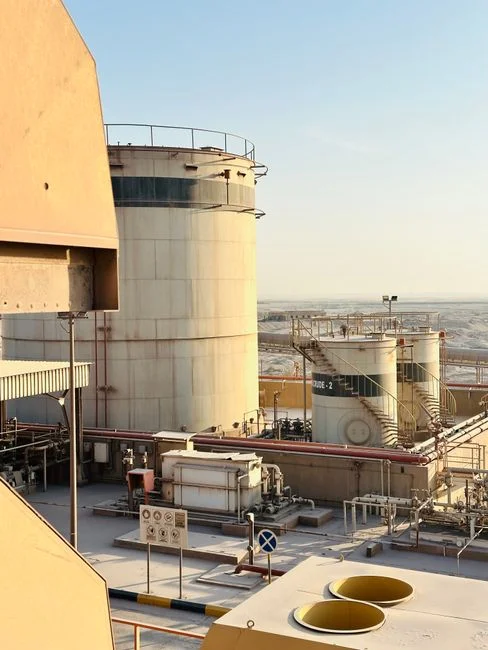
An indirect-discharge design should stop at the treatment required by the municipal agreement, whereas a direct-discharge design must add the polishing necessary to satisfy the full permit envelope. In the supplied commercial recommendation, an indirect route stops at MBR plus carbon polishing, while a direct route adds RO and tighter AOX polishing to the applicable BAT-AEL envelope (HydropureWater, 2026). This is preliminary route guidance, not a unit-selection guarantee.
The biological core is a three-stage arrangement: pre-denitrification consumes nitrate and residual organics in an anoxic zone; nitrification oxidizes ammonia; and post-denitrification removes residual nitrate with an external carbon source where needed. Aeration, sedimentation, and sludge separation follow. Tests reported more than 30% greater nitrogen reduction than conventional methods (The Elec, 2025; HydropureWater, 2026).
The supplied fab-treatment guidance cites a dissolved-oxygen range of 2.0–3.0 mg/L for nitrification, but the Samsung-Ecolab patent does not disclose hydraulic retention time (HydropureWater, 2026). Reactor sizing therefore cannot be transferred from the patent: it requires representative influent testing and confirmed nitrogen, ammonia, COD, flow, and batch-loading data. An MBR system for German fab wastewater may provide the biological stage, but solids removal and carbon balance still precede it.
| Performance stage | Primary function | Indirect-route scope | Direct-discharge scope | Acceptance inputs |
|---|---|---|---|---|
| Headworks and equalisation | Remove debris, balance flow and load, and control pH | Required as confirmed by the design basis | Required before the permitted treatment chain | Peak flow, batch releases, pH, solids, and control strategy |
| DAF or clarification | Remove suspended solids, oils, and precipitated flocs | Confirm against municipal solids limits | Confirm against upstream and final BAT-AEL limits | TSS, oils, metals, fluoride, and settleability |
| Biological nitrogen removal | Remove ammonia, nitrate, and biodegradable organics | Use an MBR where justified by footprint and effluent quality | Size against the confirmed direct-discharge TN envelope | TN, ammonia, COD, C/N ratio, dissolved oxygen, and HRT |
| Carbon polishing | Reduce AOX and residual trace organics | Confirm target with municipal requirements | Select media and contact time from AOX and organic data | AOX profile, TOC/COD, and required polishing duty |
| RO and reuse disinfection | Produce lower-salinity reuse water and control microbiological risk | Include only where reuse or sewer limits require it | Include when required by the permit or reuse design | Conductivity, recovery, pretreatment, disinfectant, and reuse specification |
Check the sector-specific limits before using a battery treatment template
AbwV Annex 31 applies to the manufacture of primary cells, secondary cells, and batteries, including specified processes such as electrode coating, electrolyte filling, formation cycling, and module or pack assembly (HydropureWater, 2026). A semiconductor fab cannot treat those limits as automatically applicable to its own permit.
The supplied battery-manufacture benchmark gives a pH range of 6.5–9 and COD of 150–300 mg/L at the discharge point, with other parameters including sulfate, fluoride, zinc, copper, nickel, lead, lithium, total nitrogen, and AOX (HydropureWater, 2026). These are source-scoped benchmarks for comparison, not established German semiconductor-fab limits.
The authority must determine the applicable sector requirements and site-specific discharge values. For an indirect route, the Entwässerungssatzung and Indirekteinleiter requirements may impose additional pretreatment conditions. The commercial guidance states that A 198-related requirements can tighten heavy-metal and AOX values by 20–50% relative to the cited AbwV band and that municipal sulfate caps around 200 mg/L are common for sewer corrosion protection (HydropureWater, 2026). Treat those statements as preliminary guidance because the applicable municipal instrument and receiving system must be reviewed.
The engineering consequence is straightforward: do not issue an equipment guarantee against Annex 31 values merely because the plant also makes batteries. Require the permit, applicable annex, municipal requirements, and written regulator interpretation before fixing pH, COD, fluoride, nitrogen, AOX, metals, or sulfate acceptance criteria.
Build the permit, commissioning and procurement package
A procurement package should separate four evidence classes: confirmed legal obligations, source-scoped technical benchmarks, published corporate targets, and preliminary vendor guidance. Confirmed obligations come from the current permits and municipal instruments; benchmarks describe the cited source scope; corporate targets guide reuse strategy; and preliminary guidance supports comparisons but does not determine acceptance criteria.
Request confirmation of the §57 or §58 route, discharge limits, monitoring frequency, receiving-water constraints, municipal pretreatment requirements, and Klärwerk hydraulic capacity (HydropureWater, 2026). For each source, request representative flow, TSS, COD, nitrogen, pH, fluoride, metals, AOX, oil and grease, NMP where relevant, and batch peaks. The supplied guidance notes that peak fab flows can be 3–5 times the daily average when formation cycling is batched (HydropureWater, 2026).
The same guidance recommends annual wastewater reporting, quarterly self-monitoring under the permit schedule, and integration with Samsung’s ISO 14001 environmental-management system and ESG disclosures (HydropureWater, 2026). Confirm the final monitoring schedule against the actual permit rather than treating those frequencies as universal requirements.
Commissioning acceptance should use agreed influent and effluent datasets, documented mass balances, stage-by-stage sampling, chemical and sludge handling tests, and a proven reuse-water specification where relevant. Samsung E&A reports an 86,000 m³/d semiconductor wastewater-treatment project in Korea (Samsung E&A, 2026). That is relevant experience, but its capacity cannot be transferred to a German expansion without site-specific flow, chemistry, batching, and permit data.
- Confirm the permit route, authority, municipal route, and applicable limits.
- Complete source segregation and representative wastewater characterization.
- Issue the preliminary process flow diagram and solids, nitrogen, AOX, and reuse mass balances.
- Obtain supplier guarantees tied to confirmed feed envelopes and permit values.
- Verify commissioning, monitoring, sludge handling, and permit reporting before acceptance.
Frequently Asked Questions
Should the German fab pretreat for sewer discharge or install direct-discharge polishing?
Choose indirect discharge under §58 WHG if the Entwässerungssatzung allows the route, the Indirekteinleiter permit can be obtained, and the Klärwerk confirms hydraulic and biological capacity. Choose direct discharge under §57 WHG if municipal capacity or pretreatment constraints are unacceptable and the site can meet the complete receiving-water and BAT-AEL envelope. The supplied commercial comparison stops an indirect train at MBR plus carbon polishing and adds RO and tighter AOX polishing for direct discharge, but that comparison is preliminary guidance rather than a site-specific design (HydropureWater, 2026).
What inputs are needed to size a German semiconductor fab wastewater treatment train?
Request source-by-source average and peak flows, TSS, COD, total nitrogen, ammonia, TMAH, pH, fluoride, metals, AOX, oil and grease, NMP where relevant, and batch-release profiles. For biological sizing, obtain representative C/N variability and nitrification data; the patent cited by the supplied research does not disclose hydraulic retention time (HydropureWater, 2026). Do not select final reactor, DAF, MBR, carbon, or RO capacity from headline flow alone.
How should a supplier be evaluated for permit and technical risk?
Require one offer that maps each unit to a confirmed stream, discharge route, and permit parameter. Ask the supplier to identify which values are contractual guarantees, which are assumptions, and which require regulator or municipal confirmation. Also request reference experience on comparable semiconductor wastewater, solids-removal performance, nitrogen-control performance, AOX polishing, sludge handling, and commissioning protocols. Samsung E&A’s reported 86,000 m³/d project provides relevant semiconductor experience, but it does not by itself prove suitability for the German expansion (Samsung E&A, 2026).
What drives the cost difference between direct and indirect discharge?
The supplied research supports a qualitative comparison, not a universal price, lead time, or final equipment size for the German expansion. Indirect discharge may limit on-site treatment to MBR and carbon polishing but introduces municipal pretreatment, capacity, and surcharges; direct discharge generally adds RO and more demanding AOX treatment while transferring the full treatment obligation to the site (HydropureWater, 2026). Request itemized capital and operating quotations using the confirmed route, flow and chemistry, reuse target, sludge-disposal route, and monitoring obligations.