Decide the legal discharge route before selecting equipment
Wastewater from a TSMC fab expansion in Germany should generally be segregated by process chemistry, pretreated on site and discharged indirectly to a municipal Kläranlage under a §59 WHG authorization, while the fab also needs a coordinated BImSchG permit under 4. BImSchV. AbwV Annex 36 supplies the regulatory framework, and the receiving Kläranlage may impose tighter sewer Übergabewerte. The likely treatment train comprises equalization, fluoride precipitation, clarification, ammonia stripping and biological polishing, with sludge dewatering and optional RO-based reuse. TSMC’s 61.9% water-pollution composite-indicator reduction is an ESG target, not a discharge limit.
The working assumption should be indirect discharge to the municipal sewer, not a direct outfall. Under §58 WHG, a Direkteinleiter discharges treated wastewater directly to a Gewässer, including surface water or groundwater, and the applicable AbwV requirements are tied to that discharge. Under §59 WHG, an Indirekteinleiter discharges through the public sewer to a municipal Kläranlage. In that case, AbwV requirements apply at the site boundary, while the sewer交接 point is also subject to Übergabewerte negotiated with the Kläranlage operator. The distinction is set out in the TSMC Germany wastewater compliance guide.
For a semiconductor fab, indirect discharge is the more defensible base case because untreated fluoride, ammonia and COD can exceed the biological and hydraulic capacity of a typical municipal treatment system, while the Dresden-area receiving waters are nutrient-sensitive (HydropureWater, 2026). This is not permission to send untreated process water to the sewer. It means that a defined industrial wastewater pretreatment plant must make the flow acceptable before the municipal system receives it.
Process and sanitary streams must remain hydraulically separate. Sanitary wastewater from kitchens, restrooms and process-area showers requires collection and biological treatment under the EU Urban Waste Water Treatment Directive 91/271/EEC, as described in the HydropureWater compliance guide (2026). Before equipment sizing, obtain written confirmation of the Kläranlage’s chemical acceptance criteria, sewer route, available capacity and applicable Übergabewerte.
TSMC’s published 61.9% reduction in its water-pollution composite indicator is a corporate ESG measure against a greater-than-60% 2030 target, not an AbwV limit (HydropureWater, 2026). Legal compliance and corporate water performance must therefore remain separate design checks.
Build the permit and mass-balance package
The approval package should contain four linked submissions: a §59 WHG application for indirect discharge, a BImSchG Genehmigungsantrag under 4. BImSchV, an AbwV-compliant Analysen- und Messprogramm, and a Notfallkonzept. The technical basis should be a stream-by-stream mass balance connecting every drain and treatment unit to the final sewer交接 point. Further permit-to-procurement detail is available in the site acquisition wastewater due-diligence guide.
Each stream entry should identify its source, discharge point, peak flow, contaminant inventory, sampling location, treatment step, residual sludge or concentrate destination, and accountable sampling frequency. AbwV Annex 36 governs semiconductor and flat-panel display manufacturing parameters. Where its provisions are silent, Annex 25 for general industrial wastewater, Annex 40 for metal-processing wastewater, and applicable LAWA Ableitwerte may need consideration (HydropureWater, 2026).
The compliance check has two layers: applicable AbwV requirements at the site boundary, and potentially stricter Übergabewerte at the municipal sewer handover point. Neither the AbwV envelope nor a corporate ESG indicator substitutes for the negotiated sewer criteria.
| Parameter | Municipal acceptance reference cited by HydropureWater (2026) | Design implication |
|---|---|---|
| COD | Typically 800–1,200 mg/L | Photo-resist and stripping streams require biological pretreatment and representative load testing. |
| Fluoride | Typically 20–50 mg/L | Raw IC streams reported at 50–500 mg/L make precipitation the principal treatment constraint. |
| NH₄-N | Typically 10–20 mg/L | High- and low-ammonia streams require different treatment routes. |
| Suspended solids | Around 200 mg/L | Clarification and biological solids removal must be sized for peak batch loads. |
The Notfallkonzept should address chemical-spill containment, fire-water retention, bypass prevention and supplier oversight. TSMC’s 2025 Key Supplier Wastewater Discharge Supervision Enhancement Program evaluated 425 critical raw-material suppliers and audited 15 high-risk suppliers on site; it generated 140 improvement recommendations, of which 85.7% had been closed by July 2026 (HydropureWater, 2026).
Separate the wastewater before it reaches the treatment train
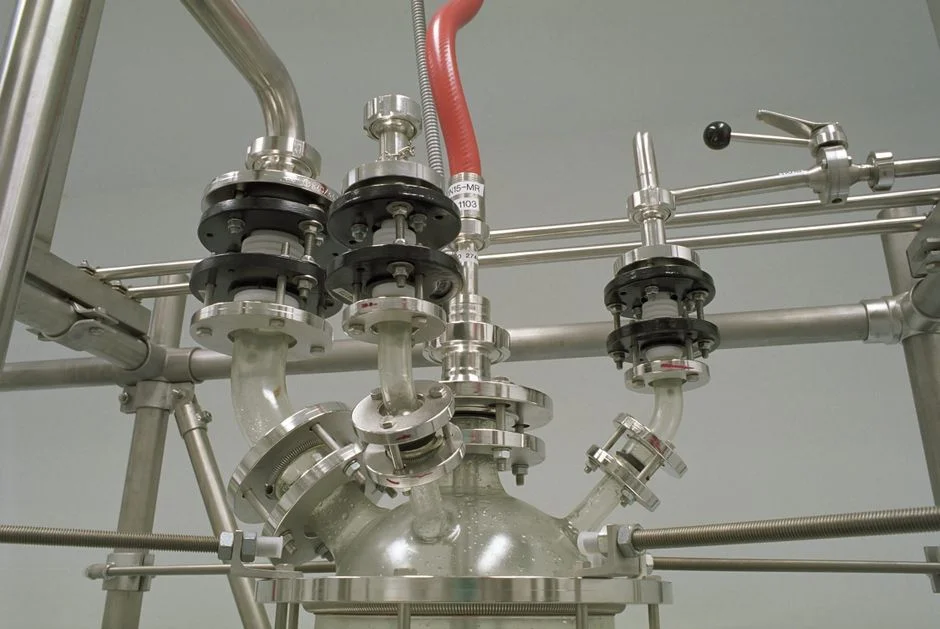
A workable fab treatment plant begins with drain segregation, not with a single mixed-water balance. Create separate collection zones for fluoride-bearing process water, high- and low-concentration ammonia streams, photo-resist and stripping waste, CMP slurry, metals-bearing waste, cooling and other utility water, and sanitary wastewater. Incompatible chemistry should not reach one shared precipitation, aeration or biological stage.
Equalization basins, lift stations and controlled diversions should smooth batch peaks and keep one tool or chemical family from destabilizing the whole plant. The DAF versus clarifier selection for semiconductor wastewater explains why solids-removal technology must follow the actual stream composition.
TSMC’s Fab 20 Phase 1 practice provides a direct segregation benchmark. Routing high- and low-concentration ammonia streams to different downstream processes reduced conductivity by 40% and chemical use by 30% in June 2025 (HydropureWater, 2026). The same source reports that the related Precise Diversion program audited 5,887 drain ports and approximately 1,000 tools at Fab 20 Phase 1 to verify correct routing.
Before selecting tank volumes, dosing rates or treatment capacities, compile a chemical inventory and characterize each drain under representative production conditions. Total fab water use cannot substitute for stream-level flow and load data. The sampling plan should capture batch dumps, tool upset conditions, maximum fluoride and ammonia concentrations, COD loading, solids characteristics and the operating envelope across new tools.
- Assign every drain to a defined treatment stream.
- Characterize each stream by concentration and batch frequency.
- Install controlled isolation and diversion before the common treatment area.
- Provide compatible containment, including HDPE-lined sumps and PLC-controlled diverters.
- Keep sanitary collection physically separate from industrial streams.
Use a PLC-controlled chemical dosing system where the measured stream chemistry requires automatic pH or reagent control. The control logic should retain the ability to isolate an off-spec batch rather than relying only on downstream end-point correction.
Design treatment around fluoride, ammonia, COD and solids
Fluoride and ammonia determine the core treatment architecture: equalization and source separation should feed calcium precipitation or CaF₂ crystallization, lamella clarification, ammonia stripping, and biological MBR or SBR polishing. Disinfection may follow for the sanitary train, while RO and near-zero liquid discharge remain optional reuse stages. The equipment sequence should be matched to the German permit and the receiving sewer’s Übergabewerte, not to generic treatment targets.
| Treatment step | Primary function | Design inputs required |
|---|---|---|
| Equalization and segregation | Smooths batch peaks and preserves distinct treatment routes. | Stream hydrographs, batch frequency, flow and load envelopes. |
| Calcium precipitation or CaF₂ crystallization | Removes fluoride as calcium fluoride solids. | Fluoride concentration, alkalinity, calcium availability, pH, flow and precipitate characteristics. |
| Lamella clarification | Removes precipitated fluoride sludge and suspended solids. | Solids loading, settling behavior, sludge yield and dewatering tests. |
| Ammonia stripping | Transfers ammonia from high-ammonia streams to an acid or degassing system. | Ammonia load, pH, temperature, stripping performance and scrubber chemistry. |
| MBR or SBR polishing | Reduces residual COD, organics, ammonia and solids. | Influent COD, biodegradability, nutrients, temperature and hydraulic variation. |
| Optional RO, ion exchange or ZLD | Produces higher-quality reuse water or concentrates residual salts. | Site water balance, reuse demand, brine destination and future-space allocation. |
Raw IC streams reportedly contain fluoride at 50–500 mg/L, compared with typical municipal Übergabewerte of 20–50 mg/L (HydropureWater, 2026). Those values imply a sustained 10–25-fold reduction ratio, so the precipitation reactor and solids-handling system must be sized from measured peak fluoride load, not average concentration.
Calcium precipitation produces calcium fluoride sludge. Dewatering is therefore part of the main wastewater process: the solids handling train should be specified with the precipitation reactor, not added later as a housekeeping item. Lamella clarification is the reference treatment for precipitated fluoride sludge and suspended solids. DAF is an alternative where the wastewater contains substantial FOG, oil or low-density colloidal material; the choice should follow representative solids testing rather than equipment preference.
High-ammonia streams can be treated by air-stripping or a degassing membrane with an acid scrubber. The supplied treatment architecture targets less than 10–20 mg/L after stripping and identifies ammonium sulfate recovery as an option (HydropureWater, 2026). MBR or SBR then addresses residual COD and organics. The guide gives an illustrative MBR polishing outcome of COD below 50 mg/L and ammonia nitrogen below 1 mg/L, but these values must be verified against the German permit, influent testing and municipal acceptance criteria (HydropureWater, 2026). An integrated MBR wastewater treatment system can form the biological-polishing stage if influent characterization supports that configuration.
Decide whether water reuse belongs in the base project

RO, ion exchange, brine concentration, evaporation and crystallization are strategic resilience infrastructure, not mandatory elements of the base German pretreatment package in the supplied research. The base ETP should first demonstrate AbwV compliance and municipal sewer acceptance. Reuse should be evaluated separately against the fab water balance, process-water demand, future tool loading and the permitted destination for concentrate.
| Decision | Evidence or requirement | Procurement consequence |
|---|---|---|
| Approve the compliance ETP | Base scope is source segregation, pretreatment and verified sewer handover. | Use representative wastewater data and confirmed Übergabewerte for sizing and guarantees. |
| Defer RO or ZLD | The German reuse stage is not yet mandatory in the supplied research. | Do not add recovery CAPEX without a site-specific reuse and brine case. |
| Reserve future expansion | Later high-recovery insertion requires additional space, power, piping and brine management. | Protect plot area, utility corridors and routing in the base design. |
| Advance an Arizona-style reclamation project | TSMC Arizona’s IRWP targets 90% recycling, with 85% anticipated at launch and operation expected in 2028. | Develop as a separately justified project using representative wastewater and a firm water balance. |
TSMC Arizona’s Industrial Water Reclamation Plant is the available reuse benchmark. It uses reverse osmosis, ion exchange and near-zero liquid discharge concepts to remove salts and return treated water to the fab; it is expected to become operational in 2028 (The Business Journals, 2025-09-23). TSMC Arizona was operating at a 65% recycling rate before the project (The Business Journals, 2025-09-23).
Broader market context does not make the reuse decision site-specific. Robeco reported in March 2026 that leading fabs in water-stressed regions are targeting more than 70% recycling. That is a strategic benchmark, not a German discharge requirement. A practical approach is to approve permit-compliant pretreatment first while reserving utilities and space for a future RO or ZLD expansion. The ZLD buyer’s guide for high-recovery wastewater provides a separate route for evaluating brine and crystallization risks.
Set the procurement and acceptance gates
Final equipment order should follow three gates: representative influent characterization, written receiving-sewer acceptance criteria, and an AbwV compliance demonstration. Skipping these gates leaves the project exposed to undersized tanks, invalid vendor guarantees and permit changes. The TSMC fab ETP engineering guide provides the broader equipment and cost framework.
The supplied HydropureWater 2026 benchmarks are planning ranges, not quotations. For a tier-1 greenfield fab, estimated ETP CAPEX is US$18–45 million and annual OPEX is US$2–3.5 million. For a tier-2 fab, estimated CAPEX is US$8–22 million and annual OPEX is US$0.8–2 million (HydropureWater, 2026). These ranges exclude a site-specific reuse scope.
The principal cost drivers are the fluoride-precipitation method, treatment capacity, sludge handling, ammonia treatment, instrumentation, reuse scope and brine management. Vendor guarantees should therefore be tied to measured site flows and loads: fluoride removal, ammonia performance, COD and solids polishing, sludge moisture, automatic controls, availability and monitoring outputs. The guarantee basis must state which streams, operating conditions and analytical methods apply.
Contracts should also transfer the wastewater-control expectations embedded in TSMC’s supplier program. Require disclosure of discharge destination, daily volume, process pollutants, corrective-action closure, sampling access and emergency-response readiness. The 2025 program evaluated 425 critical raw-material suppliers and audited 15 high-risk suppliers on site (HydropureWater, 2026).
Commissioning must include representative production wastewater, not clean-water testing alone. Acceptance should cover steady operation, batch peaks, off-spec diversion, reagent and sludge handling, alarms, interlocks, monitoring outputs and recovery from an upset. The final design must retain enough routing flexibility for future tools and chemistry changes.
Frequently Asked Questions
Should wastewater from TSMC’s expanded German fab go directly to a surface water body or to a municipal sewer?
Under §58 WHG, direct discharge to a Gewässer is the Direkteinleiter route; under §59 WHG, discharge through the public sewer to a municipal Kläranlage is the Indirekteinleiter route. Indirect municipal discharge is the working assumption because untreated fluoride, ammonia and COD can overload typical municipal treatment capacity. The final route still requires confirmation from the competent Wasserbehörde and receiving Kläranlage.
What does a German semiconductor wastewater treatment plant cost?
HydropureWater’s 2026 planning ranges are US$18–45 million CAPEX and US$2–3.5 million annual OPEX for a tier-1 greenfield fab, and US$8–22 million CAPEX with US$0.8–2 million annual OPEX for a tier-2 fab. These are not quotations and exclude site-specific reuse scope. Buyers should request a quotation tied to measured stream flows, loads, Übergabewerte, sludge-disposal assumptions and the selected reuse boundary.
How should the ETP be sized for peak wastewater loads?
Segregate the streams and size fluoride precipitation, ammonia stripping, clarification and biological polishing against measured peak flows and contaminant loads. Total fab water use is not an adequate design basis. The procurement package should request drain-level hydrographs, batch frequencies, fluoride and ammonia concentrations, COD profiles, solids data and operating envelopes for current and planned tools.
Which criteria should be used to select an industrial wastewater pretreatment supplier?
Select against demonstrated performance on representative wastewater, not only clean-water capacity. Require guarantees for fluoride, ammonia, COD and solids; evidence for the proposed controls, sludge handling and monitoring; commissioning with production wastewater; emergency-readiness procedures; and an audited corrective-action process tied to discharge destination, pollutant inventory and sampling access.
Should RO or near-zero liquid discharge be included in the base German ETP?
No, not unless the site-specific case justifies it. The supplied research identifies the base German requirement as permit-compliant pretreatment to the municipal sewer, while RO and ZLD are optional resilience and reuse layers. TSMC Arizona’s reclamation plant targets 90% recycling, with 85% anticipated at launch and operation expected in 2028 (The Business Journals, 2025-09-23). A German reuse decision needs the site water balance, reuse demand, representative wastewater and a permitted brine route.