What Changes When a Texas Fab Transfers Ownership
Wastewater at a TSMC Texas fab should be handled through a site-specific, permit-based system that separates streams at the source, treats them to applicable TPDES or POTW requirements, monitors regulated flows, and retains evidence of compliance. For an acquisition of an existing Texas plant, the buyer must file a TCEQ change-of-ownership CORE form within 30 days of closing under 30 TAC §305.64. Commissioning should also establish the documentation, monitoring, and corrective-action controls required for TSMC supplier-audit readiness.
The legal transfer and operational acceptance are separate events. The existing TPDES permit number transfers, while TCEQ re-issues the permit in the successor’s legal name. Filing CORE does not erase the seller’s violations, permit conditions, or inherited corrective-action obligations. The buyer must therefore diligence compliance history before treating the acquired wastewater system as acceptable.
For a newly commissioned fab, the equivalent question is whether the proposed process and evidence package satisfies the site’s permit before equipment is accepted into operation. For an acquisition, use the transfer deadline to establish a parallel diligence and commissioning plan covering the permit, DMR history, enforcement record, stream segregation, treatment performance, and supplier-audit controls. The acquisition-specific framework is detailed in this Texas plant acquisition wastewater compliance guide.
| Item transferred or inherited | Required buyer action | Acceptance evidence |
|---|---|---|
| TPDES individual permit | File CORE with TCEQ within 30 days of closing; confirm the permit is re-issued in the successor’s legal name. | CORE filing receipt and re-issued permit |
| DMR history | Review the inherited monitoring record for exceedances, missed reports, and permit-limit trends. | Eight-quarter DMR trend and compliance review |
| NOV and enforcement records | Identify unresolved Notices of Violation, Enforcement Actions, and Agreed Orders. | Regulatory correspondence and closure records |
| Corrective actions | Confirm inherited commitments, responsible personnel, deadlines, and verification. | Open-action register with supporting records |
| Supplier obligations | Map the site to TSMC’s seven-theme wastewater audit and corrective-action process. | Pre-audit file and Supply Online 360 actions |
Build the Permit and Reporting Baseline
Semiconductor effluent is controlled through the site’s SIC code and site-specific TPDES limits rather than a single federal categorical standard. Combined process flows above 50,000 gpd place a site in individual-permit territory; smaller satellite operations may use TXR050000 if each files its own Notice of Intent and its SIC codes are eligible (TCEQ general permit TXR050000, 2026).
Surface-water requirements must be checked against 30 TAC Chapter 307 and the current permit language. The metal-finishing limits in 40 CFR Part 433—including total nickel and total cobalt limits below 1.0 mg/L—do not establish a semiconductor-fabrication limit; that regulation applies to metal finishing, not semiconductor fabrication. Equipment selection should therefore begin with the actual permit, discharge route, receiving stream, SIC classification, and proposed reuse destination.
Federal and local obligations run in parallel. EPCRA Section 313 Form R is due July 1 for the preceding calendar year. Potential fab chemicals identified in the research include NMP, hydrofluoric acid compounds, and certain glycol ethers, but each chemical must be checked against the current TRI list and applicable reporting thresholds. Where wastewater enters a POTW, establish whether an industrial waste survey, local pretreatment permit, permit fee, or separate discharge prohibition applies. County drainage-district rules and pipeline-easement restrictions require separate review; a TPDES permit does not authorize a pipeline crossing.
Before equipment procurement, resolve these questions:
- Does the site hold an individual TPDES permit, qualify for TXR050000, or discharge to a POTW?
- Which permit conditions govern each regulated stream and monitoring point?
- Does the discharge route trigger POTW, drainage-district, or easement restrictions?
- Which chemicals exceed applicable EPCRA Section 313 reporting thresholds?
| Compliance route | What to verify before design | Design consequence |
|---|---|---|
| Individual TPDES permit | Current limits, monitoring frequencies, sampling locations, reporting forms, and transfer status. | Treatment objectives and monitoring points must match the permitted configuration. |
| TXR050000 | Notice of Intent status for each satellite and SIC-code eligibility. | Each eligible operation needs its own permit coverage. |
| POTW discharge | Local limits, pretreatment permit, waste-survey requirements, and prohibited discharges. | Add source control and local pretreatment obligations. |
| County drainage district | District rules, easements, approved crossings, and discharge authorization. | Confirm route and crossing rights independently of TCEQ permitting. |
| EPCRA Section 313 | Chemical inventory, thresholds, prior-year Form R status, and successor obligations. | Maintain chemical traceability separate from wastewater treatment. |
The fabricated-metals wastewater pretreatment guide provides a useful review framework for discharge controls, but its applicability must be established against the site’s actual regulatory route.
Characterize and Segregate Every Wastewater Stream
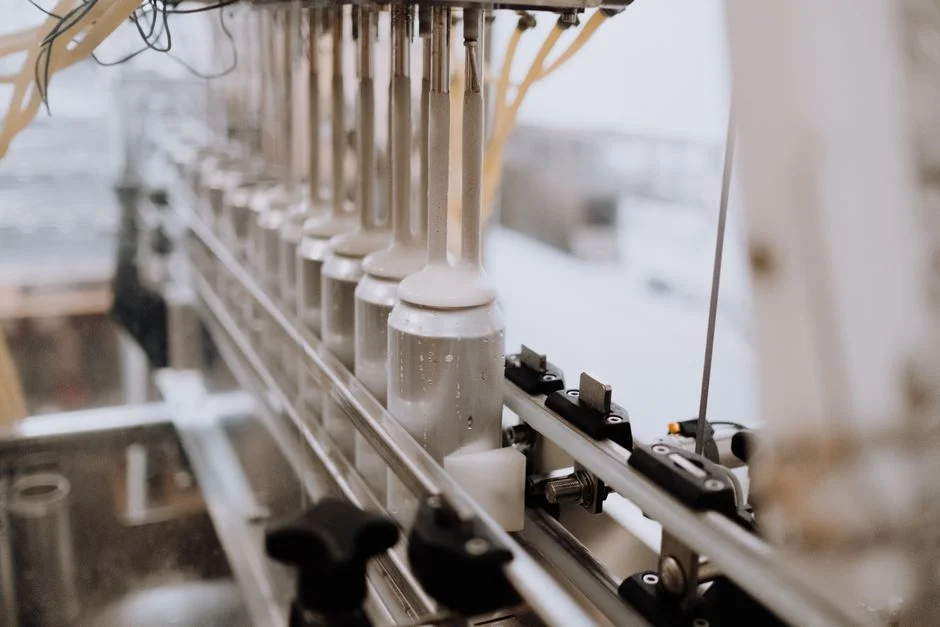
A defensible semiconductor wastewater process design begins with a chemical inventory and a process-by-process wastewater map, not a single combined influent analysis. Separate fluoride, acidic and alkaline streams, organic cleaners, NMP-containing wastewater, cooling and blowdown, sanitary wastewater, stormwater, and reusable process water until their compatibility and treatment requirements are established.
For every stream, obtain flow, constituent concentrations, temperature, variability, generation schedule, and intended reuse destination. Where these data are absent, specify site testing rather than inserting assumed concentration limits. The design team should also identify which process units can produce off-specification events, how diversion occurs, and who authorizes a temporary route change.
TSMC’s Fab 20 demonstrates why source segregation can be an engineering system rather than a piping convention. Its ammonia-nitrogen wastewater system, developed in 2024, used gradient-based diversion rules, inspected approximately 1,000 tools and 5,887 drain ports, and optimized wastewater routing and software configurations. TSMC incorporated the system into the standard design for future fabs and was progressively implementing it in fabs using processes below N7 (TSMC ESG, 2025-06-02).
After implementation at Fab 20 Phase 1, TSMC reported a 40% reduction in discharged conductivity and a 30% reduction in chemical-reagent use in June 2025. Those results apply specifically to Fab 20 Phase 1 and should not be transferred automatically to another site without equivalent stream characterization.
An equalization-basin influent-channel count offers an early diagnostic. The research identifies one channel as evidence that streams were not segregated and five or more as evidence of established segregation discipline. That observation should trigger a closer process review, not serve as a substitute for source data.
| Stream class | Required characterization | Primary design decision |
|---|---|---|
| Fluoride, acid, and alkaline wastewater | Flow, pH, fluoride, temperature, generation variability, and compatibility with other streams. | Keep separate where neutralization, precipitation, or chemical recovery is required. |
| Organic cleaners and NMP-containing wastewater | COD, TOC, NMP status, pH, FOG, and biological suitability. | Determine pretreatment and whether biological or membrane treatment is justified. |
| Cooling and blowdown | Conductivity, scaling constituents, biocide history, temperature, and reuse destination. | Assess cooling-system chemistry, blowdown segregation, and RO feasibility. |
| Sanitary wastewater | Hydraulic load, treatment compatibility, discharge route, and local requirements. | Determine whether it enters the industrial treatment train or a separate system. |
| Stormwater | Exposure areas, collection boundaries, pollutants, drainage route, and permit controls. | Preserve separation from process wastewater and verify drainage controls. |
| Reusable process water | Desired quality, application, recovery target, and rejection criteria. | Validate treatment and end use before designing reuse flow. |
Equipment comparison should follow this evidence. This comparison of DAF and clarifiers for semiconductor wastewater addresses the solids-removal stage, but it cannot substitute for segregation and characterization.
Select the Treatment Train by Treatment Objective
The treatment train should follow the contaminants and compliance objective: characterization and equalization, source-specific pretreatment, solids or FOG removal, targeted chemical removal, biological or membrane polishing where justified, disinfection if required, and final discharge or reuse. Each unit must have a defined control objective, an owner, a monitoring method, and a corresponding permit or audit record.
DAF is a candidate for FOG, TSS, oil, and colloidal removal; it is not a complete semiconductor treatment system. In the research-supported Stage 2 arrangement, an industrial DAF system for fab FOG and TSS pretreatment follows PLC-controlled coagulant and pH dosing. Mixed-stream pH is adjusted to 6.5–7.5 before flotation in that arrangement. A PLC-controlled chemical dosing skid for wastewater pretreatment must therefore be selected from actual chemistry, peak flow, control response, containment, and compatibility requirements—not from a catalog duty range alone.
Chemical removal depends on the contaminant. Fluoride, metals, silica, dissolved solids, organics, and ammonia cannot be treated as interchangeable design bases. Biological treatment may support nitrogen removal or organics removal where influent characteristics support it. Industrial RO becomes relevant when reuse or ultrapure make-up water is required, but permeate quality and recovery must be validated against the intended application rather than assumed from the feed. The cooling-blowdown treatment and reuse guide provides a design reference for that application, not a substitute for fab chemistry.
Sludge generation, inspection, and dewatering belong within the wastewater scope. The equipment proposal should identify residual origin, expected characteristics, inspection points, containment, and the final handling route. This DAF selection guide for FOG and TSS removal should be used to evaluate the flotation duty, while the full train remains tied to permit conditions.
| Objective | Candidate unit operation | Design basis | Acceptance evidence |
|---|---|---|---|
| Equalization and routing stability | Segregated collection and equalization | Actual flow, concentration, temperature, variability, and diversion rules. | Mass balance, level controls, and verified routing. |
| FOG and TSS removal | Coagulation, pH control, and DAF | Peak-hour flow, FOG, TSS, and mixed-stream pH condition. | Performance test and operating trend. |
| Targeted constituent removal | Chemical, biological, or membrane process selected by contaminant | Site analysis and treatment chemistry. | Compliance samples and validated control range. |
| Reuse or make-up water | Industrial RO and associated pretreatment | Feed chemistry, intended reuse specification, and recovery validation. | Permeate quality and sustained recovery demonstration. |
| Residual management | Sludge inspection and dewatering | Residual origin, handling constraints, and destination. | Chain-of-custody and operating records. |
Commission for Compliance, Reuse, and TSMC Audit Readiness
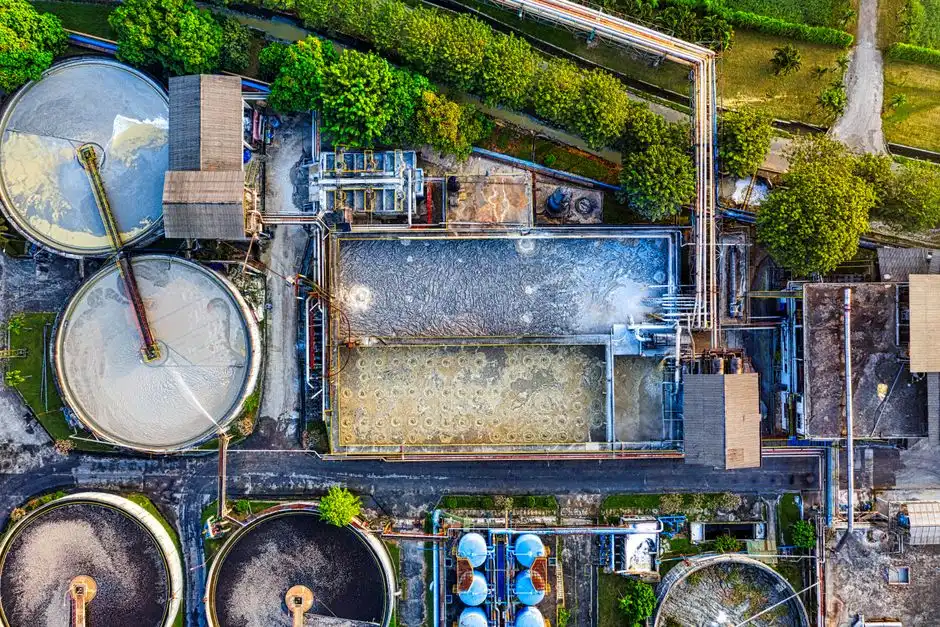
Commissioning should prove that the installed treatment system matches the permitted process and produces repeatable compliance evidence. First verify permit and reporting duties, characterize the streams, confirm segregation, reconcile as-built P&IDs with the permitted configuration, and performance-test each unit. Establish monitoring and laboratory procedures, then validate each reuse application.
The acquisition pre-audit sequence developed in the research begins with an eight-quarter DMR trend review and flags any parameter within 80% of its limit. Verify SWPPP currency for active construction, reconcile the Water Pollution Control Measures Plan with the as-built system, and close vulnerable parameters before the next sampling window. TSMC’s seven audit themes also require evidence covering the substance disclosure list, named ESH lead, training records, water balance, monitoring calibration, bypass prevention, spill drills, emergency procedures, drainage applications, sampling wells, and outfall signage.
TSMC’s supplier program is an active operating control, not a closing formality. It screened 425 suppliers, audited 15 high-risk sites, tracked 140 improvement recommendations, and reported 85.7% closure as of July 2026 (TSMC ESG, 2026). Improvement recommendations should therefore be logged and tracked through Supply Online 360 until closure.
| Commissioning phase | Engineering action | Compliance or audit evidence |
|---|---|---|
| Permit baseline | Verify permit route, conditions, reporting programs, and successor obligations. | Permit set, reporting calendar, CORE receipt where applicable |
| Design-basis confirmation | Characterize streams and confirm source segregation. | Chemical inventory, wastewater map, sampling results, routing records |
| Configuration check | Reconcile as-built P&IDs with the permitted configuration. | Approved drawings, inspection records, deviation log |
| Unit performance | Test each treatment stage under defined operating conditions. | Performance-test reports, trends, calibration records |
| Monitoring and compliance | Establish sampling, laboratory support, DMR controls, and escalation. | Monitoring plan, laboratory qualifications, DMR history |
| Reuse validation | Demonstrate permeate and recovery suitability for each intended use. | Reuse specification, validation results, operating envelope |
| Emergency readiness | Verify spill response, drainage controls, bypass prevention, drills, and signage. | Drill records, procedures, equipment inventory, photo log |
| Audit closure | Log findings and track improvement recommendations. | Supply Online 360 closure evidence |
Frequently Asked Questions
How should treatment equipment be sized for a TSMC Texas fab?
Use a peak-hour flow and constituent study, then evaluate variability, generation schedules, chemical demand, control response, and reuse targets. Average daily flow alone cannot establish DAF, dosing, or RO capacity. Ask the supplier to state the design flow, influent basis, operating envelope, and performance-test method; the research does not support a universal equipment price or sizing factor.
How should an owner select a wastewater treatment supplier?
Require demonstration of semiconductor-relevant duties, PLC controls, chemical compatibility, monitoring provisions, containment, and supporting case evidence. The supplier should also identify sludge handling, validation methods, documentation deliverables, and corrective-action support. For budgeting, request a quotation broken down by equipment, controls, installation, commissioning, chemistry review, and reuse validation because the supplied research provides no quotation against which to compare prices.
What compliance obligations begin after a Texas fab changes ownership?
Separate three records: the 30-day CORE transfer requirement, inherited regulatory history, and TSMC supplier-audit obligations. Review DMR history, Notices of Violation, Enforcement Actions, and Agreed Orders before closing; filing CORE does not erase inherited exceedances or corrective actions. Verify EPCRA Section 313 status and local discharge requirements separately.
Can DAF and RO replace a complete semiconductor wastewater treatment train?
No. DAF addresses FOG and TSS, while RO serves reuse or ultraprime make-up applications only after suitable feed pretreatment and validation. Acid, alkaline, fluoride, organic, ammonia, dissolved-solids, and reuse requirements may require different source controls, unit operations, and monitoring. The DAF-versus-clarifier analysis is useful for one stage, not the whole train.
Related Equipment
- industrial DAF system for fab FOG and TSS pretreatment — specifications, capacity range, and technical data