Define the discharge route and final water use
Selecting an industrial effluent treatment plant in Germany starts with the discharge route and wastewater profile, not a single product. High-oil, high-solids flows generally need pretreatment before biological treatment; an MBR can provide compact biological treatment with membrane filtration below 1 μm, while UF can remove colloids and suspended solids without chemicals and support downstream RO. Where reuse is the objective, nanofiltration research indicates that membrane polishing can improve treatment-plant effluent toward EU Water Framework Directive standards, but final suitability must be demonstrated for the actual wastewater.
Start by recording the proposed outlet: municipal sewer, permitted surface-water discharge, irrigation demand, process-water reuse or another destination. The supplied research does not provide a current German permit or effluent limit for any of these routes. The buyer must obtain the applicable requirements from the competent authority, sewer operator, receiving-water assessment and relevant sector rules before equipment selection.
Define the objective separately for each outlet. A compliance train, a process-water recovery system and a potable-use project impose different verification obligations. Nanofiltration was assessed by the University of Twente as a technique for polishing wastewater treatment plant effluent to EU Water Framework Directive standards, with potential agricultural or direct or indirect potable use; that research does not establish a universal solution for every industrial stream. Use the intended final-water purpose to define the required outcome, monitoring and demonstration method.
A German industrial ETP planning example serves as a planning prompt, but its site assumptions cannot replace German approval requirements. Keep a compliance register separating verified permit conditions from design assumptions. Every downstream unit should map to a stated contaminant or flow objective rather than to a preferred technology.
Characterize the wastewater before choosing equipment
An effluent treatment plant selection cannot be sized reliably from flow and pH alone. The minimum design basis must cover flow variation, organic load, solids, oil and grease, nutrients, salinity, temperature, batch discharges and any sector-specific contaminants that can inhibit biology or membrane operation.
Collect average and peak flow separately, including the timing and duration of batch discharges. Obtain representative COD/BOD, suspended solids, oil and grease, nutrient and salinity data rather than relying only on process descriptions. Identify substances that may inhibit activated sludge, damage membranes, interfere with coagulation, or require hazardous-waste or specialist handling. The analysis plan must also cover sampling locations, sample preservation and how results will be reconciled with the supplier’s guaranteed operating envelope.
For variable industrial streams, use pilot or supplier trial data to test the proposed process. The supplied evidence does not support one technology as suitable for every German industrial effluent. A supplier should demonstrate how the proposed train responds to the actual discharge profile, including upset conditions, rather than extrapolating from a single averaged sample.
| Design input | Why it affects selection | Information to obtain before RFQ |
|---|---|---|
| Hydraulic profile | Determines equalisation, pretreatment duty and downstream peak handling | Average flow, peak flow, batch timing, duration and clean-up flows |
| Water chemistry | Defines biological loading, precipitation and membrane constraints | COD/BOD, suspended solids, oil and grease, nutrients, salinity and pH |
| Contaminant risk | Identifies substances requiring inhibition control or specialist treatment | Sector-specific analysis and a list of known problematic compounds |
| Operating context | Tests whether the proposed equipment fits the available site and utility systems | Temperature, footprint, power access, controls requirements and operator availability |
| Residual handling | Prevents an unresolved sludge route from distorting the treatment design | Expected sludge characteristics, available dewatering route and disposal constraint |
| Final-water target | Sets the required polishing and verification scope | Reuse application, recipient specification and applicable approval conditions |
The wastewater profile dictates the equipment enquiry. An industrial DAF pretreatment system should be evaluated where oil, solids or colloids could compromise downstream units. An integrated MBR wastewater treatment system should be assessed when biological treatment and fine solids separation are required within a compact footprint.
Match the treatment train to the contaminant load
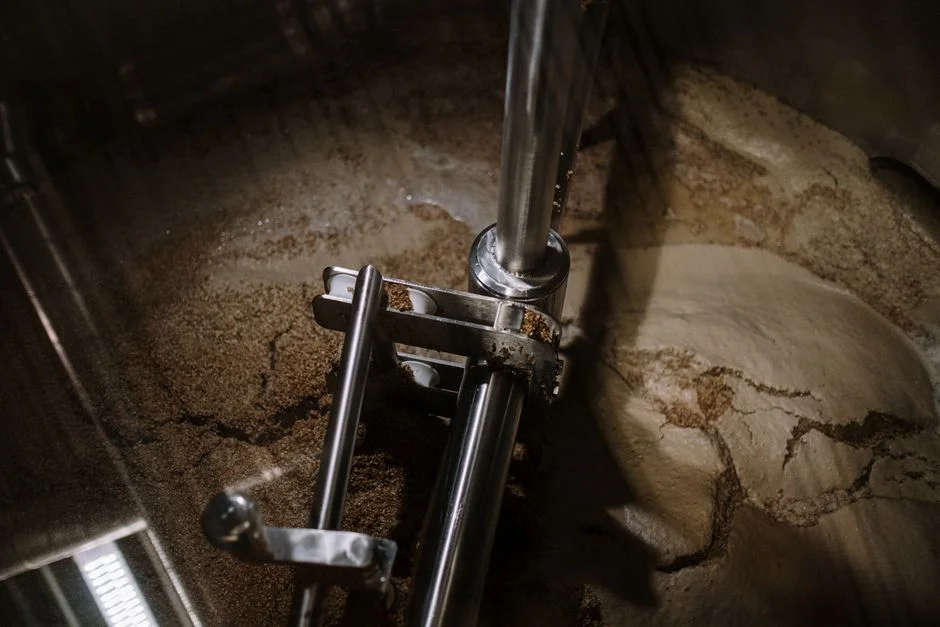
The correct treatment train begins with the contaminant that controls process risk. Suspended solids, oil and grease, FOG or colloidal material generally justify a separation stage before biological treatment; the unit must then pass a feed suitable for the downstream process.
Use dissolved air flotation when floatable or suspended material would interfere with biological treatment or membrane separation. HydropureWater’s supplied DAF range covers 4–300 m³/h across 13 standard models. Request the selected duty point, feed specification, chemical demand, recovered-solids concentration, controls and a performance test under the project wastewater profile.
Use an MBR when biological treatment and fine separation are required in a compact footprint. The supplied system combines activated sludge with submerged PVDF membrane filtration, handles 10–2,000 m³/day and filters below 1 μm. Its suitability depends on biodegradability, membrane compatibility, peak loading, cleaning access and the treatment objective.
Use UF when the design requires solids removal or pretreatment for RO. The supplied UF range is 2,000–40,000 L/h with 0.03 μm PVDF membranes, automatic backwash, air scour and feed turbidity up to 300 ppm. These are equipment-selection boundaries, not universal project guarantees: the bidder must show that the complete wastewater stays within the stated feed conditions and that cleaning and recovery remain practical.
| Process stage | Use when | Evidence to request from bidder |
|---|---|---|
| Equalisation and screening | Flows vary materially, batch discharges occur or gross solids require removal | Residence-time basis, peak-flow response, screenings and odour-control scope |
| DAF pretreatment | Oil and grease, FOG, colloids or suspended solids could burden downstream units | Duty point, recovered-solids balance, reagent consumption and guarantee limits |
| Biological treatment | The wastewater contains biodegradable organics and the receiving route requires biological removal | Organic-loading basis, sludge production, biomass control and upset response |
| MBR | Fine solids separation is required with biological treatment in a compact footprint | Submerged PVDF configuration, filtration below 1 μm, 10–2,000 m³/day system scope, cleaning and replacement basis |
| UF pretreatment | RO or another polishing step needs a controlled solids-free feed | 0.03 μm PVDF scope, 2,000–40,000 L/h range, 300 ppm feed-turbidity limit, backwash and air-scour details |
| Advanced polishing | A defined reuse specification requires further separation, desalination or disinfection | Actual-water pilot evidence, recovery, fouling, cleaning, monitoring and whole-life comparison |
Consider advanced polishing only against a defined reuse specification. The University of Twente thesis Direct nanofiltration of wastewater treatment plant effluent assessed nanofiltration for effluent reclamation; Wageningen University and Research’s doctoral thesis Removal of micropollutants from wastewater treatment plant effluent by constructed wetlands, published in September 2022, examined micropollutant removal using constructed wetlands. These are research routes, not blanket selections for a German industrial plant. For sector-specific questions, compare them with pharmaceutical wastewater treatment in Germany.
Do not select membrane stages from nominal pore size alone. Confirm wastewater chemistry, fouling tendency, cleaning strategy, recovery, energy use, replaceable-element cost and whole-life costs. The buyer should require evidence from the actual wastewater or a defensible worst-case matrix.
Close the loop with sludge and reuse decisions
A water-treatment train is incomplete until the residual sludge has a defined route. Estimate sludge generation from the selected pretreatment and biological units, then decide thickening, dewatering, storage, transport and permitted disposal before fixing the ETP layout.
HydropureWater’s supplied plate-and-frame catalogue covers filtration areas from 1 m² to 500 m², with manual, hydraulic and fully automatic PLC-controlled operation. The correct configuration depends on expected sludge volume, solids concentration, dewatering cycle, filtrate quality, cake handling and labour requirements. Include filtrate return to the inlet stream in the process mass balance.
Match final-water quality to the receiving process. One industrial application may require solids removal, while another requires desalination, disinfection or additional micropollutant control. Nanofiltration research assessed polishing toward EU Water Framework Directive standards for reclamation scenarios, but suitability must be demonstrated against the project wastewater and the stated reuse destination.
Ask each RFQ respondent to report four items separately: residual-sludge destination, final-water use, system recovery and monitoring scope. This prevents a bid from combining treatment, reuse and disposal assumptions that have not been checked. Where disinfection is relevant, assess the required barrier and control concept for the intended water use; an ozone generator and tank-sterilization system should be specified against that objective rather than added generically.
Assign responsibility for sampling, laboratory support, calibration, operator training and maintenance access. The project boundary should state who verifies treated-water quality, who receives the sludge and who bears the cost of non-compliant operation. Without those allocations, equipment capital cost alone will not represent the project’s operational exposure.
Build the supplier RFQ and acceptance criteria
A comparable RFQ must contain one shared design basis. Otherwise, differences in wastewater assumptions, exclusions and guarantees will make the bids technically incomparable.
Issue peak and average flows, representative wastewater analyses, site drawings, the permit route, final-water target, available utilities, footprint constraints and sludge-disposal constraints to every bidder. Require a process flow diagram, equipment list, duty points, performance guarantees, utility demands, control philosophy, civil requirements, installation sequence, commissioning plan and operator handover. Require bidders to identify assumptions, exclusions, pretreatment requirements and permit-support responsibilities explicitly.
Qualification is important in a dense market: RevenueBase identified 215 company matches associated with effluent treatment plant construction in Germany as of September 2026, using exact business-description matching. The directory is a market-density indicator, not a quality ranking; relevant experience, design accountability and test evidence must be checked separately.
| RFQ area | Required bidder response | Acceptance evidence |
|---|---|---|
| Process basis | Flow and load calculations, process flow diagram and design assumptions | Calculation checked against the common wastewater data pack |
| Equipment scope | Make, model, quantity, duty point, materials and included ancillaries | Nameplate and functional inspection before handover |
| Performance | Treated-water guarantees for defined analytes and flow conditions | Documented sampling method, test protocol and acceptance condition |
| Controls | Automation, interlocks, alarms, fail-safe responses and data logging | Simulated and functional tests of operating sequences and alarms |
| Sludge | Generation basis, thickening or dewatering route, cake destination and filtrate return | Mass balance and physical inspection or test during commissioning |
| Implementation | Civil interfaces, utilities, delivery sequence, commissioning and training | Agreed programme, site acceptance record and operator handover |
| Exclusions | Permit work, sampling, laboratory analysis, consumables and specialist disposal | Completed responsibility matrix with no unresolved interface |
Do not accept a generic performance guarantee. Tie each guarantee to the treated-water quality, flow, sludge characteristics, automatic controls, alarms and operator-handover tests. The buyer can compare package sewage treatment options in Germany only after separating package assumptions from site-specific equipment and civil scope.
Frequently Asked Questions
How should I calculate the indicative capacity of an industrial effluent treatment plant in Germany?
Start with verified average flow, peak flow, batch-discharge timing, wastewater variability and the required reuse quality, then use the proposed treatment train to establish each stage’s duty. Ask bidders for the calculation basis, design margin, upset-response method and performance test. Do not select a nominal plant size from an average flow alone, because that can conceal pretreatment overload and membrane-fouling risk.
What should I request when comparing industrial ETP suppliers in Germany?
Request a process flow diagram, equipment list, duty points, utility consumption, control philosophy, civil requirements, commissioning plan and references for comparable wastewater. Ask each bidder to identify assumptions and exclusions. RevenueBase’s 215 German matches as of September 2026 show that a supplier count is not a technical qualification
Frequently Asked Questions
How much does an industrial effluent treatment plant cost in Germany?
Capital expenditure for industrial effluent treatment plants in Germany typically ranges from 250,000 EUR for small-scale modular systems to several million EUR for complex, high-capacity installations. Costs are heavily influenced by the required degree of purification, the complexity of the influent matrix, and the integration of automated sludge dewatering systems.
Operational expenditure (OPEX) should be calculated based on German electricity tariffs and local disposal fees for hazardous waste. On average, expect to budget between 1.50 EUR and 5.00 EUR per cubic meter of treated water, depending on the chemical oxygen demand (COD) load and specific discharge permit requirements stipulated by local water authorities.
How do I select an effluent treatment plant supplier in Germany?
When selecting a supplier, prioritize firms with certification according to DIN EN ISO 9001 and DIN EN ISO 14001. It is critical to verify if the vendor is a certified specialist company (Fachbetrieb) as defined by the German Water Resources Act (WHG), which ensures they are qualified to handle systems involving water-polluting substances.
Evaluate potential partners based on their experience with specific industry-specific discharge permits (Abwasserverordnung - AbwV). Request references for plants currently operating within the German regulatory framework to ensure the supplier is familiar with the reporting requirements of local environmental agencies (Umweltamt) and the technical standards set by the DWA (German Association for Water, Wastewater and Waste).
What flow rate and wastewater analysis are needed to size a German industrial ETP?
To ensure proper hydraulic and organic sizing, provide the average daily flow rate (m³/day) and the peak hourly flow rate (m³/h). German engineering standards require a comprehensive wastewater characterization including COD, BOD5, total suspended solids (TSS), nitrogen (N), phosphorus (P), and pH levels, along with specific heavy metal or halogenated hydrocarbon concentrations relevant to your industry sector under the AbwV.
It is essential to account for seasonal variations and batch production cycles. Providing a 24-hour composite sample analysis is the minimum requirement for accurate design, though capturing fluctuations in temperature and salinity is equally vital, as these parameters directly impact the biological degradation rates in aerobic or anaerobic reactor stages.
Do I need DAF before an MBR for industrial wastewater?
Dissolved Air Flotation (DAF) is generally recommended as a pretreatment step if the industrial wastewater contains high concentrations of fats, oils, and grease (FOG) or high levels of suspended solids that exceed 500-1,000 mg/L. Membrane Bioreactors (MBR) are highly sensitive to fouling; excessive FOG or particulate loads can significantly reduce flux rates and necessitate premature membrane cleaning cycles.
If your influent exhibits high emulsified oil content or non-biodegradable particles, DAF acts as a critical protective barrier. By removing these constituents upstream, you maintain the integrity of the ultrafiltration or microfiltration membranes, thereby extending membrane lifespan and reducing the chemical cleaning frequency required to maintain system permeability.
What should I include in a wastewater treatment plant RFQ to avoid compliance and scope gaps?
A robust RFQ must explicitly state the target discharge parameters based on the relevant annex of the German Wastewater Ordinance (AbwV). You must include a detailed site plan, available footprint dimensions, current utility connection points (power, water, discharge point), and a clear definition of the battery limits—specifying whether the scope includes civil works, sludge handling, and analytical instrumentation.
Furthermore, define the expected degree of automation and the requirement for remote monitoring (Industry 4.0 integration). Request a clear breakdown of the guaranteed performance parameters, including energy consumption per m³ of treated water, chemical dosage rates, and sludge production volumes, to ensure that the proposal accounts for the full lifecycle costs and regulatory compliance requirements.