Start with the settlement pattern, not a treatment unit
Rural sewage treatment in Germany is an infrastructure decision before it is an equipment purchase. A buried A/O package plant is plausible for small residential communities and remote developments; the WSZ series combines biological contact oxidation, sedimentation and disinfection in one unit, handles 1–80 m³/h and requires no full-time operator, according to the HydropureWater verified product catalog. An MBR may suit stricter solids-separation or reuse requirements. Sewer connections remain relevant for concentrated development. The correct route depends on flow and load, seasonal variation, groundwater, soil, receiving-water risk, sludge handling, approvals and local operating capability.
Begin with a settlement map rather than a supplier list. Record the number and type of connected properties, wastewater flow and pollutant load, seasonal peaks, distance to existing infrastructure, available land, groundwater and soil conditions, receiving-water sensitivity and who can operate and maintain the system. For dispersed properties, investigate individual treatment; for a compact cluster, compare a shared package plant with a sewer connection; and for a concentrated development adjacent to an existing network, examine connection costs and disruption.
The US rural wastewater initiative provides a transferable planning principle, not German law. ASCE reported in 2022 that the EPA and USDA programme connects homes near centralized systems, facilitates shared systems for clusters and converts geographically isolated homes to reliable individual systems. The same ASCE report placed sewer-extension costs in the hundreds of thousands to millions of dollars, depending on connections, distance and collection-system design; those are US benchmarks and cannot be used as German estimates.
Receiving-water assessment must identify the contribution from the settlement rather than assume it from a drainage catchment. Environmental Pollution reported on 2026-07-02 that, in one low-urbanization catchment with less than 1% urban or suburban cover, treated sewage contributed an estimated 30±7% of riverine E. coli load. Diffuse agricultural sources still dominated overall faecal pollution, so source attribution belongs in the site assessment. A comparison of rural sewage treatment systems can support a structured route assessment, but German approvals and site data remain decisive.
Compare the four practical treatment routes
Individual settlement characteristics dictate the feasibility of specific treatment technologies. No single route fits every rural settlement, and nominal capacity alone cannot establish technical or regulatory suitability. Individual systems suit suitable dispersion and soil conditions but place maintenance responsibility on the owner and require attention to groundwater and protection-zone approval. Package A/O plants suit clustered loads where automated operation, limited surface coverage and local installation are priorities. MBRs add fine solids separation and can support reuse projects, while sewer extensions convert wastewater treatment into a long-term network asset.
| Route | Technical application | Installation and operation | Sludge and lifecycle implication |
|---|---|---|---|
| Individual septic system | Geographically isolated properties with suitable soil, groundwater and dispersion conditions | Owner responsibility; site-specific groundwater and protection-zone approval | Requires recurring owner maintenance; treatment and dispersion failures remain site liabilities |
| A/O package plant | Small communities, hotels, hospitals, factories and rural developments | Buried package; automated operation without a full-time operator; also available for mobile deployment | Requires an explicit residual-sludge route and service access |
| MBR membrane bioreactor | Municipal sewage, industrial process water and water-reuse applications requiring fine solids separation | Integrated treatment; filtration below 1 μm; stated footprint 60% smaller than conventional systems | Adds membrane maintenance, spare-parts and performance-verification requirements |
| Sewer extension | Concentrated development or clusters close to an existing collection system | Pipeline construction, connection disruption, ownership and routine network maintenance | Shifts treatment to the receiving authority but commits the authority to network assets |
The underground A/O package sewage treatment plant combines anoxic/aerobic contact oxidation, sedimentation and disinfection in one buried unit. Its published capacity is 1–80 m³/h, with fully automated operation and no operator required, according to the HydropureWater verified product catalog. The published MBR membrane bioreactor specification covers 10–2,000 m³/day, filtration below 1 μm and a stated 60% smaller footprint than conventional systems; it identifies municipal sewage, industrial process water and water reuse as applications.
These process descriptions are selection inputs, not approval evidence. Require the proposed configuration to be checked against the site’s discharge conditions, permit, receiving-water category, groundwater conditions and land availability. For sewer extensions, compare pipe routes, easements, construction disruption, connection ownership and the authority’s replacement cycle against the operating burden of a local package plant.
Size the system around the complete wastewater load
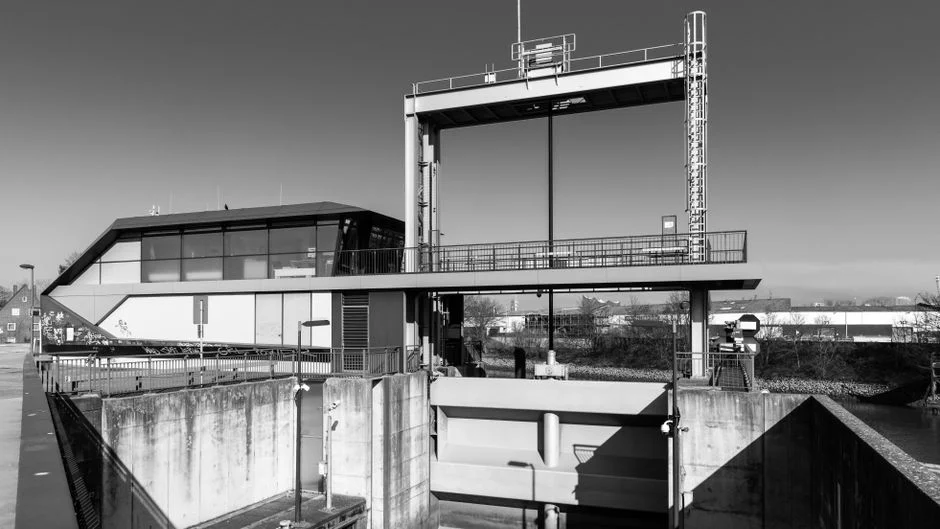
A defensible design basis must account for wastewater quantity, pollutant concentration and variability before a treatment route or nominal capacity is selected. Obtain measured flows where available, or require the supplier to explain the estimation method. The data set should cover daily and seasonal flow, pollutant concentrations, rainfall-derived inflow, groundwater infiltration and any industrial or commercial contribution.
| Parameter | Published WSZ value | Published integrated MBR value | Information still required |
|---|---|---|---|
| Nominal treatment capacity | 1–80 m³/h | 10–2,000 m³/day | Design flow, peak flow, load and operating basis |
| Process configuration | Anoxic/aerobic biological contact oxidation, sedimentation and disinfection | MBR with filtration below 1 μm | Treatment objectives and required effluent quality |
| Footprint | Buried installation with landscaping above | Stated 60% smaller footprint than conventional systems | Site geometry, excavation, access and installed-area confirmation |
| Stated applications | Residential communities, hotels, hospitals, factories and rural areas | Municipal sewage, industrial process water and water reuse | Actual catchment composition and pretreatment requirements |
The HydropureWater verified product catalog supports the WSZ and MBR capacities shown above. Each bidder should state whether capacity refers to average flow, peak flow or another basis; whether infiltration is included; how hydraulic and organic loads were checked; how peaks are treated; and what redundancy is provided. Ask for confirmation of export flow and operating limits rather than accepting a headline capacity.
Separate treatment from reuse. The integrated MBR is identified for water reuse, but reuse quality, intended use, additional treatment, monitoring and regulatory acceptance must be defined as separate work packages. Do not let a reuse claim substitute for a discharge permit.
Assess pretreatment before committing to biological or membrane treatment. Establish expected screenings, grease, solids and industrial contaminants. For FOG and TSS separation, DAF selection for FOG and TSS provides a technical screening reference. Where a mechanical bar screen is proposed, require the supplier to define screenings handling and the resulting headloss or maintenance implications.
Plan sludge, monitoring and maintenance before commissioning
A treatment plant without a defined sludge route is an incomplete design. Assign each maintenance task, identify safe plant access, define the spare-parts stock and specify how sludge is removed, stored, transported and treated. This decision must be resolved before selecting the treatment route because it can affect tank volume, pumping, vehicle access, operating frequency and the responsible contractor.
Germany’s regulatory framework requires verification of the current legal standards. The Eurowaste SRL 2023 review cites the Klärschlammverordnung dated 2017 and amended in 2020, and also cites DWA-M 387 on thermal treatment of sewage sludge, including incineration in power plants. The same 2023 review discusses hydrothermal carbonization as a potential sludge-management option; it is research and options context, not evidence that carbonization should be selected by default.
Where residual treatment or dewatering equipment is considered, an plate-and-frame filter press or an sedimentation tank should be evaluated against the required sludge form, handling route and receiving contractor’s requirements. Ask what material is displaced, how much further treatment is necessary and whether the residual remains classified and transportable.
Build monitoring around the permit and receiving water, not around equipment convenience. Environmental Pollution reported on 2026-07-02 that E. coli was positively correlated with other faecal indicators at Spearman ρ≥0.88 and p<0.05, and with 24-hour antecedent rainfall at ρ=0.66 and p<0.05. The same study found that treated sewage contributed an estimated 30±7% of riverine E. coli load in one low-urbanization catchment while diffuse sources dominated the broader faecal-pollution picture.
Manufacturer performance statements are not local compliance evidence. Confirm with the responsible German authority the receiving-water classification, discharge conditions, sampling regime, monitoring records and treatment objectives. A permit may require evidence the proposed equipment can generate under the actual design flow and load.
Build a procurement package that suppliers can quote consistently
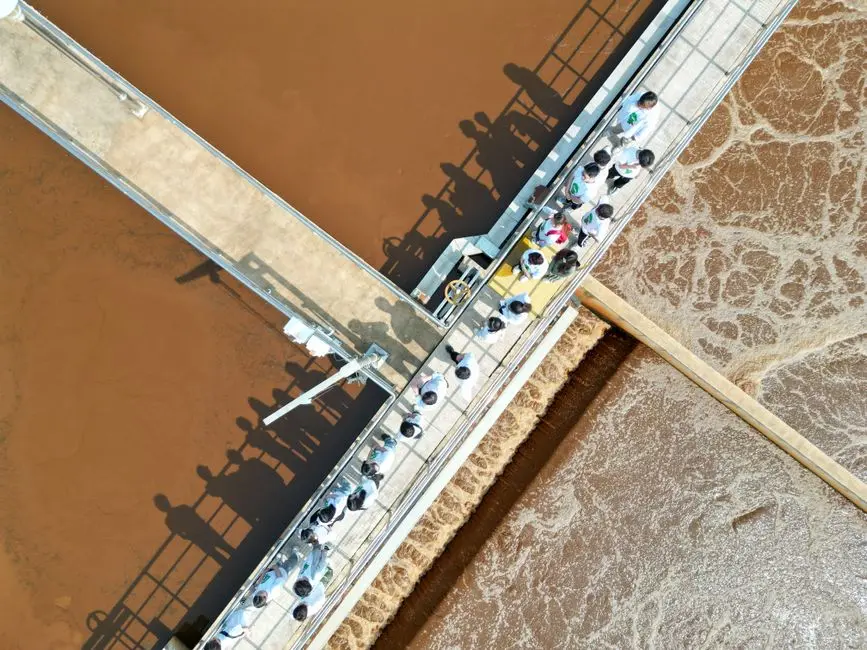
A comparable RFQ starts with a defined site and design basis, then requires every bidder to price the same scope. Include a site plan, catchment map, wastewater characterization, flow data, soil and groundwater report, effluent and reuse objectives, installation method, power availability and access constraints. The more complete the common information package, the easier it is to distinguish technical differences from commercial assumptions.
- Define the basis: Provide connected properties, measured or defensibly estimated flows, pollutant loads, seasonal peaks, infiltration and pretreatment constraints.
- Define performance: Specify required effluent or reuse quality, receiving-water context, sampling points, availability expectations and the proposed acceptance protocol.
- Define delivery: Separate equipment, civil works, installation, commissioning, training, controls integration, remote monitoring, chemicals, sludge removal, maintenance and support.
- Define submittals: Require a process guarantee, performance protocol, drawings, materials of construction, control philosophy, alarm list, maintenance schedule, spare-parts list and documented operating limits.
- Define support: Ask for comparable references and evidence of service arrangements, response arrangements and operator support.
Evaluate bids as whole-life systems. ASCE reported in 2022 that large decentralized systems may reduce infrastructure costs relative to some centralized alternatives. That observation supports comparing lifecycle options; it does not guarantee savings in Germany. The German comparison must include excavation, power, controls, consumables, sludge transport, energy, inspection, maintenance, renewal and the authority’s ownership conditions.
Use the Germany-specific wastewater planning guidance to keep permits, local conditions and operating responsibilities in the same decision process. Require quotations to identify exclusions, assumptions and price-validity conditions. A lower equipment price can be misleading if civil works, controls integration, sludge handling, commissioning or support are omitted.
Frequently Asked Questions
What should a German buyer request when comparing costs for decentralized sewage treatment?
Request an itemized offer covering equipment, civil works, installation, commissioning, controls, remote monitoring, energy, chemicals, maintenance, sludge removal, monitoring and support. No German price should be assumed from a nominal capacity. Ask bidders to state exclusions, assumptions, warranty coverage and price-validity conditions so alternatives can be compared on the same life-cycle scope.
How should a supplier be selected when comparing decentralized sewage treatment in Germany?
Audit comparable references, the proposed process guarantee, acceptance protocol and support arrangements. Also request evidence that the proposed equipment can meet the site-specific permit and operating conditions. Capacity alone is not a sufficient selection criterion.
What data is required to size a small-community treatment system?
Require a documented design basis covering wastewater flow, pollutant load, seasonal peaks, groundwater infiltration, rainfall-derived inflow and industrial or commercial contributions. The bidder must state how nominal capacity was derived, how peaks are handled and whether infiltration is included.
Does a manufacturer’s product specification prove regulatory compliance in Germany?
No. A product specification describes the offered process and published capacity; it does not establish approval at a particular site. Obtain the local discharge permit, receiving-water classification, sampling requirements and treatment objectives, then require the supplier to demonstrate that the proposed configuration can satisfy them.