Confirm the German project before designing the treatment plant
The supplied research does not establish SK On’s commissioning status, German plant location, production capacity or wastewater profile. Those facts must be confirmed before equipment is sized or a discharge route is selected. The project team should request the German site’s industrial wastewater pretreatment permit, water-discharge authorization, sewer connection conditions, stormwater plan and hazardous-waste determination, then map each wastewater stream to direct discharge, controlled sewer discharge, on-site reuse, or a combination of permitted outlets and segregated residues.
Possession of a discharge authorization does not prove that every production stream may enter the selected outlet. The EV and auto plant pretreatment compliance guide provides a document-based review method, but it does not establish German SK On project facts. Factory wastewater obligations should also be kept separate from Germany’s BattDG end-of-life battery regime; the BattDG became part of the national framework in October 2025, while producer registration and extended producer-responsibility duties concern batteries placed on the market rather than the treatment of manufacturing effluent (Green Li-ion, October 2025).
Separate process wastewater before selecting treatment equipment
Battery manufacturing wastewater should remain segregated by production function because each stream imposes different contaminant loads and treatment duties. The commercial source S3 identifies four source categories: cathode coating wash water containing NMP and PVDF; aqueous anode coating wash water containing CMC/SBR; electrolyte salt flush involving fluoride and phosphate; and general effluent from boiler blowdown, HVAC condensate and domestic sewage. LiPF6 hydrolysis is the mechanism that introduces fluoride into electrolyte-related wastewater, while cathode coating carries recoverable organic solvent.
Keep NMP-bearing cathode wastewater separate because dilution with general effluent destroys the concentration basis for solvent recovery and transfers additional fluoride and COD to downstream biological treatment. S3 reports concentrated cathode wastewater at COD 5,000–25,000 mg/L, fluoride 50–500 mg/L, suspended solids 500–3,000 mg/L and pH 2–4. These values are source-specific commercial data, not verified limits for a German SK On plant. The sampling program should cover batch coating operations, cleaning cycles, first flush, storm conditions and normal production changes. Use grab samples to identify short-duration peaks and flow-proportional composites to establish representative loading; do not size a unit from one composite sample. The filter press guide for battery manufacturing wastewater provides additional context for treatment and solids-handling decisions.
| Source stream | Principal characteristics identified by S3 | Engineering decision |
|---|---|---|
| Cathode coating wash water | NMP, PVDF residues, metals, fluoride and suspended solids | Preserve NMP concentration for dedicated recovery; characterize before biological treatment |
| Aqueous anode coating wash water | CMC/SBR binder in an aqueous slurry | Retain residual COD for source-specific treatment and avoid mixing with the NMP train |
| Electrolyte salt flush | Fluoride and phosphate associated with LiPF6 hydrolysis | Provide dedicated chemical control and fluoride removal |
| General effluent | Boiler blowdown, HVAC condensate and domestic sewage | Route toward biological treatment without diluting concentrated process streams |
Recover solvents and control fluoride before biological treatment
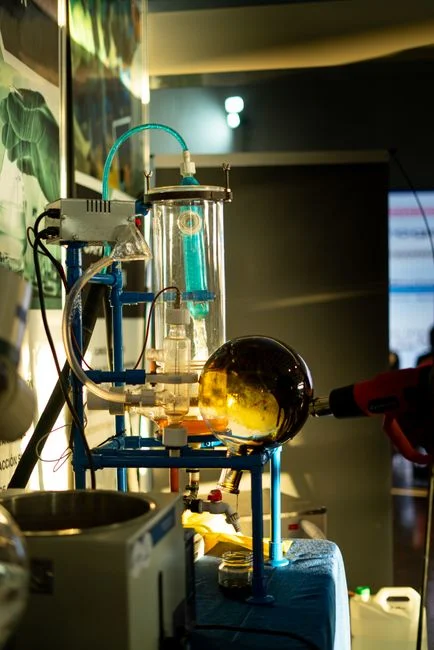
NMP recovery and chemical precipitation should precede biological treatment because recovering or removing contaminants at source reduces the load and scale required downstream. S3 reports NMP at roughly 1–5 wt% in cathode-coating wastewater and describes vacuum distillation at 50–100 mbar and 80–120 °C. These are source-specific process parameters, not universal German design values; the supplier must demonstrate them against the actual wastewater and the required NMP recovery duty. Equalization should homogenize batch swings before recovery and chemical dosing, with online pH, conductivity, fluoride and TOC monitoring identified by S3.
The precipitation sequence described by S3 is selective: nickel and cobalt hydroxide precipitation occurs at pH 9.5–10.5, manganese oxidation requires pH above 10, and calcium chloride dosing can precipitate fluoride as CaF₂. An automatic chemical dosing system should control additions from measured pH, fluoride and reaction conditions rather than operate only from an open-loop schedule. A sedimentation tank can support solids separation after precipitation, but the solids must remain identifiable and separate.
S3 reports a residual fluoride target below 10 mg/L and refers to EU IED 2010/75/EU BAT-AEL in the fluoride-control context. Treat that value as an engineering reference only; final acceptance must follow the applicable German permit or sewer condition. Hydroxide-bearing and fluoride-bearing solids should be separated before sludge dewatering or waste classification, because mixing them can obscure the waste determination and recovery route.
| Control step | Source-reported basis from S3 | Acceptance requirement |
|---|---|---|
| Equalization | Online pH, conductivity, fluoride and TOC monitoring | Demonstrate mixing of batch variations without transferring contamination between segregated streams |
| NMP recovery | Roughly 1–5 wt% NMP; vacuum distillation at 50–100 mbar and 80–120 °C | Set recovery and residual NMP guarantees from representative cathode wastewater |
| Metal precipitation | Nickel and cobalt hydroxide at pH 9.5–10.5; manganese oxidation above pH 10 | Verify residual metals against the German permit or sewer condition |
| Fluoride precipitation | Calcium chloride dosing to form CaF₂; source-reported residual target below 10 mg/L | Do not adopt the source target as a permit limit without confirmation |
Choose clarification, MBR and RO for the remaining wastewater
Clarification should remove material that would impair biological treatment or membrane operation; DAF is appropriate where floatable contaminants are present, while lamella clarification is an alternative where the solids are principally settleable. A DAF system for solids and floatable contaminants should be selected against actual oil, grease, colloid and precipitated-solids data, not assumed from the generic description “battery wastewater.”
For lower-strength residual streams, S3 describes biological treatment followed by MBR and RO rather than direct biological treatment of concentrated coating wastewater. Its reported MBR configuration uses submerged PVDF membranes, with TSS below 1 mg/L and SDI below 3. It reports RO recovery of 70–80%, concentrate of 20–30% and permeate conductivity below 50 μS/cm. These are engineering references from S3, not confirmed SK On design values. An integrated MBR membrane bioreactor should be justified by the residual stream after source control and chemical precipitation, and its membrane configuration should be matched to the identified wastewater matrix.
Where zero-liquid-discharge treatment is required, S3 describes RO concentrate feeding mechanical vapour recompression and crystallization. It reports energy demand of 20–35 kWh/m³ of distillate and concentrate at 200,000–250,000 mg/L TDS. The resulting mixed salt cake and lithium-enriched mother liquor require separate waste-classification and recovery-or-disposal decisions. Zero liquid discharge should be treated as a residual-management design choice, rather than assumed merely because the facility is a battery plant.
| Residual condition | Applicable treatment step | Decision evidence |
|---|---|---|
| Floatable oil, grease or precipitated solids | DAF or lamella clarification | Representative solids, colloid and floatables characterization |
| Lower-strength biodegradable residual stream | Biological treatment followed by MBR | Biological loading, membrane fouling tests and MBR outlet data |
| Permitted reuse or controlled discharge requiring low suspended solids | RO after MBR, with monitored concentrate handling | Permit-defined water quality, recovery and concentrate destination |
| Permit requires zero liquid discharge | RO concentrate to MVR and crystallization | Energy balance, salt characterization and separate residue classification |
Build compliance into automatic controls and emergency response
Compliance controls must remain effective during batch dumps, chemical-control failures and permit changes, not only under steady-state operation. Chemical addition should be interlocked with measured pH and fluoride, with automatic diversion whenever the defined operating envelope is exceeded. Local PLC control, operator interfaces and alarms should cover screening, equalization, recovery, precipitation, clarification, MBR, RO and brine handling. The mechanical screen protects downstream equipment, while a rotary mechanical bar screen should be specified against the confirmed solids and debris load.
Require calibrated instruments, emergency shutdowns, containment and a tested procedure for diverting non-compliant wastewater. The response sequence should identify the trigger, isolate the affected stream, route it to the designated holding or treatment capacity, notify the responsible operator and authorize resumption only after evidence of compliance. A plate-frame filter press may support solids dewatering, but sludge acceptance and waste classification must be decided before the residue is generated.
S1’s 2025 academic study proposes seven in vitro bioassays covering a selected spectrum of toxicity effects for quality control of wastewater effluents. The authors describe mixture toxicity as an early-warning mechanism; use this as an optional effect-based layer alongside chemical monitoring and permit compliance rather than as a substitute for them. Build a responsibility matrix covering SK On, the EPC contractor, pretreatment operator, sewer authority, waste contractor and emergency-response lead. Each party needs a defined permit duty, sampling responsibility, escalation route and stop-discharge authority.
Set supplier guarantees around the German permit
Supplier bids should be normalized around permit-defined duty points and representative wastewater, not generic battery-plant claims. Request guaranteed flow, COD, fluoride, suspended solids, pH, NMP and salinity conditions, together with the sampling method and correction basis. Each supplier must state whether its claim rests on laboratory testing, pilot operation, continuous pilot operation or full-scale operation. Do not freeze the guarantees until representative characterization, source-segregation drawings and flow records have been reviewed. The 2026 guide to high-COD trade-waste treatment in Frankfurt offers a useful procurement comparison frame, but it does not establish the wastewater duty or price for a German SK On facility.
The supplied research does not establish a defensible plant price. Ask for itemized quotations covering confirmed source flows, duty points, recovery targets, utilities, civil works, automation, waste handling, commissioning tests and German compliance scope. Normalize exclusions and correction formulas so that bidders are answering the same question. Also request operator staffing assumptions, critical spares, membrane or media replacement intervals, remote-monitoring scope, response times and unit-specific performance guarantees.
Before normal discharge, verify instrument calibration, conduct representative chemical-dosing trials, perform process sampling, test membrane, distillation or crystallization performance under defined conditions, and demonstrate deviation handling. Normal operation should be authorized only after the evidence is complete. This sequence prevents a generic performance statement from becoming the accidental basis of a German permit-compliance claim.
| Procurement package | Required information | Commercial comparison |
|---|---|---|
| Performance basis | Flow, COD, fluoride, suspended solids, pH, NMP, salinity, sampling method and correction rules | Confirm whether evidence is laboratory, pilot, continuous pilot or full-scale |
| Scope | Recovery, treatment, reuse, automation, civil works, utilities, waste handling and commissioning | Align inclusions, exclusions and battery limits |
| Acceptance | Representative trials, calibration records, deviation handling and membrane or distillation tests | Use the same test protocol for each supplier |
| Price | Itemized quotation using confirmed source flows and duties | Do not accept a plant total without a traceable equipment and scope basis |
Frequently Asked Questions
How should wastewater treatment be sized when SK On commissions a battery plant in Germany?
Start with verified source flows and representative samples for each segregated stream. Do not infer hydraulic or contaminant loading from the plant’s announced battery capacity. Before selecting a treatment train, request source-seg
Frequently Asked Questions
How much wastewater treatment capacity does an SK On battery plant in Germany need?
A standard gigafactory producing approximately 10 to 20 GWh of battery cells typically requires a wastewater treatment plant (WWTP) capacity ranging from 500 to 1,500 cubic meters per day. This volume fluctuates based on the specific cleaning cycles of coating lines, electrolyte filling station purging, and the efficiency of internal water recycling systems.
Actual capacity requirements are dictated by the specific manufacturing process intensity. Facilities targeting near-zero liquid discharge (ZLD) often implement recovery rates of 70% to 90%, significantly reducing the daily hydraulic load discharged to municipal sewers compared to conventional open-loop systems.
Which treatment equipment should be specified for fluoride, NMP and high-COD battery wastewater?
For fluoride removal, a multi-stage chemical precipitation process using calcium hydroxide (lime) followed by aluminum sulfate or polyaluminum chloride (PAC) is required to reach discharge limits below 5 mg/L. NMP (N-Methyl-2-pyrrolidone) recovery is best achieved via vacuum distillation or fractional distillation columns, as NMP is highly miscible and difficult to remove via standard biological treatment.
High-COD (Chemical Oxygen Demand) streams containing complex electrolytes should be treated using Advanced Oxidation Processes (AOP) such as Fenton’s reagent or ozone-UV systems to break down recalcitrant organic compounds prior to biological treatment. For final polishing, activated carbon adsorption or specialized membrane bioreactors (MBR) are recommended to ensure compliance with strict environmental discharge standards.
How should wastewater suppliers compare performance guarantees and pilot evidence in Germany?
Suppliers must provide performance guarantees backed by legally binding "Acceptance Tests" (Abnahmeprüfung) conducted according to VDI/VDE guidelines. Guarantees should specify not only effluent concentrations but also energy consumption (kWh/m³) and chemical consumption (kg/m³) to prevent operational cost inflation.
Pilot evidence should be derived from local testing using actual influent samples from the specific battery chemistry being manufactured. Data must demonstrate stable operation over at least 500 hours to prove that membrane fouling rates and sludge production levels remain within the parameters proposed for the full-scale installation.
What sewer and pretreatment permit conditions should be checked before selecting an MBR or RO system?
Before selecting an MBR or RO system, the operator must review the local "Indirekteinleitergenehmigung" (Indirect Discharge Permit) issued by the local water authority (Untere Wasserbehörde). This permit specifies maximum allowable concentrations for heavy metals (nickel, cobalt, manganese), AOX (adsorbable organic halides), and total dissolved solids (TDS).
If the plant discharges to a municipal sewer, pretreatment must ensure the wastewater does not inhibit the biological processes of the municipal WWTP. RO systems are often necessary to meet strict TDS and conductivity limits, but they require robust pretreatment to prevent scaling from high sulfate or fluoride concentrations common in battery manufacturing streams.
Does Germany's BattDG apply to battery manufacturing wastewater at an SK On plant?
The BattDG (Batteriegesetz) focuses primarily on the lifecycle, labeling, and take-back obligations of finished battery products rather than the industrial wastewater treatment process itself. However, the environmental impact of the plant is governed by the Federal Immission Control Act (BImSchG) and the Wastewater Ordinance (Abwasserverordnung - AbwV).
While the BattDG does not regulate wastewater treatment technology, the overarching circular economy principles within German law necessitate that battery plants minimize hazardous waste generation. Consequently, environmental authorities often apply the "Best Available Techniques" (BAT) conclusions under the Industrial Emissions Directive (IED) to ensure wastewater treatment processes align with the high sustainability standards expected of the German battery sector.