
Confirm the German project, permit and commissioning scope
The supplied evidence confirms CATL’s planned Debrecen, Hungary battery plant at 100 GWh annual capacity and $7.5 billion, but it does not confirm the commissioning status, capacity or location of a CATL battery gigafactory in Germany.
Before designing or permitting wastewater equipment, request the German site’s industrial wastewater pretreatment permit, water-discharge authorization, sewer connection conditions, stormwater plan and hazardous-waste determination. These documents define the treatment objective: direct discharge, controlled sewer discharge, on-site reuse, or a combination with segregated residues.
The June 2026 Hungary proceedings are a compliance lesson, not evidence of conduct at a German site. The Business & Human Rights Resource Centre reported that proceedings followed an alleged illegal discharge, withdrawal of a pretreatment permit and obligations to clean the municipal wastewater network and rainwater drainage.
Prepare a responsibility matrix covering CATL, the EPC contractor, pretreatment operator, sewer authority, waste contractor and emergency-response lead. Each party needs a defined permit duty, sampling responsibility, escalation route and stop-discharge authority. Do not assume that possession of a discharge authorization proves that every production stream is permitted to enter the selected outlet.
Why battery-gigafactory wastewater cannot be treated as one flow
Battery cell manufacturing produces chemically distinct waste streams whose contaminant loads and treatment routes differ; a composite sample is therefore inadequate for unit sizing or performance guarantees.
The commercial treatment source identifies four source streams: cathode coating wash water containing NMP and PVDF; aqueous anode coating wash water containing CMC/SBR; electrolyte salt flush involving fluoride and phosphate; and general effluent from boiler blowdown, HVAC condensate and domestic sewage. LiPF6 hydrolysis is the relevant mechanism by which fluoride enters the electrolyte-related stream, while cathode coating introduces a recoverable organic solvent.
| Segregated source | Characteristic contaminants | Engineering consequence |
|---|---|---|
| Cathode coating wash water | NMP, PVDF residues, metals, fluoride, suspended solids | Preserve solvent recovery and remove contaminants before biological treatment |
| Anode coating wash water | CMC/SBR binder in an aqueous slurry | Separate residual COD from the NMP recovery train |
| Electrolyte salt flush | Fluoride and phosphate associated with LiPF6 hydrolysis | Provide dedicated chemical control and fluoride removal |
| General effluent | Boiler blowdown, HVAC condensate and domestic sewage | Route toward biological treatment without diluting concentrated process streams |
The commercial source reports concentrated cathode wastewater at COD 5,000–25,000 mg/L, fluoride 50–500 mg/L, suspended solids 500–3,000 mg/L and pH 2–4. Mixing this NMP-bearing water with general effluent destroys the economic value of solvent recovery and increases the fluoride burden carried by downstream precipitation.
The Nature study, published in 2025, distinguishes process-specific emissions before abatement from overall site emissions after abatement. Its wastewater implications are analogous: final compliance does not replace source measurement. The German gigafactory wastewater treatment guide provides additional context for location-specific planning.
Build a sampling plan around batch coating operations, cleaning cycles, first flush, storm conditions and normal production changes. Include grab samples and flow-proportional composites, with analytical methods and detection limits agreed before equipment selection.
Build a treatment train around source recovery and controlled removal
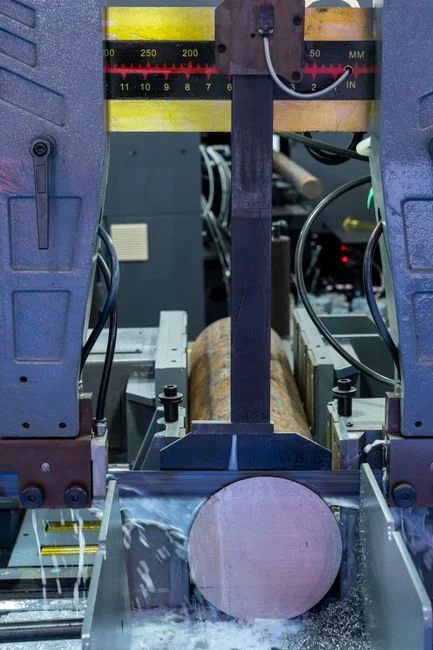
The process train should start with segregated collection and equalization, recover NMP from cathode wash water, remove metals and fluoride through controlled precipitation, and then use biological treatment, MBR and RO for lower-strength residual streams.
- Collect each source separately, apply coarse screening, correct pH and provide equalization. The commercial source specifies 8–24 hours of retention and online pH, conductivity, fluoride and TOC instrumentation.
- Prepare cathode coating wastewater for NMP recovery through pH adjustment, suspended-solids removal and activated-carbon polishing.
- Recover NMP by vacuum distillation, then remove dissolved metals and fluoride through staged precipitation and clarification.
- Treat lower-strength residual streams biologically, polish them with MBR and, where reuse is required, use RO as the closure step.
- Send RO concentrate to MVR and crystallization where zero liquid discharge is required.
The commercial source reports NMP at roughly 1–5 wt% in cathode coating wastewater and vacuum distillation at 50–100 mbar and 80–120 °C. After recovery, nickel and cobalt hydroxide precipitation occurs at pH 9.5–10.5; manganese oxidation requires pH above 10; calcium chloride dosing precipitates fluoride as CaF₂. These are source-specific process parameters, not a universal German design basis.
| Process block | Specified parameter or duty | Purpose |
|---|---|---|
| Equalization | 8–24 hours; online pH, conductivity, fluoride and TOC | Homogenize batch swings and control chemical dosing |
| NMP recovery | NMP roughly 1–5 wt%; 50–100 mbar; 80–120 °C | Recover coating solvent before biological treatment |
| Precipitation | Nickel and cobalt at pH 9.5–10.5; manganese above pH 10 | Remove dissolved metals before sludge separation |
| Fluoride precipitation | Calcium chloride dosing to form CaF₂ | Reduce residual fluoride |
| Coagulation and clarification | PAC 50–200 mg/L; anionic polymer 1–5 mg/L; DAF or lamella clarification | Separate hydroxide and fluoride-bearing solids |
| MBR | Submerged PVDF membranes, 0.1–0.4 μm; TSS below 1 mg/L; SDI below 3 | Provide low-solids permeate suitable for RO protection |
| RO | 70–80% recovery; 20–30% concentrate; permeate conductivity below 50 μS/cm | Close the reuse loop and concentrate residual salts |
| MVR and crystallization | 20–35 kWh/m³ distillate; concentrate at 200,000–250,000 mg/L TDS | Produce distillate, mixed salt cake and lithium-enriched mother liquor |
For lower-strength residual streams, biological treatment precedes MBR and RO. The commercial source describes an integrated MBR membrane bioreactor using submerged PVDF membranes to cut TSS below 1 mg/L and SDI below 3. The industrial zero-liquid-discharge treatment blueprint provides a useful comparison for the MBR-to-RO-to-concentrate interface.
Where zero liquid discharge is required, the commercial source routes RO concentrate to MVR and crystallization, reporting 20–35 kWh per m³ of distillate and concentrate at 200,000–250,000 mg/L TDS. The resulting mixed salt cake requires a waste classification, while the lithium-enriched mother liquor requires its own recovery or disposal decision.
Design for German permit, discharge and emergency-control risk
German compliance must be designed into the control system, because a technically effective process flow can still fail if it cannot prove compliance during abnormal operation.
The Nature study’s 2025 conclusion is directly relevant: abatement systems are designed location-specific to correspond with local environmental regulations and laws. For wastewater, translate that principle into a permit-compliance matrix covering COD, fluoride, metals, pH, salinity and flow. The supplied research does not establish one universal German discharge limit, so every numerical acceptance value must be tied to the applicable authorization or sewer condition.
The commercial source refers to EU IED 2010/75/EU BAT-AEL in the fluoride-control context and reports a target residual fluoride below 10 mg/L. Treat that as a source-reported design target, not a substitute for the final German permit. The PLC-controlled chemical dosing system should interlock chemical addition with measured pH and fluoride, rather than operate from an open-loop schedule alone.
- Specify calibrated flow measurement and online monitoring at permit-relevant and process-control points.
- Interlock automatic chemical feed with pump status and water-quality measurements.
- Provide high-high alarms, automatic diversion, spill containment and a protected route for contaminated hold-up.
- Define regulator notification, sample preservation, chain of custody and incident-evidence retention.
- Test the response against the June 2026 Hungary scenario: permit withdrawal, network-cleanup obligations, regulator escalation and continuing investigation.
The Hungarian case should shape the German contingency plan without being presented as proof about a German CATL facility. Its engineering lesson is that discharge controls must remain effective when a pretreatment permit is withdrawn or a release occurs.
Convert the design into commissioning and procurement criteria
Equipment guarantees should follow the German permit and representative wastewater characterization, not the unsupported label “battery wastewater.”
Request guaranteed duty points for flow, COD, fluoride, suspended solids, pH, NMP and salinity, with the sampling method and correction basis stated. Ask each supplier to state whether its performance claim is based on laboratory testing, pilot operation, continuous pilot operation or full-scale operation. A proposal without a defined guarantee protocol cannot establish that the equipment will meet the operating envelope.
| Procurement stage | Required evidence | Decision gate |
|---|---|---|
| Design basis | Representative samples, flow records, permit conditions and source-segregation drawings | Freeze the guaranteed duty points |
| Supplier offer | Mass and energy balances, control narratives, guarantee corrections and test references | Reject generic performance claims |
| Factory acceptance test | Instrument calibration, interlocks, alarms, safety shutdowns and simulated failures | Accept controls before site delivery |
| Wet commissioning | Clean-water hydraulic testing followed by representative chemical dosing and process sampling | Verify stability at each unit boundary |
| Performance demonstration | Membrane, distillation or crystallization performance under defined test conditions | Confirm guarantees and operating envelope |
| Permit verification | Discharge samples, calibration records, batch records and deviation handling | Authorize normal operation only after compliance |
Require automatic controls, local PLC control and operator interfaces for screening, chemical dosing, equalization, distillation, precipitation, clarification, MBR, RO and brine handling. Use the MBR-versus-conventional activated-sludge engineering comparison and the chemical-wastewater comparison to define the biological and membrane acceptance criteria.
Also request operator staffing assumptions, critical spares, membrane or media replacement intervals, remote-monitoring scope, response times and unit-specific performance guarantees. Final selection should remain contingent on representative site testing and the German permit; source data alone cannot guarantee the completed treatment train.
Frequently Asked Questions
What is the fastest way to reduce CATL gigafactory wastewater risk during commissioning?
Separate the four source streams first and restrict discharge until representative samples, permit limits and emergency diversion have been verified. Confirm that pH correction, monitoring, containment and automatic diversion are operational before accepting mixed or continuous production discharge.
Which treatment technology should be specified first when selecting equipment for a German battery plant?
Specify the source-segregation and pretreatment train before selecting MBR, RO or zero-liquid-discharge equipment. NMP recovery must be considered separately because the commercial source reports roughly 1–5 wt% NMP in cathode coating wastewater; its concentration, recovery duty and residual limits require their own guarantee.
How much does a battery-gigafactory wastewater treatment plant cost?
The supplied research does not provide a defensible plant price. Request itemized quotations using the confirmed source flows, duty points, recovery targets, utilities, civil works, automation, waste handling, commissioning tests and German compliance scope; compare offers on the same battery