Which Treatment Fits Chemical Wastewater in Tucker?
MBR is usually the stronger fit for chemical wastewater in Tucker when reuse requires low TSS and turbidity, the site is space-constrained, or chemical slugs make conventional activated sludge (CAS) settling unreliable. HydropureWater’s 2026 comparison reports MBR effluent below 5 mg/L TSS and below 1 NTU versus 10 to 30 mg/L TSS at best for CAS, with about 60% less treatment-train footprint. For a 1,000 m³/day stream, estimated MBR CAPEX is 1.4 to 1.8 times CAS and OPEX is 1.2 to 1.5 times CAS per cubic meter. MBR is unsuitable without screening if oils and greases exceed 50 mg/L, while solvents and temperatures above 40 °C require membrane-material review.
The selection rule is therefore conditional: MBR offers more stable solids separation, but membrane compatibility, pretreatment, reuse value, and operating capability determine whether that advantage survives the life-cycle comparison. Obtain current Tucker permit limits, renewal-cycle conditions, whole-effluent-toxicity requirements, and monitoring obligations before sizing equipment. Generic municipal MBR performance does not establish performance for an industrial chemical stream.
For an early commercial screening, the MBR wastewater cost per m³ guide is a starting point, not a substitute for plant-specific characterization, a compatibility review, and a site-specific life-cycle model.
How MBR and Conventional Activated Sludge Differ
CAS separates biomass by gravity settling, while MBR separates it through a membrane barrier, shifting the plant’s critical separation risk from sludge settleability to membrane integrity and sustainable flux. Biological treatment first removes biodegradable organics; CAS then uses a secondary clarifier, whereas an MBR retains biomass in the mixed liquor and uses submerged membranes to produce solids-free effluent.
HydropureWater’s general membrane comparison in 2026 reports pore sizes of 0.04 to 0.4 μm. That is a general equipment comparison, not a Tucker design specification. Physical retention gives MBR more control over effluent solids than CAS because poor sludge settleability does not directly determine the quality of solids separated by the membrane. In CAS, a chemical slug can impair settling and sharply reduce separation performance.
The same 2026 source describes CAS at 5 to 15 days of solids retention time (SRT) and 6 to 12 hours of hydraulic retention time (HRT). Corresponding MBR ranges are 20 to 60 days SRT and mixed liquor suspended solids (MLSS) of 8,000 to 15,000 mg/L. These are comparison ranges for process screening, not Tucker guarantees or permit limits.
| Process characteristic | Conventional activated sludge | Membrane bioreactor |
|---|---|---|
| Biomass separation | Gravity settling in a secondary clarifier | Physical retention through submerged membranes |
| 2026 comparison range | 5–15 days SRT; 6–12 hours HRT | 20–60 days SRT; 8,000–15,000 mg/L MLSS |
| Primary solids-separation risk | Sludge settleability and clarifier performance | Membrane integrity, fouling, and sustainable flux |
| Effect of chemical slugs | May impair biomass settling and effluent quality | May foul membranes or inhibit biology; compatibility screening remains necessary |
That operating shift matters during upset recovery. Replacing a clarifier with a membrane does not eliminate process sensitivity; it transfers the reliability question. Operators still need chemical controls, mixed-liquor management, flux monitoring, membrane cleaning, and sufficient redundancy.
Chemical and Operating Constraints That Can Disqualify MBR
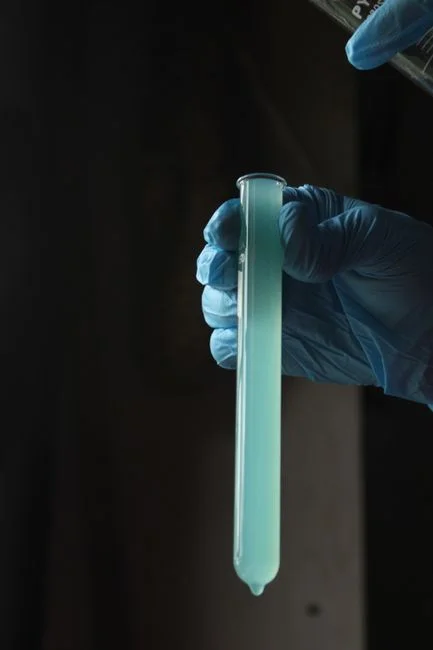
Oils and greases above 50 mg/L can cause irreversible membrane fouling, aggressive solvents can damage membrane polymers, and temperatures above 40 °C are unsuitable for PVDF membranes, according to HydropureWater’s general 2026 comparison. These are screening warnings, not automatic disqualifiers for every membrane configuration. They do mean that an MBR should not be approved from flow and regulatory limits alone.
Request plant-specific data across production and cleanup cycles: chemical inventory and toxicity, oils and greases, solvent concentration, temperature, pH, biodegradability, COD, whole-stream toxicity, and chemical-dosing requirements. HydropureWater’s 2026 Central US regional envelope identifies COD swings from 800 to 4,000 mg/L, but the source explicitly requires plant-specific influent data for final design. Do not treat the regional range as a Tucker design basis.
| Screen | Evidence required | Decision consequence |
|---|---|---|
| Oils and greases | Concentration across operating cycles | Above 50 mg/L, evaluate source control, oil removal, and fouling risk before selecting MBR. |
| Solvents and chemical constituents | Identity, concentration, duration, and toxicity | Require membrane-polymer compatibility and biological toxicity review. |
| Temperature | Minimum, maximum, and mixed-liquor temperatures | Above 40 °C requires material review because PVDF is unsuitable under the cited condition. |
| Influent COD | Plant-specific seasonal and batch-cycle profile | Use actual data rather than the 800–4,000 mg/L regional screening envelope for final sizing. |
| pH and toxicity | Continuous records and shock-event data | Define equalization, toxicity control, and chemical-dosing requirements. |
Pretreatment can determine whether MBR remains viable. Source control prevents incompatible chemicals from entering the train; equalization limits shock loads; oil removal can protect membranes; toxicity control protects biomass; and chemical segregation may solve the problem more directly than adding treatment capacity. Dissolved air flotation pretreatment may therefore be part of the MBR decision rather than an optional add-on.
Winter design also matters in Tucker. HydropureWater’s 2026 Central US source identifies January mixed-liquor temperatures of 8 to 12 °C and states that nitrification rates roughly halve for each 10 °C decline. At 10 °C, that source says a 30-day MBR SRT can still support full nitrification while a 10-day CAS SRT typically cannot. These are regional comparison statements, not site-specific biological guarantees. Request compatibility review using the actual stream and operating-temperature range, and define chemical-dosing controls for pH and toxicity management.
Effluent Quality, Footprint, and Sludge Trade-Offs
HydropureWater’s 2026 chemical-wastewater comparison reports typical MBR performance below 5 mg/L TSS and below 1 NTU, compared with 10 to 30 mg/L TSS at best for CAS. These are reported comparison values, not universal standards, guaranteed outputs, or Tucker permit limits. The reuse destination and its quality envelope must define the actual target.
For chemical wastewater, the same 2026 source estimates about 60% less MBR treatment-train footprint by eliminating the secondary clarifier and most tertiary filtration. HydropureWater’s broader 2026 comparison reports a 30 to 50% footprint reduction for equivalent systems. The verified 2026 MBR catalog also specifies filtration below 1 μm and a footprint 60% smaller than conventional systems, but the buyer should check whether that claim applies to the offered configuration and site arrangement.
| Outcome | HydropureWater 2026 comparison | Procurement interpretation |
|---|---|---|
| Effluent solids | MBR below 5 mg/L TSS and below 1 NTU; CAS 10–30 mg/L TSS at best | Compare with the reuse specification and permit limits, not another vendor’s generic claim. |
| Treatment-train footprint | About 60% less for the chemical-wastewater scenario; 30–50% broader comparison | Confirm tankage, pumping, pretreatment, maintenance access, and auxiliary equipment in the layout. |
| Observed yield | MBR 0.10–0.25 kg VSS/kg COD; CAS 0.30–0.45 kg VSS/kg COD | The source translates the difference into 20–40% less waste activated sludge. |
| Verified catalog claim | Filtration below 1 μm and 60% smaller footprint | Require configuration-specific evidence rather than treating the catalog statement as a guarantee. |
Lower sludge volume does not remove solids handling from the cost model. Compare dewatering performance, disposal route, hauling distance, and labor. Evaluate the plate-and-frame filter press and high-efficiency sedimentation tank as possible downstream options, but base their selection on residual sludge characteristics and disposal economics rather than MBR versus CAS labels.
Cost Comparison for a Tucker Chemical Wastewater Project
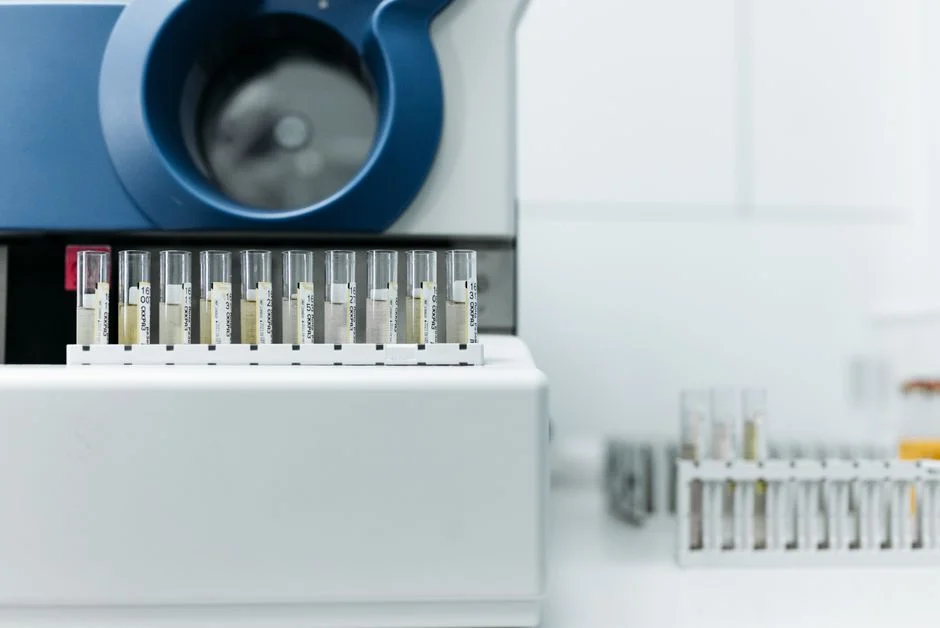
For a 1,000 m³/day chemical stream, HydropureWater’s 2026 directional estimate places MBR CAPEX at 1.4 to 1.8 times CAS and MBR OPEX at 1.2 to 1.5 times CAS per cubic meter. These are comparative estimates, not quotations or guaranteed project costs. Final cost depends on flow, chemistry, pretreatment, site constraints, equipment configuration, and the selected membrane system.
A defensible 20-year comparison must include energy, chemicals, membrane replacement, sludge volume, dewatering, disposal, labor, and reuse-water value, as specified in HydropureWater’s 2026 source. Include avoided purchased water only when there is a defined reuse destination, expected replacement volume, and acceptable water-quality envelope. A possible reuse benefit is not a cash offset until those conditions exist.
| Procurement option | Best fit | Key cost and risk questions |
|---|---|---|
| New CAS | Reliable gravity settling, adequate space, and no compelling need for membrane-quality reuse | Compare biological reactor, secondary clarifier, pumping, sludge handling, and labor without membrane replacement. |
| Retained CAS with membrane separation | Useful biology is retained but solids separation or reuse quality is the primary constraint | Confirm hydraulic capacity, membrane feed quality, pretreatment, controls, cleaning, and redundancy. |
| Full MBR | Stable low-solids effluent has high reuse value, space is constrained, or settling is unreliable | Include membrane area, flux, cleaning, replacement, fouling control, and chemical compatibility. |
These are three distinct scopes and should receive three comparable proposals. Asking only for “MBR versus CAS” can hide an economical hybrid, especially in a brownfield site with a serviceable biological process. The 2026 MBR cost per m³ guide supplies the comparative framework, while site-specific bids must define the same cost boundary for each option.
A Five-Area Site Decision Framework
HydropureWater’s 2026 framework directs buyers to favor an MBR package when it scores at least three of five decision areas: effluent and reuse value, footprint, chemical compatibility, life-cycle cost, and operational capability. The score supports screening; it does not override failed compatibility checks or unmet permit requirements.
| Decision area | Question for the Tucker site | Evidence required |
|---|---|---|
| Effluent and reuse value | Does the destination require more stable solids separation than CAS can reliably deliver? | Permit limits, reuse specification, and monitoring conditions |
| Footprint | Is available space too constrained for a secondary clarifier and auxiliary equipment? | Survey, elevations, maintenance clearances, and proposed layouts |
| Chemical compatibility | Can the stream be controlled to protect the selected membrane and biology? | Chemical inventory, toxicity, oils and greases, solvent, pH, and temperature data |
| Life-cycle cost | Do membrane benefits justify the capital and operating premium? | Comparable 20-year cost model for all three procurement options |
| Operational capability | Can the team monitor flux, clean membranes, control chemicals, and manage redundancy? | Operating plan, training scope, controls requirements, and maintenance access |
Prefer CAS when gravity settling is reliable, space is adequate, reuse does not justify membrane polishing, and lower capital and operating cost dominates the decision. Prefer MBR when stable low-solids effluent has meaningful reuse value, space is constrained, or chemical slugs make settling unreliable—provided compatibility and pretreatment checks pass. Prefer retained CAS with membrane separation when the biological process remains valuable and solids separation or reuse quality is the main problem.
Before final selection, obtain current Tucker permit limits, renewal-cycle information, and applicable whole-effluent-toxicity or monitoring conditions. Evaluate the MBR membrane bioreactor module against the full treatment train, including pretreatment and auxiliary systems.
What to Request Before Ordering an MBR in Tucker
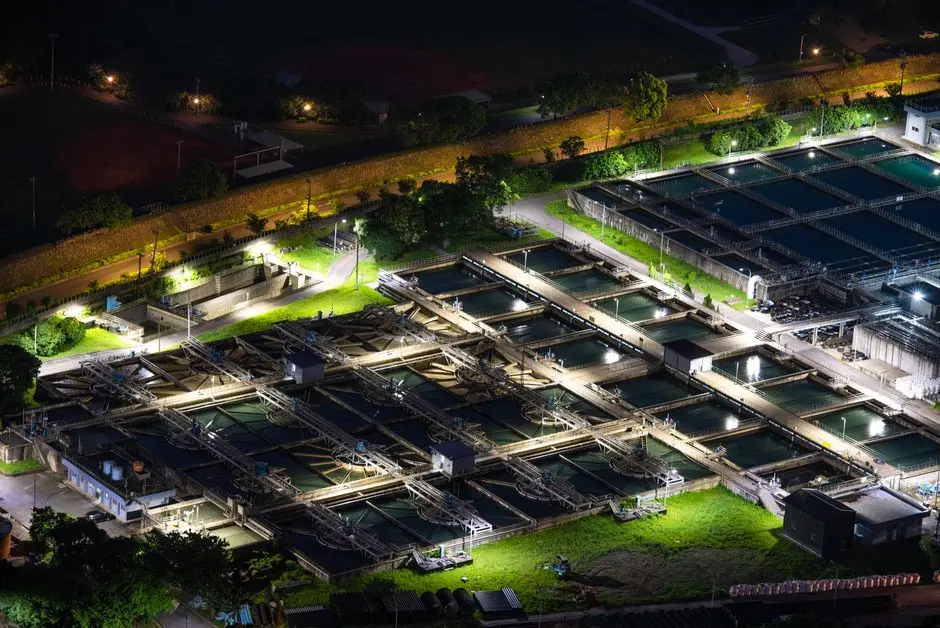
Require current influent and effluent characterization across production, cleaning, and shutdown cycles, including COD, oils and greases, toxicity, temperature, pH, and relevant chemical constituents. Ask the supplier to reconcile the data with membrane material, operating temperature, and every chemical stream entering the reactor. Generic wastewater compatibility statements are not sufficient evidence.
Request the selected flux, membrane area, design redundancy, controls scope, cleaning chemicals, expected membrane life, and replacement assumptions. The proposal should identify fouling controls, monitoring points, recovery procedures, and how membrane condition affects the treatment plant’s available capacity. Use the integrated MBR wastewater treatment system as an equipment reference, but require configuration-specific guarantees and site acceptance criteria.
Also request a 20-year life-cycle comparison with stated assumptions for energy, chemicals, membrane replacement, sludge handling, labor, disposal, and reuse-water value. Confirm that every performance figure is tied to the offered configuration and is not represented as a universal discharge standard. Pilot testing is justified when chemical variability, membrane compatibility, or scale-up risk remains unresolved.
Frequently Asked Questions
Is MBR always better than CAS for chemical wastewater in Tucker?
No. MBR is generally stronger where low-solids reuse quality, limited space, or reliable separation during chemical slugs has high value. HydropureWater’s 2026 comparison reports MBR below 5 mg/L TSS and below 1 NTU versus 10–30 mg/L TSS at best for CAS, but oils and greases above 50 mg/L, aggressive solvents, and temperatures above 40 °C require compatibility review or pretreatment. The reported effluent values are comparison data, not permit limits.
How much does an MBR cost compared with CAS?
HydropureWater’s 2026 directional estimate for a 1,000 m³/day chemical stream places MBR CAPEX at 1.4–1.8 times CAS and OPEX at 1.2–1.5 times CAS per cubic meter. Treat these as comparative estimates rather than quotations. Request itemized pricing and a common 20-year cost boundary covering energy, chemicals, membrane replacement, sludge handling, labor, and disposal.
How should an MBR supplier be qualified for a Tucker project?
Require evidence tied to the actual stream: membrane-material compatibility, selected flux and area, redundancy, controls, cleaning strategy, expected membrane life, and replacement assumptions. Ask how the supplier will respond to the site’s documented chemical inventory, oils and greases, solvents, toxicity, and temperature range. Generic municipal references or catalog performance claims should not substitute for configuration-specific evidence.
When is retained CAS with membrane separation more defensible than full MBR?
Retained CAS with membrane separation is defensible when the existing biological reactor remains valuable and solids separation or reuse quality is the primary constraint. Compare its hydraulic capacity, membrane-feed quality, controls, cleaning, and redundancy against full MBR using the same 20-year model. Current permit limits, renewal-cycle conditions, and applicable whole-effluent-toxicity or monitoring requirements must be confirmed before selection.