Determine Which Iowa Rules Apply to the Discharge
Chemical plants near Iowa Falls generally meet pretreatment limits by characterizing each process-wastewater stream, preventing prohibited discharges, applying any applicable categorical standards, and treating wastewater to the stricter applicable local limit before it reaches the municipal collection system. Iowa DNR explains that local programs operate under EPA’s General Pretreatment Regulations in 40 CFR Part 403. EPA applies local limits at the industrial user’s end-of-pipe connection, and compliance must prevent pass-through and interference with the Iowa Falls POTW. In practice, that can require equalization, pH control, DAF or clarification, biological treatment and documented monitoring.
EPA’s General Pretreatment Regulations in 40 CFR Part 403 provide the federal framework that Iowa DNR identifies for delegated pretreatment programs. Iowa received delegated pretreatment authority from EPA in 1982. A chemical plant becomes an industrial user when it introduces nondomestic wastewater into a POTW, so the review must include process wastewater, cleaning streams, laboratory drains and any contaminated-contact water entering the sewer—not merely the largest process stream.
Iowa DNR states that large POTWs with design flow above 5 MGD and smaller POTWs with significant industrial discharges must establish local pretreatment programs. If Iowa Falls has no approved local program, national standards are enforced by the state, and industries often need a treatment agreement with the city. Iowa DNR’s published pretreatment-coordinator contact list was dated June 9, 2025. Do not assume that Iowa Falls’ industrial limits appear on the municipal website; request the controlling sewer-use requirements, pollutant list, sampling point and monitoring duties. The industrial wastewater permit due-diligence checklist provides a useful structure for collecting those documents.
| Decision point | Evidence to obtain | Why it controls design |
|---|---|---|
| Local pretreatment program | Current Iowa DNR program listing and city coordinator confirmation | Establishes who administers local requirements and treatment agreements. |
| Industrial-user status | Discharge inventory, flow estimates and process descriptions | Shows whether nondomestic streams enter the POTW and which streams must be evaluated. |
| Applicable discharge requirements | Current sewer-use rules, permit, treatment agreement and local limits | Supplies the actual numerical and narrative basis for treatment and monitoring. |
| Compliance point | Approved sampling location and discharge schematic | Defines where the industrial user must demonstrate compliance. |
Build the Compliance Basis from Federal, State and Local Requirements
The applicable limit must be assembled from every relevant legal layer rather than from one concentration in one permit. Map the plant’s principal manufacturing activity to the categorical pretreatment standards in 40 CFR Parts 405–471. The supplied commercial pretreatment guide identifies Part 414 for organic chemicals, Part 415 for inorganic chemicals, Part 419 for petroleum refining and Part 439 for pharmaceutical manufacturing. The correct subcategory must be verified from the actual manufacturing process; process labels alone can be misleading.
EPA’s prohibited-discharge requirements in 40 CFR Part 403 focus on pass-through and interference. Pass-through is a discharge that exits the POTW in quantities or concentrations that cause or worsen an NPDES permit violation. Interference is a discharge that both inhibits or disrupts the POTW, its treatment processes or operations, or its sludge processes, use or disposal, and causes a permit violation or noncompliance with applicable sludge provisions. These definitions make process compatibility part of compliance, not merely an equipment-design preference.
Iowa DNR states that local programs may impose requirements more stringent than national standards. EPA further explains that local limits can be numerical or narrative and that POTWs impose them at the industrial user’s end-of-pipe discharge, or point of connection to the collection system. Request the local-limit development file, including pollutants of concern, maximum allowable loading calculations, supporting data, implementation provisions, annual review records and periodic reevaluation information.
| Requirement layer | Source to verify | Engineering consequence |
|---|---|---|
| General prohibited discharges | 40 CFR Part 403 | Control slug loads, pass-through, interference and incompatible discharges. |
| Categorical pretreatment standards | Applicable subcategory in 40 CFR Parts 405–471 | Set pollutant-specific requirements for the manufacturing process. |
| Iowa local requirements | Iowa DNR program and controlling city documents | Apply where more stringent than the applicable federal standard. |
| Site-specific local limits | POTW local-limit calculations and approval record | Protect the Iowa Falls treatment process, sludge system and receiving waters. |
| User-specific conditions | Treatment agreement, permit and monitoring schedule | Establish reporting, sampling, operational and notification duties. |
No supplied source states a specific Iowa Falls industrial discharge limit. The engineer must therefore identify the controlling requirement for each pollutant and discharge condition, determine which provision is stricter, and document why the selected treatment objective satisfies every applicable layer.
Characterize the Wastewater Before Fixing the Treatment Train
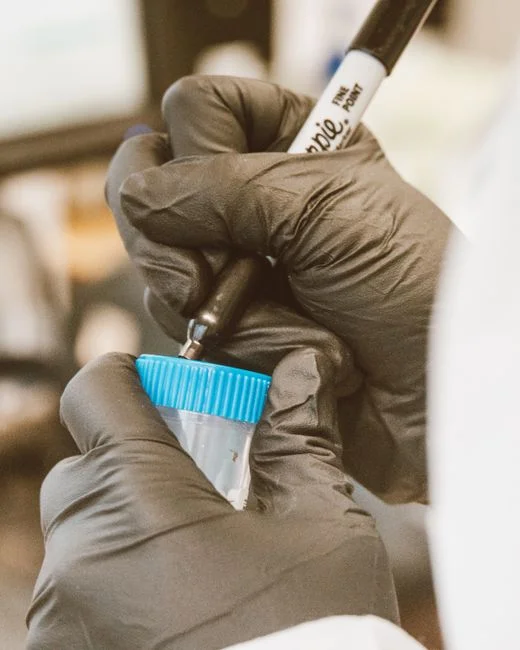
Equipment selection should begin with a source-by-source wastewater inventory, not with a chosen technology. Identify product residuals, batch dumps, cleaning chemicals, laboratory drains and contaminated stormwater. Classify each stream as continuous, intermittent or slug-prone, and trace where it enters the sewer. This inventory should be cross-checked using the industrial wastewater characterization and sewer-limit guide.
Develop a representative sampling plan by production campaign, contaminant and operating condition. A single grab sample cannot establish variability across batches or provide defensible mass-loading data. The analytical program should include the pollutants named in the Iowa Falls requirements, along with flow, pH, suspended solids, oil and grease, BOD or COD, ammonia, metals and temperature. Chemical identity, biodegradability, toxicity, salinity and concentration variability must also be established before selecting biological or flotation equipment.
Mass loading matters as well as concentration because the industrial contribution must be evaluated against POTW capacity. The City of Iowa Falls reports monitored parameters including BOD, ammonia, suspended solids, settleable solids, pH, temperature, acid alkalinity, fecal chloroform, flow and toxicity. These municipal reporting parameters describe the POTW’s monitoring context; they are not automatically a list of industrial-user limits.
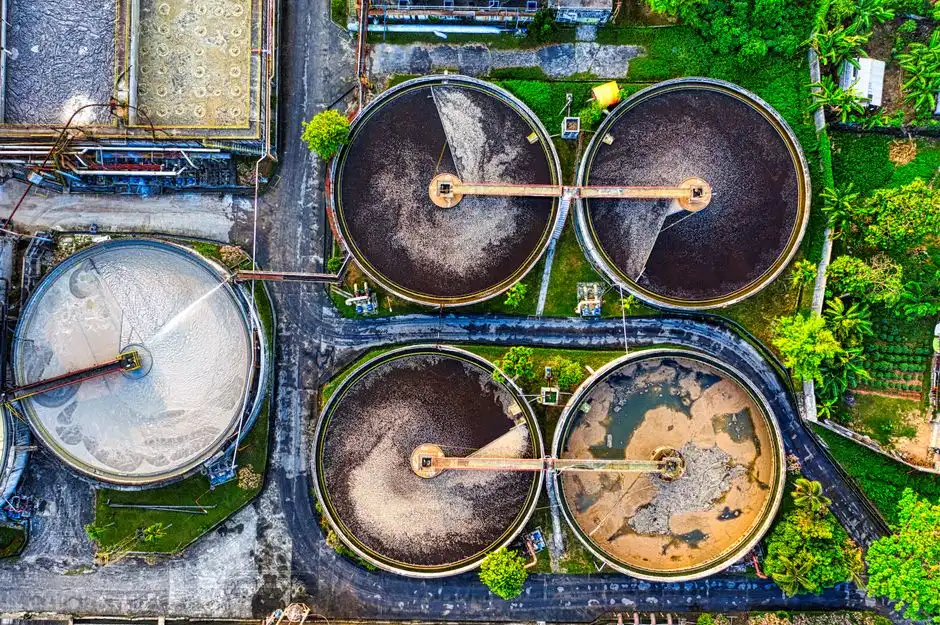
The City of Iowa Falls describes a treatment train consisting of screening, grit removal, primary settling, trickling filters, a bio-tower for nitrogen removal, final clarification, disinfection and aeration steps before discharge to the Iowa River. An industrial stream may interfere with solids separation, biological treatment, nitrification, disinfection or sludge handling. That municipal process architecture narrows the risks the pretreatment design must control, but it does not replace analysis of the industrial stream.
Wastewater characterization is complete only when the plant can explain what enters the sewer, when it enters, how much it contributes, how it varies and which municipal process or permit requirement each stream could affect.
Design Treatment to Protect Both the Sewer and the POTW
The treatment train should address each demonstrated risk: batch peaks, corrosive discharges, emulsions, suspended solids, biodegradable organics, dissolved pollutants and incompatible sludge constituents. The City of Iowa Falls treats residential and industrial wastewater together, so the industrial user must design for protection of both the collection system and the downstream POTW rather than assume that dilution inside the sewer establishes compliance.
Specify equalization when verified flow or concentration data show material variability. Its operating volume must follow the plant’s production cycle, batch-discharge pattern and slug-control strategy. Provide automatic pH adjustment where the local prohibition or process chemistry requires it. An automatic wastewater chemical dosing system should be evaluated with high- and low-pH interlocks, chemical containment, high-high alarms and a defined response to dosing failure.
Use an industrial DAF wastewater treatment system for streams carrying oil, grease, emulsions, suspended solids or colloidal material that could impair settling or biological treatment. The supplied commercial pretreatment guide describes DAF applications across 4–300 m³/h and 13 models, but that range is supplier-reported equipment information, not an Iowa Falls sizing conclusion. Final selection requires verified flow, loading, fractionation and treatability data.
Consider a lamella clarifier where solids capture and footprint are priorities and effective flocculation can be established. The supplied source states 20–40 m/h surface loading and up to 30% lower chemical consumption, but those figures require project-specific verification before inclusion in a design basis. The DAF vs. clarifier guide for chemical wastewater provides the appropriate technology-comparison framework.
Apply biological treatment only after establishing that the organic fraction is biodegradable and that residual chemicals, metals, salinity or temperature will not inhibit it. MBR may be appropriate for demanding applications, but its selection needs a verified influent treatability basis rather than a general performance claim.
| Design condition | Treatment response | Verification required |
|---|---|---|
| Batch or intermittent flow peaks | Equalization and controlled slug release | Verified flow series, batch volumes and production sequence. |
| High or low pH | Automatic dosing with independent high and low interlocks | Controlling local requirement and chemical demand. |
| Oil, grease, emulsions or floatable solids | DAF with appropriate conditioning | Oil-and-grease characterization, solids and emulsion behavior. |
| Settleable or flocculable solids | Clarification with verified flocculation | Settling, surface loading, sludge handling and footprint. |
| Biodegradable organics | Biological treatment after toxicity screening | Biodegradability, temperature, salinity, nutrient and residual chemistry. |
| Sludge-impacting pollutants | Source control and dedicated solids removal | Pollutant transfer to sludge and POTW biosolids acceptance criteria. |
| Treatment upset or power failure | Automatic isolation, alarm and controlled hold-down | Fail-safe test, containment capacity and response procedure. |
Treat sludge and biosolids impact as a separate workstream because EPA’s interference definition expressly reaches POTW sludge processes, use and disposal. Include final sampling, flow measurement and automatic shutoff provisions so a treatment failure does not send an untreated batch into the collection system.
Prove Compliance at the Point of Connection
Compliance is demonstrated at the industrial user’s end-of-pipe discharge, not at the municipal plant’s final effluent. EPA explains that POTWs impose local limits at that point of connection. The sampling location, representative flow path and treatment controls therefore need to be included in the approved design basis.
- Install a representative compliance sampling point and flow measurement at the point of connection.
- Record concentration together with flow and calculated pollutant load so the applicable daily maximum and monthly-average provisions can be evaluated.
- Use continuous pH and flow monitoring, a controlled sampling station and a pre-discharge interlock for high-pH, low-pH, overflow or equipment-failure conditions.
- Retain production, cleaning, chemical-use, calibration, laboratory, maintenance and deviation records with each compliance result.
- Document slug prevention, bypass restrictions, notification procedures and corrective actions.
The supplied research does not state a universal Iowa Falls monitoring frequency for industrial users. Obtain that requirement from the controlling treatment agreement, permit or local program. Iowa Falls states that its own POTW submits monthly reports and that its laboratory is inspected bi-annually by state Hygienic Laboratory staff, but those municipal obligations do not replace the industrial user’s self-monitoring and reporting duties.
Plan Procurement, Sizing and Supplier Evaluation
A defensible quotation requires a process-design basis, not a technology label. Include verified wastewater analyses, flow and mass-loading data, applicable limits, sampling requirements, available space, utilities, containment, sludge-disposal route, operating staffing and planned production changes. Identify whether the discharge is continuous, intermittent or slug-prone and include the basis for each design peak.
Require every bidder to state its design basis, guaranteed performance parameters, pretreatment assumptions, redundancy, controls, alarms, utility demand, startup support and O&M obligations. A bidder should identify which wastewater properties control equipment size and which results are conditional on treatment chemistry or operator intervention.
Compare DAF against clarification only after solids, oil and grease, flocculation needs and footprint constraints are known. Neither technology independently resolves biodegradable organics, dissolved metals, salinity or toxicity. Budget for equalization, chemical storage, odor control, containment, sample analysis, sludge handling, monitoring, spare parts and instrumentation rather than comparing equipment purchase price alone.
The supplied research provides no Iowa Falls equipment prices, project budgets or supplier lead times. Request current quotations against one common design basis and require bidders to identify exclusions, commissioning assumptions and schedule dependencies.
Frequently Asked Questions
What specific documents should a chemical plant near Iowa Falls request before designing a pretreatment system?
Request the current Iowa DNR program determination, city pretreatment or sewer-use requirements, treatment agreement, applicable permit, categorical-standard determination, local-limit calculations, monitoring schedule, approved sampling point and discharge schematic. Obtain the pollutant list and narrative prohibitions directly from the controlling documents rather than relying on a municipal web summary.
Is DAF alone enough to meet a chemical plant’s Iowa Falls sewer pretreatment limits?
Not necessarily. DAF can remove floatable oils and solids, but it does not establish compliance for biodegradable organics, dissolved metals, pH, toxicity, pass-through or interference. Verify the complete waste profile and applicable limits, then add equalization, pH control, biological treatment, dissolved-pollutant controls or another barrier where the analysis requires them.
How should an industrial wastewater package supplier size a DAF or clarification system for Iowa Falls?
Provide the supplier with verified flow and mass-loading data, oil-and-greese and suspended-solids results, variability and slug information, required effluent objectives, flocculation needs, available footprint, utility limits and sludge route. Require the bidder to state its design basis and identify assumptions; do not accept a model selected from hydraulic capacity alone.
What monitoring equipment is needed to demonstrate compliance at the point of connection?
The minimum installation should include flow measurement, pH monitoring, representative sampling capability, treatment-control interlocks, event alarms and secure recordkeeping. Add parameters required by the controlling agreement, such as suspended solids, metals, oil and grease, ammonia or organic indicators. EPA defines local limits as applying at the industrial user’s end-of-pipe discharge.
How do budget and operating complexity affect the choice between DAF, clarification and MBR treatment?
Choose the least complex train that addresses the documented risk. DAF is relevant to emulsified oil or floatable solids; clarification is relevant to settleable or flocculable solids; MBR is a biological option requiring a verified biodegradability and toxicity basis. Compare full installed costs, utilities, chemical use, sludge handling, controls, staffing, monitoring and replacement obligations. Obtain current Iowa Falls project quotations because the supplied research contains no local prices or lead times.