Why Pasadena Chemical Plants Struggle With One-Technology Treatment
Pasadena chemical plants rarely run a single clean waste stream. A typical 2026 influent lands between 200–2,000 mg/L TSS, 50–800 mg/L oil and grease, pH 2–11, and arrives in batch slugs rather than a steady flow — and the same plant often has to handle both emulsified oils from specialty batch reactors and high-density catalyst fines from inorganic operations in the same header (HydropureWater field data, 2026). The one-unit-fits-all pitch breaks down: a clarifier cannot remove buoyant emulsified oil, and a DAF wastes compressed air on catalyst fines that would settle under gravity in minutes. Pasadena-headquartered Tetra Tech's April 2025 award of a major Florida wastewater expansion contract underscores that local engineering capacity understands mixed industrial matrices, not just textbook municipal strength. Capex reviews for 2026 should treat the oil and the solids as two separate unit-operation problems, then decide whether a single technology dominates or whether a hybrid DAF-plus-clarifier train is the defensible default — the same logic our Cleveland chemical-factory guide applied to Gulf Coast emulsions.
DAF vs Clarifier: How Each Unit Actually Works in a Chemical Plant
DAF and clarifiers rely on different physical principles to separate contaminants. A DAF pressurizes 20–40% of clean recycle to 60–80 psi, saturates it with air, and releases it through needle valves; the pressure drop nucleates 10–100 µm micro-bubbles that attach to oil droplets and fine floc and float them to the surface in a 5–15 minute retention window (IandES, 2026). A clarifier holds wastewater 2–4 hours under quiescent gravity so dense particles drop to the bottom; lamella plates multiply the effective footprint, pushing surface loading to 20–40 m/h versus 1–2 m/h for a conventional basin (HydropureWater product data). The chemical-industry DAF design window for an air-to-solids (A/S) ratio sits at 0.02–0.06 lb air per lb solids; below 0.02, oil carry-under rises sharply and you start failing the FOG limit on the discharge side. Skim versus sludge handling is the other mechanical difference: DAF float comes off at 3–6% solids and routes to a separate sludge line, while clarifier underflow thickens to 2–4% and feeds a thickener or filter press. Neither unit hits its rated removal without chemical pretreatment — an automatic coagulant and flocculant dosing skid is what bridges the two and lets the operator hit the 40 CFR Part 414 envelope.
| Parameter | DAF (chemical-industry duty) | Lamella Clarifier |
|---|---|---|
| Dominant mechanism | Micro-bubble flotation of oil and fine TSS | Gravity settling of dense TSS |
| Hydraulic retention | 5–15 min | 120–240 min |
| Surface loading / A:S | A/S 0.02–0.06 lb air / lb solids | 20–40 m/h (lamella) |
| Skim or underflow solids | 3–6% float | 2–4% underflow |
| Typical removal on FOG | 95–97% with chemical pretreatment | 60–75% on emulsified oil |
| Energy intensity | 0.5–2.0 kWh/m³ (recycle pump + air) | Mostly passive; rake drive only |
Selecting the right equipment requires balancing these mechanical differences to achieve consistent effluent quality. Two pieces of equipment from the same vendor line — the HydropureWater DAF and the HydropureWater lamella clarifier — are sized against these parameters, so the comparison stays apples-to-apples when you build a flowsheet.
The 40 CFR Part 414 Numbers That Drive the Decision in Pasadena
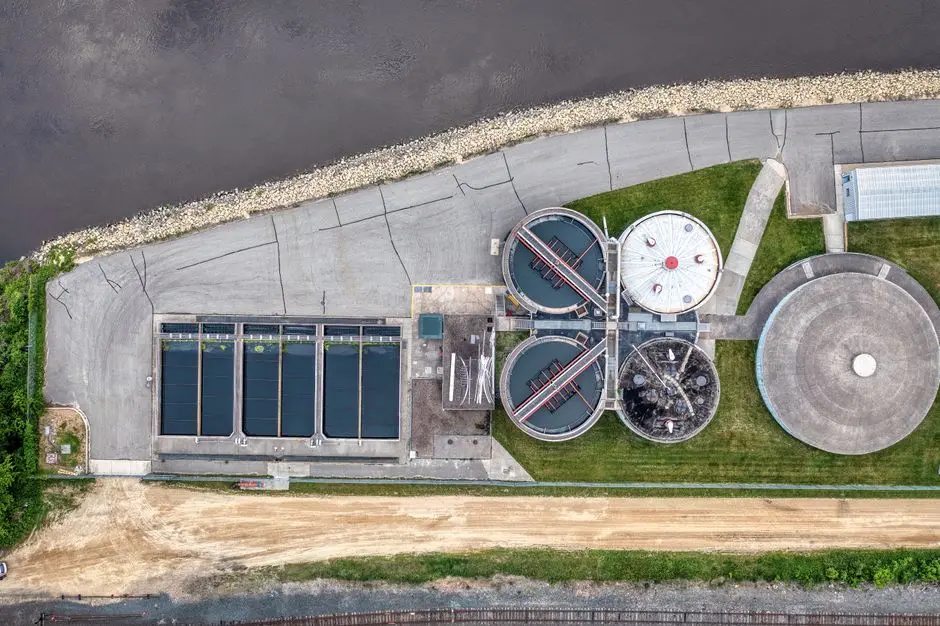
40 CFR Part 414 sets categorical effluent guidelines for the organic chemicals, plastics, and synthetic fibers (OCPSF) point source category — the subpart that covers most Pasadena chemical plants discharging to the Sanitation Districts of Los Angeles County. Daily-maximum TSS limits land near 300 mg/L for many OCPSF subcategories, with BAT-tier limits pushing tighter on a case-by-case basis (40 CFR Part 414, subparts E/F). The wrinkle that complicates a one-technology answer: 40 CFR Part 414 does not cap oil and grease directly in every subpart, so the binding FOG number is usually the local pretreatment limit — typically 100 mg/L FOG and 250 mg/L TSS at the discharge sampling point (per 40 CFR 403 baseline plus LA County industrial waste ordinances). Ecologix's 2026 selection guidance reinforces the pattern: it is the removal target, not the raw influent, that drives unit-operation choice. For a real-world anchor, U.S. Filter's 2002 Baytown retrofit permitted 100,000 gpd of oily wastewater through biological and DAF polishing — a 20-year-old chemical-sector precedent that still reads as a defensible reference (Industrial Info, 2002-09-10). If the local FOG ceiling is 100 mg/L, DAF is almost always the controlling primary, and the clarifier downstream only earns its footprint if the waste stream also carries settleable solids the DAF cannot economically float.
Pasadena Case Profiles: When DAF Wins, When the Clarifier Wins, When You Need Both
Three Pasadena-flavored profiles make the decision concrete. Scenario A — specialty batch chemicals with high emulsified oil. A DAF with proper coagulant/flocculant pretreatment hits 95–97% FOG removal, while a clarifier on the same stream stalls near 70% because the oil is emulsified and will not settle (Ecologix, 2026). Scenario B — inorganic chemicals with catalyst fines and metal hydroxides. A lamella clarifier cuts TSS 85–90% at lower capex and opex; a DAF would burn compressed air floating particles that gravity drops in 20 minutes. Scenario C — petrochemical blending and additives with mixed loads. This is the Pasadena 2026 default: DAF primary for the oil/FOG side, then a lamella clarifier as post-DAF polishing and sludge thickener ahead of dewatering.
Capex for chemical-industry installs varies significantly based on technology type. Packaged DAF systems in the 4–50 m³/h range land at roughly $80K–$350K USD, while lamella clarifiers of similar hydraulic capacity run 30–50% lower in capex but consume 2–3× the floor footprint. Op-ex flips the other direction: DAF needs 0.5–2.0 kWh/m³ for the recycle pump plus compressed air, while a lamella clarifier is largely passive aside from the rake drive, so the electrical load is typically 5–10× lower. DAF float and clarifier underflow should converge on a common sludge line feeding a plate-and-frame filter press that delivers 18–25% dry cake — a single dewatering asset that handles both sidestreams and keeps the 40 CFR Part 414 solids mass-balance defensible at the next permit renewal.
| Scenario | Dominant contaminant | Recommended primary | Expected removal | Capex band (packaged, 4–50 m³/h) |
|---|---|---|---|---|
| A — specialty batch / emulsified oil | FOG 200–800 mg/L, emulsified | DAF | 95–97% FOG, 85–90% TSS | $80K–$350K |
| B — inorganics / catalyst fines | TSS 1,000–2,000 mg/L, dense | Lamella clarifier | 85–90% TSS | 30–50% below DAF |
| C — mixed petrochemical blending | Both FOG and settleable TSS | DAF + lamella polish | 95–97% FOG; 90–95% TSS overall | $120K–$500K combined |
Decision Framework: Choosing DAF or Clarifier for a Pasadena Chemical Plant in 2026
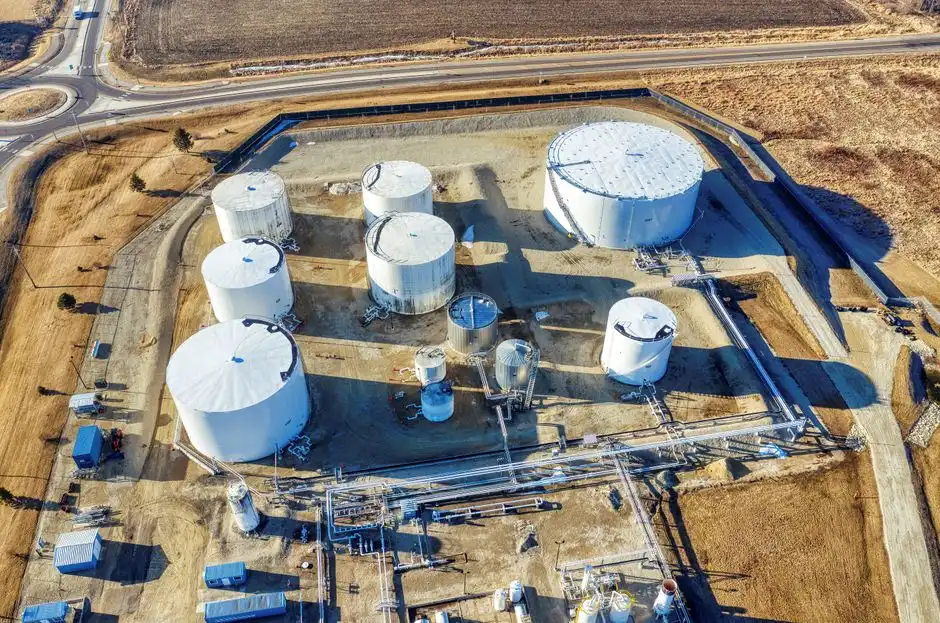
Five steps translate the comparison into a 2026 capex recommendation. Step 1 — Characterize the influent. Oil and grease above ~200 mg/L, or any emulsified oil, points DAF-first. Settleable TSS above ~1,000 mg/L with oil below 100 mg/L points clarifier-first. Step 2 — Match the discharge target. If the binding limit is FOG <100 mg/L (typical LA County pretreatment envelope), DAF is almost always the controlling unit regardless of how the influent looks. Step 3 — Check site constraints. Limited footprint or indoor installation favors a compact packaged DAF, where the HydropureWater DAF covers 4–300 m³/h in a skid footprint a clarifier basin cannot match. Step 4 — Plan for hybrid as the default. Route DAF float and clarifier underflow to a common sludge line and dewater with a plate-and-frame filter press for 18–25% cake solids — same asset handles both sidestreams. Step 5 — Loop in local regulators early. The Sanitation Districts of Los Angeles County pretreatment envelope can run tighter than 40 CFR Part 414 BPT/BAT, and a pre-design meeting prevents a 30% capex redesign six months before startup. The petrochemical wastewater plant maintenance guide covers the preventive side once the equipment is in service.
Frequently Asked Questions
What air-to-solids ratio should a DAF be designed to for a Pasadena chemical plant?
Target an A/S ratio of 0.02–0.06 lb air per lb solids for chemical-industry DAF service; below 0.02, oil carry-under rises sharply and the unit starts failing the 100 mg/L FOG discharge limit (HydropureWater design data, 2026).
Is a lamella clarifier ever sufficient as a standalone for chemical wastewater in Pasadena?
Yes, when the stream is dominated by inorganic settleables — catalyst fines, lime, metal hydroxides — with oil and grease below ~100 mg/L. Lamella clarifiers deliver 85–90% TSS removal at 5–10× lower electrical load than a DAF (HydropureWater product data, 2026).
What 40 CFR Part 414 limits actually govern a Pasadena chemical plant discharging to LA County?
40 CFR Part 414 subparts E/F cap daily-max TSS near 300 mg/L for many OCPSF subcategories; the binding FOG number is usually the local pretreatment limit of 100 mg/L oil and grease and 250 mg/L TSS at the discharge sampling point (per 40 CFR 403 and LA County industrial waste ordinances). For the oil side of that envelope, the HydropureWater DAF is the primary unit operation most Pasadena plants specify.