Why an Acquisition Changes the Wastewater Risk
Wastewater from a Tesla Gigafactory acquired in Germany should be handled through a permit-based, source-segregated treatment and reuse plan, rather than assuming the existing facility model transfers automatically. At Giga Berlin in Grünheide, Tesla stated it recycles up to 100% of process water and reported 2022 consumption was 300,000 cubic metres against 1.8 million cubic metres approved. However, local reporting cited permit-limit exceedances involving phosphorus and nitrogen, five warnings since the previous March, and a demand to close the wastewater line. An acquirer should prioritize wastewater due diligence, permit verification, stream characterization, pretreatment, online monitoring and enforceable production-continuity safeguards.
An acquisition transfers four linked risks: permit status, wastewater-stream composition, treatment-plant condition and public acceptance. Permit risk includes the legal validity, transferability, compliance history and enforcement correspondence associated with the operating entity. Stream risk arises because cleaning, coating, battery production, laboratories, sanitary services and stormwater may require different treatment and disposal routes. Asset risk requires inspection of tanks, piping, membranes, controls, bypasses and sludge handling. Public acceptance matters because a technically compliant discharge can still become a permitting and production-continuity issue where residents or the receiving authority contest the plant’s water performance.
Reporting by Yahoo Finance quoting Stern described five warnings since the previous March, alleged discharge of hazardous pollutants at six times the permitted level, and a demand to close the wastewater line. It also reported repeated phosphorus and nitrogen exceedances. These are reported Grünheide events, not legal limits that can be transferred to another German site. ilovetesla.com separately quoted Tesla’s claim that Giga Berlin recycles up to 100% of process water. That claim does not establish that every wastewater stream is reused or that discharge compliance is satisfied. The acquisition review should follow the structure in wastewater requirements for a German plant acquisition.
Map Wastewater by Source Before Selecting Equipment
Equipment selection must follow a documented wastewater register, as combining streams can conceal hazardous contamination, dilute regulated constituents or make reuse quality impossible to control. For each source, request analytical data, permit conditions, flow variability, seasonal factors and evidence showing where every discharge originates. Characterize actual operating conditions rather than relying on process descriptions alone.
| Stream to document | Minimum diligence record | Treatment decision |
|---|---|---|
| Process rinse water | Constituent analyses, batch flows, reuse history and water-balance origin | Set a confirmed reuse specification before selecting final treatment |
| Floor and equipment washdown | Suspended solids, oil and grease, cleaning chemicals and discharge route | Physical pretreatment and targeted removal where required |
| Sanitary sewage | Flow, composition, sewer conditions and ownership boundary | Determine whether dedicated treatment is necessary |
| Stormwater | Source areas, rainfall exposure, pollutants and inspection controls | Segregate clean and contaminated drainage |
| Cooling or HVAC blowdown | Chemical inventory, heat, salinity, treatment chemicals and reuse feasibility | Assess discharge, controlled reuse or dedicated treatment |
| Laboratory wastewater | Identified chemicals, concentrations, volumes and hazardous-waste classification | Contain or pretreat according to the waste classification |
| Hazardous waste | Waste code, generator status, compatibility and authorized receiving route | Use dedicated containment and authorized disposal |
Define acceptance criteria for reuse and direct discharge separately. A reuse specification may need tighter control than a sewer-discharge requirement, but no quality target should be created before the intended reuse is documented. Hazardous streams may need containment rather than entry into a biological treatment system. The phosphorus and nitrogen allegations reported by Yahoo Finance and Stern justify nutrient-relevant monitoring and mass-balance checks; they do not establish the acquired facility’s legal limits. A rotary mechanical bar screen may protect downstream equipment where preliminary screening is justified, but only after the material and flow characteristics are known.
Build a Source-Segregated Treatment and Reuse Train
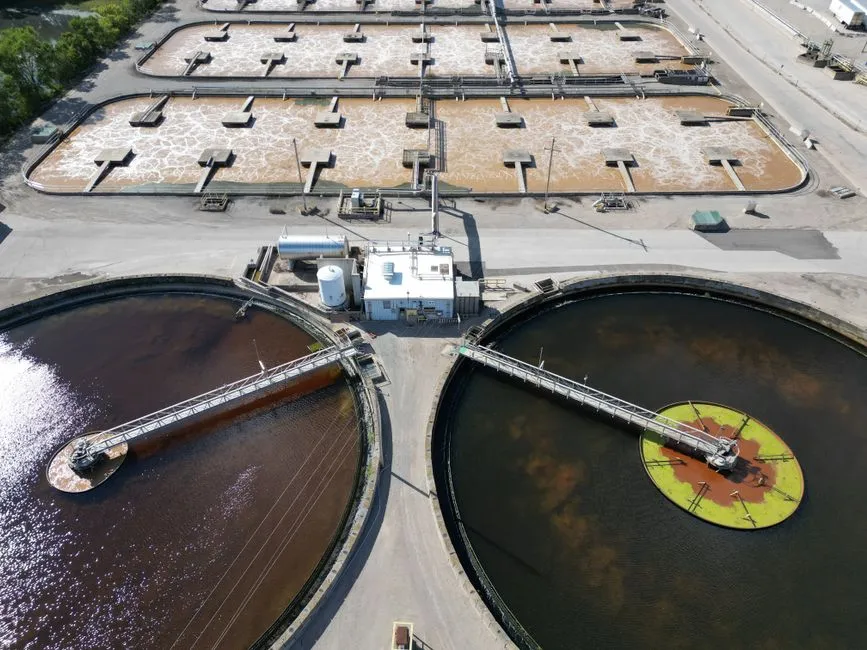
A defensible treatment train follows seven functions: characterize the source, equalize flow, remove physical contaminants, apply targeted treatment, disinfect where required, store the treated stream and route it to reuse or an authorized destination under final monitoring. Each function requires a defined operating envelope, bypass condition and response action. Blending should not be used to conceal an incompatible or hazardous stream.
For wastewater carrying suspended solids, oil and grease, FOG or colloidal material, dissolved air flotation can serve as physical pretreatment. An industrial DAF pretreatment system is appropriate only after those characteristics and the required flow range are confirmed. DAF does not replace biological treatment, nutrient removal, disinfection or an established reuse specification.
Where biological treatment and membrane separation are required, an MBR wastewater treatment and reuse system may fit. Selection requires influent characterization, confirmation of the receiving or reuse quality specification, residual-sludge handling and evaluation of membrane maintenance, energy demand and redundancy. An automatic chemical dosing system should be specified only after the required chemical, dose range and control objective are established. Dosing must support the treatment mechanism rather than conceal inadequate separation or uncontrolled chemical inputs.
Segregate hazardous or incompatible streams into dedicated containment with an authorized disposal route. Close the process with a monitoring chain covering flow, operating parameters, retained samples and reporting. For reuse, identify where quality is checked before storage and use. For discharge, tie final monitoring to the applicable permit and receiving-system requirements. Alarms must trigger a defined investigation and isolation response.
Match Treatment Objectives to Equipment
Equipment selection should be based on the characterized stream, required receiving-water or reuse quality, operating variability and available maintenance capability. Compare treatment technologies by contaminant duty, controls, footprint, sludge route, redundancy and maintainability rather than by a headline removal rate.
| Option | Primary decision basis | Catalogued scope | Buyer checks |
|---|---|---|---|
| DAF | Suspended solids, FOG, oil and grease, and colloidal matter | 4–300 m³/h across 13 standard models | Installed-flow range, chemical demand, sludge removal and controls |
| Integrated biological treatment | Biodegradable organic load where biological removal is appropriate | No catalogued range supplied in the research | Influent treatability, process control, residuals and receiving-system compatibility |
| MBR | Biological treatment with membrane separation for process water or reuse | 10–2,000 m³/day; claimed output below 1 μm | Site-specific effluent quality, membrane cleaning, redundancy and reject-water route |
| Plate and frame filter press | Mechanical dewatering of sludge generated by the selected treatment process | No catalogued range supplied in the research | Sludge volume, cake consistency, plate capacity and cake handling |
The DAF flow range and duty are stated in the supplied product catalog, while the MBR flow range and claimed near-reuse-quality output are stated in its product catalog. A sub-micrometre separation claim is not evidence of chemical compliance or permission to discharge. Confirm the required flow envelope, variability, control package, redundancy, maintenance access, utility requirements and compatibility with the receiving system.
If the selected process produces sludge requiring dewatering, a plate and frame filter press may be suitable. Determine press size from actual sludge volume and cake-handling requirements rather than adopting a catalogued unit before operational trials. For a wider comparison of physical clarification options, see DAF versus clarifier selection for EV factory wastewater.
Turn Permit and Monitoring Obligations into a Continuity Plan
Every permit, approval, inspection record, warning and corrective-action commitment must be verified against the legal entity that will own and operate the acquired site. A transaction does not remove the obligation to demonstrate permit compliance, and inherited equipment does not establish inherited compliance.
Review monitoring records for the pollutants reported in the Grünheide dispute—phosphorus and nitrogen—and establish upstream process checks plus final-discharge monitoring. The Yahoo Finance report citing Stern also described five warnings since the previous March and a threatened closure of the wastewater line. Those reported events support a documented corrective-action system, but the acquirer must obtain the actual permit, correspondence and analytical records rather than treat press accounts as the controlling legal record.
| Control point | Required record | Escalation response |
|---|---|---|
| Source characterization | Stream register, analyses, flow records and chemical inventory | Stop unverified routing and characterize the affected batch or stream |
| Treatment operation | Operating parameters, alarms, bypasses, chemical records and retained samples | Isolate the affected train and move to the approved contingency route |
| Final discharge or reuse | Permit-defined monitoring, chain of custody and instrument status | Notify the responsible authority where required and open a documented investigation |
| Water balance | Make-up water, process-water reuse, wastewater flow and reuse credits | Reconcile discrepancies before changing operating credits or assumptions |
| Corrective action | Owner, due date, evidence, root cause and effectiveness check | Escalate overdue actions to the accountable executive and permit owner |
Reconcile the complete water balance, treatment bypasses, reuse credits, sampling points and chain of custody. A claimed process-water recycle cannot substitute for evidence covering the entire wastewater network. Suppliers should document operating envelopes, alarm functions, data exports, calibration needs, redundancy and support procedures as acceptance-test deliverables. The same acquisition framework set out in wastewater requirements for a German plant acquisition should connect permit evidence to equipment acceptance.
Sequence Due Diligence, Commissioning and Reuse
Due diligence begins with legal and permit verification, followed by stream characterization, water balance reconciliation, physical inspection and a control-system audit of the existing treatment assets. Confirm that equipment can handle measured and approved peak flows, but do not finalize system size until wastewater profiles, variability and reuse targets are documented.
- Verify permits, approvals, inspection records, warnings, corrective actions and the responsible operating entity.
- Build the source register and collect analytical, flow, seasonal and chemical-inventory data.
- Audit tanks, piping, screens, membranes, dosing systems, sludge handling, bypasses, alarms and data exports.
- Develop the treatment, reuse, monitoring and contingency concept against verified permit conditions.
- Perform clean-water functional tests, process-water trials, analytical verification and operator training.
- Accept the plant only after agreed operating envelopes, alarm responses, sampling procedures and reporting workflows are demonstrated.
Historical figures provide context, not a design basis. ilovetesla.com reported that Giga Berlin used 300,000 cubic metres of water in 2022 against 1.8 million cubic metres approved, and reported opposition to expansion toward one million cars per year over water concerns. The acquired site must be evaluated through current measurements, verified permits and its own production profile.
After acceptance, maintain a continuous improvement plan with baseline sampling, alarm review, preventive maintenance, management review and periodic reassessment against permit conditions. Update the water balance when production changes, because a nominal reuse rate can become misleading when product mix, cleaning frequency or expansion changes the wastewater composition.
Frequently Asked Questions
What should an acquirer verify about an inherited German wastewater permit before investing in treatment equipment?
Verify the permit holder, legal basis, transfer implications, compliance history, inspection records, warnings, sampling results, corrective actions and any commitments affecting production. Reported Grünheide exceedances involving phosphorus and nitrogen are not substitutes for the acquired site’s permit limits, which must be obtained and reviewed directly. Equipment selection should follow that review because the permit determines monitoring, discharge and reuse constraints.
How much does wastewater treatment cost when Tesla acquires or expands a Gigafactory in Germany?
The provided research contains no site-specific capital cost, operating cost or equipment quotation for an acquisition or expansion in Germany. A defensible budget requires the source-by-source flow profile, analytical data, permit conditions, confirmed reuse specification, treatment objectives, sludge route and required civil works. Request a supplier quotation only after those inputs are defined; otherwise the price will not be comparable between treatment concepts.
How should DAF, biological treatment and MBR systems be compared for Gigafactory wastewater?
Compare them against the characterized contaminant load, required treatment or reuse quality, flow variability, residuals, controls,