Start with the Plant’s Wastewater Legal Route
The buyer must verify the site’s applicable wastewater permit, discharge route, pretreatment obligations, monitoring records, and treatment-system condition before closing an Amazon AWS plant acquisition in Germany. The exact requirements depend on whether the plant discharges directly, sends wastewater to a municipal sewer, or reuses treated water. AWS’s water strategy may create an additional reuse assessment: Amazon reported in September 2025 that it had expanded reclaimed-water use from 24 to more than 120 U.S. data-center locations, while Veolia expects a reclaimed-water facility in Mississippi to reuse more than 83 million gallons of potable water annually. These examples do not replace German site-specific legal and engineering review.
The first diligence step is to map every wastewater stream, outlet, and final destination. A direct discharge permit governs an outlet to a receiving water; an indirect discharge permit or municipal pre-treatment permit governs discharge to a sewer. Internal reuse requires a different check: what will be reused, at what quality, and under which permit or reporting conditions?
| Legal route | Evidence to request | Diligence issue |
|---|---|---|
| Direct discharge to receiving water | Current permit, regulator-issued limits, monitoring plan, receiving-water information, renewal correspondence and history | Do the permitted outlet, limits and treatment performance still match plant operations? |
| Indirect discharge to municipal sewer | Pre-treatment permit, sewer-use conditions, pollutant and flow restrictions, discharge-control agreement and correspondence with the sewer authority | Could the acquired process, increased flow or a changed product mix exceed municipal restrictions? |
| Internal process reuse | Proposed use, source-water specification, treatment train, monitoring plan and any permit or reporting consequence | Does reuse create another regulated discharge or alter the treatment obligation? |
The supplied general compliance checklist distinguishes direct from indirect permits and recommends renewal planning 6–12 months before expiration for permits with a 3–5-year term (Hydrochemix, 2026-08). Those intervals are due-diligence context, not German statutory deadlines. The research does not establish a universal German permit-transfer deadline, site permit number, issuing authority, or effluent limit. The Germany plant acquisition wastewater requirements should be read as an issue-spotting framework, not a substitute for the permit and regulator correspondence.
Build the Wastewater Characterization File
An industrial effluent characterization file is necessary to link measured flows and loads to the installed treatment train, as a current permit does not establish that the system can handle present production or a future AWS operating change.
- Measure flow over a representative period. Request metered flow for normal production, cleaning cycles, and credible peak periods rather than relying on an annual production estimate.
- Sample every relevant stream. Obtain analytical results covering normal production, cleaning, and credible worst-case conditions. Hydrochemix’s 2026-08 checklist identifies representative flow measurement, comprehensive sampling, and analysis of all wastewater streams as pre-permit evidence.
- Connect the wastewater to production. Document processes, raw materials, cleaning chemicals, and product changes so the buyer can identify constituents not addressed by the current permit.
- Map the treatment train. Trace incoming streams through equalization, physical or chemical pretreatment, biological treatment where applicable, clarification, filtration, and final disinfection.
- Compare installed and demonstrated performance. Check peak flow and pollutant loading against approved design values, operating records, and compliance results.
The pollutant file should cover parameters relevant to the discharge route and must be specific enough to support permit review and capacity testing. It may need to include pH, suspended solids, BOD, COD, oil and grease, nitrogen, phosphorus, metals, toxic organics, and microbiological parameters. Hydrochemix (2026-08) lists conventional pollutants, heavy metals, toxic organics, and microbiological parameters among the constituents commonly addressed in industrial permitting; the applicable set remains site-specific.
| Diligence file | Minimum evidence | Question answered |
|---|---|---|
| Flow and variability | Meter records, production reconciliation, peak-period log and future operating assumptions | What flow must equalization and final treatment handle? |
| Influent quality | Laboratory reports, sampling plan, chain-of-custody information and analytical methods | Which pollutants and loads drive treatment design? |
| Process description | Production and cleaning records, raw-material inventory, wastewater map and chemical-use list | Could an AWS change introduce a new regulated load? |
| Treatment performance | Design basis, commissioning records, operating logs, effluent results, bypass events and corrective actions | Is the installed train actually adequate? |
For reuse scenarios, include source-water quality and the intended end use in the same file. The separate discipline of data-center wastewater and cooling-blowdown treatment planning can help frame technical questions, but a German plant’s characterization must remain based on its own streams, permits, and operating data.
Test Whether the Existing Treatment Asset Is Transferable
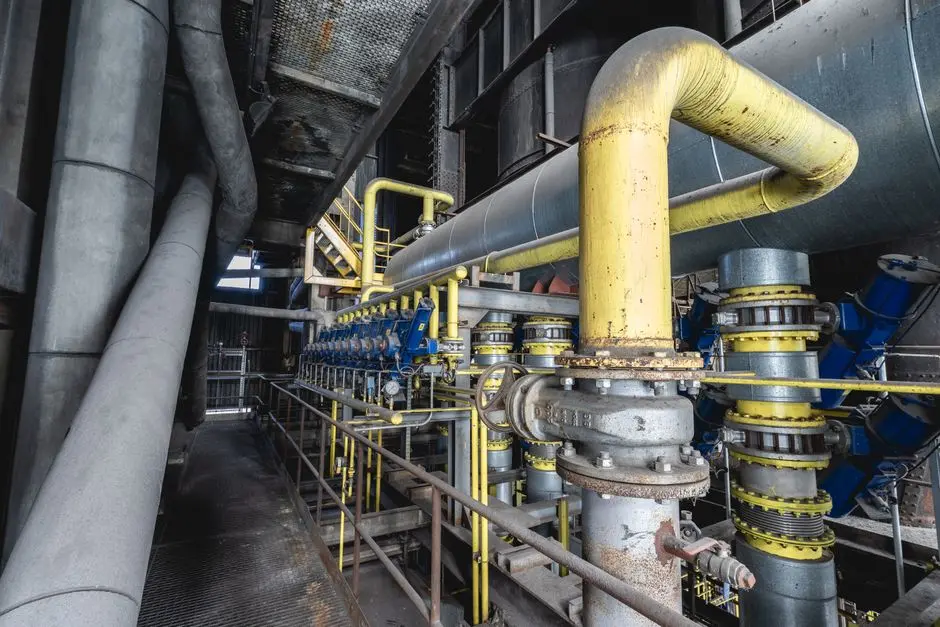
Treatment equipment is transferable only when the buyer can establish both its current condition and its compliance role. Permit validity, operational history, and physical reliability must be reviewed together.
Request operating and maintenance records for pumps, aeration, clarification, membranes, dosing systems, sludge handling, instrumentation, and standby equipment. Establish whether treatment runs continuously, whether bypasses have occurred, whether upset events triggered notifications, and whether corrective actions closed. Check redundancy, spare-parts availability, chemical storage, emergency power, bypass controls, operator competence, and the operational consequences of treatment failure. Where flow characterization indicates a physical removal step, compare the installed arrangement with options such as a DAF system for industrial wastewater pretreatment; suitability depends on the constituent, loading, and treatment objective.
HydropureWater’s 2026 ETP acquisition guidance recommends a condition assessment and reports a treatment benchmark of $280–$620 per m³/day treated. That is an article-level benchmark requiring site-specific validation, not a German tariff or expected acquisition cost. The same guidance reports a full zero-liquid-discharge retrofit benchmark of $5 million–$15 million in 2026, depending on influent characterization, discharge destination, and recoverable byproducts. Neither figure establishes a retrofit price for a German acquisition without local scope, permits, utilities, civil works, and equipment quotations.
Do not transfer India-specific process assumptions into Germany. HydropureWater’s 2026 article describes a 90–180-day consent-to-operate application period under cited Indian regulatory guidance; that period is not evidence of a German approval timetable. The buyer should obtain written confirmation from the relevant German authority or, for indirect discharge, the responsible municipal sewer authority.
The governing sewer restrictions require site-specific verification. The supplied research on industrial sewer pretreatment limits describes the sewer-restriction context but does not establish the receiving authority’s German requirements for the acquired site.
Convert Compliance Evidence into an Acquisition Decision
A missing document is an open diligence issue, not automatically a violation. The decision should distinguish assets that can transfer from those requiring confirmation or capital work before AWS assumes operational responsibility.
| Decision category | Evidence threshold | Required transaction response |
|---|---|---|
| Transferable with complete evidence | Valid route-specific permit, complete compliance records, demonstrated treatment performance and identified permit and operating parties | Confirm transfer mechanism and include ordinary compliance obligations in the closing checklist |
| Transferable subject to confirmation | Permit or approval exists, but ownership transfer, renewal status or municipal acceptance requires regulator, landlord or sewer-authority confirmation | Make the relevant approval a condition precedent or allocate the risk through price, indemnity or escrow |
| Upgrade required before operational use | Treatment capacity, controls, monitoring or containment cannot meet the applicable route or anticipated AWS loading | Fund a site-specific design, obtain approval, prove performance and define the responsible delivery party |
For each category, identify the permit or approval holder, required amendments, capital work, operating-cost impact, monitoring burden, warranty exposure, and responsible party. Request monitoring results, laboratory reports, flow-meter calibration, chemical usage, sludge generation and disposal records, maintenance and repair logs, operator training, and emergency-response exercises. The evidence should also include unresolved notices, exceedances, spills, permit transfers, renewal applications, regulator correspondence, and planned AWS production or water-reuse changes.
HydropureWater’s 2026 acquisition guidance recommends an environmental reserve of 2%–8% of enterprise value for manufacturing targets with on-site ETPs, with the upper end associated with heavy-metal, chemical, or pharmaceutical exposures and documented permit-history issues. This is commercial guidance requiring transaction-specific validation, not a German requirement or automatic valuation adjustment.
The ETP due-diligence framework for AWS acquisitions is useful for organizing the evidence request, but the final classification must use the German permit, regulator or sewer authority’s written position, and the acquired asset’s demonstrated performance.
Evaluate Reclaimed Water as an AWS Value Driver
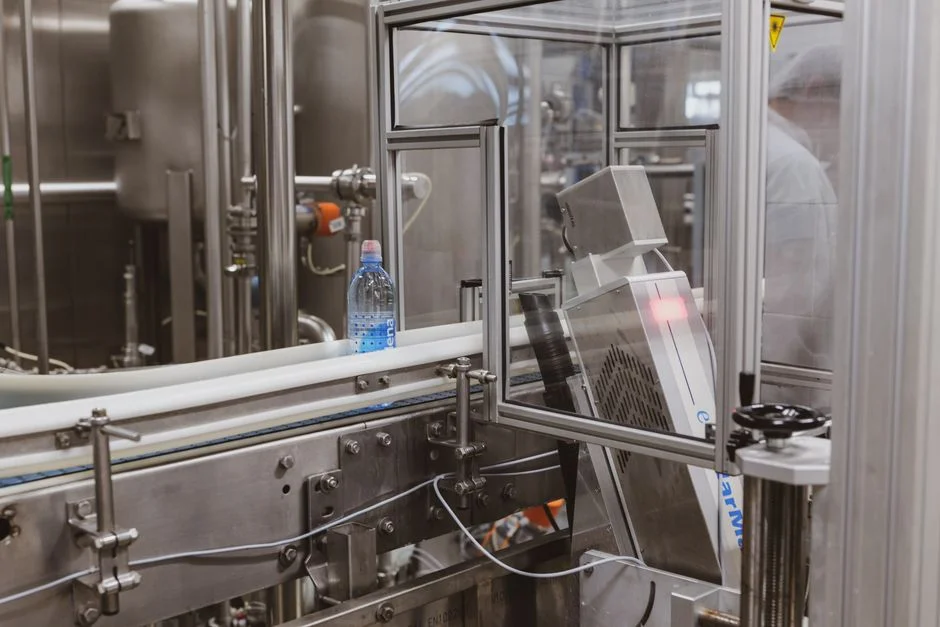
Reuse should be evaluated only after the legal route, wastewater profile, and treatment condition are understood. A reclaimed-water project cannot cure an unauthorized discharge, an undersized treatment train, or a missing approval.
Amazon reported in September 2025 that recycled-water use had expanded from 24 to more than 120 U.S. data-center locations. Amazon expected that expansion to preserve more than 530 million gallons of fresh drinking water annually, equivalent to about 800 Olympic-sized swimming pools. This demonstrates strategic use of reclaimed water in U.S. data centers, not German permit compliance.
Veolia’s Mississippi project is expected to use containerized treatment systems and, once fully operational, reuse more than 83 million gallons of potable water annually, equivalent to approximately 760 U.S. homes’ annual use. Veolia stated that the modular design could be replicated globally “where conditions are suitable.” That supports a German feasibility study; it does not establish regulatory approval, reuse quality, or economic viability at any particular plant.
The German business case should compare freshwater savings with additional treatment, monitoring, energy, chemicals, maintenance, and residual disposal. A supplier may propose an integrated MBR wastewater treatment system, but technical selection must follow the site’s reuse specification, source-water variability, and permit route. No payback period can be calculated without site water, energy, chemical, disposal, and permit data. The data-center wastewater treatment guide provides context for this assessment, not German site evidence.
Frequently Asked Questions
What will it cost to bring a German plant’s wastewater system into compliance after an AWS acquisition?
There is no defensible plant-level price without the permit route, flow and pollutant loads, treatment-train condition, required capital work, and local approval scope. The buyer should request a site-specific capital estimate, operating-cost forecast, and contingency range from a qualified bidder. HydropureWater’s 2026 figures of $280–$620 per m³/day treated and $5 million–$15 million for a full ZLD retrofit are benchmarks only and must not be used as German quotations.
How should the buyer size an upgrade without relying on the current permit alone?
Size the upgrade from measured flow and pollutant loading under normal, cleaning, and credible peak conditions, then compare those demands with the installed equipment’s approved and demonstrated performance. Ask the supplier to state design inputs, redundancy, controls, monitoring points, treatment guarantees, and performance-test criteria. A permit limit alone does not establish available treatment capacity.
Which wastewater supplier qualifications reduce compliance and equipment-selection risk?
Require evidence of German project experience, a site-specific process design, verified reference performance, named treatment guarantees, operator training, spare-parts support, and a clear responsibility for performance testing. Also ask how the supplier will support regulator or sewer-authority submissions and address bypass, chemical storage, and emergency operation. Verify these qualifications separately from commercial claims.