What treatment does a Maianga data center need?
A data center in Maianga needs separate treatment paths for sanitary wastewater, cooling tower blowdown, process wastewater, stormwater and laboratory drains. Cooling tower blowdown should be characterized for TDS, hardness, silica, alkalinity, suspended solids, biocides and corrosion inhibitors before equipment is sized. UF can remove solids and biological contaminants, while RO can reduce dissolved salts to produce cooling tower make-up water; however, conventional blowdown RO commonly recovers 50–85% because scaling limits recovery. Final design depends on source-water chemistry, cycles of concentration, discharge route and reuse objectives.
Cooling tower blowdown forms as evaporation leaves dissolved salts and minerals in the circulating water. Operators purge part of that water to control scaling, corrosion and biological growth. The treatment decision should follow a defined sequence: characterize each source, confirm discharge and reuse routes, define product-water objectives, calculate peak and average flows and chemistry loads, then specify equipment with enforceable performance guarantees.
Scale must be demonstrated rather than inferred from location. IDE Tech reports that a 100 MW data center can use up to 2 million liters of water per day; this is an illustration of cooling-water scale, not an estimate of consumption at a Maianga facility. The same 2026 source states that conventional brackish-water RO is often limited to 75–80% recovery before silica, calcium carbonate and calcium sulfate scaling becomes difficult to control.
A data center wastewater and cooling blowdown assessment should be adapted to Maianga’s actual source water, cooling configuration and drainage infrastructure. The supplied research does not establish current Angolan discharge limits, soil conditions, sewer-acceptance rules or permit procedures. The relevant authority and a local environmental adviser must confirm those conditions before final treatment selection.
Characterize every water stream before selecting equipment
Source-water analysis and site metering must precede equipment selection because the same TDS value can have different treatment implications when silica, hardness or biocide residuals differ. Request representative sampling of source water and cooling blowdown across normal and peak operating conditions.
The initial analytical suite should cover pH, conductivity, TDS, total hardness, calcium, magnesium, alkalinity, silica, sulfate, chloride, suspended solids, turbidity, iron, manganese, and oil and grease where relevant. Identify the cooling program’s biocide, corrosion inhibitor, scale inhibitor and dispersant residuals. These compounds can foul membranes, interfere with disinfection or constrain reuse.
Genesis Water Technology reports preliminary cooling-blowdown characteristics of 1,200–6,000 mg/L TDS and 10–50 mg/L suspended solids. These values are screening benchmarks, not expected Maianga results. Actual design limits must come from analysis of the selected source water, treatment chemicals, cycles of concentration and cooling-system operating history.
Use separate meters where practical for makeup water, blowdown, evaporation and product-water reuse. Record circulation flow, makeup-water flow, blowdown flow, evaporation rate, cycles of concentration, operating schedule and future expansion envelope. Genesis Water Technology reports that approximately 25–30% of makeup water becomes blowdown at four cycles of concentration; verify the site ratio through metering and a water balance rather than adopting it as a design value.
Complete an average and maximum-flow mass balance for water and dissolved salts. Storage-tank volume is not a valid substitute for treatment flow because it describes inventory rather than continuous hydraulic demand. The automatic chemical-dosing system should be specified only after the cooling chemistry and membrane-compatibility requirements are established.
| Design input | Evidence or field required | Decision affected |
|---|---|---|
| Source-water chemistry | Representative analysis including salinity, silica, hardness, alkalinity and turbidity | RO or NF selection; pretreatment; scaling assessment |
| Cooling-blowdown chemistry | TDS, suspended solids, treatment-chemical residuals and biological indicators | Filtration, UF, disinfection and reuse compatibility |
| Hydraulic duty | Average and peak blowdown flow, operating hours, storage and expansion | Treatment capacity, redundancy and tank sizing |
| Cooling concentration | Measured cycles of concentration and evaporation | Freshwater reduction and concentrate production |
| Disposal and reuse | Permit criteria, sewer acceptance and proposed reuse destination | Product quality, concentrate route and commercial objective |
Match each stream to its treatment objective
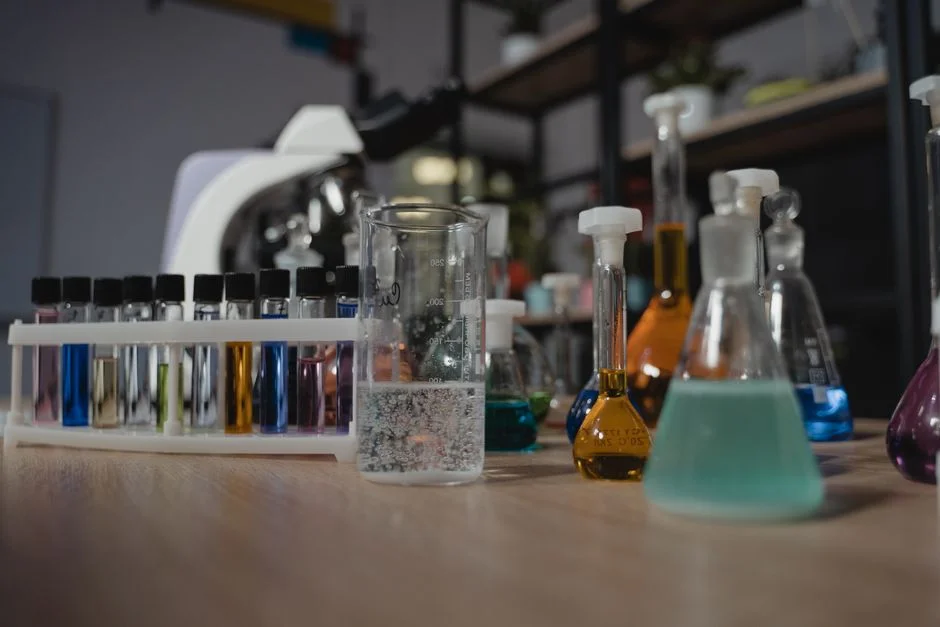
Cooling make-up reuse, sanitary treatment, discharge compliance and zero liquid discharge are separate commercial objectives with different acceptance criteria. Genesis Water Technology distinguishes cooling-tower make-up reuse, lower-grade non-potable reuse and discharge compliance; selecting among them prevents a treatment train from being optimized for the wrong end use.
For sanitary wastewater, match treatment capacity to the wastewater flow and the effluent quality or sewer-connection standard required by the receiving system. The research provides no Maianga-specific sanitary discharge limit, so the engineer must obtain current permit and sewer-acceptance criteria. Stormwater and laboratory drains should remain separately controlled rather than entering an uncharacterized combined stream.
For cooling make-up reuse, UF removes suspended solids, bacteria and colloids but leaves dissolved salts in the permeate. RO is therefore required when both particulate control and TDS reduction are needed. Genesis Water Technology reports UF recovery of 90–95%, conventional blowdown RO recovery of 50–85%, NF recovery of 70–85%, and mechanical vapour compression recovery of 95–98% from concentrate streams. It also reports RO permeate at 10–50 mg/L TDS for suitable blowdown applications.
An ultrafiltration pretreatment for cooling tower blowdown can protect downstream membranes, while an industrial RO system for cooling-tower make-up reuse addresses dissolved solids. Where biological control remains necessary, evaluate chlorine-dioxide generation for disinfection against the complete cooling-water treatment program; oxidant generation does not substitute for removal of suspended solids, salt or scaling species.
Partial and full zero liquid discharge are technically possible, but they carry additional capital, energy, chemical and maintenance burdens. Genesis Water Technology reports $3–$8 million capital for ZLD systems and $5–$15 per thousand gallons treated. These are non-Angolan comparison benchmarks, not quotations for Maianga, and their economics depend on concentrate handling, local energy conditions, disposal routes and permitted discharge.
The 2026 Open Engineering study found that its wastewater-reuse scenario had about twice the GWP of the freshwater case, with treatment energy accounting for roughly 80% of the difference. The same study reported an indirect water penalty of approximately 0.93 L/m³ for its analyzed reuse train, less than 0.1% of the direct water-displacement benefit. These findings are scenario-specific and should not be transferred directly to a Maianga installation.
| Objective | Principal treatment | Acceptance focus | Main constraint |
|---|---|---|---|
| Cooling-tower make-up reuse | Filtration, UF and usually RO | TDS, silica, hardness, suspended solids, biocide compatibility and recovery | Concentrate route and cooling chemistry |
| Lower-grade non-potable reuse | Treatment matched to the receiving use | Use-specific water quality and public-health controls | Variable demand and non-potable distribution |
| Discharge compliance | TDS reduction, particulate removal or biocide control as required | Current permit and sewer conditions | Receiving-system capacity |
| Zero liquid discharge | Membrane concentration, evaporation and crystallization | Liquid elimination and solid-waste handling | Capital, energy and concentrate management |
Build a treatment train that protects the cooling system
A technically coherent train normally progresses from solids removal to membrane protection, dissolved-salt separation and controlled concentrate management. Side-stream or blowdown filtration removes corrosion products and suspended solids; UF then provides a finer barrier against particulates and biological material; chemical conditioning controls scale; and RO separates dissolved salts when the reuse objective requires it.
Genesis Water Technology recommends filtration to less than 10–15 microns before membranes. The appropriate arrangement should be selected after site turbidity and particle testing rather than treating that figure as a universal equipment-selection rule. A multi-media filtration stage can provide the solids barrier where the source data supports it, with membrane and filter elements selected to match the verified feed chemistry.
The specified UF platform has a capacity range of 2,000–40,000 L/h, 0.03-micron PVDF membranes, automatic backwash and air scour, and feed turbidity up to 300 ppm. Those ratings still require confirmation against the actual blowdown flow, temperature, fouling potential and treatment chemistry. The industrial RO platform offers automated PLC operation and recovery rates up to 95%, but only site chemistry can establish the guaranteed design recovery.
Silica scaling, calcium carbonate precipitation and calcium sulfate saturation must be evaluated with representative feed data and the proposed recovery. IDE Tech reports conventional brackish-water RO limitations around 75–80% recovery and describes controlled salt precipitation as one route to higher recovery. Chemical conditioning should therefore be linked to a calculated scaling limit rather than selected from a generic antiscalant dosage.
Where the RO concentrate cannot be reused or lawfully discharged, evaluate partial or full ZLD, mechanical vapour compression, a brine concentrator or controlled crystallization. The commercial recovery figures for these processes are vendor-reported benchmarks and must be validated against local disposal, climate, energy and operating conditions. All concentrate volumes, salt loads and solid residues belong in the site mass balance and permit application.
Controls, valves and treatment media should also be defined as part of the complete process. The relevant water-treatment valves, media and replacement parts scope should cover chemical compatibility, local spares and maintenance access rather than relying on generic equipment names.
Compare capital cost, operating risk and long-term resilience
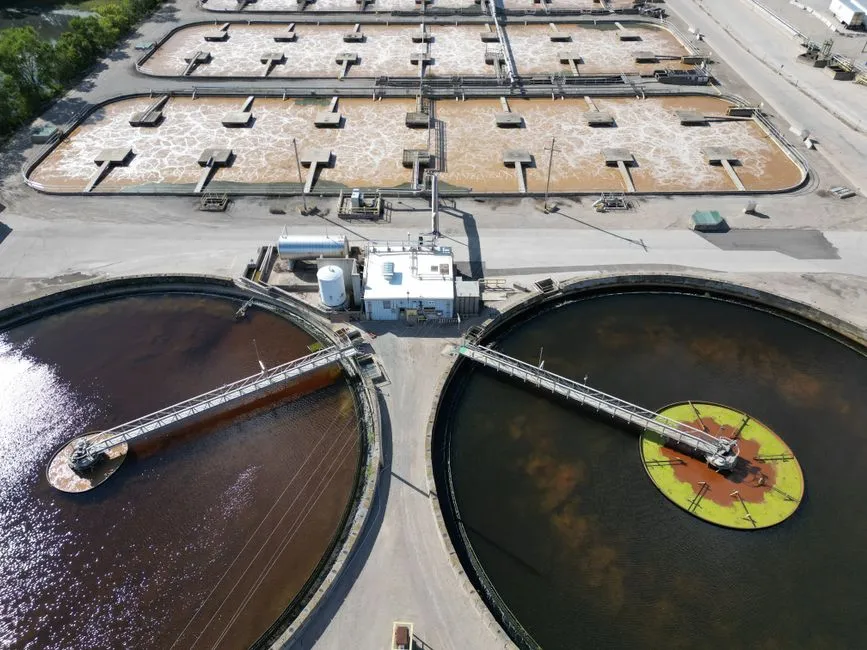
Whole-life cost must include freshwater displaced, avoided discharge costs, treatment energy, chemicals, cleaning, concentrate handling, operator attendance and planned replacement. Genesis Water Technology reports $250,000–$500,000 installed for a 50,000 GPD blowdown RO system and operating cost of $1.50–$3.00 per thousand gallons treated. These are non-Angolan benchmarks requiring local engineering, freight, power, permits, civil works and supplier quotations.
The 2026 Open Engineering lifecycle study provides a useful warning: wastewater reuse had about twice the GWP of freshwater in its case, and treatment energy explained roughly 80% of that difference. A renewable-powered or lower-energy design may alter the result, but energy must be evaluated at Maianga’s actual supply conditions and operating profile.
Resilience should be quantified around three exposures: interruption of mains water, rejection or unusable concentrate, and membrane downtime. Require a documented contingency operating plan that protects the cooling system without allowing untreated blowdown to bypass environmental controls. Do not accept a recovery-rate claim without feed tolerance, cleaning frequency, chemical consumption, spare-parts availability, local service capability, PLC or SCADA integration and enforceable performance guarantees.
| Cost or risk item | Information required for comparison | Buyer action |
|---|---|---|
| Capital cost | Local quotation, civil works, power, freight, installation and commissioning | Normalize bids to the same flow, feed chemistry and performance duty |
| Operating cost | Energy, chemicals, cleaning, media, labour and membrane replacement | Request measured consumption or defensible design calculations |
| Freshwater and discharge | Water tariff, discharge route, discharge charge and expected reuse | Calculate net savings over the operating scenario |
| Concentrate | Volume, chemistry, transport and disposal conditions | Price a lawful route before accepting the recovery guarantee |
| Availability | Redundancy, maintenance access, spares and response time | Include availability and contingency tests in acceptance criteria |
Implement the project in controlled stages
Implementation should begin with feasibility and regulatory boundaries, not with a selected membrane skid. This sequence reduces the risk of installing equipment that cannot meet an unavailable discharge route or unverified source-water chemistry.
- Stage 1 — Establish conditions. Confirm source availability, sewer and surface-water discharge options, permit pathway, facility layout, power supply and future expansion.
- Stage 2 — Characterize and balance. Complete source-water and cooling-blowdown testing, meter the cooling system and prepare average, peak and future-load water and salt balances.
- Stage 3 — Issue a performance specification. Define flow range, feed chemistry, product-water quality, recovery, energy demand, availability, concentrate handling, controls and testing procedures.
- Stage 4 — Verify the process. Conduct pilot or side-stream work, focusing on silica scaling, membrane fouling, biological growth and biocide compatibility. Use the cooling blowdown treatment guide for a data center as a technical framework, not as a substitute for site testing.
- Stage 5 — Commission and monitor. Complete acceptance testing, operator training, cleaning procedures, spares planning and monitored water balances. The data center wastewater and cooling blowdown implementation reference can support handover planning.
Because the research contains no Angolan permit values, discharge limits or disposal procedures, the project team must obtain and record current local approval conditions before final equipment selection. This includes permitted discharge quality, sewer acceptance, analytical methods, monitoring frequency, concentrate disposal and any reuse constraints.
Frequently Asked Questions
What treatment system is best for a data center in Maianga?
The best system depends on source-water chemistry, measured blowdown flow, the required reuse quality and local concentrate-disposal conditions. Where suspended solids and dissolved salts both need control for cooling-tower make-up reuse, filtration or UF followed by RO is the appropriate candidate. The final selection still requires site analysis, scaling calculations and confirmation of the discharge or reuse route.
How much does cooling blowdown treatment cost?
The available benchmarks are $250,000–$500,000 for an installed 50,000 GPD blowdown RO system and $1.50–$3.00 per thousand gallons treated, according to Genesis Water Technology. A Maianga budget needs local quotations covering flow duty, pretreatment, civil works, power, freight, chemicals, concentrate handling, commissioning and lifecycle operating costs; these figures are not Angola quotations.
What capacity should the treatment plant be designed for?
Size the plant from measured maximum blowdown flow, operating hours, storage turnover, future cooling expansion and the required recovery—not from a generic gallons-per-day figure. Give the engineering team daily and peak flow records, source-water analysis, cooling cycles of concentration, blowdown chemistry and operating schedule so the mass balance can be calculated.
Can cooling tower blowdown be reused without a ZLD system?
Yes. Conventional make-up reuse can use filtration, UF and RO, but the resulting concentrate still needs a lawful and technically viable route. ZLD is warranted only when permitted disposal and practical reuse options are unavailable or uneconomic after assessing freshwater supply, discharge charges, energy and solid-waste handling.
How should an equipment supplier be selected in Angola?
Require site-specific guarantees for feed chemistry, product quality, recovery, energy, availability and concentrate handling. Verify references, membrane and spare-parts availability, local service capability, operator training, cleaning support and contingency arrangements. Headline recovery alone is not an adequate selection criterion; ask the supplier to document each guarantee and the evidence behind it using the data center wastewater treatment planning guide as a structured review reference.