
Why Srinagar's data center water problem is different
Cooling accounts for 80–90% of data center water demand, and evaporative systems lose 70–80% of withdrawn water to evaporation while 20–30% leaves as blowdown (KETOS, 2025), so the first engineering move at a Srinagar site is to cut consumptive loss, then treat what remains. Kashmir's cold climate supports extended free-air and direct-air cooling, which suppresses evaporation but introduces strong seasonal swings between winter air-cooling dominance and summer evaporative operation (Schneider Electric India, 2026-09).
National guidance and state policy direction increasingly favour treated wastewater and recycled water for cooling-tower makeup, with AWS announcing drinking-water substitution at upcoming Mumbai and Hyderabad sites, a precedent Srinagar projects should cite when engaging the J&K Pollution Control Board (Schneider Electric India, 2026-09). Source choice, whether Dal-fed surface water, Jhelum-fed municipal supply, or on-site blowdown reuse, is a Day One design decision because conveyance distance and pretreatment intensity both shift the unit-operation sizing and the eventual J&K PCB consent pathway (Schneider Electric India, 2026-09).
For a 2026 Srinagar campus, the design tension is therefore not scarcity in the way Phoenix or Northern Virginia frame it, but the opposite: abundant cold Himalayan water that makes evaporative blowdown look easy to dump while tightening reuse rules and a tourism-driven sustainability mandate quietly raise the bar. A defensible train has to absorb the seasonal swing, respect Dal Lake tributary sensitivity, and still leave room for the J&K PCB to approve a discharge consent within 6–18 months.
Working water balance and Srinagar source-water characterisation
At 4 cycles of concentration a typical cooling tower loses approximately 25–30% of makeup water to blowdown; a facility using 10 million gallons monthly therefore discharges roughly 2.5–3 million gallons, which becomes the design feed rate for any recovery skid (Genesis Water Technologies, 2025). Blowdown TDS runs 4–8× makeup water, 1,200 to 6,000 mg/L, with suspended solids at 10–50 mg/L and accumulated biocides, scale inhibitors and corrosion byproducts from the cooling chemistry (Genesis Water Technologies, 2025). Cooling-tower makeup reuse should be designed against targets of 500–1,500 mg/L TDS, hardness <200–400 mg/L as CaCO₃, suspended solids 10–25 mg/L, pH 6.5–8.5, alkalinity 50–200 mg/L as CaCO₃, and heterotrophic plate count <10,000 CFU/mL (Genesis Water Technologies, 2025).
Srinagar's winter source water from Jhelum and Dal tributaries is generally cold and low-TDS relative to peninsular-Indian surface water, so the design should treat 'makeup TDS' as a project-specific input confirmed by site sampling before finalising RO/NF selection. The supplied research does not provide a Srinagar-specific TDS value, and that gap should drive the early site-water characterisation campaign rather than be filled with an assumed range.
| Parameter | Genesis reuse target (cooling makeup) | Blowdown feed to recovery skid (4× COC) | Srinagar Jhelum/Dal source (site input required) |
|---|---|---|---|
| TDS (mg/L) | 500–1,500 | 1,200–6,000 | Confirm by site sampling (low-TDS expected) |
| Hardness as CaCO₃ (mg/L) | <200–400 | Scales with makeup × COC | Confirm by site sampling |
| Suspended solids (mg/L) | 10–25 | 10–50 | Site-specific; rises in monsoon |
| pH | 6.5–8.5 | 6.5–8.5 | Site-specific |
| Alkalinity as CaCO₃ (mg/L) | 50–200 | Scales with makeup × COC | Site-specific |
| HPC (CFU/mL) | <10,000 | Variable; biocide-dependent | Site-specific |
Pretreatment: side-stream filtration and ultrafiltration
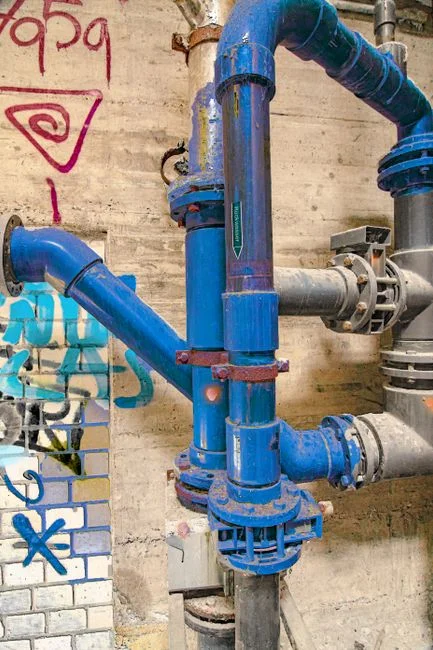
Side-stream filtration should be sized at 1–5% of total circulation flow with a 10–25 micron rating; self-cleaning spiral units run continuously without backwash downtime, cost $50,000–$200,000 installed, and keep suspended solids in blowdown low enough to feed UF/RO without rapid fouling (Genesis Water Technologies, 2025). A multi-media filter for source-water pretreatment handles the bulk TSS load before the side-stream polishers. Ultrafiltration at 0.01–0.1 micron pore size removes suspended solids, bacteria, viruses and high-MW organics at 90–95% recovery, operates at only 10–30 psi, and backwashes with permeate, making it the standard RO pretreatment for blowdown (Genesis Water Technologies, 2025).
UF feed should be conditioned to <10–15 microns, with pH adjustment and antiscalant injection ahead of RO to control CaCO₃, silica, and sulfate scaling; pairing pretreatment with a bio-organic flocculant such as Zeoturb improves colloidal removal and reduces downstream cleaning frequency (Genesis Water Technologies, 2025). A PLC-controlled antiscalant and biocide dosing skid is the standard way to keep the conditioning step reproducible as feed temperature shifts between winter and monsoon. For Srinagar winter operation, the pretreatment skid should be housed in an enclosed, heated space because low feed temperature reduces membrane flux and can push required membrane area up by a meaningful margin; the supplied research does not quantify this derate and it should be confirmed with vendor flux curves at the design stage.
Core recovery stage: RO, NF, and how to choose between them
Reverse osmosis removes 95–99% of dissolved solids and produces 10–50 mg/L TDS permeate suitable for direct cooling-tower makeup; recovery on blowdown is 50–85%, limited by scaling as concentrate TDS rises; a 50,000 GPD skid costs $250,000–$500,000 installed with OPEX of $1.50–$3.00/kgal (Genesis Water Technologies, 2025). An industrial RO system for cooling blowdown recovery sized to a Srinagar facility's peak blowdown flow is the heart of a reuse train where sub-1,500 mg/L TDS reuse standards apply. Nanofiltration at 75–150 psi removes hardness and multivalent ions while passing monovalents, achieving 70–85% recovery and permeate TDS ~30–50% of feed; it cuts energy use 30–40% versus RO and is the right choice when hardness, not total TDS, drives the discharge or reuse limit (Genesis Water Technologies, 2025).
RO needs 150–400 psi to overcome osmotic pressure, with antiscalant injection and periodic clean-in-place every 1–3 months; advanced antiscalant programs and catalytic-activation pretreatment extend the interval between cleanings and raise effective recovery (Genesis Water Technologies, 2025). The choice of RO/UF membrane elements and matching valves and media should be locked in once site TDS and silica are characterised. For Srinagar, where source water is typically low-TDS and cold, NF is often the right primary membrane for makeup reuse; RO should be reserved for sites that pursue zero liquid discharge or that must meet a sub-1,500 mg/L TDS reuse standard for hyperscaler customer commitments.
| Decision input | Reverse osmosis (RO) | Nanofiltration (NF) |
|---|---|---|
| Operating pressure | 150–400 psi | 75–150 psi |
| Recovery on blowdown | 50–85% | 70–85% |
| Permeate TDS | 10–50 mg/L | ~30–50% of feed TDS |
| Energy vs. RO | Baseline | 30–40% lower |
| 50,000 GPD CAPEX (installed) | $250,000–$500,000 | Lower than RO (not separately quoted) |
| Best fit for Srinagar | ZLD sites, sub-1,500 mg/L reuse commitment | Low-TDS makeup reuse, hardness-limited discharge |
Concentrate management: sewer discharge, partial ZLD, or full ZLD
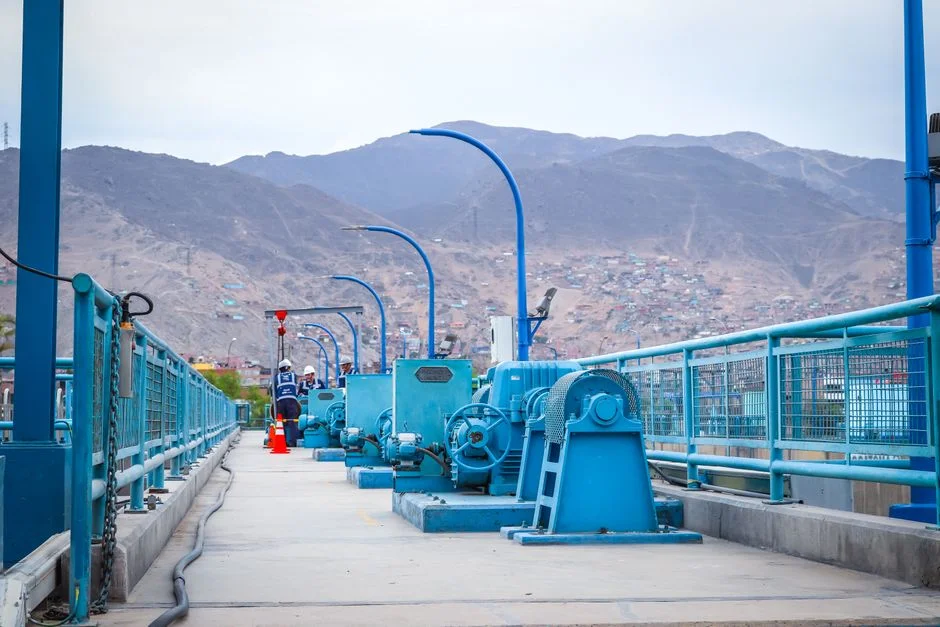
RO concentrate at 15–50% of feed volume can be discharged to a municipal sewer under an Indian PCB consent, but direct discharge fees in water-stressed regions already run $5–15/kgal and some jurisdictions cap TDS at <1,500 mg/L, effectively banning untreated concentrate discharge (Genesis Water Technologies, 2025). Mechanical vapour compression on the concentrate achieves 95–98% recovery, produces <10 mg/L TDS distillate, and concentrates brine to 20–30% dissolved solids; capital is $1–3M for 10,000–30,000 GPD systems and energy is 15–25 kWh per 1,000 US gallons of distillate (Genesis Water Technologies, 2025).
A combined RO (50–75% recovery) plus MVC (95% of the concentrate) train reaches 85–95% overall water recovery, and adding a crystalliser for full ZLD pushes overall recovery to 95–99% but raises installed cost to $3–8M and OPEX to $5–15/kgal (Genesis Water Technologies, 2025). Solar evaporation ponds are technically viable in Kashmir's dry, sunny shoulder seasons but are constrained by land area, monsoon-period precipitation, and concentrate heavy-metal handling, so the supplied research treats them as a niche option rather than a default for hyperscale campuses (Genesis Water Technologies, 2025). The J&K PCB consent pathway will largely decide which of these rows applies; until that conversation is opened, the engineer should not lock the concentrate path.
| Disposal path | Overall recovery | Installed CAPEX (typical) | OPEX (per kgal) | Best fit for Srinagar |
|---|---|---|---|---|
| Sewer discharge under consent | 50–85% (single-pass RO) | RO skid only ($250–500k for 50,000 GPD) | $1.50–$3.00 RO + $5–15 discharge fee | Default path, subject to J&K PCB consent and TDS cap |
| Partial ZLD (RO + MVC) | 85–95% | $1–3M for 10,000–30,000 GPD MVC | Driven by 15–25 kWh/kgal MVC energy | Sites pursuing hyperscaler water-positive targets |
| Full ZLD (RO + MVC + crystalliser) | 95–99% | $3–8M system-level | $5–15/kgal | Where discharge is refused outright |
| Solar evaporation pond | Site-specific | Land-driven | Low OPEX, land-intensive | Niche; constrained by monsoon and land |
Cooling chemistry that survives a blowdown reuse loop
Conventional liquid cooling water chemicals concentrate in blowdown proportionally to cycles of concentration, which both fouls downstream membranes and risks non-compliance with phosphorus, chromate, and biocide discharge limits (Genesis Water Technologies, 2025). Tablet-based, non-oxidising programmes (zinc-silver ionic chemistry) provide broad-spectrum microbiological control, scale inhibition, and cathodic corrosion protection without producing oxidiser by-products; heterotrophic plate counts can be held below 1,000 CFU/mL and corrosion rates below 2 mils/yr (Genesis Water Technologies, 2025).
For a Srinagar site using blended makeup (fresh Jhelum water + RO or NF permeate), the chemistry programme should be re-selected rather than carried over from the original design, because permeate TDS is much lower than raw surface water and shifts the Langelier Saturation Index in a non-trivial way. A PLC-controlled antiscalant and biocide dosing skid, paired with a chlorine dioxide generator for periodic shock dosing, gives the operator a tunable chemistry envelope that survives both the winter air-cooling season (low biocide demand) and the summer evaporative season (higher biocide and scale demand).
Compliance pathway in J&K and India-specific procurement checklist
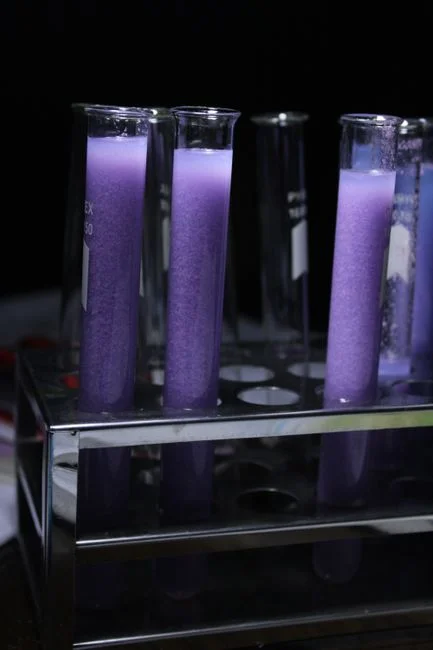
Reuse permits in water-stressed jurisdictions routinely take 6–18 months and require treatment validation, monitoring protocols, and cross-connection prevention; the design pack should include pilot data, NSF/EPA compliance evidence for any biocide, and a contaminant-mass balance (Genesis Water Technologies, 2025). Indian national guidance and state policy increasingly require treated wastewater substitution for cooling-tower makeup, with AWS's Mumbai and Hyderabad projects cited as live precedents; Srinagar proposals should reference these when seeking J&K PCB consent (Schneider Electric India, 2026-09). Direct discharge fees, TDS caps, and biocide limits for J&K specifically are not consolidated in the supplied research and must be confirmed with the J&K Pollution Control Board before finalising the concentrate disposal path; this confirmation step is the single highest-risk schedule item.
Procurement should pre-qualify equipment on: (1) cold-weather membrane flux derate curves, (2) Himalayan seismic rating for outdoor skids, (3) PLC/SCADA integration with the BMS for WUE reporting, and (4) local service footprint in North India for membrane replacement within 48–72 hours. The industrial RO system for cooling blowdown recovery, the PVDF ultrafiltration skid for RO pretreatment, and the PLC-controlled antiscalant and biocide dosing package together cover the core train; for analogous Indian deployments, the Virar data center blowdown treatment guide, the Meerut data center cooling blowdown treatment guide, and the RO retrofit and upgrade guide provide useful design references for Indian source water and discharge norms.
Frequently Asked Questions
What is the realistic 2026 capital cost band for a Srinagar data center blowdown treatment train?
A packaged estimate assembled from the Genesis Water Technologies (2025) CAPEX data points: side-stream filtration $50,000–$200,000; a 50,000 GPD RO skid $250,000–$500,000 installed; MVC on RO concentrate $1–3M for 10,000–30,000 GPD; full ZLD (RO + MVC + crystalliser) $3–8M. The engineer should add site-specific costs for a heated enclosure, BMS integration, and seismic-rated outdoor skids, and request vendor quotes against the Srinagar source-water characterisation before locking a budget.
How should we pre-qualify a supplier for a Srinagar cooling blowdown project?
Pre-qualify on cold-weather membrane flux derate curves down to the lowest expected Jhelum feed temperature, Himalayan seismic rating for outdoor skids, PLC/SCADA integration with the BMS for WUE reporting, NSF/EPA evidence for any biocide chemistry, and a North-India service footprint able to deliver replacement membranes within 48–72 hours. The supplier must also be able to support pilot data and a contaminant-mass balance for the J&K PCB consent application; the supplied research does not name a single vendor and this checklist lets procurement filter objectively.
What is the RO recovery ceiling on cooling tower blowdown and why?
Recovery for blowdown RO typically ranges from 50–85%, limited by scaling potential as concentrate TDS increases; antiscalant injection and periodic clean-in-place every 1–3 months extend the interval between cleanings and allow higher recovery in many applications (Genesis Water Technologies, 2025). The engineer should not over-promise reuse percentages internally without confirming site-specific calcium, silica, and sulfate against vendor antiscalant projection software.
How long does J&K PCB consent take and what should we file first?
Reuse-permit timelines in jurisdictions covered by the supplied research run 6–18 months depending on complexity (Genesis Water Technologies, 2025). For a Srinagar project, the first filing should be a treatment validation pack with pilot data, an NSF/EPA evidence dossier for any biocide, a cross-connection prevention plan, and a contaminant-mass balance for the proposed concentrate disposal path; the J&K-specific discharge fees, TDS caps, and biocide limits must be confirmed with the J&K Pollution Control Board before the train is finalised.
How does winter operation affect the treatment train at a Srinagar site?
Low feed temperature raises water viscosity and reduces membrane flux, which can push required membrane area up by a meaningful margin; the supplied research does not quantify this derate and the engineer should request vendor-specific flux curves at the lowest expected operating temperature before sizing. Biological kinetics also slow in winter, which can ease biocide demand but lengthen any required clean-in-place recovery, and pretreatment skids should be housed in enclosed, heated spaces to keep the upstream stage of the train from limiting the downstream membranes.