Why a Data Centre in Virar Cannot Treat Water as an Afterthought
India holds roughly 18% of the world's population but only about 4% of its freshwater resources, a structural imbalance that the World Bank documented in March 2026 and that Schneider Electric cited on 2026-09-29 when describing data-centre water risk. Around 75% of India's data-centre capacity is concentrated in Maharashtra, Tamil Nadu, Karnataka, Telangana and Uttar Pradesh, with many of these facilities sitting in zones classified as high or extremely high water stress (ETV Bharat, cited by Schneider 2026-09-29).
Virar and the wider Palghar corridor fall inside that Maharashtra cluster, which means a campus here is being designed against a tightening, not a permissive, water baseline. AWS announced on 2026-08-08 that its upcoming data-centre sites in Mumbai and Hyderabad will use treated sewage water for cooling instead of drinking water, a signal that hyperscalers in the same state have already accepted reuse as a Day One specification (Business Today via Schneider 2026-09-29). The scale is not academic: a 100 MW facility can require up to 2 million litres of water per day, the daily equivalent of thousands of households (IDE Tech 2026). At that demand level, intake selection, blowdown handling, and consent strategy are project-defining engineering decisions, not end-of-pipe add-ons.
Two Streams, Two Decisions: Intake Makeup vs Cooling-Tower Blowdown
Stream 1 is intake makeup water: the volume feeding cooling towers, humidification, chiller loops, and ancillary demand. The design question here is source, whether the campus draws on potable municipal supply, treated municipal sewage, harvested greywater, or rainwater, and which combination survives a 50-year water-stress projection. Stream 2 is cooling-tower blowdown (CTBD), the controlled purge that keeps cycles of concentration (COC) inside scaling and corrosion limits. At 4 COC, blowdown equals 25–30% of makeup water and carries 1,200–6,000 mg/L TDS, 10–50 mg/L suspended solids, accumulated biocide and corrosion-inhibitor residues, and elevated silica, calcium and magnesium (Genesis Water Tech 2026). The two streams are not solved by the same unit process and they are not optimised by the same decision rule.
Closed-loop direct-to-chip cooling can recirculate more than 95% of its coolant, so the first move is usually to reduce consumptive demand before enlarging the water-treatment package (Schneider 2026-09-29). Where evaporative cooling remains, blowdown becomes the primary internal reuse target because its volume, chemistry, and discharge-fee exposure all push toward on-site recovery. Direct discharge fees in water-stressed regions now exceed $5–15 per 1,000 gallons, and some jurisdictions enforce TDS caps below 1,500 mg/L, effectively prohibiting untreated blowdown discharge (Genesis Water Tech 2026). The decision rule for a Virar project is therefore: reduce consumptive demand first, then choose the lowest-risk source, then size the treatment train, in that order.
Designing the Treatment Train for a Virar Campus
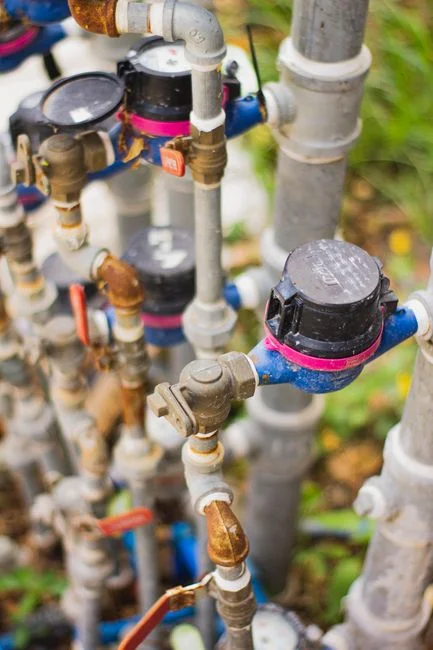
The complete train handles two incoming streams and produces one or two outgoing ones, and the engineer should keep these paths physically separate on the P&ID so that consent and operating envelopes stay clean.
Stream A: sewage-to-cooling-makeup. Rotary bar screening removes rags and grit; a packaged MBR unit for sewage-to-cooling-makeup duty carries the biological load, dropping BOD/COD and ammonia and producing a low-SDI feed; hollow-fibre UF polishing ahead of BWRO at 0.01–0.1 micron tightens SDI to a membrane-safe level; brackish-water reverse osmosis with antiscalant and a industrial RO unit producing 10–50 mg/L TDS permeate (anchor corrected to product page) delivers permeate suitable for cooling-tower makeup; an on-site ClO₂ generator for cooling-loop biological control provides residual disinfection in the recirculating loop. A side-stream or pre-RO multimedia filter can be inserted ahead of UF to drop silt and protect membrane life.
Stream B: blowdown recovery. Side-stream filtration at 1–5% of circulation flow drops suspended solids to below 10–15 microns and protects downstream membranes (Genesis Water Tech 2026). BWRO is then operated conservatively, typically 75–80% local recovery, to keep silica, calcium carbonate, and calcium sulfate below scaling thresholds (IDE Tech 2026). Where higher overall recovery is required, a controlled-precipitation or dynamic-RO step can push overall recovery toward 95% with permeate silica near 1 mg/L (IDE Tech 2026). RO permeate at 10–50 mg/L TDS is suitable as direct cooling-tower makeup or as blend water that lets the operator raise cycles of concentration (Genesis Water Tech 2026).
Concentrate handling is a separate consent and cost stream. Three options are realistic for a Virar site: partial ZLD via mechanical vapour compression (MVC) at 15–25 kWh per 1,000 US gallons of distillate, producing 20–30% TDS brine (Genesis Water Tech 2026); MPCB-permitted off-site disposal where consent and tanker capacity allow; and evaporation pond as a low-cost tail step where land is available. Sludge from the MBR and clarifier lines is dewatered on a plate-and-frame filter press for MBR and clarifier sludge before disposal, a parallel solids line that should not be omitted from the scope.
| Stream | Unit Operation | Function | Key Design Anchor |
|---|---|---|---|
| Sewage intake | Rotary bar screen | Rags, grit removal | 6–10 mm aperture (engineer to set) |
| Sewage intake | Packaged MBR | BOD/COD/NH₃ reduction | Sized to peak daily flow |
| Sewage intake | UF (0.01–0.1 µm) | SDI reduction ahead of RO | SDI < 3 to RO feed |
| Sewage intake | BWRO + antiscalant | Dissolved salt removal | 10–50 mg/L TDS permeate (Genesis Water Tech 2026) |
| Sewage intake | ClO₂ dosing | Cooling-loop biological control | Residual setpoint to be defined |
| Blowdown | Side-stream filtration (1–5% of circ.) | SS to < 10–15 µm | Pre-membrane protection (Genesis Water Tech 2026) |
| Blowdown | BWRO (75–80% local recovery) | Salt, silica, hardness removal | Scaling threshold envelope (IDE Tech 2026) |
| Blowdown | Controlled precipitation / dynamic RO (optional) | Push overall recovery to ~95% | Permeate silica ~1 mg/L (IDE Tech 2026) |
| Blowdown | MVC partial ZLD (optional) | Brine concentration | 15–25 kWh/1,000 US gal distillate; 20–30% TDS brine (Genesis Water Tech 2026) |
| Solids | Plate-and-frame filter press | MBR + clarifier sludge dewatering | Cake dryness to be specified |
Parameter and Cost Anchors an Engineer in Virar Should Plan Around
Before vendor engagement, lock the parameter envelope and the cost envelope. Genesis Water Tech (2026) gives the following anchors from data-centre blowdown practice: blowdown TDS 1,200–6,000 mg/L, suspended solids 10–50 mg/L, RO permeate 10–50 mg/L TDS, and overall recovery 50–85% for membrane-only trains, extending to 85–95% when MVC is added. Side-stream filtration is sized at 1–5% of circulation flow and brings suspended solids below 10–15 microns. A 50,000 GPD RO unit treating blowdown is reported at $250,000–500,000 installed, with operating cost $1.50–3.00 per 1,000 gallons. MVC for 10,000–30,000 GPD is $1–3 million, full ZLD $3–8 million at $5–15 per 1,000 gallons, and discharge fees in stressed basins sit at $5–15 per 1,000 gallons with TDS caps below 1,500 mg/L. Indian EPC, electrical-input, and civil costs are not in the research and must be re-priced locally; the table below keeps the source numbers in their original units so the engineer can convert with their own assumptions.
| Parameter | Anchor from Research | Source |
|---|---|---|
| Blowdown TDS (at 4 COC) | 1,200–6,000 mg/L | Genesis Water Tech 2026 |
| Blowdown suspended solids | 10–50 mg/L | Genesis Water Tech 2026 |
| RO permeate TDS | 10–50 mg/L | Genesis Water Tech 2026 |
| Permeate silica at high recovery | ~1 mg/L | IDE Tech 2026 |
| BWRO local recovery (blowdown) | 75–80% | IDE Tech 2026 |
| Overall recovery with MVC | 85–95% | Genesis Water Tech 2026 |
| SDI to RO feed | < 3 (target); < 10–15 µm pre-filtration | Genesis Water Tech 2026 |
| Side-stream filter sizing | 1–5% of circulation flow | Genesis Water Tech 2026 |
| MVC energy use | 15–25 kWh per 1,000 US gallons distillate | Genesis Water Tech 2026 |
| 50,000 GPD BWRO capex (USD) | $250,000–500,000 installed | Genesis Water Tech 2026 |
| BWRO opex (USD) | $1.50–3.00 per 1,000 gallons | Genesis Water Tech 2026 |
| MVC 10–30k GPD capex (USD) | $1–3 million | Genesis Water Tech 2026 |
| ZLD capex (USD) | $3–8 million | Genesis Water Tech 2026 |
| ZLD opex (USD) | $5–15 per 1,000 gallons | Genesis Water Tech 2026 |
| Discharge fee exposure (stressed basins) | $5–15 per 1,000 gallons; TDS caps < 1,500 mg/L | Genesis Water Tech 2026 |
Inputs the buyer must still validate before procurement: MIDC/MJP water-allocation letter, MPCB consent for treated-sewage cooling makeup, hazardous-waste authorisation for reject brine (ZLD salt cake), and the developer's own WUE and WSC targets. The research does not contain Indian Rupee cost conversions or MIDC tariff numbers, so any ₹/kL figure in a basis-of-design must come from a current vendor quotation or utility letter, not from the anchors above.
Compliance Map: MPCB Consent, Bulk-User Rules and Maharashtra Policy
Rules introduced in 2025 require bulk users consuming more than 5,000 litres per day to increase wastewater treatment and reuse, and the national direction is 50% wastewater reuse by 2031 (India Water Portal via Schneider 2026-09-29). A data-centre campus in Virar sits well above that 5,000 L/day trigger, which means the consent narrative cannot rely on being a small user. The Bureau of Energy Efficiency's 2023 District Cooling Guidelines encourage treated wastewater over freshwater for cooling-tower makeup where feasible, a useful policy lever in any MPCB submission (AEEE via Schneider 2026-09-29). Maharashtra's data-centre policy stack combines the state IT and ESDM framework, MPCB consent to operate for trade effluent, MIDC industrial water-allocation letters, and the 2025 wastewater-reuse rules; together they push toward high-recovery reuse or ZLD rather than simple blowdown-to-drain. Rajasthan's 2025 data-centre policy explicitly references wastewater recycling, ZLD, rainwater harvesting, and groundwater recharge (Schneider 2026-09-29), a useful precedent when arguing that the same expectation is arriving in Maharashtra. For a working summary of the Indian effluent discharge rules in 2026, keep the consent narrative aligned to that document.
How to Sequence Investment and Choose a Supplier
For a Virar campus, the capex should be sequenced to the decision that gives the most leverage per rupee. Sequence 1 is the cooling-architecture and demand-reduction package: closed-loop share, cycles of concentration, chiller and heat-rejection setpoints. These choices fix the size of every downstream unit and must be locked before any water-treatment equipment is selected. Sequence 2 is the intake side, sewage reception, MBR/UF, and BWRO, sized to a target makeup volume. This is usually the most defensible first capex because it directly displaces potable purchase. Sequence 3 is blowdown recovery and concentrate management, often the highest marginal cost per litre saved; defer to a phase-2 expansion unless MPCB consent or discharge-fee exposure forces it forward. Engineer-side context on a similar coastal-corporate train is available in the data-centre blowdown treatment train in Da Nang and the Bien Hoa data-centre blowdown treatment guide, useful for benchmarking the RO-plus-evaporator layout against a peer Asian site.
Vendor selection checklist: demonstrated CTBD or high-recovery RO references rather than generic BWRO, ability to integrate with MBR/UF pretreatment, scope that explicitly covers sludge dewatering, and a service model able to support membrane cleaning and antiscalant optimisation in coastal Maharashtra conditions. The research does not contain project-specific cost data, so ask each vendor for an itemised capex split (pretreatment, RO, evaporator/ZLD, sludge line) and an opex build-up per 1,000 litres of recovered water. Two vendors with the same headline price can differ by 20–30% on lifetime opex once membrane replacement, energy, and antiscalant are totalled, so the opex build-up is where the real comparison happens.
Frequently Asked Questions
What is the realistic Indian cost range for a data-centre blowdown and sewage-to-makeup train in Virar?
The research gives USD anchors: $250,000–500,000 installed for a 50,000 GPD BWRO unit on blowdown, $1–3 million for a 10,000–30,000 GPD MVC, and $3–8 million for full ZLD, with operating costs of $1.50–3.00 per 1,000 gallons for RO and $5–15 per 1,000 gallons for ZLD (Genesis Water Tech 2026). Indian EPC, electrical-input, civil, and freight costs are not in the research, so a buyer should request an itemised quotation in ₹/kL with separate rows for pretreatment, RO, evaporator, and sludge dewatering, and benchmark the opex figure against the same source.
What discharge or consent thresholds should a Virar data centre design around?
Blowdown at 4 COC carries 1,200–6,000 mg/L TDS and 10–50 mg/L suspended solids, and discharge fees in water-stressed regions now exceed $5–15 per 1,000 gallons with TDS caps below 1,500 mg/L (Genesis Water Tech 2026). On the Indian side, bulk users above 5,000 L/day must meet the 2025 wastewater-reuse rules and the 50%-reuse-by-2031 direction (India Water Portal via Schneider 2026-09-29), and MPCB consent to operate for trade effluent is mandatory. A defensible design treats the 1,500 mg/L TDS cap and the 5,000 L/day bulk-user rule as binding thresholds, not aspirational ones.
How should a Virar project choose between treated sewage makeup and blowdown recovery as the bigger freshwater offset?
At 4 COC, blowdown equals 25–30% of makeup water (Genesis Water Tech 2026), so blowdown recovery reclaims a quarter to a third of total demand once it is running. Treated sewage makeup can supply a much larger fraction of total makeup when MBR, UF, and BWRO are in place. Where freshwater is most scarce, sewage-to-makeup usually delivers the bigger first-phase offset because it attacks the largest flow; blowdown recovery is then layered on as a phase-2 high-recovery step that raises cycles of concentration and reduces discharge exposure.
Which supplier capability should be non-negotiable for a Virar campus?
Look for documented CTBD or high-recovery RO references rather than generic BWRO, in-house integration with MBR/UF pretreatment, sludge dewatering in the same scope, and a Maharashtra-service footprint able to support membrane cleaning and antiscalant optimisation on a mission-critical site. The research does not name specific suppliers, so a buyer should request at least two reference sites running at similar TDS and recovery targets, plus a written opex commitment per 1,000 litres of recovered water, before signing.
Related Equipment
- industrial RO unit producing 10–50 mg/L TDS permeate — specifications, capacity range, and technical data