Start with the wastewater, not the equipment
Pharmaceutical wastewater treatment in Germany requires a seven-step process: inventory products and raw materials, assess toxicity and biodegradability, define treatment duties, benchmark technologies, check preliminary feasibility, and validate the process at bench or pilot scale. Biological treatment addresses biodegradable loads, while membranes and advanced oxidation provide separation or micropollutant-removal barriers. A 2026 Brazilian study integrating reverse osmosis with UASB and anaerobic filtration achieved compliant effluent at $0.44 per m³, but German projects require site-specific effluent, reuse and regulatory analysis.
The procurement error is choosing a treatment train from a generic technology list before defining the wastewater. Start by separating synthesis, formulation, cleaning, laboratory, washing and sanitary flows, then assess whether combining them improves treatment economics or creates a harder biological and membrane load.
Record the products manufactured and the raw materials capable of contributing to effluent composition. This follows the first three steps in the seven-step framework published by Alvim and colleagues in the Brazilian Journal of Chemical Engineering in 2026: inventory products, identify contributing raw materials, and assess their toxicity and biodegradability. Bulk parameters alone will not reveal whether a compound inhibits the biological stage.
Define the required outcome separately for direct discharge, sewer pretreatment, industrial water reuse or production-water recovery. Each route imposes different evidence requirements. The broader pretreatment considerations for industrial wastewater remain relevant, but pharmaceutical streams require a product-specific inventory.
A 2024 hospital-wastewater review reports pharmaceutical concentrations 4–150 times higher than in urban wastewater. That evidence concerns hospital effluent, not pharmaceutical manufacturing, but it demonstrates why transfer factors and stream-specific sampling are necessary.
Use the seven-step framework to select a treatment train
Alvim and colleagues’ 2026 framework makes pilot validation the seventh and final step rather than an optional activity after equipment selection. Its sequence is: inventory products; identify contributing raw materials; assess toxicity and biodegradability; pinpoint critical treatment aspects; benchmark candidate systems; conduct preliminary feasibility analysis; and validate treatment at bench or pilot scale.
- Create an effluent characterization plan covering flow, temporal variability, bulk loads and product-specific constituents.
- Compile a product and raw-material inventory linked to the manufacturing streams.
- Assess toxicity and biodegradability before selecting a biological load basis.
- Define primary, secondary and polishing treatment barriers.
- Benchmark candidate systems against the identified duties.
- Prepare a preliminary mass and energy balance and assess feasibility.
- Validate the proposed train with a controlled bench or pilot protocol.
These steps produce six procurement deliverables: an influent characterization plan, contaminant inventory, treatment-objective matrix, technology scorecard, conceptual mass and energy balance, and pilot protocol. The objective matrix should connect every candidate technology to a defined removal barrier and evidence requirement.
Treat product mix, production campaigns, cleaning recipes and the reuse destination as controlled design inputs. A change in any of them can alter toxicity, salinity, organic load, membrane fouling and the required discharge performance.
| Framework stage | Engineering question | Required deliverable |
|---|---|---|
| Wastewater definition | What enters each stream, and how does it vary? | Characterization plan and sampling list |
| Source inventory | Which products and raw materials can contribute? | Product-to-effluent inventory |
| Biodegradability and toxicity | Will biological treatment remain viable? | Compound assessment and inhibition evidence |
| Treatment benchmarking | Which barrier addresses each requirement? | Objective matrix and technology scorecard |
| Feasibility and pilot | Do performance and operating assumptions hold? | Mass and energy balance plus pilot report |
Match each process stage to its equipment role
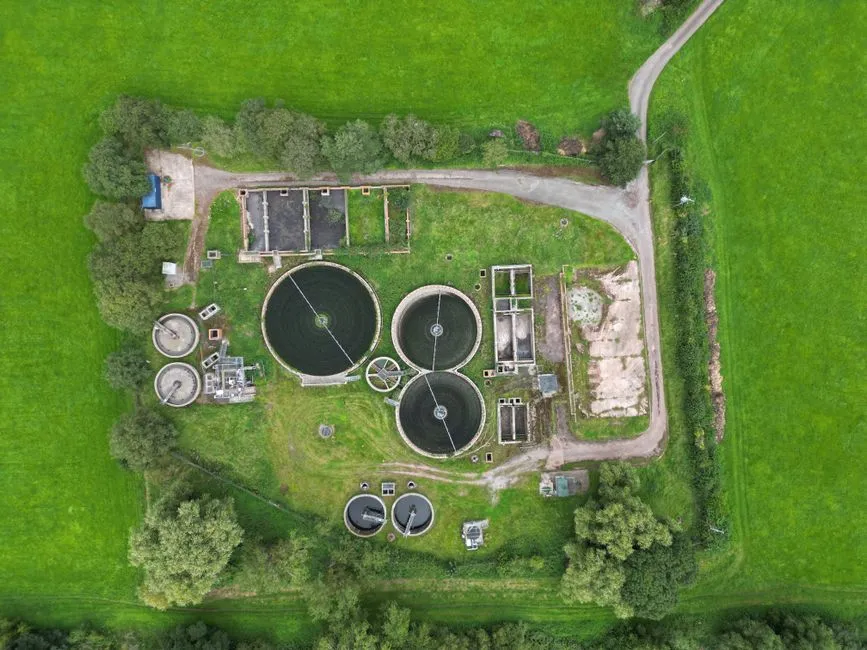
Each treatment stage serves a primary duty, as no single unit addresses suspended solids, biodegradable organics, dissolved salts, persistent pharmaceuticals and microbiological risk simultaneously. Assign each treatment stage a primary duty and specify performance evidence requirements before selecting equipment.
DAF is a pretreatment option where suspended solids, FOG, oil, grease and colloidal material could overload biological or membrane equipment. The supplied HydropureWater DAF catalog covers 4–300 m³/h across 13 standard models; applicability depends on the stream characterization and a DAF selection guide for FOG and TSS. Ultrafiltration can remove bacteria, colloids and suspended solids before sensitive processes. The supplied UF specification lists 2,000–40,000 L/h flow, 0.03 μm PVDF membranes and acceptance of up to 300 ppm turbidity; these are catalog limits, not guaranteed site performance.
An integrated MBR wastewater treatment system combines biological treatment and membrane solids separation where a compact process is required. The supplied catalog range is 10–2,000 m³/day with filtration below 1 μm. An industrial reverse osmosis system can act as a polishing or reuse barrier where dissolved salts, residual pharmaceuticals or process-water quality justify its use; the supplied specification states recovery rates up to 95%.
Chemical dosing should be assigned to defined pH, coagulation, flocculation or disinfection duties. Disinfection belongs after relevant upstream removal because oxidants do not substitute for biological treatment, membrane separation or micropollutant removal.
| Process stage | Primary equipment role | Design evidence required | Supplied catalog scope |
|---|---|---|---|
| Pretreatment | DAF | Suspended-solids, FOG, oil and colloid load | 4–300 m³/h; 13 standard models |
| Solid-liquid separation | UF | Turbidity, solids and downstream fouling risk | 2,000–40,000 L/h; 0.03 μm PVDF; up to 300 ppm turbidity |
| Biological treatment plus separation | MBR | Biodegradable load, toxicity and required solids separation | 10–2,000 m³/day; filtration below 1 μm |
| Polishing and reuse | RO | Dissolved salts, residual contaminants and reuse quality | Recovery rates up to 95% |
| pH, coagulation, flocculation or disinfection | Chemical dosing | Defined reaction duty and residual control | No site-performance figure supplied |
The 2024 hospital-wastewater review notes that conventional wastewater treatment plants often fail to eliminate persistent compounds such as carbamazepine and sulfamethoxazole. That finding is not a direct guarantee for API manufacturing wastewater, but it prevents an unqualified biological or conventional-sewer assumption.
Compare biological, membrane and oxidation options
Biological treatment is defensible when the stream contains biodegradable organics and toxicity assessment supports the selected process. The 2026 Alvim framework requires that biodegradability and toxicity be assessed before candidate systems are benchmarked; this sequencing prevents a biological design from being based only on soluble or bulk organic measurements.
MBR combines activated-sludge treatment with submerged membrane filtration. It is relevant when biological treatment and effective solids separation must be combined in a compact system. The supplied catalog range is 10–2,000 m³/day with filtration below 1 μm, but site performance depends on feed characteristics, biological loading, fouling control and pretreatment.
RO provides a strong physical separation barrier and can support industrial water reuse. However, the $0.44 per m³ result reported by Alvim and colleagues in 2026 belongs to a Belo Horizonte case integrating RO with UASB and anaerobic-filter treatment. It reflects that case’s legal, cost and operating conditions; it is not a German budget estimate.
Advanced oxidation processes should address a documented persistent-compound problem rather than be added as an unspecified polishing layer. The 2024 hospital-wastewater review cites ozonation achieving more than 90% pharmaceutical removal in the referenced application and identifies PAC, ozonation and UV as options. The scope remains hospital effluent, so German API wastewater requires its own compound and matrix testing.
Carbon electrodes remain a potential research route, as covered by the CRC Press chapter Carbon Electrodes for Pharmaceutical Wastewater Treatment in 2026. That is not equivalent to an industrially selected plant: the buyer still needs scale, fouling, by-product, energy and durability evidence.
| Option | Best-supported role | Principal limitation | Decision evidence |
|---|---|---|---|
| Biological treatment | Remove biodegradable organics | Inhibition by toxic constituents | Biodegradability and toxicity assessment |
| MBR | Combine biological treatment and solids separation | Fouling and biological-loading constraints | Site pilot with the characterized feed |
| RO | Polish dissolved contaminants and support reuse | Concentrate management and membrane fouling | Recovery, permeate quality and concentrate disposal |
| Advanced oxidation | Target documented persistent compounds | Oxidant demand, by-products and energy use | Compound-specific matrix testing |
| DAF and UF pretreatment | Protect downstream biological and membrane processes | They do not independently remove all dissolved pollutants | Suspended-solids, FOG and turbidity data |
Build the German compliance and reuse case
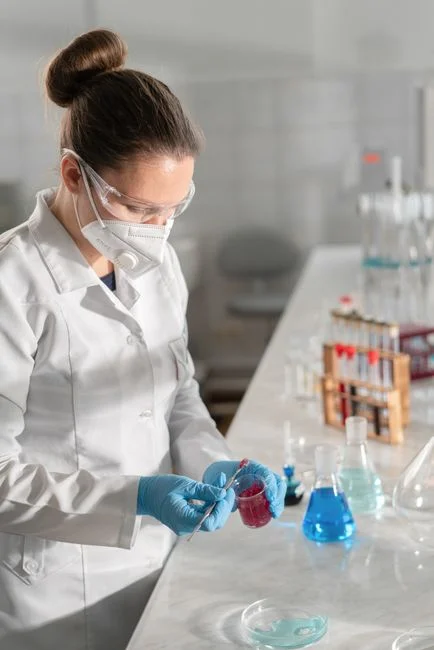
German pharmaceutical wastewater treatment must be designed around the receiving route: municipal sewer, direct discharge, reuse within the plant or another reuse destination. These routes require different evidence packages, so the equipment specification should follow the permit and reuse objective rather than precede them.
Request the applicable local pretreatment or discharge permit and confirm the requirements of the responsible German authority for the specific site. The research supplied does not establish a universal German limit for pharmaceutical wastewater, COD, nutrients or pharmaceutical residues. Do not import a generic limit into a German approval package.
Build a site-specific compliance matrix covering flow, COD, BOD, nutrients, toxicity, relevant pharmaceutical residues, reused-water quality and monitoring frequency. For industrial water reuse, add process compatibility, membrane fouling, recovery, concentrate management and sanitization.
Pilot data should establish realistic operating and maintenance assumptions before a supplier presents guaranteed performance or cost. This is essential because the 2024 hospital-wastewater review identifies persistent compounds that conventional treatment often fails to eliminate, while the 2026 pharmaceutical-industry framework treats pilot validation as a formal selection step.
| Decision area | Information to obtain | Why it affects equipment selection |
|---|---|---|
| Discharge route | Local permit and authority requirements | Defines enforceable treatment objectives |
| Effluent quality | Characterized flow, bulk loads, toxicity and relevant residues | Sets biological, oxidation and polishing duties |
| Industrial water reuse | Reuse specification and process compatibility | Sets membrane, disinfection and fouling requirements |
| Residuals | Sludge and RO concentrate destinations | Determines pretreatment and lifecycle scope |
| Verification | Pilot results and monitoring plan | Converts claims into testable acceptance criteria |
The supplied hospital wastewater treatment in Germany reference provides adjacent compliance context, but hospital discharge evidence must not be treated as an API-manufacturing approval route.
Evaluate suppliers, costs and implementation risk
A defensible equipment proposal should map each offered unit to the seven-step framework and identify primary, secondary and polishing duties. Ask suppliers to state which contaminant, operating condition or reuse parameter each unit is intended to address; otherwise the proposal remains a list of equipment rather than a treatment concept.
Request duty-specific guarantees tied to the characterized influent and enforceable discharge or reuse parameters. Generic throughput claims do not establish performance. The commercial schedule should also include pilot acceptance criteria, commissioning boundaries, controls integration, operator training, critical spares and membrane-cleaning responsibilities.
Compare lifecycle inputs: pretreatment, sludge or concentrate handling, membrane cleaning, chemical demand, energy use, automation and operator workload. The $0.44 per m³ reverse-osmosis result from the 2026 Brazilian study is a case-study reference, not a German price. A local estimate requires the wastewater matrix, flow, utility prices, recovery, residual-disposal route, equipment scope and pilot-derived operating assumptions.
Technical documentation on chemical dosing systems and treatment valves and media should be evaluated against the actual duties. The key procurement check is whether every component closes an identified treatment barrier or supports maintainability.
Frequently Asked Questions
What is the best treatment system for pharmaceutical
Frequently Asked Questions
What is the best treatment system for pharmaceutical wastewater in Germany?
In Germany, the current gold standard for pharmaceutical wastewater treatment is a multi-stage process combining advanced oxidation processes (AOPs), such as ozonation (O3) or UV/H2O2, followed by granular activated carbon (GAC) or powdered activated carbon (PAC) adsorption. This combination is highly effective at meeting the stringent requirements of the German Wastewater Ordinance (Abwasserverordnung - AbwV), specifically targeting recalcitrant active pharmaceutical ingredients (APIs) that conventional biological treatment systems often fail to degrade.
How much does pharmaceutical wastewater treatment cost per m³?
Treatment costs for pharmaceutical wastewater in Germany typically range between €5.00 and €15.00 per cubic meter, depending on the COD (Chemical Oxygen Demand) load, the toxicity of the waste stream, and the required discharge compliance levels. High-strength streams requiring specialized pretreatment or hazardous waste incineration of concentrated brine can push costs significantly higher, whereas large-scale, low-concentration flows utilizing optimized AOPs operate at the lower end of this cost spectrum.
Should a German pharmaceutical plant choose MBR or reverse osmosis?
The choice depends on the specific end-goal: Membrane Bioreactors (MBR) are the preferred choice for high-efficiency biological degradation and solids separation, providing a high-quality effluent suitable for discharge or further polishing. Reverse Osmosis (RO) is necessary if the objective is water recovery and demineralization to reach process water quality, but it creates a concentrated reject stream that requires secondary treatment or disposal, increasing overall operational complexity and cost.
What should I ask a pharmaceutical wastewater treatment equipment supplier?
You should request evidence of compliance with the 2026 German Best Available Techniques (BAT) reference documents and ask for specific data on API removal efficiency rates for the substances unique to your production line. It is also critical to ask for a pilot-scale trial report, the projected energy consumption per m³ of treated effluent, and the guaranteed lifespan of membranes or catalysts under high-load chemical exposure.
Can pharmaceutical wastewater be reused instead of discharged to the sewer?
Yes, pharmaceutical wastewater can be reclaimed for non-potable applications such as cooling tower makeup, facility cleaning, or landscape irrigation through "Closed-Loop" water management systems. In Germany, achieving direct process reuse often requires a tertiary treatment train consisting of MBR followed by a combination of Nanofiltration (NF) or RO and UV-disinfection to ensure the removal of micro-pollutants and compliance with the German Drinking Water Ordinance (TrinkwV) standards where applicable.