Match the treatment route to the property
Room count provides the first screen, but it does not determine the treatment train. HydropureWater’s 2026 guidance places up to 150 rooms without reuse as a candidate for a single buried anoxic-oxic package plant, 150–500 rooms with partial reuse as an MBR case, and 500+ rooms or FOG-heavy operations as a DAF followed by MBR case (HydropureWater, 2026). The final selection must also reflect measured peak flow, available footprint, reuse quality, sludge handling and the applicable discharge licence.
A dense Kowloon site changes the comparison because surface-area demand can control the architecture before hydraulic capacity does. The WSZ underground integrated sewage treatment plant combines biological treatment, clarification and disinfection in a buried package. The submerged MBR wastewater treatment system offers a smaller-footprint route where reuse or limited site access drives the specification. For hotel wastewater dominated by free oil and grease, DAF pretreatment for FOG-heavy hotel wastewater should be assessed as a guard stage before biological treatment.
| Property condition | Initial route to assess | Decision that must follow |
|---|---|---|
| Up to 150 rooms; sewer discharge; no reuse target | Single WSZ buried A/O package plant | Confirm peak flow, footprint, permit conditions and sludge route |
| 150–500 rooms; partial reuse for irrigation or toilet flushing | Submerged MBR with project-specific polishing | Define reuse-water quality, available space and treatment capacity |
| 500+ rooms, large banquet kitchen or central laundry | DAF guard stage followed by MBR | Measure FOG and solids; establish equalisation and pretreatment objectives |
| Material kitchen, laundry, spa or pool-backwash contribution | Reconsider the basic A/O route; assess screening and FOG removal | Separate or characterize each non-domestic discharge before final selection |
Kitchen effluent, central laundry, spa discharge and pool backwash can make the hotel wastewater stream materially different from domestic sewage. Heavy cooking operations require effective FOG control before biological treatment; laundry can introduce detergents and variable solids; pool backwash can disrupt treatment through flow and chemistry. None should be hidden inside a generic “hotel sewage treatment package plant” allowance. HydropureWater’s 2026 guidance identifies FOG load, peak flow, reuse, footprint and sludge handling as conditions that must be checked alongside room count.
Calculate design flow from occupancy and peak demand
Design flow must be established from occupied rooms and operating conditions before comparing equipment throughput. HydropureWater’s 2026 field-data basis is 0.3–0.6 m³ per occupied room per day, with a peak factor of 2.5–3.0 for morning shower and laundry overlap. These values are screening inputs, not substitutes for current water-use records or influent sampling.
- Confirm the number of occupied rooms and the occupancy profile that governs wastewater generation.
- Apply the HydropureWater flow basis to the expected occupied-room population.
- Apply the stated peak factor to establish the instantaneous design condition.
- Check equalisation, pretreatment, biological and polishing capacity against both average and peak conditions.
- Require each supplier to identify whether its quoted capacity is average, peak or a simultaneous duty basis.
The supplied worked example is a 300-room property at 70% occupancy: approximately 95 m³/day average and about 285 m³/day at the morning peak, according to HydropureWater’s 2026 field data. The same example identifies equalisation and biological reactor sizing as part of the consequence, rather than treating the daily average as the sole equipment-sizing input.
| Equipment | Stated capacity range | Basis to require in the proposal |
|---|---|---|
| WSZ buried A/O package plant | 1–80 m³/h | Clarify whether the rating covers average flow, peak flow or both |
| Submerged MBR system | 10–2,000 m³/day | State the hydraulic duty, peak treatment method and reuse configuration |
| DAF system | 4–300 m³/h | Provide hydraulic loading and measured FOG and solids removal requirements |
The capacity limits above come from HydropureWater’s 2026 hotel-treatment guidance and should not be compared across proposals until their flow bases are normalized. A daily MBR rating may satisfy an annual load while failing a short morning peak; an hourly DAF rating may conceal a lack of equalisation. The comparison of A/O package plants and MBR for hotels provides an architectural reference, but the Kowloon submission still needs site-specific hydraulic calculations.
Test whether the wastewater needs pretreatment
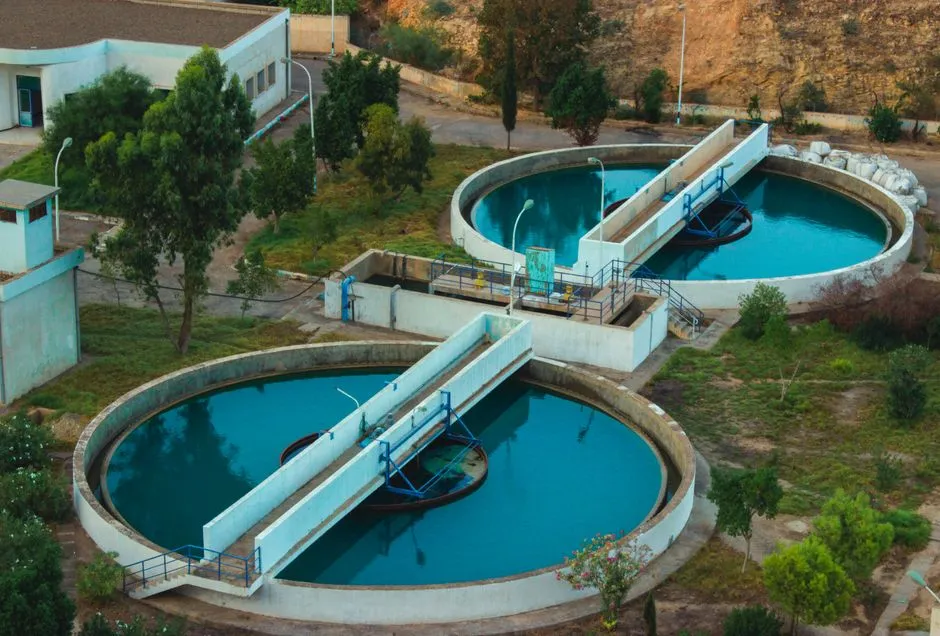
FOG and solids characterization determines whether a basic biological route is credible. HydropureWater’s 2026 screening ranges are BOD 200–500 mg/L, COD 400–900 mg/L, TSS 150–350 mg/L, FOG 50–150 mg/L and ammonia 20–40 mg/L. These are not site-specific design values and should not be copied into a performance guarantee without current sampling.
Where kitchen, laundry, spa and pool operations materially affect the sewer, take separate samples by source and across normal operating periods. The sampling request should identify the parameter, sampling point, operating condition, flow relationship and analytical method. Screening alone will not characterize emulsified or dissolved FOG adequately. An rotary mechanical bar screen may protect downstream equipment from larger solids and rags, while DAF should be selected for its measured oil, grease and floatables-removal duty rather than as a generic pretreatment box.
HydropureWater’s 2026 guidance states that its DAF system removes more than 90% of TSS and FOG. That equipment claim does not establish performance at the Kowloon site: influent variation, FOG characteristics, hydraulic loading and upstream equalisation still require verification. Current influent data should therefore be obtained before freezing a DAF, A/O or MBR configuration.
The practical decision is conditional: if FOG dominates and measured loads threaten the biological stage, place DAF upstream; if the stream is mainly domestic and the permit can be met by the biological route, pretreatment should be limited to the equipment needed for screening, solids control and reliable operation. Avoid adding DAF merely because the hotel has a kitchen.
Plan reuse, compliance and sludge handling together
The discharge route and reuse objective must be defined together, because biological treatment and reuse polishing are not interchangeable scopes. HydropureWater, citing the EPD Technical Memorandum on Effluent Standards in 2026, gives BOD at or below 20 mg/L, TSS at or below 30 mg/L and ammonia at or below 5 mg/L where the receiving sewage treatment works is nitrogen-sensitive. These figures require confirmation against the property’s current discharge licence and sewer receiving point.
For irrigation, toilet flushing or cooling-tower makeup, specify the additional polishing needed for that use rather than assuming MBR permeate is automatically suitable. The reuse specification should identify the end use, required water quality, intended percentage, storage and distribution, monitoring, and responsibility for downstream equipment. The available research does not establish a universal reuse-water limit for every Kowloon property, so the project consultant should confirm the applicable requirement with the relevant authority.
Sludge handling belongs in the initial equipment scope. HydropureWater’s 2026 guidance specifies a plate-and-frame filter press as the dewatering method for the cited T·PARK sludge chain, with cake at no more than 80% moisture. A plate-and-frame filter press proposal should therefore state the feed characteristics, dosing requirement, operating cycle, cake-moisture basis and cake-disposal route. The filter press sludge dewatering guide provides a technical reference for that scope.
Keep the T·PARK figures in their original context. HydropureWater, citing the Arup T·PARK project profile, describes consolidation of sludge from 11 sewage treatment works, an incinerator rated for 2,000 tonnes of dry solids per day and roughly 90% mass reduction. These are system-level figures, not a specification for every hotel cake. If disinfection is included, a chlorine dioxide generator must be justified against the receiving sewer, process controls and safety requirements rather than added without an operating basis.
Issue a design-data checklist for quotation
A comparable EPC quotation requires the same design basis from every bidder. The RFQ should separate information due from the hotel, laboratory, authority and EPC contractor so missing inputs are visible rather than hidden inside supplier assumptions.
| Information owner | Data or confirmation required | Why it affects the decision |
|---|---|---|
| Hotel operations team | Room count, occupancy profile, kitchen and laundry loads, pool and spa discharge, water-use records and intended reuse percentage | Defines flow, pollutant load and treatment objectives |
| Laboratory | Current influent and effluent sampling across representative operating periods | Tests whether generic concentration ranges represent this property |
| Project consultant and relevant authority | Applicable discharge licence, sewer acceptance conditions and reuse requirements | Establishes the compliance basis and receiving constraints |
| EPC contractor | Process calculations, peak-flow confirmation, civil and plant footprints, utilities, automation, sludge handling, commissioning criteria and approved vendor list | Makes the equipment scope and commercial offer auditable |
For budgeting, request an itemized quotation rather than relying on catalogue pricing. HydropureWater’s indicative 2026 ranges are USD 30,000–150,000 for WSZ plants and USD 80,000–400,000 for MBR skids, with final cost dependent on capacity and reuse scope (HydropureWater, 2026). Require separate pricing for civil works, pretreatment, polishing, disinfection, sludge dewatering, utilities, controls, commissioning, permits and disposal charges. The supplied research gives no comparable DAF price range, so a DAF quotation must be obtained project by project.
Frequently Asked Questions
What should a Kowloon hotel budget for an A/O plant or MBR skid?
Use USD 30,000–150,000 for WSZ plants and USD 80,000–400,000 for MBR skids only as HydropureWater’s indicative 2026 equipment-budget ranges. Request an itemized EPC quotation based on measured flow, reuse percentage, treatment scope, civil works and sludge handling; no DAF budget range is supported by the supplied research.
How should supplier proposals be compared?
Normalize every proposal to the same flow basis, then check pretreatment, biological, polishing and disinfection scope; sludge moisture target; utility demand; controls; commissioning tests; and performance evidence. A capacity statement without its average or peak basis is not a comparable offer.
What are the main sizing and compliance risks?
The main risks are sizing from rooms without the occupancy profile, overlooking FOG from kitchens and laundry, omitting equalisation and sludge dewatering, and assuming a generic discharge benchmark applies to the property. Current influent data, the actual discharge licence and the sewer receiving point are required to close these risks.
Can final equipment selection rely on room count alone?
No. Room count is only the first property-class screen. Final selection remains project-specific and must