Start with the discharge and reuse route
For a Brooklyn hotel or resort, select an MBR when the site requires compact tertiary treatment, non-potable water reuse, or stable performance under variable flows; select a buried A/O package plant when the discharge route permits its treatment level, flows are lower, and capital cost is the controlling constraint. The decision begins with the NYSDEC discharge route and a verified flow-and-load basis. New York surface-water discharges require an SPDES permit under Article 17, Titles 7 and 8, while groundwater discharges use a separate SPDES pathway (NYSDEC, 2025-05-07). The 2025 Esopus Barns precedent required a draft SPDES permit for 0.2 MGD serving a mixed hotel, restaurant, conference, pool, gym, and retail operation (NYSDEC, 2025-05-07).
Do not ask bidders to demonstrate compliance with a generic “Class A” specification. Ask each one to identify the receiving water and classification, proposed discharge point, permit status, reuse application, and agencies consulted. For a Brooklyn site, the New York rules provide the regulatory framework, but applicability of the Esopus precedent and any city-specific approvals must be confirmed with the responsible authorities before equipment selection is frozen.
| Bidder information to complete | Minimum statement required | Procurement check |
|---|---|---|
| Discharge route | Surface water, groundwater, sanitary sewer, or reuse-only route | Reject proposals that assume a route without naming the receiving authority |
| Receiving water | Classification and discharge location | Compare against the applicable permit route |
| Permit status | Existing permit, pre-application, application submitted, or unresolved | Unresolved items must be listed as risks and schedule dependencies |
| Reuse application | Non-potable irrigation, toilet flushing, cooling, or another intended use | Treatment requirements must follow the intended use, not a generic reuse claim |
| Agency coordination | Authorities consulted and approvals still required | Separate confirmed New York requirements from Brooklyn-specific verification |
Build the wastewater flow and load basis
Occupancy alone is not a defensible design flow for a hotel wastewater treatment system. The 2026 New York guide gives a starting range of 200–450 L per occupied guest per day for a full-service hotel and a higher 400–600 L per guest per day trend for luxury resorts with spa, laundry, and food-and-beverage service; staff add roughly 50 L per employee per shift, while conference and event space adds 30–50 L/m² (HydropureWater, 2026). These are starting assumptions, not substitutes for metered wastewater data.
Build the daily balance from occupied rooms and guest-night patterns, staff shifts, restaurant covers, laundry, pool backwash, and event schedules. Morning shower peaks and evening F&B peaks can produce instantaneous flows 2.5–3.0 times the daily average, so equalization must be included before the biological reactor (HydropureWater, 2026).
The guide’s 80-key Hudson Valley example combines 120 staff, 400 m² of conference space, a restaurant, spa, and pool to produce roughly 50 m³/day before a 2.5–3.0 peaking factor. That example is useful as a worksheet format, not as a Brooklyn design input. Require every bidder to document the calculation and identify which data are measured, assumed, or awaiting confirmation.
| Flow or load source | 2026 planning basis | Information for the bidder to submit |
|---|---|---|
| Guest accommodation | 200–450 L per occupied guest per day for a full-service hotel | Occupancy calendar, room count, and whether the allowance represents per occupied guest or per available room |
| Luxury resort operations | 400–600 L per guest per day where spa, laundry, and F&B apply | Facility list and operating assumptions supporting the selected allowance |
| Staff | Roughly 50 L per employee per shift | Staff count, shift pattern, and employee-only facility assumptions |
| Conference and event space | 30–50 L/m² | Area, event calendar, and simultaneous-use assumptions |
| F&B, laundry, and pool | No separate numeric allowance supplied in the research | Covers per meal period, laundry loads, and pool-backwash frequency and volume |
| Diurnal peaking | 2.5–3.0 times daily average | Measured hourly profile or a documented peaking study |
| Equalization | 25–40% of average daily flow is the guide’s stated hedge | Tank volume calculation, usable working volume, pumping controls, and standby strategy |
Match the treatment train to the operating risks
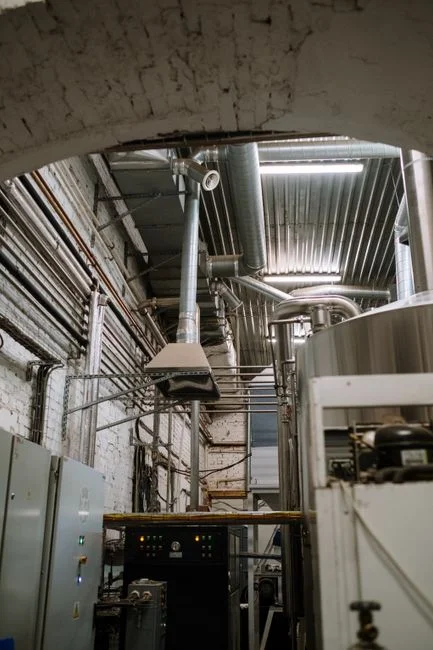
The WSZ buried A/O package plant integrates anoxic/aerobic contact oxidation, sedimentation, and disinfection in one buried unit with a stated capacity of 1–80 m³/h; it is appropriate only where the regulator accepts its treatment level (HydropureWater, 2026 product catalog). The MBR combines activated sludge with submerged PVDF membrane filtration, covers 10–2,000 m³/day, and produces near-reuse-quality effluent below 1 micron. Those characteristics make the integrated MBR membrane bioreactor the stronger candidate for a constrained Brooklyn site with reuse objectives.
F&B loading can decide the pretreatment scope before the biological process is chosen. The supplied guidance calls for DAF pretreatment when banquet or resort kitchens exceed 200 covers per meal period, because FOG and suspended solids can destabilize biological treatment (HydropureWater, 2026). The buried A/O package sewage treatment plant may suit a simpler route, but it does not remove the need to assess kitchen loads and permit limits.
The supplied hotel train uses rotary bar screening, equalization, DAF where required, MBR, chlorine dioxide maintained at a 0.2–0.5 mg/L residual, optional UV polish, and filtration for landscape irrigation (HydropureWater, 2026). The treatment plant does not remove the hotel’s Legionella exposure. The same guidance calls for hot-water circulation at 55–60°C, cold-water delivery below 25°C, and a water-management program aligned with ASHRAE 514 and the CDC toolkit.
| Decision point | A/O package route | MBR route | Required proof in the bid |
|---|---|---|---|
| Core process | Anoxic/aerobic contact oxidation, sedimentation, and disinfection in one unit | Activated sludge with submerged PVDF membrane filtration | Process train, sizing calculations, and treatment-stage drawings |
| Stated capacity | 1–80 m³/h | 10–2,000 m³/day | Selected capacity must cover the submitted design basis |
| F&B pretreatment | DAF where kitchen loading and permit requirements justify it | DAF upstream of biology where required | Covers per meal period, FOG characterization, and DAF calculation |
| Disinfection | Integrated stage subject to permit acceptance | Chlorine dioxide, optional UV polish, and additional filtration as required | Method, expected residual, monitoring points, and chemical or power demand |
| Reuse readiness | Depends on the permitted treatment level and intended use | Stronger fit for compact tertiary treatment and non-potable reuse objectives | Identify the reuse route and applicable treatment requirements |
| Building-side biofilm control | Required regardless of the treatment-process choice | Required regardless of the treatment-process choice | Hot- and cold-water controls, dead-leg review, and water-management program |
Compare cost, footprint and delivery constraints
Supplied 2026 benchmarks place a buried A/O package plant below 80 m³/day at $300,000–$900,000 installed and an MBR in the 100–500 m³/day band at $1.2 million–$4 million; these are benchmark ranges, not project quotations (HydropureWater, 2026). The MBR comparison gives a footprint roughly 60% smaller than conventional activated sludge, which can be material where a Brooklyn site has limited plant area (HydropureWater, 2026). An A/O package plant versus MBR comparison should therefore be evaluated against site constraints rather than equipment price alone.
Adding DAF pretreatment and on-site chlorine dioxide generation typically adds 25–40% to the biological CAPEX line, while MBR aeration is the largest operating-cost item (HydropureWater, 2026). A bid should separate the base biological system, pretreatment, disinfection, equalization, sludge handling, electrical work, controls, commissioning, and permit support so that omissions are visible.
The supplied guide estimates approximately 18–24 months overall: 3–6 months for SPDES pre-application, 9–15 months for permit issuance, and 6–9 months for fabrication, installation, and commissioning (HydropureWater, 2026). These are planning ranges, not a commitment for a Brooklyn site. Require each bidder to show schedule interfaces and state which dates depend on unresolved permits.
| Commercial comparison | Buried A/O package plant | MBR | Procurement action |
|---|---|---|---|
| Installed benchmark | $300,000–$900,000 below 80 m³/day | $1.2 million–$4 million in the 100–500 m³/day band | Require site-specific quotations with scope boundaries |
| Footprint | Buried package configuration | Roughly 60% smaller than comparable conventional activated sludge | Obtain a scaled site plan and construction access plan |
| Added pretreatment | DAF and on-site chlorine dioxide generation typically add 25–40% to the biological CAPEX line | Price each addition separately | |
| Operating driver | Aeration | MBR aeration is the largest operating-cost item | Request electrical demand and operating-cost assumptions |
| Planning schedule | Approximately 18–24 months overall: 3–6 months pre-application, 9–15 months for permit issuance, and 6–9 months for fabrication, installation, and commissioning | Map every permit dependency and issue a fabrication release date | |
Issue a permit-aligned bidder checklist
A bid is comparable only when every bidder bases it on the same flow basis and permit questions. Require the design flow, average daily flow, peak factor, equalization calculation, biological process, disinfection method, and expected residual (HydropureWater, 2026). Require supporting wastewater data, not just equipment schedules. Proposed BOD₅, TSS, and disinfection performance must be checked against the final SPDES permit rather than a generic Class A target.
Also request the discharge point, receiving-water classification, permit status, reuse application, engineering assumptions, equipment guarantees, controls, O&M assumptions, electrical demand, sludge handling, commissioning tasks, schedule, and a complete exclusion list. A bidder should identify unresolved permit items rather than promise compliance that has not been verified.
| Required submittal | Acceptance criterion | Disposition if missing |
|---|---|---|
| Flow-and-load worksheet | Shows daily and peak flows, operating assumptions, and equalization volume | Return as technically incomplete |
| Permit basis | Names the route, receiving water, permit status, reuse application, and unresolved approvals | Do not rely on an unqualified compliance statement |
| Treatment guarantees | Tied to the final permit limits and stated test conditions | Do not accept generic Class A language |
| Equipment submittal | Includes capacities, drawings, controls, electrical demand, and sludge handling | Hold technical review |
| O&M basis | Defines staffing, consumables, maintenance, laboratory, reporting, and energy assumptions | Exclude from life-cycle cost comparison |
| Schedule | Separates permitting, procurement, fabrication, installation, and commissioning | Do not treat an equipment delivery date as project completion |
| Exclusions | Lists civil work, utilities, permits, testing, training, disposal, and other assumed exclusions | Normalize bids after clarification |
Frequently Asked Questions
What installed-cost difference should a Brooklyn hotel expect between A/O and MBR bids?
The 2026 benchmark places a buried A/O plant below 80 m³/day at $300,000–$900,000 installed and an MBR in the 100–500 m³/day band at $1.2 million–$4 million (HydropureWater, 2026). Treat these as comparison ranges, not quotations. Ask bidders to price equalization, DAF, disinfection, sludge handling, electrical work, controls, commissioning, and permit support separately so that differences reflect the complete treatment train.
What information does a bidder need before sizing a hotel sewage treatment plant?
Provide the occupancy schedule, staff shifts, restaurant covers per meal period, conference and event area, laundry, pool-backwash data, measured wastewater flows, proposed discharge route, reuse goals, and available footprint. The bidder should show how these inputs produce average daily flow, peak flow, equalization volume, and equipment capacity.
How early should a Brooklyn hotel begin the New York permit process?
Start the permit coordination before awarding equipment. The supplied guide’s overall schedule is approximately 18–24 months, including 3–6 months for SPDES pre-application and 9–15 months for permit issuance before fabrication, installation, and commissioning (HydropureWater, 2026). Confirm the applicable Brooklyn route with the authorities rather than assuming the Esopus precedent applies locally.
Which sizing error most often changes the selected treatment train?
Understating peak flow is usually more consequential than using the wrong average-flow allowance. The guide identifies 2.5–3.0 peaking and a 25–40% equalization basis for hotel operations (HydropureWater, 2026). Failing to include event drainage, kitchen peaks, laundry, pool backwash, or shower timing can eliminate the equalization, DAF, or biological capacity required for stable operation.