
Identify the Controlling Gurley Discharge Route
Mining and metals plants discharging to a sewer must comply with the Clean Water Act Section 307(b) pretreatment program under 40 CFR Part 403, including the controlling POTW’s local limits at the point of connection. Federal categorical standards may apply under 40 CFR Part 437 for ore mining and dressing, and Part 433 for metal finishing, but the POTW ordinance is site-specific and may be stricter. A typical train combines equalization, pH-controlled precipitation, DAF or lamella clarification, polishing filtration and sludge dewatering. Equipment selection should follow measured flow and contaminants, especially metals, TSS, pH, oil and grease, rather than use federal limits alone.
The first engineering decision is not whether the facility needs an NPDES permit; it is whether the proposed connection discharges to a POTW or to surface water. A sewer discharge is governed through the pretreatment route, while a separate surface-water outfall may require an NPDES permit. HydropureWater, How Mining & Metals Plants Meet Pretreatment Limits Before Sewer Discharge, states that sewer discharge is governed by Clean Water Act Section 307(b), 40 CFR Part 403, with enforcement delegated to the POTW through its sewer-use ordinance.
EPA’s official pretreatment guidance explains that POTW local limits can be numeric or narrative and are applied at the end-of-pipe discharge from an industrial user, meaning the point where the user connects to the POTW collection system. The receiving POTW should identify its current local limits, effective dates, monitoring requirements, prohibited discharges, surcharge triggers and enforcement procedures. EPA also states that local limits protect the POTW, its sludge and receiving waters, so a permit must be tied to a specific sewer authority rather than to a generic list of federal values.
| Document or determination | What the buyer must obtain | Decision it controls |
|---|---|---|
| Receiving POTW identification | Name, authority and collection-system connection point | Which sewer-use ordinance and POTW procedures apply |
| Current local limits | Effective values or narrative requirements, monitoring basis and surcharge triggers | Equipment performance guarantees and discharge controls |
| Categorical classification | Written determination for Part 437, Part 433 or both, including the applicable subcategory | Federal pretreatment floor and monitoring scope |
| Connection agreement and permit | Indirect-discharge permit status, connection agreement and approved local-limit calculations | Whether the proposed train may discharge at the connection |
| Surface-water route, if any | Separate NPDES applicability determination | Keeps direct-discharge and indirect-discharge requirements segregated |
Part 437 covers ore mining and dressing; Part 433 covers metal finishing activities such as plating, pickling or anodizing. A facility may need to determine whether either or both apply. Ask the POTW for a written classification, permit status and approved local-limit calculations, and retain the industrial pretreatment compliance decision path as a document-control framework.
The evidence limitation is material: the supplied research does not identify the POTW serving Gurley or its enacted numerical limits. No federal value or general practice in this article establishes site-specific compliance for a Gurley connection.
Characterize Wastewater Before Fixing the Flow Basis
Equipment sizing should begin with representative wastewater data, because peak flow and contaminant loading determine whether equalization, DAF or lamella clarification is adequate. HydropureWater’s mining pretreatment article specifies an equalization basis of 8–24 hours of average daily flow to damp batch discharges from shift changes, dump-leach cycles and mill clean-outs; those values are design references, not substitutes for verified site data.
Request sampling that covers normal production, dump-leach releases, mill clean-outs and shift-change conditions. For each condition, obtain flow, pH, TSS, oil and grease and the applicable metals. Confirm whether the facility falls within ore mining and dressing, metal finishing or both, because that determines which categorical pollutants and monitoring requirements enter the data request. Preserve laboratory reports with sample times, flow conditions, methods and any production status needed to reconstruct peak loading.
Do not size from average flow alone. The HydropureWater article says to use the controlling peak condition and, for procurement, design around the peak 2-hour flow with 20–30% turndown capacity. Its equalization recommendation is intended to prevent batch spikes from passing directly to the clarifier. Verify the selected residence time against the actual discharge sequence rather than treating the 8–24-hour range as automatic.
| Fillable input | Site value required | Use in equipment selection |
|---|---|---|
| Average daily flow | Measured operating-day average | Initial equalization-volume calculation |
| Controlling peak flow and duration | Verified event flow and duration | Clarifier, filter and diversion sizing |
| Batch-discharge schedule | Shift, dump-leach and clean-out sequence | Equalization and chemical-feed response |
| Flow range | Low, normal and peak operating points | Turndown, parallel trains and controls |
| pH | Influent range during each operating condition | Reactor staging and automatic dosing |
| TSS | Concentration and mass loading | DAF or lamella solids capacity |
| Oil and grease | Concentration and mass loading | DAF applicability and pretreatment need |
| Applicable metals | Concentration and mass loading | Precipitation chemistry and polishing duty |
The same source reports DAF screening coverage of 4–300 m³/h. It states that packaged DAF skids are common below 10 m³/h, while parallel DAF trains or lamella may become more economical above 100 m³/h. Those thresholds support preliminary commercial planning only. The final selection still requires verified peak flow, stream composition and available footprint.
Use the mining pretreatment DAF-versus-lamella comparison to structure the design basis, but keep site data and the controlling POTW permit in the same review package. A supplier should not select a clarification technology from flow band alone.
Select the Metals-Removal Chemistry
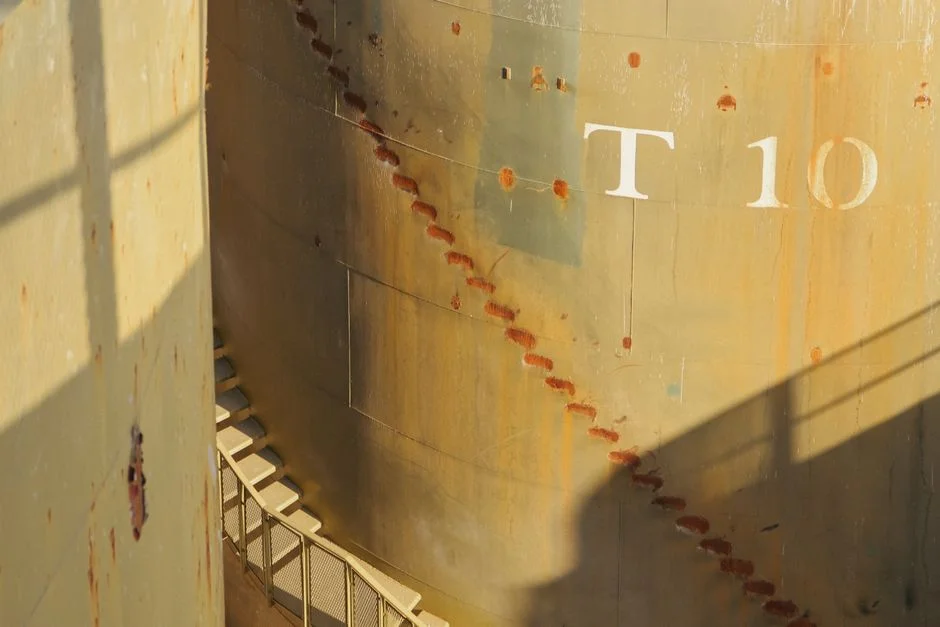
Hydroxide precipitation should be the baseline only when jar testing confirms that its residual performance satisfies the controlling POTW limit. Sulfide treatment should be considered when the remaining limit cannot be met with hydroxide chemistry, subject to off-gas controls, reagent supply and downstream residuals.
The HydropureWater article reports residual metals of 0.01–0.05 mg/L for sulfide precipitation, compared with 0.5–2.0 mg/L for hydroxide precipitation. It states that sulfide reagent cost is typically 2–4 times higher. Those figures make sulfide relevant where the local limit is below the hydroxide result, but they do not establish that sulfide is required at a particular Gurley site because the applicable POTW limit remains unknown.
If sulfide is selected, the project scope must include sealed reactors and H₂S off-gas management or scrubbing. The same source identifies off-gas control as an operating requirement, not an accessory. Include the odor-control system, ventilation, monitoring, reagent storage, operator controls and maintenance access in the equipment comparison and acceptance schedule.
Automatic pH adjustment and coagulant feed are appropriate components of a metal-removal train. HydropureWater describes PLC-controlled dosing with pH maintained within a ±0.2 band. Treat that band as a reference for controls design, not a universal operating requirement. Jar and pilot testing must establish the optimum pH window for each metal and its interaction with the actual water matrix. If influent pH swings exceed two pH units, the article recommends staging dosing in two reactors.
Use an automatic chemical dosing system as the equipment-scope reference, then require a control narrative that states the measured pH input, reagent-selection logic, dosing limits, alarms, fail positions and automatic diversion response. Chemical consumption should be measured during acceptance rather than guaranteed from generic product data.
- Define the controlling POTW limit and the applicable categorical requirement in writing.
- Run jar tests across the characterized pH and contaminant range.
- Compare hydroxide and sulfide residuals against the same acceptance basis.
- Evaluate reagent consumption, sludge generation, safety and off-gas requirements.
- Confirm the selected chemistry through pilot testing before final equipment sizing.
Choose DAF or Lamella by Stream Character
DAF is the stronger candidate when oil, grease or fine colloidal solids dominate the separation duty; lamella is the stronger candidate when the stream is mainly metal-hydroxide sludge, available footprint is constrained or high-flow clarification is required. HydropureWater reports 90–98% TSS removal and 85–95% oil and grease removal for DAF in mining and metal-finishing service.
For lamella, the same source gives a surface-loading range of 20–40 m/h and states that it handles heavy metal-hydroxide flocs well while occupying less footprint than a conventional clarifier. For DAF, it gives a hydraulic-loading range of 5–25 m/h. Use these ranges for concept screening; verify the selected model against measured flow, suspended-solids loading and polymer demand.
| Decision factor | Favor DAF | Favor lamella |
|---|---|---|
| Dominant contaminant | Oil, grease or fine colloidal solids | Metal-hydroxide sludge |
| Reported mining and metal-finishing performance | 90–98% TSS removal; 85–95% oil and grease removal | 20–40 m/h surface-loading reference |
| Screening loading | 5–25 m/h hydraulic loading | 20–40 m/h surface loading |
| Footprint | Greater than lamella | Lower than conventional clarification |
| Best fit | Colloidal or oily separation duty | High-flow precipitation-solids separation |
| Required next check | Actual peak flow, solids loading and polymer demand | Actual peak flow, solids loading and available footprint |
For a preliminary bid, compare the industrial DAF system for mining wastewater against the high-efficiency lamella clarifier using the same measured flow, influent duty, footprint, controls and acceptance criteria. Do not let a proposal substitute vendor removal claims for the site-specific POTW limit.
Downstream filtration remains a polishing barrier. The HydropureWater article states that a multimedia filter can reduce residual TSS to less than 10 mg/L, but that does not establish final metals compliance. The filter must remove or capture the metal-bearing solids and ensure that any residual dissolved metal remains below the controlling limit. A multi-media filter should therefore be specified against metals, TSS, loading, backwash and peak-flow requirements rather than TSS alone.
Build a Permit-Ready Treatment Train
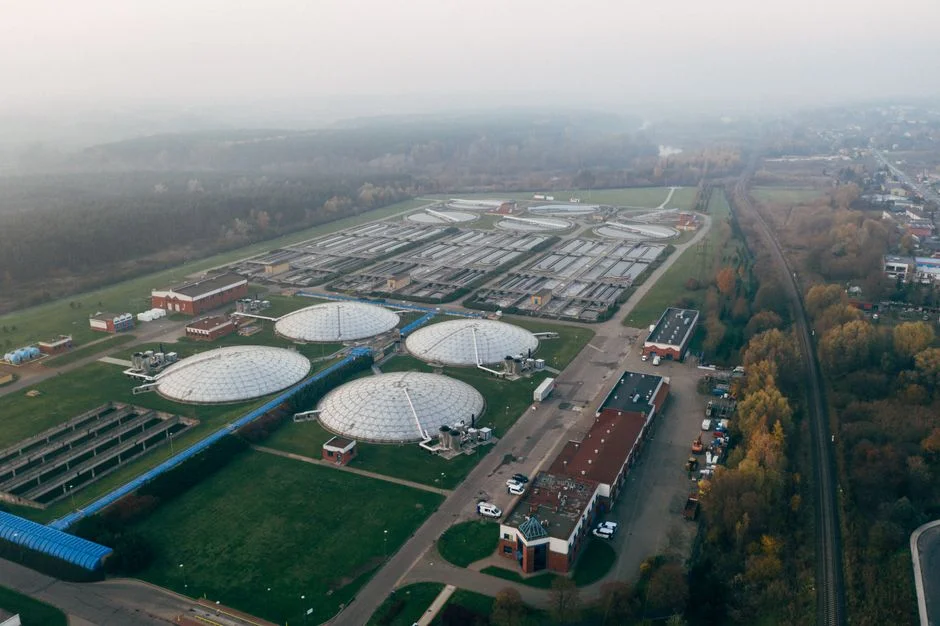
A defensible pretreatment train normally runs from equalization through pH-controlled precipitation, solids clarification, polishing filtration and controlled discharge. Flow measurement and automatic diversion belong in the same scope because a treatment train without a verified connection-point limit or fail-safe response does not establish an acceptable discharge route.
HydropureWater’s power-plant wastewater precedent describes a physical-chemical train using chemical addition, sedimentation and filtration to remove heavy metals and TSS, with additional selenium treatment where required. Although that source concerns a different industrial sector, it demonstrates a relevant project structure: precipitation or scavenging, clarification and filtration are separate performance barriers rather than one undivided treatment claim.
| Train element | Fillable design requirement | Acceptance evidence |
|---|---|---|
| Permit and jurisdiction | POTW name, local-limit date, permit status, categorical classification | Written POTW documents and connection agreement |
| Equalization | Measured flow basis, batch sequence, required operating volume | Level-control test during representative discharge |
| Precipitation and dosing | Reagent, pH window, feed rate, control band, off-gas scope | Jar/pilot results and monitored chemical consumption |
| DAF or lamella | Peak flow, solids loading, hydraulic basis, polymer demand | TSS and turbidity performance at representative loading |
| Polishing filter | Metals, TSS, filtration rate and backwash capacity | Final effluent data and demonstrated backwash operation |
| Sludge handling | Metal-bearing sludge quantity, dewatering duty and authorized destination | Solids capture, cake consistency, filtrate quality and disposal records |
| Discharge control | Connection-point sampling, limit, averaging basis and diversion logic | Automatic alarm and diversion test |
| Overall acceptance | POTW limit, permit requirement, analytical method and sample point | Representative compliance monitoring package |
Include solids handling in the same procurement package. The HydropureWater article reports that plate-and-frame filter presses can dewater sludge to 25–35% dry solids, producing cake for a selected authorized disposal or recovery route. The project must identify that route before claiming beneficial reuse; metal-bearing sludge requires characterization and a destination permitted for the actual waste.
Set acceptance criteria against the POTW limit and connection agreement. Define sampling points, analytical methods, averaging basis, representative operating periods, peak-flow response, chemical consumption, solids capture and automatic diversion testing. Where the permit requires narrative controls, translate them into measurable acceptance events rather than leaving them as general performance language.
The DAF and lamella mining pretreatment guide can support the equipment comparison, while the broader alternative-treatment comparison can help procurement teams test whether the proposed physical-chemical train addresses the actual discharge route rather than relying on an unrelated biological process.
Frequently Asked Questions
Is a federal categorical limit enough to guarantee discharge from a Gurley-area sewer?
No. EPA’s official pretreatment guidance states that POTW local limits are site-specific and apply at the industrial user’s point of connection. Federal categorical standards establish applicable pretreatment requirements, but the current POTW sewer-use ordinance and written connection requirements determine the site-specific discharge conditions. Require the POTW to provide its effective local limits, monitoring rules and permit status before the supplier guarantees performance.
How should buyers compare DAF and lamella supplier proposals?
Issue the same design and acceptance basis to every bidder: measured flow range, peak duration, TSS, applicable metals, pH, oil and grease, target POTW limits, footprint, controls, sludge route and required analytical methods. Ask each bidder to identify the sizing parameter that controls its proposal, such as hydraulic loading or surface loading, and to provide separate treatment and solids-handling scopes. This makes commercial differences attributable to design assumptions rather than inconsistent inputs.
What information must a supplier receive before selecting DAF or lamella?
Provide representative wastewater characterization, average and peak flow, batch-discharge duration, TSS and solids loading, oil and grease, pH range, applicable metals, target discharge limits and available footprint. For lamella, include the required clarification duty and chemical-sludge characteristics. For DAF, include the oil, grease and colloidal fraction that must be removed. If those inputs are missing, request a design-basis memorandum identifying assumptions rather than accepting a flow-only selection.
What is the main compliance risk when specifying pretreatment equipment near Gurley?
The main risk is treating a general federal value or industry article as the Gurley permit. The supplied evidence does not identify the receiving POTW or its enacted numerical limits. A buyer should close that gap by obtaining the current sewer-use ordinance, effective local limits, written categorical classification, permit status and connection agreement. Then translate those requirements into measurable procurement and acceptance criteria; otherwise, equipment can meet a referenced value without demonstrating compliance at the connection point.
Related Equipment
- industrial DAF system for mining wastewater — specifications, capacity range, and technical data