Identify the rules that control the discharge
Use 40 CFR Part 403 as the federal pretreatment reference, but do not treat it as the plant’s complete set of enforceable discharge requirements. The controlling local values should come from the current industrial user permit issued by the receiving sewer authority, together with any applicable sewer-use agreement or discharge permit. The supplied research identifies 40 CFR Part 403 as the governing pretreatment framework but provides no confirmed Wilmington-area numerical limits, prohibited-discharge concentrations, monitoring frequencies, or local loading restrictions.
Request the current permit and supporting documents directly from the receiving authority. The document request should cover concentration and loading limits, prohibited discharges, monitoring and sampling instructions, reporting forms, record-retention requirements, compliance schedules, and the reapplication cycle. Ask which rules govern process wastewater, cooling water, contact cooling water, wash water, floor drainage, and stormwater entering the sewer system. That list should then be checked against the plant drainage map and each actual discharge point.
Separate verified obligations from open items in the purchase specification. A numerical limit should be entered only after the permit or written authority response confirms its parameter, unit, averaging basis, applicable discharge point, and effective date. Review prohibited discharges separately from monitored parameters, because screening equipment may be needed even when a pollutant is not subject to a numerical concentration limit. The industrial pretreatment compliance workflow provides a structure for organizing permit documents and internal evidence.
| Verification item | Buyer record | Status before equipment specification |
|---|---|---|
| Receiving sewer authority | Authority name, contact, and jurisdiction confirmation | Must be verified |
| Federal reference | 40 CFR Part 403 applicability | Federal framework confirmed; local implementation remains open |
| Industrial user permit | Permit number, effective period, discharge points, and attachments | Current copy required |
| Local pretreatment limits | Parameter, unit, concentration or loading basis, averaging period, and effective date | Leave blank until confirmed |
| Prohibited discharges | Authority’s written list and applicable exceptions | Map each prohibition to a control or source-control action |
| Monitoring program | Parameters, frequency, sample location, method, and reporting form | Use in the sampling and compliance plan |
| Reapplication | Renewal date and required submission cycle | Add to compliance calendar |
| Drainage pathways | Source-to-outfall map for process, cooling, wash, floor, and stormwater flows | Confirm which streams are permitted to discharge |
Characterize each plastics and rubber wastewater stream
EPA’s Profile of the Rubber and Plastics Industry, published in September 1995, describes distinct manufacturing operations—including injection molding, extrusion, thermoforming, transfer molding, encapsulation, rubber products manufacturing, and tire production—so plant wastewater should be characterized by process rather than treated as one uniform stream. This sector profile remains useful for identifying production-specific pollution outputs, though it cannot substitute for current permit language or current sampling results.
Build the characterization around source, production area, batch chemistry, flow route, and discharge point. For each stream, record production-normal and upset conditions, including the maximum documented flow and the concentration variation associated with releases. Evaluate biochemical oxygen demand, chemical oxygen demand, total suspended solids, and total organic carbon where relevant. Add the parameters expressly listed in the permit and contaminants supported by plant records, such as oils, greases, soluble materials, or metals where process evidence makes them relevant.
Do not infer that every plant stream contains every pollutant. A cooling-water stream, an additive-rich wash stream, and a production-floor drainage system can have different compliance pathways and treatment objectives. Sampling design should therefore distinguish reusable, segregable, or high-concentration streams from diluted combined flows. If averaging or mass-loading limits apply, retain enough flow and concentration data to calculate the permitted loading basis rather than relying on a concentration result alone.
Use an industrial wastewater pretreatment for sewer discharge guide to frame industrial wastewater characterization, while checking every local requirement against the Wilmington-area receiving authority. The worksheet below can be copied directly into a procurement or compliance file.
| Fillable characterization field | Plant entry |
|---|---|
| Production process and area | Enter process, equipment, and production area |
| Wastewater source and origin | Describe material, batch chemistry, and contamination mechanism |
| Normal discharge route | Identify collection point, treatment step, and final discharge point |
| Alternate or upset route | Describe bypassing, containment, and notification action |
| Production-normal flow | Attach meter or production-based flow record |
| Maximum documented flow | State the operating condition and source record |
| Flow variability | Describe batch, campaign, cleaning, and production changes |
| BOD | Enter result, unit, date, sample point, and analytical method |
| COD | Enter result, unit, date, sample point, and analytical method |
| TSS | Enter result, unit, date, sample point, and analytical method |
| Total organic carbon | Enter result if relevant, with the same supporting details |
| Oil and grease or related parameters | Enter only where required by the permit or supported by process records |
| Other permit or process parameters | List method, result, date, and supporting document |
| Controlling constraint | Identify the parameter or prohibition that determines the required treatment step |
Choose a treatment train based on the controlling pollutant
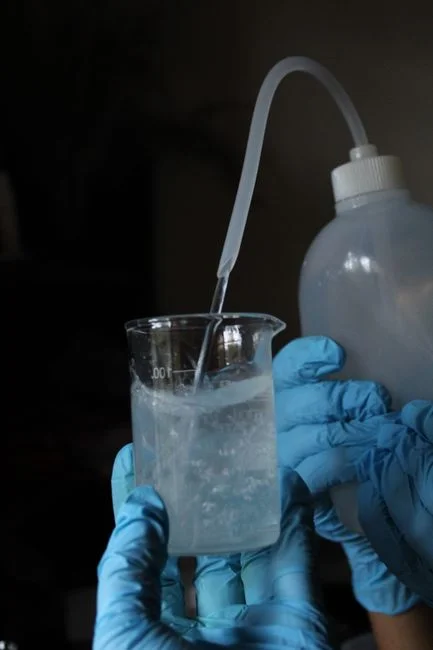
Treatment technology selection depends on the specific pollutants identified during characterization and the limits set by the receiving authority.
Chemical dosing should be a defined process step tied to a named objective. PLC-controlled systems are available for coagulants, flocculants, pH adjusters, and specialty chemicals, but the chemical selection and dose must come from jar testing and operating data. Permit compatibility for chemical additions also requires an assessment of the added constituent, its discharge effect, and any authority restrictions.
| Decision condition | Treatment consideration | Required verification before acceptance |
|---|---|---|
| Suspended solids are the controlling constraint | DAF or another solids-removal step, followed by treatment needed for remaining permit parameters | Representative solids removal and residual results |
| Oil and grease or FOG must be removed | DAF with confirmed chemical conditioning where testing supports it | Removal, solids behavior, and permit-parameter residuals |
| Biodegradable organics and fine solids both require control | MBR or a biological process followed by the required solids-separation step | Organic removal, solids separation, hydraulic response, and stability |
| pH is outside the verified limit | Defined pH adjustment step | Jar testing, calibrated control, and off-limit response |
| Multiple parameters control | Combined train with each unit assigned a named purpose | Complete-train performance against every applicable permit parameter |
| Characterization is incomplete | No final technology commitment yet | Representative sampling, production-condition review, and pilot work |
Pilot, operate, and prove compliance
Acceptance testing should demonstrate the complete treatment train under representative plant wastewater and production conditions. Record constituent removals, residual levels, hydraulic response, sludge behavior, chemical consumption, and operating stability. A successful result under one batch or a clean-water test does not establish performance across the documented production range.
Verify each permit parameter using results that represent the required monitoring point and operating condition. At the same time, confirm that prohibited discharges are controlled at their sources and that reporting duties are assigned to named personnel. The data center wastewater treatment guide provides a broader operating-record structure that can be adapted to the plant’s permit obligations and equipment controls.
Establish operating controls for flow, pH adjustment, chemical feed, air supply where applicable, membrane or solids handling, and alarms. Each control needs an operating limit, a responsible operator, a defined response to an off-limit result, and a record of any deviation or corrective action. Keep calibration records with the relevant sampling and operating records so an auditor can trace a reported result to the equipment condition at the time of collection.
The compliance file should link the current permit, drainage map, characterization results, equipment submittals, operating settings, calibration records, sampling records, analytical results, deviations, and corrective actions. Keep supplier performance claims separate from plant acceptance evidence. If a pilot is required, define the test protocol before execution, including the wastewater used, operating conditions, monitored parameters, acceptance criteria, and treatment of results that fall outside the proposal.
- Confirm the applicable permit and its effective requirements.
- Characterize each discharge stream and identify the controlling pollutant or prohibition.
- Select and define each treatment step against that requirement.
- Run representative pilot or acceptance testing.
- Issue operating controls, monitoring procedures, and corrective-action rules.
- Assemble the auditable compliance record.
Frequently Asked Questions
Where do we obtain Wilmington-area numerical pretreatment limits?
The supplied research contains no confirmed Wilmington-specific numerical sewer limits. Obtain the current industrial user permit, sewer-use agreement or discharge permit, and current local pretreatment limits from the receiving sewer authority. Before specifying equipment limits, obtain the parameter, unit, concentration or loading basis, averaging period, discharge point, and effective date in writing.
Should we select DAF or an MBR based on treatment capacity?
Select technology based on the controlling pollutant and the required effluent quality rather than capacity alone. Evaluate the treatment train against the verified permit parameters, characterization results, and pilot data. Ensure the selected system provides removal efficiency for the specific contaminants present in the plastics or rubber wastewater stream.
How should we control supplier selection and acceptance risk?
Give bidders the wastewater characterization, verified permit requirements, flow data, pilot protocol, controls specification, and required documentation. Evaluate process fit, pilot evidence, maintenance information, monitoring support, and deliverables rather than capacity claims alone. Require the supplier to identify which unit is responsible for each named pollutant and to support that claim with representative wastewater results.
How much should treatment and monitoring cost?
The supplied research provides no quotation or defensible cost basis for this application. Request a written budget breakdown covering equipment, tanks and piping, chemical-system requirements, controls, installation, commissioning, pilot work, monitoring support, maintenance, and documentation. Require each bid to state exclusions and assumptions so the receiving authority’s verified permit requirements, characterization results, and acceptance criteria can be compared consistently.
Does federal pretreatment guidance replace the local permit?
No. The supplied eCFR reference identifies 40 CFR Part 403 as the federal pretreatment framework, while the industrial user permit and current receiving-authority documents establish locally enforceable limits, prohibitions, monitoring duties, and reporting procedures. Treat the federal reference as the baseline and the current local documents as the source for the plant-specific design and compliance schedule.
What records should be retained after commissioning?
Retain the permit, characterization baseline, drain and sampling-point maps, equipment settings, calibration records, chemical and operating logs, analytical results, deviations, corrective actions, and acceptance-test reports. Link each compliance sample to its sampling point, production condition, flow record, equipment status, and analytical result. The industrial wastewater compliance and treatment guide offers a document-control example, but the final record set must follow the receiving authority’s confirmed requirements.