Determine Which Cranberry Township Limits Apply
Cranberry Township operates an EPA-mandated pretreatment program for its wastewater collection system and Brush Creek Wastewater Treatment Plant, and Chapter 19 of the Municipal Code establishes the wastewater-survey criteria used to evaluate industrial processes and their potential effect on the collection and treatment system. A Discharge Permit applies to an industrial user that meets significant industrial user criteria or falls within the Fat, Oil, and Grease Program specifications; the permit defines pollutant limitations and monitoring conditions, including when, where, how, and how often monitoring occurs.
The Township also enforces federal categorical pretreatment regulations, local pollutant limits, and general prohibitions. The Township states that local limits are derived from the local wastewater makeup and the treatment plant’s removal performance. Do not treat the federal table as a complete design basis: confirm the current discharge permit, sewer-use requirements, applicable local limits, and any categorical requirements with the Township before selecting equipment.
For facilities subject to 40 CFR Part 433, the governing categorical requirements must be separated by source status. Pretreatment Standards for Existing Sources, or PSES, apply to existing sources, while Pretreatment Standards for New Sources, or PSNS, apply to new sources. The category analysis must also examine whether forming, finishing, forging, foundry, metal spraying, machining wash, plating, or anodizing operations are performed. Manufacturing alone does not establish coverage without checking the actual operations and whether they are co-located with regulated metal-finishing activities.
| Requirement layer | What it establishes | Design or compliance use |
|---|---|---|
| Wastewater survey | Chapter 19 criteria for evaluating processes and determining whether a facility could negatively affect the collection and treatment system. | Use as the starting point for process classification, flow tracing, and pollutant characterization. |
| Industrial user discharge permit | Applies to a significant industrial user or an industrial user covered by the Fat, Oil, and Grease Program specifications. | Use the pollutant limitations and monitoring requirements in the current permit. |
| Federal categorical standards | PSES and PSNS requirements under 40 CFR Part 433 when the facility’s operations fall within the Metal Finishing category. | Identify the applicable source category and source status before finalizing the design envelope. |
| Local POTW limits | Township limits derived from local wastewater makeup and treatment-plant removal performance. | Compare each pollutant against the categorical, local, and permit conditions and use the governing requirement for design. |
Use the fabricated metals wastewater pretreatment guide as a technical starting point, then resolve every applicability question against the current permit and Chapter 19. A broader treatment comparison is available in the MBR versus conventional activated-sludge discussion, but it does not replace the Township’s approval process.
Characterize the Wastewater Before Selecting Equipment
Representative wastewater data must define the design basis before equipment is selected, because fabricated metals operations can produce incompatible pollutant families in intermittent batch discharges. HydropureWater’s 2026 field data reports mixed-floor-drain oils at 50–500 mg/L, total dissolved metals at 5–200 mg/L, TSS at 100–1,000 mg/L, and pH swings between 2 and 12 across batch dumps. These are field-data ranges, not permit limits or Cranberry Township discharge limits.
The sampling program should capture each production stream rather than relying on one floor drain. Grinding and casting can contribute suspended solids; stamping, machining, and drawing operations can contribute free or emulsified oils; and plating rinsewater or acid pickling can contribute dissolved metals. Hexavalent chromium may be present where chromic-acid anodizing, hard chrome, or conversion coating occurs, while cyanide may be present where alkaline cyanide plating remains in use.
Batch dumps make an average daily flow a weak sizing basis. The HydropureWater field data specifically identifies plating shops as batch-discharge operations and recommends a full-week composite sample before equipment specification so that a missed dump does not undersize equalization. A buyer should request the production schedule, measured batch volumes, chemical inventory, floor-drain routing, rinsewater reuse practices, and analytical results covering representative operating periods. The number of samples and monitoring duration should be agreed with the Township and project engineer rather than assumed.
Request these documents before preparing a treatment package:
- The current industrial user discharge permit and sewer-use requirements.
- Chapter 19 survey status or survey request.
- Process and floor-drain drawings showing segregation and combined drainage.
- Chemical-use records for acids, caustics, plating chemicals, oxidants, and flocculants.
- Production schedules, batch-discharge records, and flow measurements.
- Analytical data covering oil and grease, TSS, pH, metals, and pollutants specifically named in the permit.
A rotary mechanical bar screen may protect downstream handling equipment from rags, wipes, and tramp metal, but it does not replace flow equalization or pollutant characterization.
Build a Treatment Train for Each Pollutant Family
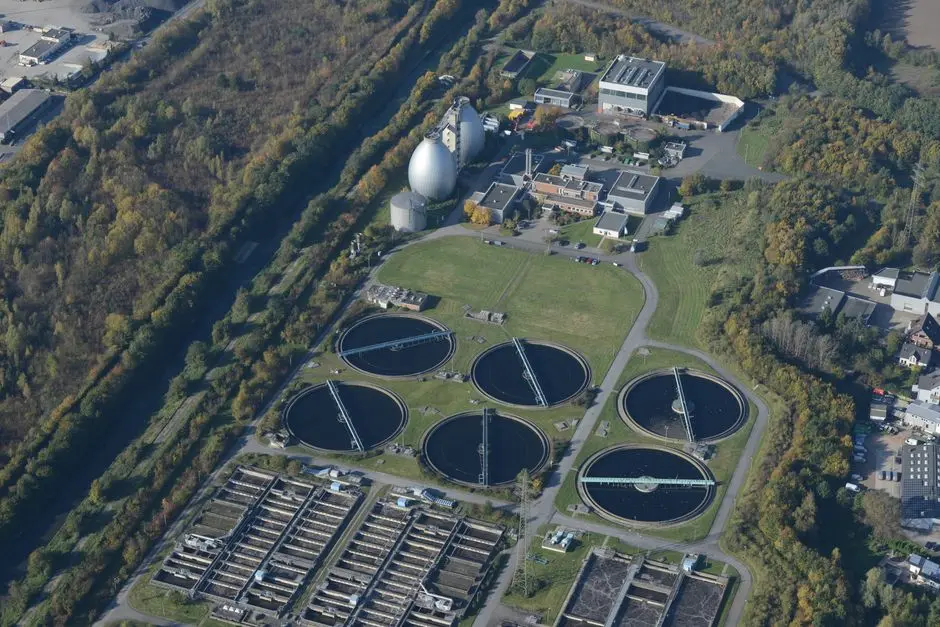
A defensible treatment train separates contaminants that require different removal mechanisms: equalization controls hydraulic and chemical upsets, oil removal protects downstream chemistry, hexavalent chromium and cyanide require conversion reactions, and dissolved metals require precipitation followed by solids separation. The sequence must be adjusted to the permit and measured wastewater rather than copied from a generic metals worksheet.
- Equalize flow and load. Blend batch dumps and stabilize flow, pH, and pollutant loading before downstream unit operations. Establish the equalization requirement from representative batch-volume and discharge-schedule data.
- Remove oil and grease. Use physical separation or chemical breaking for free and emulsified oil. Oil carried into chemical treatment or solids separation can consume treatment capacity and interfere with downstream equipment.
- Reduce hexavalent chromium. Sodium metabisulfite or ferrous sulfate can reduce Cr(VI) to Cr(III) under acidic conditions. HydropureWater’s 2026 design guidance specifies ORP control at roughly 250–300 mV for this reaction.
- Oxidize cyanide. Destroy cyanide before metals precipitation because cyanide can resolubilize precipitates downstream. Controlled chemical addition and verification of the reaction endpoint are required.
- Precipitate dissolved metals. Raise pH to form metal hydroxides. The same HydropureWater treatment guidance places chromium hydroxide precipitation at pH 8.5–9.5 in the precipitation stage.
- Separate solids. Apply a dissolved air flotation system or a high-efficiency lamella sedimentation tank to remove precipitated metal hydroxides and other floating or settled solids, followed by pH adjustment.
- Add polishing only when justified. Filtration, MBR, RO, or another polishing step is warranted by the governing effluent limit, reuse objective, or identified future requirement.
Use a PLC-controlled automatic chemical dosing skid for pH adjustment, chromium reduction, cyanide oxidation, and polymer addition. HydropureWater’s 2026 guidance identifies sodium metabisulfite, sodium hypochlorite, sodium hydroxide or sulfuric acid, and anionic or cationic polymer as typical dosing chemicals. Feedforward control can follow flow, while feedback control uses pH or ORP; critical operating states should generate an alarm or diversion response.
| Process step | Primary function | Required operating evidence |
|---|---|---|
| Equalization | Blend batch dumps and stabilize hydraulic and chemical loading. | Flow, pH, and batch-loading records. |
| Oil and grease removal | Remove floating and emulsulated oil before it interferes with downstream treatment. | Oil and grease results at the applicable monitoring point. |
| Chromium reduction | Convert Cr(VI) to the less soluble trivalent form. | Reaction endpoint and ORP record; confirm the applicable analytical result. |
| Cyanide oxidation | Destroy cyanide before metal precipitation. | Chemical dose and endpoint verification. |
| Metal precipitation | Convert dissolved metals to removable solids. | pH control and precipitation-stage results. |
| DAF or clarification | Separate precipitated and floating solids. | Stage outlet TSS and solids-handling records. |
| Polishing | Meet a tighter limit or prepare water for reuse. | Documented reuse target or governing limit that justifies the stage. |
Match DAF, Clarification, and Polishing to the Treatment Objective
DAF, lamella clarification, and polishing perform different functions, so selecting between them requires an identified effluent or reuse objective. HydropureWater’s 2026 product information describes DAF systems for suspended solids, FOG, oil and grease, and colloidal matter, with standard capacities from 4–300 m³/h across 13 models. Its DAF design guidance lists hydraulic surface loading of 4–20 m/h, an air-to-solids ratio of 0.005–0.060 with 0.02 as a typical design point, and recycle rate of 10–30% of forward flow.
A lamella clarifier combines sludge recirculation, flocculation, and inclined-plate separation in a compact structure. HydropureWater’s 2026 product information reports surface loading rates of 20–40 m/h for that equipment. These figures are equipment design references, not Cranberry Township limits. The selected device must be checked against the wastewater characteristics, hydraulic profile, floc properties, and solids handling established during engineering.
DAF is the stronger candidate when the objective is removal of floating oil together with suspended and precipitated solids. A lamella clarifier is the alternative to examine when inclined-plate solids separation and the available footprint, sludge-recirculation arrangement, and operating approach fit the project. Use the DAF selection guide for FOG and TSS and the DAF versus clarifier comparison to structure the technical comparison, then validate the choice with site data.
Polishing is a separate decision. HydropureWater’s 2026 article identifies MBR as an option for BOD/COD tightening and reuse, while RO is used for sub-ppm TDS or particularly tight specific-metal requirements. A multi-media filter can remove suspended solids, turbidity, and colloids before RO and is reported to produce SDI values suitable for downstream membrane protection. For possible future PFAS polishing, the same source recommends reserving space and connection points for anion exchange or granular activated carbon; it states that no current numerical PFAS limit for chrome finishers was identified in the cited material.
| Equipment path | Best-fit treatment objective | Decision input still required |
|---|---|---|
| DAF | Remove oil, FOG, suspended solids, precipitated solids, and colloidal matter. | Measured flow, solids and oil loading, floc behavior, and required hydraulic loading. |
| Lamella clarification | Separate settled or precipitated solids in a compact clarification arrangement. | Floc properties, settling performance, sludge-recirculation design, and site constraints. |
| Multi-media filtration | Prepare water for membrane protection or a defined solids-reduction target. | Target SDI and downstream membrane requirements. |
| MBR | Tighten BOD/COD and support reuse applications. | Water-reuse objective and influent characteristics. |
| RO | Address sub-ppm TDS or a particularly tight specific-metal target. | Target water quality, pretreatment requirements, and disposal or recovery route for concentrate. |
| Anion exchange or GAC | Reserve a possible future PFAS-polishing route. | Confirmed regulatory requirement and water matrix; the cited source identifies no current numerical chrome-finisher PFAS limit. |
Manage the Sludge and Protect Downstream Equipment
Metal-bearing treatment sludge must be handled as a defined waste stream, not simply as a filter-press output. HydropureWater’s 2026 field guidance reports that floated metal-hydroxide sludge typically leaves a DAF at 2–5% dry solids. The same source reports plate-and-frame filter presses dewatering metal hydroxide sludge to 25–35% dry solids, compared with a typical belt-press ceiling around 22% dry solids for this sludge.
The equipment comparison must include the disposal route rather than only cake dryness. A plate-and-frame filter press is available from HydropureWater with filtration areas from 1 m² to 500 m² and manual, hydraulic, or fully automatic PLC-controlled operation. Those specifications describe equipment options; they do not establish the required filter area for a specific Cranberry plant. Final sizing depends on representative solids generation, batch volume, desired cycle time, and accepted waste form.
A rotary mechanical bar screen can remove rags, wipes, and tramp metal before sludge treatment. HydropureWater’s 2026 guidance identifies this upstream protection as a common measure against premature press-cloth failure. Screen selection and placement should therefore be tied to the actual floor-drain and sludge-stream inventory rather than added as an isolated accessory.
Waste characterization and a sludge-hazardousness review determine the disposal routing, handling, and any applicable waste-classification requirements. Dewatering changes the physical form and water content; it does not itself establish that the material is suitable for a particular disposal route.
Verify Compliance Through Monitoring and Operating Controls
Cranberry Township monitors industrial-user performance through inspections, wastewater collection and analysis, and work with industries to improve pretreatment performance. The permit is the operating document that determines when, where, how, and how often an industrial user must monitor its discharge. Compliance therefore depends on both treatment performance and retained evidence that the plant was operating as designed.
Track pH, ORP, flow, TSS, oil and grease, and the metals or other parameters named in the permit, using the authority’s specified sampling methods and frequencies. Instrument readings can support process control, but they do not automatically replace required compliance sampling. Establish where each parameter is sampled, who performs the analysis, how results are reported, and what corrective action applies to an excursion.
Automatic interlocks should divert flow back to equalization when pH, ORP, or TSS indicates an upset. This prevents untreated or off-spec flow from reaching the sewer and gives operators time to correct the chemistry. The automatic chemical dosing skid should be integrated with flow-paced and feedback signals, chemical inventory interlocks, alarms, and diversion-valve sequencing rather than operated as an isolated dosing panel.
Retain an operating record that a reviewer can use to reconstruct performance:
- Compliance sampling results and associated calibration records.
- Daily flow, pH, ORP, and stage-performance records.
- Chemical-use logs and dosing-system stroke totals.
- Equipment maintenance, calibration, and work-order records.
- Sludge-removal quantities and disposal documentation.
- Corrective-action records for alarms, diversions, or excursions.
The Township’s current permit must control the final monitoring program. This framework does not replace the stated sampling point, analytical method, frequency, or reporting condition.
A Practical Pretreatment Decision Framework
A defensible equipment purchase begins with regulatory classification and measured wastewater, not with a packaged treatment skid. The sequence below links each procurement decision to the information that should control it.
- Classify the facility. Confirm the Chapter 19 survey status, significant industrial user status, FOG applicability, industrial user discharge permit, and potential coverage under 40 CFR Part 433.
- Establish the production baseline. Obtain the process inventory, chemical-use records, floor-drain routing, operating schedule, batch-volume data, and representative analytical results.
- Define the governing limit for every pollutant. Compare the applicable categorical standard, local POTW limit, permit condition, and any reuse specification. The permit and site-specific approval remain the final authority.
- Map each contaminant to a treatment function. Assign flow control to equalization, oil removal to physical or chemical separation, Cr(VI) to reduction, cyanide to oxidation, dissolved metals to precipitation, precipitated solids to DAF or clarification, and only defined reuse or tighter-limit targets to polishing.
- Establish measurable stage targets. Define the analytical or operating condition needed to release flow from each stage, including pH, ORP, flow, TSS, and the permit-named constituents.
- Size from batch behavior. Use representative batch-flow and solids data rather than average daily flow alone to evaluate equalization and solids handling.
- Review operating and disposal risk. Check chemical compatibility, interlocks, diversion logic, operator workload, maintenance access, downstream equipment protection, and the sludge-disposal route.
Use the fabricated metals wastewater pretreatment guide to prepare that engineering basis, but submit the final design against the current Cranberry Township permit and sewer-use requirements. General industry guidance is not a substitute for site-specific approval.
Frequently Asked Questions
Can a fabricated metals plant use DAF alone to meet sewer pretreatment limits?
DAF alone is appropriate only if the wastewater, after suitable upstream treatment, has no unresolved chemistry requiring separate conversion. A fabricated metals stream containing hexavalent chromium, cyanide, or dissolved metals generally needs dedicated reduction, oxidation, and precipitation steps; DAF then removes the resulting solids and floating material. The permit, pollutant profile, and required outlet quality determine whether additional filtration or polishing is necessary.
How much equalization capacity does a batch-dump metals facility need?
Equalization capacity should be based on representative batch volumes, discharge frequency, and the operating strategy selected for the plant. HydropureWater’s 2026 field guidance identifies plating operations as batch-discharge facilities and recommends a full-week composite sampling program before equipment specification. The buyer should provide batch records, production schedules, and measured flow data, then obtain an engineered volume calculation; no supported site-specific capacity can be inferred from general guidance.
Should an existing plant design to PSNS or its current local limits?
Do not select between PSES, PSNS, and local limits without confirming the facility’s source status and the Township’s current permit. Under 40 CFR Part 433, PSES applies to existing sources and PSNS applies to new sources, while Cranberry Township enforces local limits derived from its wastewater makeup and plant performance. The governing requirement must be resolved for each pollutant and confirmed with the Township before the design basis is approved.
What information should a wastewater equipment supplier request before selecting a treatment train?
Request the current discharge permit, Chapter 19 survey documents, wastewater survey results, process inventory, chemical-use records, floor-drain drawings, production and batch-discharge schedules, flow data, analytical results, and reuse objectives. For sludge handling, also provide expected solids generation, available footprint, operating-control requirements, and the intended disposal route. These inputs let the supplier distinguish a DAF selection for FOG and TSS from a broader chemical-treatment and solids-handling package.
When is polishing equipment justified for fabricated metals wastewater?
Polishing is justified when the governing discharge or reuse requirement cannot be met by equalization, chemical conversion, precipitation, and solids separation alone. HydropureWater’s 2026 article identifies MBR for BOD/COD tightening and reuse, RO for sub-ppm TDS or particularly tight specific-metal requirements, and multi-media filtration for pretreatment ahead of RO. For PFAS, that source recommends reserving space and connection points for anion exchange or granular activated carbon because it identifies no current numerical PFAS limit for chrome finishers; the buyer should request confirmation of the applicable regulatory requirement rather than install speculative polishing.