Choose the Copper Treatment Duty First
A decanter centrifuge for copper mining wastewater is suitable when the treatment objective is continuous removal of suspended solids, recovery of process water, or production of mechanically dewatered tailings. It does not remove dissolved copper by itself; copper-bearing water may also require chemical precipitation and downstream polishing. The equipment decision starts by identifying where the separated solids will go and whether the liquid will be reused, discharged, treated further, or routed to a recovery circuit.
For dry-stack tailings, Diamond T Services explains that “dry stack” describes the storage method rather than completely dry solids; the objective is mechanically dewatered tailings with moisture low enough for stackable management (Diamond T Services, Mining Dewatering Equipment: Tailings & Concentrate Processing, supplied research accessed in 2026). That duty is different from concentrating post-flotation slurry, recovering fine copper minerals, treating dissolved copper in mine water, or separating solvent-extraction scum.
| Copper duty | Separated solids destination | Liquid objective | Equipment decision |
|---|---|---|---|
| Tailings dewatering for dry-stack management | Stackable tailings | Return water to the process where suitable | Evaluate continuous dewatering against the required cake moisture and storage method |
| Post-flotation or magnetic-separation thickening | Dense slurry transferred to the next process step | Recover process liquid and reduce downstream loading | Specify thickened-slurry consistency and fines recovery |
| Copper mine wastewater clarification | Suspended solids and precipitated metal solids | Reuse, discharge or further treatment | Assess precipitation, separation and polishing as a complete train |
| Solvent-extraction scum treatment | Concentrate or residue | Recover organic phase and protect downstream electrolysis | Use a three-phase separation duty, not a general solids-dewatering selection |
Suspended-solids separation does not establish dissolved-copper compliance. Shenzhou Machinery reports at least 95% suspended-solids removal for a copper mine wastewater case when chemical precipitation is combined with separation, which supports a combined treatment train rather than a centrifuge-only claim (Shenzhou Machinery, Application of Decanting Centrifuges in Copper Ore Processing, supplied research accessed in 2026). Use the decanter centrifuge sizing methodology as a framework for separating hydraulic and dry-solids duties, but map it to the actual copper stream and final destination.
Build the Feed Characterization Worksheet
Feed characterization must establish whether the centrifuge is hydraulically adequate, solids-capable and durable enough for the duty. Request average and peak flow, dry-solids loading in kg DS/h, feed solids concentration, particle-size distribution, mineral composition, slurry density and viscosity. Also define the required cake moisture or thickened-solids consistency, filtrate quality, water-reuse target and the final destination of each separated stream. Missing any of these inputs leaves a comparison between nominal machine capacities rather than an engineering selection.
Quartz and other hard particles are the central abrasive concern identified for copper tailings. Shenzhou Machinery specifies wear-resistant screw and bowl surfaces, including tungsten-carbide treatment, to maintain throughput and separation performance (Shenzhou Machinery, Application of Decanting Centrifuges in Copper Ore Processing, supplied research accessed in 2026). Ask the supplier to identify the proposed wetted and conveying materials in relation to the supplied mineralogy, then require wear monitoring during pilot operation.
| Worksheet input | Evidence needed from the site | Selection or acceptance use |
|---|---|---|
| Hydraulic feed | Average and peak flow | Checks volumetric capacity, feed stability and overload protection |
| Dry-solids feed | kg DS/h at representative feed concentrations | Prevents an adequate m³/h rating from being overloaded |
| Feed solids | Mass percentage and source variability | Defines the separation duty and operating envelope |
| Particle and mineralogy | Particle-size distribution, quartz content and mineral composition | Determines sedimentation demand and wear exposure |
| Rheology | Slurry density and viscosity | Identifies pumping and feed-conditioning constraints |
| Cake target | Required moisture or thickened consistency | Defines the solids destination and downstream handling method |
| Liquid target | Filtrate solids, dissolved-copper requirement and reuse destination | Separates clarification duty from metal-removal requirements |
| Conditioning | Flocculant type, dose and mixing response | Defines auxiliary dosing and operating control |
Feed variation affects capacity directly: Shenzhou Machinery reports that each 5% increase in solids content usually reduces throughput by 8%–12%, and therefore recommends a feed buffer tank to stabilize flow and pressure (Shenzhou Machinery, Application of Decanting Centrifuges in Copper Ore Processing, supplied research accessed in 2026). Treat that relationship as vendor-reported and test it against representative slurry. Configure an automatic chemical dosing system only after jar or bench testing establishes the required conditioning response.
Its mineral-processing configuration guidance is a starting point, not a universal copper-wastewater specification. Require representative site slurry and challenge the supplier to explain which conclusions change with solids concentration, particle size, abrasion, chemistry or the required filtrate quality.
Compare Centrifuge and Clarification Duties

Centrifugation is most relevant where the required output is concentrated solids or dewatered cake, not merely removal of dilute suspended solids. Diamond T Services states that decanter centrifuges provide continuous processing, can achieve strong cake dryness and clean-water recovery, and are particularly useful for fine particles or difficult separations (Diamond T Services, Mining Dewatering Equipment: Tailings & Concentrate Processing, supplied research accessed in 2026). The alternative remains a clarification duty where the objective is bulk solids removal before a downstream process.
Commercial copper cases provide useful selection bounds but not project guarantees. Shenzhou Machinery reports tailings moisture of 18%–25%, liquid-phase reuse of at least 90%, and feed solids of 10%–40% for its copper tailings dry-stacking case. It also reports thickened slurry of 50%–65% and fine-grained copper recovery of at least 90% after flotation or magnetic separation (Shenzhou Machinery, Application of Decanting Centrifuges in Copper Ore Processing, supplied research accessed in 2026). These are vendor-reported figures and must be checked with representative feed.
| Decision point | Centrifuge-led route | Clarification-led route |
|---|---|---|
| Primary product | Mechanically dewatered solids or concentrated slurry | Clarified liquid with separated solids sent elsewhere |
| Best fit | Fine particles, difficult solids, continuous high-solids separation or cake production | Bulk suspended-solids removal before polishing, biological treatment or sludge handling |
| Water objective | Recover filtrate for reuse where its quality matches the receiving process | Remove suspended solids before discharge or further treatment |
| Dissolved copper | Not resolved by mechanical separation alone | Chemical precipitation or other treatment may be required |
| Required evidence | Cake moisture, filtrate solids, recovery and dry-solids throughput | Clarified-solids removal, overflow quality and downstream compatibility |
For oily or otherwise difficult wastewater streams, evaluate pretreatment rather than assigning the full duty to the centrifuge. HydropureWater’s 2026 guide identifies DAF as relevant pretreatment for oily wastewater and states that a decanter is not a primary clarifier, secondary clarifier, DAF unit or final filter (HydropureWater, Decanter Centrifuge for MSG Wastewater: Sizing Guide, 2026). Compare the required DAF pretreatment system against a high-efficiency sedimentation tank using the actual feed and downstream targets rather than generic duty claims.
Set Equipment, Wear and Control Requirements
Procurement criteria should connect the measured feed to bowl capacity, separation force, solids-conveying capability, wear protection and control response. Shenzhou Machinery lists common copper-application bowl diameters of 550–920 mm and gives an LW764 throughput range of 60–120 m³/h (Shenzhou Machinery, Application of Decanting Centrifuges in Copper Ore Processing, supplied research accessed in 2026). These are commercial selection references, not a universal copper range or a substitute for sizing the site’s dry-solids duty.
For streams containing substantial fine copper particles, Shenzhou Machinery recommends a G-force of at least 2500G to improve sedimentation efficiency and reduce copper loss (Shenzhou Machinery, Application of Decanting Centrifuges in Copper Ore Processing, supplied research accessed in 2026). Require the supplier to demonstrate that the proposed bowl geometry and operating speed achieve the requested separation at the actual particle-size distribution—not merely that the machine meets a catalog G-force.
| Procurement item | Minimum written requirement | Evidence requested |
|---|---|---|
| Bowl and capacity | Duty-specific configuration | Machine dimensions, rated hydraulic capacity and dry-solids capacity |
| Separation force | Selected from particle size and recovery target | Calculated operating range and separation basis |
| Differential speed | Variable control for feed-solids variation | Drive specification and operating-response procedure |
| Wear protection | Screw and bowl surfaces suited to quartz-rich abrasives | Material specification, treatment details and replacement strategy |
| Conditioning | Feed-linked dosing with operator control | Dosing-system duty, sequence and fail-safe response |
| Instrumentation | Flow, concentration and moisture measurement | Instrument ranges, calibration method and control logic |
| Auxiliaries | Stable feed and protection against overload | Buffer-tank and pumping basis |
Variable differential speed is the principal adjustment for changes in slurry solids content, while wear-resistant conveying surfaces protect throughput in abrasive service. Flocculant response must also be treated as an operating variable: Shenzhou Machinery reports that appropriate dosing can increase throughput by 15%–25% and reduce solid-phase moisture, while omitting flocculant may reduce throughput by 20%–30% (Shenzhou Machinery, Application of Decanting Centrifuges in Copper Ore Processing, supplied research accessed in 2026). These are vendor-reported relationships. Require measured feed-linked operation through an automatic chemical dosing system, with flow, concentration and moisture instruments feeding operating decisions rather than relying on fixed set points.
Validate Performance With a Site Pilot
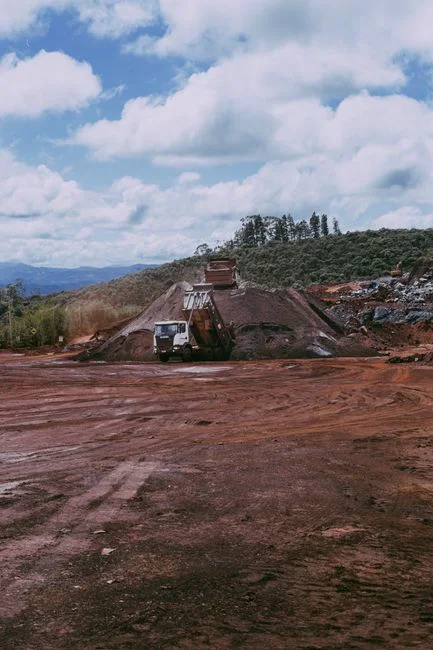
A site pilot converts feed and product targets into measurable acceptance criteria before a full-scale commitment. Diamond T Services describes its pilot program as a way to verify that a centrifuge works for the exact application before purchase (Diamond T Services, Mining Dewatering Equipment: Tailings & Concentrate Processing, supplied research accessed in 2026). For this application, the test should use representative copper-mine slurry across the intended feed range, not a clean-water demonstration or a narrow laboratory sample.
A vendor case reported by Shenzhou Machinery uses an 80 m³/h unit for copper-containing mineral-processing wastewater and reports 96% suspended-solids removal, Cu²⁺ below 0.5 mg/L and 92% effluent reuse (Shenzhou Machinery, Application of Decanting Centrifuges in Copper Ore Processing, supplied research accessed in 2026). Treat all three figures as vendor-reported and use them to frame questions: what feed conditions produced them, what chemical treatment was included, and can the same results be reproduced on site?
| Pilot measurement | Acceptance basis | Required record |
|---|---|---|
| Hydraulic throughput | Site peak-flow and sustained-feed requirement | Measured feed rate, feed concentration and operating duration |
| Dry-solids throughput | kg DS/h required at representative feed concentrations | Mass balance for solids entering and leaving the pilot unit |
| Cake moisture | Required consistency for the specified tailings-storage method | Moisture method, sample locations and operating range |
| Filtrate quality | Reuse, discharge or downstream-treatment target | Suspended solids, relevant dissolved-copper parameter and sample frequency |
| Recovery | Site requirement for water or retained solids | Water balance and solids-recovery calculation |
| Wear rate | Acceptable rate for the pilot campaign and planned maintenance interval | Before-and-after inspection of screw, bowl and critical surfaces |
| Power and polymer use | Site utility and operating-cost limits | Power consumption, dosage rate and chemical consumption |
Define acceptance limits before comparing quotations. For dry-stack tailings, tie cake moisture to the required stacking and storage method. For water reuse, specify the receiving process and filtrate criteria. For discharge, obtain the applicable site or regulatory criteria and include any required dissolved-copper treatment outside the centrifuge. Review decanter centrifuge selection examples for pilot-test structure, but do not transfer performance from one feed to copper without validation.
Request a project-specific quotation covering the selected machine, wear package, feed-conditioning equipment, controls, installation scope and pilot support. The supplied research does not establish a verified price for a copper-mine decanter-centrifuge installation, so a generic catalogue figure cannot provide a defensible budget basis.
Frequently Asked Questions
Is a decanter centrifuge suitable for copper mine wastewater?
Yes, when the duty is continuous suspended-solids separation, water recovery or tailings dewatering. It is not, by itself, a treatment step for dissolved copper. Shenzhou Machinery reports at least 95% suspended-solids removal when chemical precipitation is combined with separation for a copper mine wastewater case (supplied research accessed in 2026). Define whether the centrifuge handles raw wastewater, thickened sludge or a conditioned solids stream, and identify where dissolved-copper removal occurs.
Should copper ore tailings dewatering and copper-bearing process-water treatment use the same centrifuge selection?
No. Tailings dewatering prioritizes stackable solids and recoverable water, whereas process-water treatment may prioritize clarification, reuse or discharge quality and may require precipitation. Build a separate feed characterization and acceptance worksheet for each duty. The destination of both separated streams must be stated before comparing equipment.
What information is needed before comparing centrifuge suppliers?
Issue the same data request to each supplier: average and peak flow, dry-solids loading, feed solids concentration, particle-size distribution, mineralogy, density, viscosity, cake target, filtrate target, reuse destination, conditioning needs and local acceptance criteria. Then require each proposal to demonstrate both hydraulic and dry-solids capacity. A flow rating alone does not show that the machine can separate the site’s solids loading without overloading.
How should cost and supplier selection be evaluated?
Request a project-specific quotation because the supplied research provides no verified copper-mine installation price. Compare quotations on the same scope: centrifuge configuration, wear-resistant surfaces, feed buffer and pumping, chemical dosing, instrumentation, installation, commissioning and pilot acceptance. Use the decanter centrifuge sizing methodology to check both capacity bases, then evaluate abrasive wear and support using the mining wastewater pretreatment comparison. Accept the supplier only after representative-feed pilot results meet the agreed limits.