Define the rendering wastewater separation duty
A decanter centrifuge for rendering plant wastewater can be appropriate when the required result is continuous liquid clarification, solids concentration, or sludge dewatering, but the equipment cannot be selected from average flow alone. Denser particles migrate toward the rotating bowl wall while the liquid forms a concentric inner layer; a screw conveyor moves compacted solids along the conical section, or beach, for discharge. The appropriate comparison must therefore cover feed composition, solids loading, abrasion, oil and grease, operating variability, recovered-liquid quality, and cake dryness. This worksheet converts those requirements into a common duty for a decanter, DAF pretreatment, and filter-press dewatering.
Begin by defining the required outputs separately: clarified liquid for downstream treatment, separated solids for recovery or further processing, and dewatered cake for disposal or further treatment. This distinction matters because a rendering raw-material centrifuge is not automatically the right machine for wastewater solids control. Elgin identifies rendering centrifuges as equipment for rendering solids control, while Alfa Laval describes decanters for continuous solid-liquid separation, including clarification and dewatering (Elgin Separation Solutions, 2026; Alfa Laval, 2026).
Ask the plant engineer to complete the following feed-characterization worksheet before requesting equipment:
- Average and peak flow, operating hours, start-stop frequency, and batch-versus-continuous requirements.
- Total suspended solids and the variability of solids loading.
- Particle-size distribution and the settling characteristics of representative samples.
- Oil and grease content, including whether free oil must be recovered separately.
- Temperature, pH, and chemical composition affecting materials and pretreatment.
- Evidence of abrasiveness, including the nature and expected concentration of hard solids.
- Target liquid quality, solids-recovery objective, and required cake dryness.
These inputs address the performance variables identified for solid-bowl centrifuges: particle settling, sediment build-up, consolidation, and sediment transport. They also prevent an unjustified comparison with DAF versus clarifier selection for food and beverage wastewater, whose treatment context differs from rendering-plant wastewater.
Match the feed condition to the separation technology
Decanter, DAF, and filter-press duties become comparable only after the buyer identifies whether clarification, oil recovery, solids concentration, or cake dewatering is the primary objective. A decanter is the candidate when continuous solids concentration, liquid recovery, or sludge dewatering is central to the process train. Solid-bowl centrifuges operate continuously, and their performance depends on particle settling, sediment build-up, consolidation, transport, feed condition, and pond depth—not simply nominal flow (ChemEngineering, 2026; Alfa Laval, 2026).
Selecting the correct technology requires aligning the equipment’s mechanical capabilities with the specific physical state of the wastewater stream. DAF should be evaluated upstream when floating oil and grease, suspended solids, and colloidal material need removal before clarification or dewatering. A DAF system for industrial wastewater pretreatment addresses those contaminants, but it does not by itself define the required duty of the downstream solids-separation machine.
A plate-and-frame sludge dewatering filter press is relevant to batch or controlled dewatering duties. The available equipment specification provides filtration areas from 1 m² to 500 m² and manual, hydraulic, or automatic PLC operation (HydropureWater, 2026). The filter press therefore enters the comparison when a defined sludge batch can be held for plate filling, pressing, cake release, cleaning, and return to service.
| Decision field | Decanter centrifuge | DAF | Plate-and-frame filter press |
|---|---|---|---|
| Primary outcome | Continuous liquid clarification, solids concentration, or sludge dewatering | Removal of floating oil and grease, suspended solids, and colloidal material | Batch or controlled cake dewatering |
| Operating basis | Continuous centrifugal solid-liquid separation | Upstream treatment stage | Discrete batches with plate filling and cake discharge |
| Feed checks required | Solids loading, particle characteristics, transport behavior, abrasiveness, and pond-depth requirement | Oil and grease, suspended solids, and colloidal matter | Sludge solids, batch volume, feed condition, and target cake dryness |
| Key acceptance evidence | Clarified-liquid quality, solids discharge consistency, cake dryness, torque, energy use, and stability | Removal performance under representative feed and operating conditions | Filtration area, cycle time, cake dryness, cleaning requirements, and PLC performance if automatic |
| Main selection caution | Do not size from average flow alone | Clarification is not the same duty as sludge dewatering | Batch operation and plate handling must fit the plant cycle |
Use a simple sequence: if oil and grease removal is required, test DAF as pretreatment; if continuous solids capture or concentration is required, evaluate a decanter; if controlled batch cake production is sufficient, evaluate a filter press. A combined train may be justified, but each stage must have a defined inlet and outlet duty rather than sharing a generic treatment claim.
Specify the decanter for rendering conditions
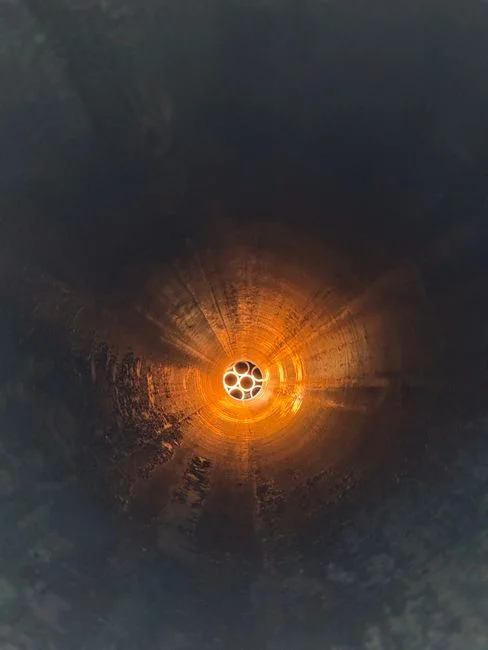
Rendering wastewater can combine abrasive solids with changing solids loading, so the selected solid-bowl decanter must be specified as a mechanical system rather than quoted only by bowl diameter and capacity. Require the supplier to identify the wear-protection approach for the feed zone, solids-discharge zone, bowl, and scroll. Alfa Laval states that wear-prone areas receive abrasion-resistant materials tailored to the process, including conveyor tiles for abrasive applications (Alfa Laval, 2026).
Engineers must ensure the mechanical design accounts for the specific rheology of rendering sludge. Require torque-responsive control for variable feed conditions. Alfa Laval describes a VFD and torque-control system that monitors conveyor torque and automatically adjusts differential speed: higher loading can trigger speed reduction to prevent overload, while lighter loading can reduce wear and energy use (Alfa Laval, 2026). For procurement, request the control philosophy, operating limits, alarm behavior, and evidence that the proposed machine was tested with representative solids rather than clean water.
Define pond-depth control and overflow arrangement as acceptance requirements. Pond depth is an operating adjustment that affects separation performance, cleanability, and startup, while the clarified phase discharges through the designated overflow arrangement (Alfa Laval, 2026). The supplier should state how pond depth is adjusted, how the setting is recorded, and how changes affect the guaranteed liquid and solids results.
For rendering duties, compare documented construction features rather than accepting generic “heavy-duty” language. Elgin lists an 80:1 or 140:1 gearbox, four wide-mouth solids-end discharge ports, four stainless-steel epicentric liquid-end discharge ports, and left- or right-hand configurations for its rendering centrifuges (Elgin Separation Solutions, 2026). These features provide reference points for a mechanical audit, but they do not prove suitability for the plant’s wastewater chemistry or abrasive feed.
Require corrosion protection for all wetted parts and a proposed material selection tied to the actual wastewater analysis. Alfa Laval states that it uses high-grade stainless steel for parts contacting the separation process and provides tailored abrasion-resistant protection (Alfa Laval, 2026). The quotation should identify materials by location and function, including the bowl, scroll, feed zone, solids outlet, liquid outlet, seals, fasteners, and exposed structure.
Build the pilot and acceptance plan
A plant-specific test should establish whether the selected centrifuge can handle the rendering wastewater under credible operating conditions. Use actual plant wastewater and document solids loading, particle characteristics, oil and grease, flow variability, abrasiveness, temperature, and pH during the test. Where no authoritative acceptance limit is available, the plant and supplier must agree the target before the run rather than applying an unstated generic value (ChemEngineering, 2026; Elgin Separation Solutions, 2026).
Verifying performance through testing reduces the risk of misapplication in complex rendering environments. Request a site trial when the feed variability, abrasion risk, or scale-up uncertainty justifies it. Alfa Laval supports onsite pilot testing with compact, modular skid-mounted equipment and states that the equipment can scale to production (Alfa Laval, 2026). A pilot should use representative startup, steady-state, peak-loading, and reduced-loading conditions; otherwise, the result will not demonstrate control response.
| Acceptance item | Evidence required | Buyer responsibility |
|---|---|---|
| Feed basis | Representative wastewater characterization and operating profile | Plant engineer supplies samples, analyses, and process data |
| Separation performance | Recovered-liquid quality and solids discharge results under stated conditions | Plant and supplier agree the measurement method and target before testing |
| Dewatering | Cake dryness measured from representative discharged solids | Define whether the objective is concentration, dewatering, or recovery |
| Mechanical response | Conveyor torque, differential-speed behavior, overload response, and operating stability | Review control response during normal and variable loading |
| Operating burden | Measured energy use and documented maintenance or wear observations | Plant operations records the trial conditions and interruptions |
| Scale-up | Documented relationship between pilot configuration and proposed production machine | Supplier identifies scale-dependent assumptions and exclusions |
Make acceptance conditional on the documented test conditions. A performance claim without feed composition, operating mode, sampling method, and measurement procedure is not comparable. The plant engineer should approve the technical result; procurement should separately assess whether the test supports the commercial assumptions.
Issue a supplier-ready selection package
A supplier-ready package separates process data from commercial claims and assigns missing information to a responsible owner. The plant engineer should provide average and peak flow, TSS, particle-size distribution, oil and grease, temperature, pH, abrasiveness, operating hours, and peak-load conditions. Operations should document flow and solids variability, start-stop patterns, batch availability, and current waste-handling constraints.
Standardizing the request for information ensures all vendors provide comparable data. The prospective supplier should return the selected bowl and conveyor concept, materials of construction, wear-protection details, drive arrangement, torque-control philosophy, pond-depth control, discharge method, utilities demand, equipment dimensions, installation requirements, and maintenance-access drawings. Each item should be linked to the defined duty rather than stated as an optional feature.
Procurement should require a documented duty curve, pilot or test basis, installation drawings, commissioning plan, spare-parts strategy, warranty scope, and total-cost comparison against the selected alternative. Use the filter press versus screw press comparison as a structure for lifecycle evaluation, but compare only the technologies included in the plant’s approved process train.
Assign commercial comparison of capital cost, consumables, energy, maintenance, downtime, and cake-disposal cost to procurement. Assign process validation and acceptance criteria to the plant engineer. Before comparison, request the scope and price of every applicable line item; if the supplier does not provide a quotation, identify the missing duty inputs and obtain them before comparing capital cost. A low purchase price is not a valid comparison when energy demand, wear-part replacement, production interruption, or downstream cake handling differs materially between alternatives.
The final selection record should show why each technology was retained or removed, which upstream pretreatment was required, what feed conditions supported the proposal, and which guarantees remain conditional. That record gives operations, engineering, and procurement one traceable basis for the purchase.
Frequently Asked Questions
How is a decanter centrifuge for rendering plant wastewater sized?
Size it from a documented duty, not from average wastewater flow alone. Give the supplier the flow profile, TSS, particle-size distribution, oil and grease, abrasiveness, temperature, pH, operating variability, and required liquid and cake outcomes. The supplier must then evaluate solids loading, sediment behavior, conveyor transport, and the required pond depth. ChemEngineering identifies particle settling, sediment build-up, consolidation, and sediment transport as important to solid-bowl decanter performance (ChemEngineering, 2026).
What should be checked when selecting a rendering wastewater centrifuge supplier?
Check evidence from rendering and wastewater applications, not only generic centrifuge experience. Require construction details, wetted-part materials, wear protection, torque control, pond-depth adjustment, discharge design, service access, and a pilot basis tied to representative feed. Rendering equipment references provide useful construction benchmarks: Elgin documents 80:1 or 140:1 gearboxes, four wide-mouth solids-discharge ports, and four stainless-steel epicentric liquid-discharge ports (Elgin Separation Solutions, 2026).